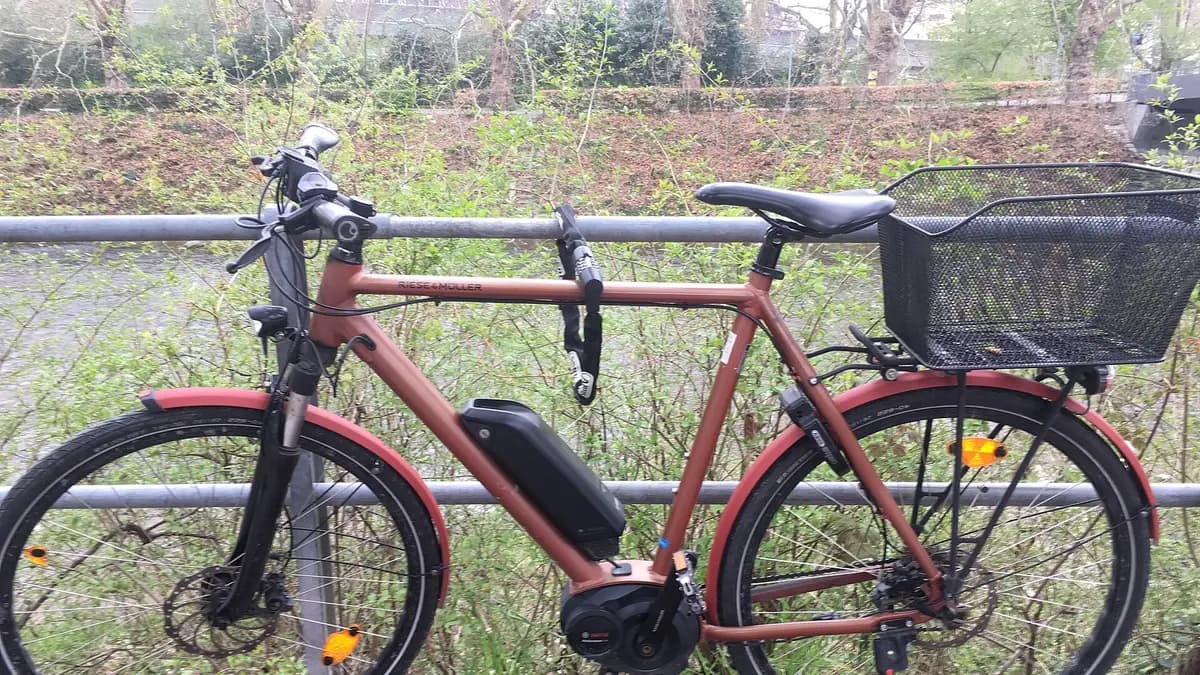
An electric bike sells in Chile today from CLP 599,990 (a small-wheel folding model) up to CLP 1,899,990 for a mid-range city bike with a 504 Wh battery, according to prices published by Falabella and by Oxford's official store on 28 October 2026. Running one is what is cheap: a full charge costs between CLP 110 and 150 on the electricity bill, and riding 100 kilometres costs about CLP 300, with power at CLP 255.27 per kWh (CGE's BT1 residential rate in Chile since October 2026).
This guide brings together prices by type, real-world range, electricity cost by monthly distance and what Chilean law requires for a bike with a motor to keep using the bike lane.
How much an electric bike costs in Chile: prices by type
Price depends mainly on three things: battery size (measured in Wh), the type of motor (in the rear hub or in the middle, next to the pedals) and the quality of components such as brakes and gears. The table below gathers prices published by Chilean retailers, checked on 28 October 2026.
| Model | Type | Battery / motor | Price | Source |
|---|---|---|---|---|
| Ebicis EFOLD | Folding | Not stated | CLP 599,990 | Falabella |
| Ebicis EBOOST 27.5-inch | Entry-level mountain | Not stated | CLP 799,990 | Falabella |
| Oxford Euroway 700c | City | 375 Wh, 250 W | CLP 799,990 | Oxford Store |
| Ebicis E-Hide 27.5-inch | Entry-level mountain | Not stated | CLP 849,990 | Falabella |
| Oxford Freeway 29-inch | City / leisure | 375 Wh, 250 W | CLP 999,990 | Oxford Store |
| Oxford Highway G2 29-inch | City | 250 W | CLP 1,599,990 | Oxford Store |
| Oxford Highway SUV G2 29-inch | All-terrain city | 504 Wh, 250 W | CLP 1,899,990 | Oxford Store |
| Cannondale Moterra Neo 3 | Full-suspension mountain | 750 Wh | CLP 4,999,990 (sold out) | Oxford Store |
| Cannondale Moterra Carbon LT 1 | Carbon mountain | 800 Wh | CLP 6,999,990 | Oxford Store |
Prices from Oxford Store's electric bike collection and from Falabella's search, checked on 28 October 2026. Battery sizes for the Freeway and Euroway are those listed by the Cyclingstore shop. Prices change with promotions and instalments.
In short, there are three tiers. Below CLP 900,000 are folding bikes and entry-level mountain bikes, with small batteries and hub motors. Between CLP 1 and 2 million are city bikes from brands with service networks, with 375 to 504 Wh batteries. Above CLP 4 million are mid-drive mountain bikes with 750 to 800 Wh batteries, built for hills and trails.
And conversion kits
Another option is to convert an ordinary bike with a kit (motor, battery, controller and pedal sensor). Kits are sold by specialist shops and marketplaces, but we could not find a verifiable price for a complete kit with battery at major Chilean retailers. If you go this way, choose a 250 W motor that cuts assistance at 25 km/h, for the reasons explained below.
Range: how many kilometres a battery really gives
Manufacturers often advertise 80 to 100 km of range, but those are ideal-condition figures: flat ground, little weight and the lowest assistance level. For the Oxford Highway, the Cyclingstore listing mentions up to 100 km in ideal conditions and 50 to 70 km of real use with its 504 Wh battery. That gap is normal: consumption rises with hills, wind, rider weight, cargo and the highest assistance mode.
A useful rule of thumb is that an electric bike on medium assistance uses around 10 Wh per kilometre. On that basis, a 375 Wh battery gives about 35 to 40 km of real range and a 504 Wh one about 50 km. For someone commuting 10 km each way, a mid-size battery lasts two or three days between charges.
How much it costs to charge an electric bike
The calculation is simple: battery capacity in kWh, plus charger losses (we assume 15%), multiplied by the price per kWh. At CLP 255.27 per kWh, the cost of a full charge is very low.
| Battery | Energy from the socket | Cost of a full charge | Example |
|---|---|---|---|
| 375 Wh | 0.44 kWh | CLP 113 | Oxford Euroway and Freeway |
| 504 Wh | 0.59 kWh | CLP 151 | Oxford Highway SUV G2 |
| 750 Wh | 0.88 kWh | CLP 225 | Cannondale Moterra Neo 3 |
| 800 Wh | 0.94 kWh | CLP 240 | Cannondale Moterra Carbon LT 1 |
Energía Futura calculations with power at CLP 255.27 per kWh and 15% charging losses, rounded. The price per kWh varies by utility and city in Chile: details in the price of electricity per kWh in Chile by city and utility.
Over a month, with 10 Wh per kilometre drawn from the battery, each kilometre costs about CLP 3 in electricity. The table shows the cost by distance ridden, counting 22 working days a month.
| Use | Kilometres a month | Energy a month | Cost a month | Cost a year |
|---|---|---|---|---|
| 5 km a day | 110 km | 1.3 kWh | CLP 330 | CLP 3,960 |
| 10 km a day | 220 km | 2.6 kWh | CLP 661 | CLP 7,930 |
| 20 km a day | 440 km | 5.2 kWh | CLP 1,321 | CLP 15,850 |
| 40 km a day | 880 km | 10.4 kWh | CLP 2,643 | CLP 31,700 |
For scale: even the heaviest use in the table, 40 km a day, adds about 10 kWh a month, around 6% of the 180 kWh a month that Chile's National Energy Commission uses as the benchmark for a typical home, as explained in how much electricity a house uses in Chile. The real cost of an electric bike is not electricity but battery wear and servicing: a full e-bike service is listed at CLP 80,000 on Cyclingstore's price list, checked on 28 October 2026.
What Chilean law says about the electric bike
Law 21,088 on road sharing, published on 10 May 2018, amended Chile's Traffic Law and defined a cycle: a non-motorised vehicle powered by people, such as a bicycle. The same definition includes vehicles with an auxiliary electric motor of a maximum continuous rated power of 0.25 kW (250 W), whose assistance is reduced or cut off at 25 km/h, or earlier if the rider stops pedalling. For legal purposes, these vehicles count as non-motorised.
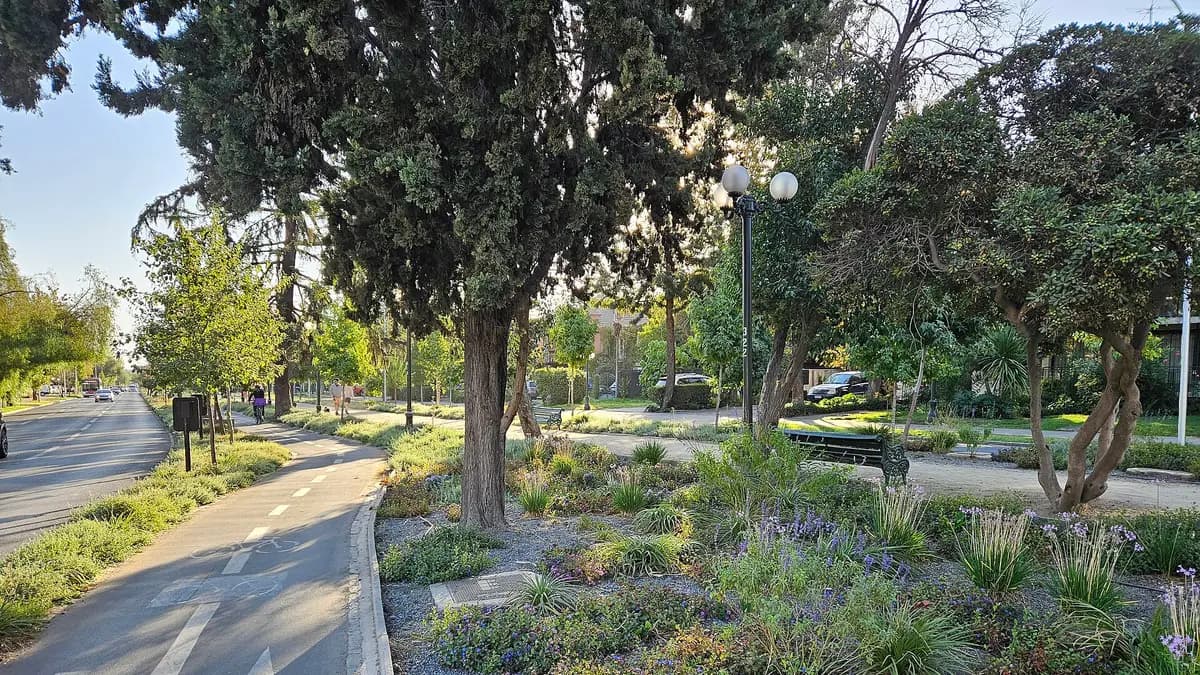
In practice, a pedal-assist electric bike with a 250 W motor and a 25 km/h cut-off follows the same rules as an ordinary bicycle: it must use the bike lane and, where there is none, the right-hand lane of the road, under article 222 of the Traffic Law. The cyclists' guide from CONASET, Chile's road safety commission (September 2024), sums it up: vehicles with electric assistance are cycles only if the motor meets 250 W and 25 km/h.
- Helmet: mandatory in urban areas for cyclists, under article 80 of the Traffic Law. CONASET says it must be certified by the Ministry of Transport, with a QR code.
- Lights: a white or yellow front light and a red rear light, on from half an hour after sunset until half an hour before sunrise.
- Pavements: only exceptionally, at walking pace, for children under 14, older adults, people with disabilities or riders carrying children under 7, when there is no bike lane.
- If it exceeds the limits: according to CONASET's FAQ, a bike with a motor that can go faster stops being a cycle and is subject to the general rules for motor vehicles, which takes it out of the bike lane.
Watch the listings: Chilean retailers also sell as electric bikes models with 1,500 W motors, such as a fat-tyre e-bike listed on Falabella at CLP 1,149,990. By power alone, that kind of vehicle does not meet the legal definition of a cycle. Before buying, check two figures on the spec sheet: the motor's rated power and the maximum assisted speed.
Which one to choose depending on use
The best electric bike is not the most powerful one but the one that fits the journey. These are general recommendations by use:
- To combine with the metro or a car: a folding bike. They are lighter and fit in a boot or under a desk, although their batteries tend to be small and small wheels are less comfortable on potholed streets.
- For daily commuting: a city bike with a 375 to 500 Wh battery, mudguards, rack and lights. That means charging two or three times a week.
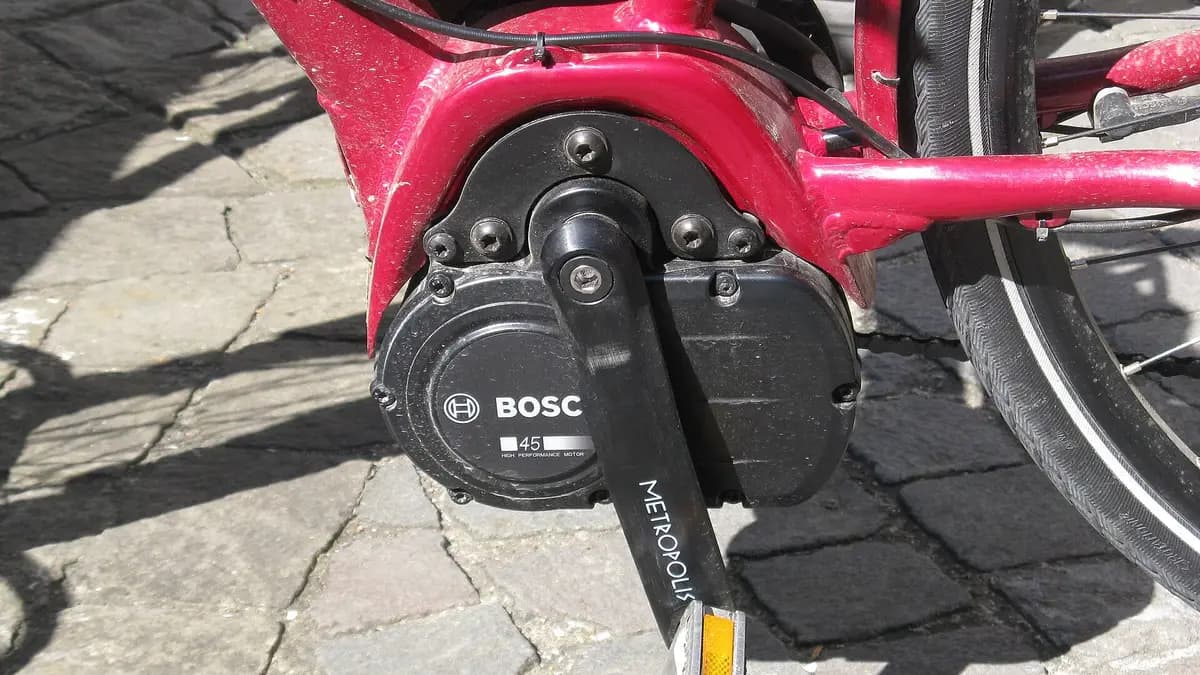
- For hilly neighbourhoods: a mid-drive motor climbs better than a hub motor because it uses the bike's gears.
- For trails: a mountain bike with suspension and a battery of 750 Wh or more, at the top of the price range.
Another key criterion is after-sales service: the battery, motor and controller are parts not every workshop can source. Before buying, ask about the battery warranty, the price of a replacement and where servicing is done.
How to look after the battery and extend its life
The battery is the most expensive part and the one that defines how long the bike lasts. E-bike lithium batteries withstand around 500 to 1,000 charge cycles, depending on brand and model, according to Electric Bike Report. Bosch, one of the largest makers of e-bike systems, recommends in its help centre storing the battery at 30% to 60% charge if it will not be used for a while, and its system only allows charging between 0 and 40 °C.
- Do not leave it in the sun inside a car in summer or charge it straight after a hot ride: let it cool down first.
- Avoid running it down to zero as a habit and do not leave it fully charged for months.
- Use the original charger and charge in a ventilated place: generic chargers can damage the battery and are a fire risk.
If you would rather stand than pedal, the cheaper alternative is the kick scooter: we compare prices, range and rules in our guide to the electric scooter in Chile.
Does your company sell electric bikes, accessories or micromobility solutions? Reach Energía Futura's readers.
See advertising optionsFrequently asked questions
How much does an electric bike cost in Chile?
From about CLP 600,000 for an entry-level folding bike, between CLP 800,000 and 1,900,000 for a mid-range city or mountain bike, and over CLP 4 million for a mid-drive mountain bike with a large battery, according to retail prices on 28 October 2026.
How much does it cost to charge an electric bike?
A full charge of a 375 to 504 Wh battery costs between CLP 113 and 151 with power at CLP 255.27 per kWh. Riding 100 km costs about CLP 300.
Do I need a licence to ride an electric bike in Chile?
No, as long as it meets the definition of a cycle in Law 21,088: a motor of up to 250 W and assistance that cuts off at 25 km/h. Above those limits, it falls under the rules for motor vehicles.
Can an electric bike use the bike lane?
Yes. A pedal-assist bike with 250 W and 25 km/h must use the bike lane or, where there is none, the right-hand lane of the road, just like an ordinary bicycle.
How long does an electric bike battery last?
Around 500 to 1,000 charge cycles, depending on the brand. With two or three charges a week, that means several years of use if it is protected from heat and full discharges.