Batteries in Chile are growing faster than the rules that run them. That is the warning from Matías Negrete, director of consultancy Vinken, in an analysis released on 26 October 2026 and reported by REDIMIN: storage systems follow, in real time, the charge and discharge instruction from the grid operator's (Coordinador Eléctrico Nacional) latest available schedule, and if conditions change afterwards they have little room to adapt.
His example is concrete. On 12 and 13 October, in the hours when batteries discharged, the average real price was US$2.8 per MWh, while the schedule assumed US$41 per MWh. In other words, the batteries delivered their energy when the system was already supplied and the price was close to zero, instead of saving it for higher-value hours.
The analysis has limits worth stating: the price comparison does not prove an economic loss attributable solely to this problem, nor does it show how much the batteries would have earned under a different dispatch. Wholesale prices change for many reasons, such as plant availability, demand and transmission congestion, and arbitrage is not the only source of income: batteries are also paid for capacity and ancillary services.
How much batteries in Chile weigh today
The debate comes as storage is already a relevant part of the system. According to the September bulletin of the Chilean Renewable Energy and Storage Association (ACERA), there were 3,125 MW of batteries in operation, with 13,555 MWh of energy capacity, another 3,017 MW in testing and 5,130 MW under construction. In September batteries injected 584 GWh, 7.9% of the energy in the National Electric System.
| Battery storage (September 2026) | Capacity | Source |
|---|---|---|
| In operation | 3,125 MW (13,555 MWh) | ACERA |
| In testing | 3,017 MW | ACERA |
| Under construction | 5,130 MW | ACERA |
| Under construction (32 projects) | 3,702 MW (15,398 MWh) | Ministry of Energy |
| Energy injected in September | 584 GWh (7.9% of total) | ACERA |
Construction figures differ between sources: the Ministry of Energy's project report counts 32 projects with 3,702 MW, while ACERA tallies 5,130 MW, and neither explains the gap. The details of that pipeline and the 6,000 MW target are in our story on the 32 battery projects under construction.
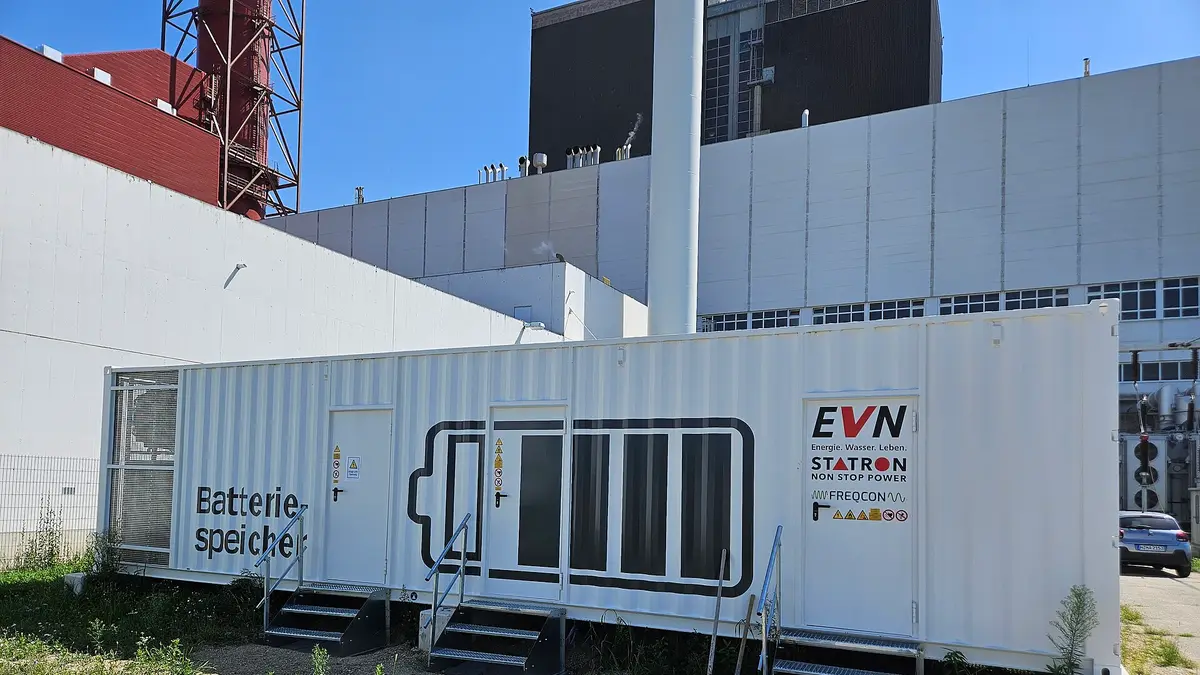
What DS 32 changes for batteries in Chile
The regulatory answer already exists on paper. The Ministry of Energy's Supreme Decree No. 32, published in the Official Gazette on 17 June 2026, amended the system coordination and operation regulation (DS 125 of 2017) to implement the storage and generation-consumption figures created by Law 21,505, according to a summary by law firm Garrigues. The decree appears in the Ministry of Energy's list of regulations.
- Opportunity cost: a battery's production cost becomes its opportunity cost, that is, the value of saving the energy for later. The grid operator calculates it to minimize present and future operating costs, and it cannot be lower than the installation's variable cost.
- Centralized dispatch: the grid operator schedules the charging and discharging of batteries that take part in the energy and capacity markets. Those with up to 9 MW of injection may request self-dispatch.
- Automatic dispatch: the grid operator must use automatic economic dispatch tools in real-time operation.
- Deadlines: 24 months from publication to apply the new opportunity-cost rules and 36 months for the automatic dispatch tools, with a phased work plan within the first 60 days.
While those deadlines run, the previous rules apply: until the corresponding technical standard is issued or amended, the production cost of a battery without a calculated opportunity cost is zero, the same as a solar or wind plant. Counted from 17 June 2026, the deadlines expire in June 2028 and June 2029.
| Regulatory milestone | Date | What it means |
|---|---|---|
| Publication of DS 32 | 17 June 2026 | New rules for batteries and self-consumption |
| CNE starts amending the Coordination and Operation Technical Standard (Res. Ex. 383) | August 2026 | Align the standard with DS 32 |
| First session of the standard's advisory committee | 24 September 2026 | Technical discussion with industry |
| Deadline for opportunity cost | June 2028 | 24 months from publication |
| Deadline for automatic dispatch | June 2029 | 36 months from publication |
The National Energy Commission (CNE) started in August the process to amend the Coordination and Operation Technical Standard, precisely to align it with DS 32, and in September appointed the advisory committee taking part in the discussion.
The industry's proposal: intraday scheduling
In July, ACERA presented a study commissioned from Vinken that proposes three changes: intraday scheduling (redoing the dispatch plan several times a day), calculating the opportunity cost of stored energy and using updated information on demand and generation. According to an August grid operator presentation cited by REDIMIN, the operator currently makes between 1 and 7 updates to its schedule within a single day.
The issue matters because batteries are the main tool to use the solar energy now wasted at midday. In the third quarter, generator Colbún attributed part of the 18% fall in the average marginal cost, to US$44.1 per MWh, to the larger contribution from batteries, according to its management discussion and analysis. If batteries discharge when the price is already low, that benefit for the system and for their owners shrinks. The effect of the solar glut on prices can be seen in our story on marginal costs at their lowest since 2002.
For Negrete, the current rigidity prevents the system from using all the flexibility of storage, while other resources do adjust to changes in demand, generation or line availability. The growing weight of these installations in the power mix is shown in our story on batteries' share of Chile's electricity.
Does your company develop, finance or operate storage systems? Reach Energía Futura's readers.
See advertising optionsFrequently asked questions about batteries in Chile
Who decides when a battery charges and discharges in Chile?
The Coordinador Eléctrico Nacional, the grid operator, which schedules the system to run safely at minimum total cost. Batteries with up to 9 MW of injection may request self-dispatch under DS 32.
What is a battery's opportunity cost?
It is the value of keeping stored energy to use later. If the battery discharges now, it has less energy available for a future hour when it might be worth more.
When will the new DS 32 rules apply?
The grid operator has 24 months from 17 June 2026 to apply the opportunity-cost calculation and 36 months for the automatic dispatch tools, that is, until June 2028 and June 2029.
How many batteries are operating in Chile?
According to ACERA, as of September 2026 there were 3,125 MW in operation, with 13,555 MWh of capacity, plus 3,017 MW in testing.