Sustainable Mining
Mining powered by renewables: electrified operations, green copper and lithium, hydrogen and water.
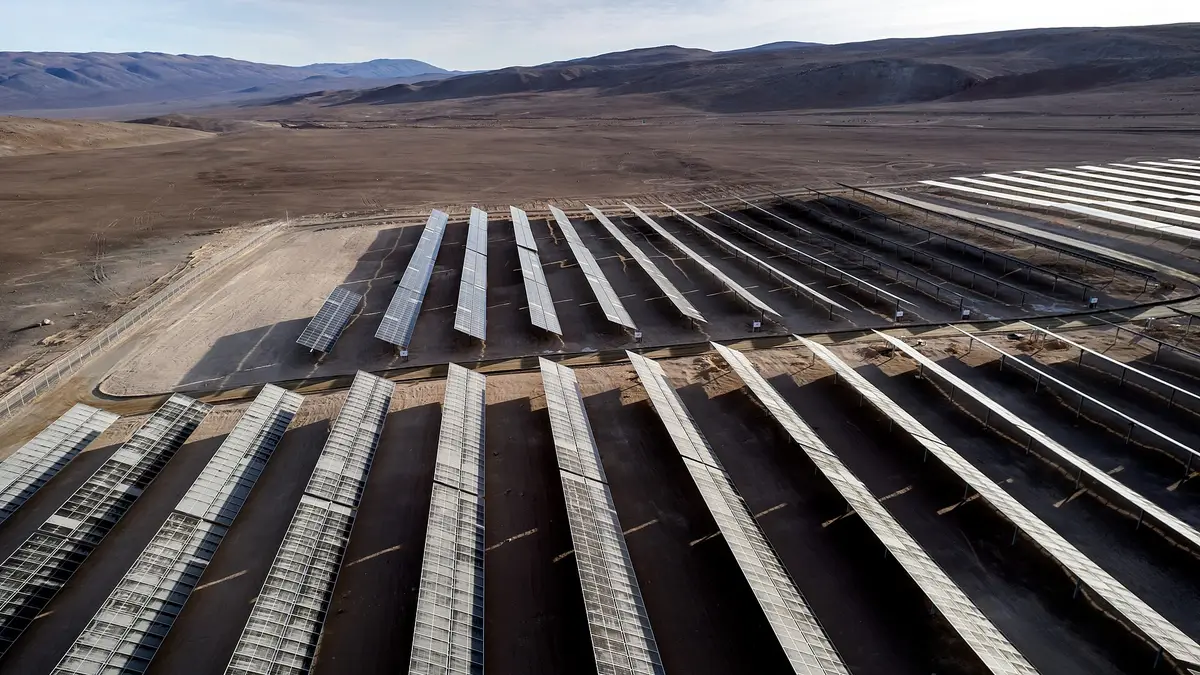
Pucobre and Codelco's Tovaku wins environmental approval: a US$870 million copper mine with a 193 MW solar park and seawater
Antofagasta's Environmental Evaluation Commission unanimously approved the Tovaku mining project, owned by Pucobre (60%) and Codelco (40%): 46,000 tonnes of cathodes a year, its own 193 MW photovoltaic park with batteries, untreated seawater from Tocopilla and an investment of US$870 million.
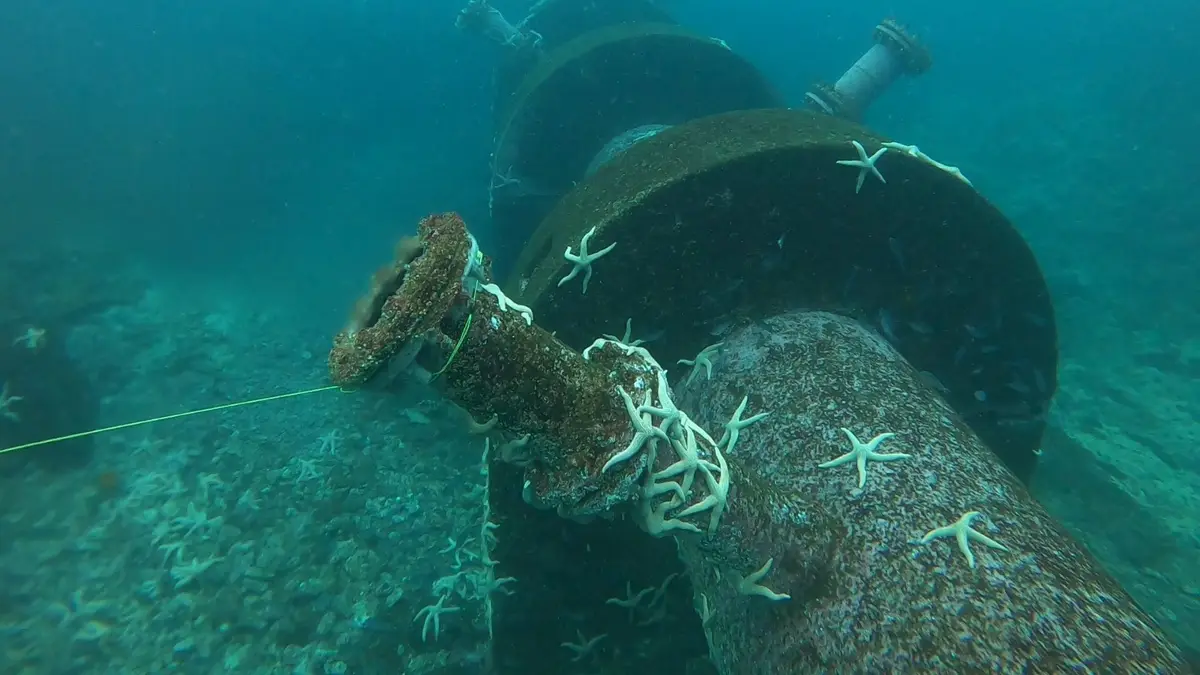
Chile to study how desalination brine affects the sea, a key issue for mining's water supply
A study by the Fisheries and Aquaculture Research Fund (FIPA 2026-01), worth CLP 190.5 million, will measure the effect of brine discharges on marine ecosystems until January 2028. Copper mining already draws 8.11 m³/s of seawater, and the new Desalination Law allows an emission standard for these discharges.
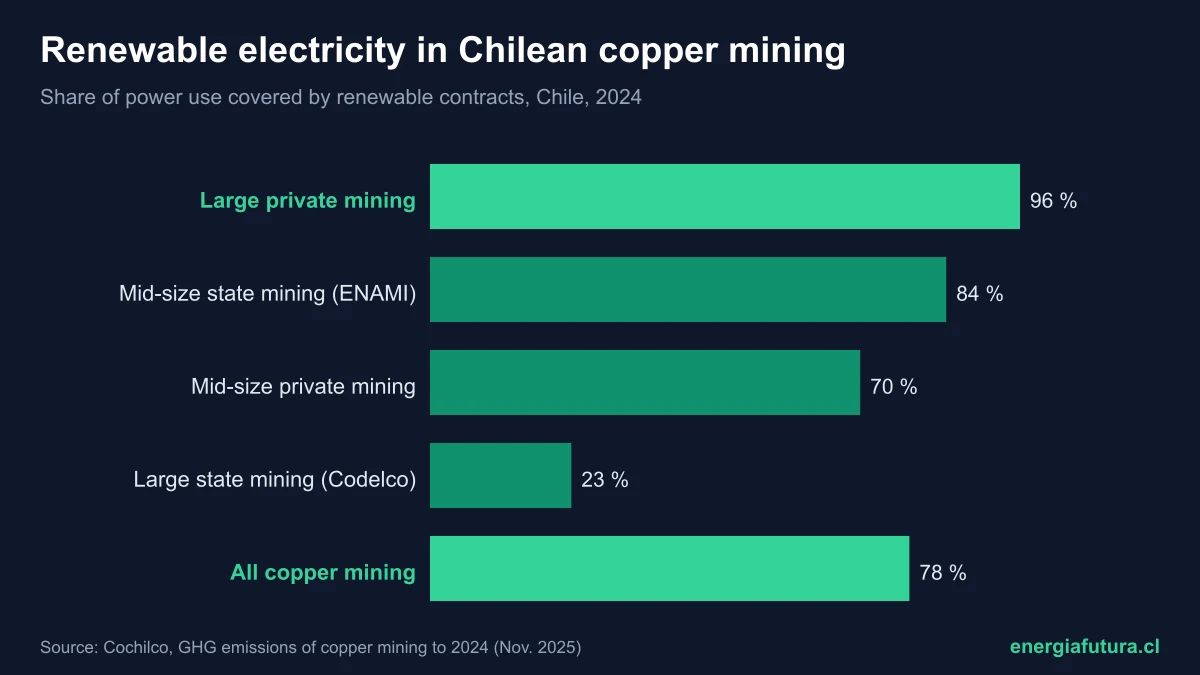
Renewable energy in Chilean mining 2026: how much each major miner uses
In 2025, 80.1% of the electricity used by Chile's copper mining came from renewable contracts, according to Cochilco. Large private mining reaches 96% and Codelco 23% (2024), with a target of 85% from 2026. Ranking by miner, contracts and what is still missing: diesel.
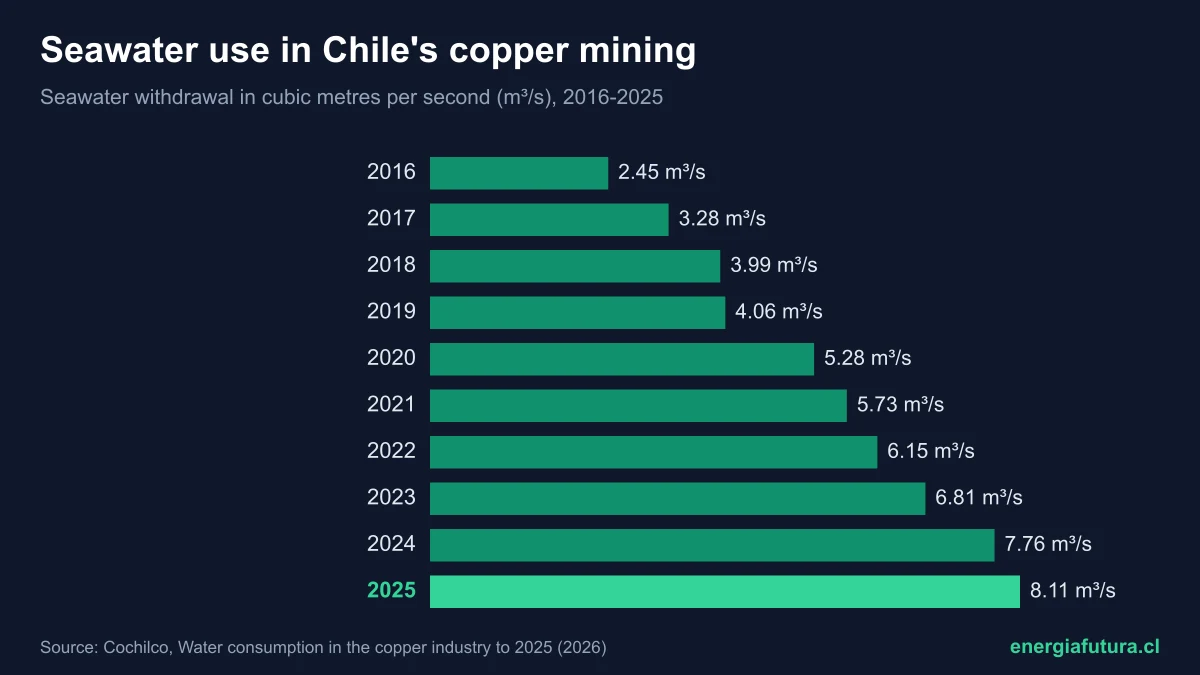
Seawater in Chilean mining 2026: consumption, desalination plants and projections in figures
Copper mining drew 8.11 m³/s of seawater in 2025, more than triple the 2016 level, and 70.4% was desalinated. Cochilco figures by region and source, the mining desalination plants in operation, those on the way and the outlook to 2034.
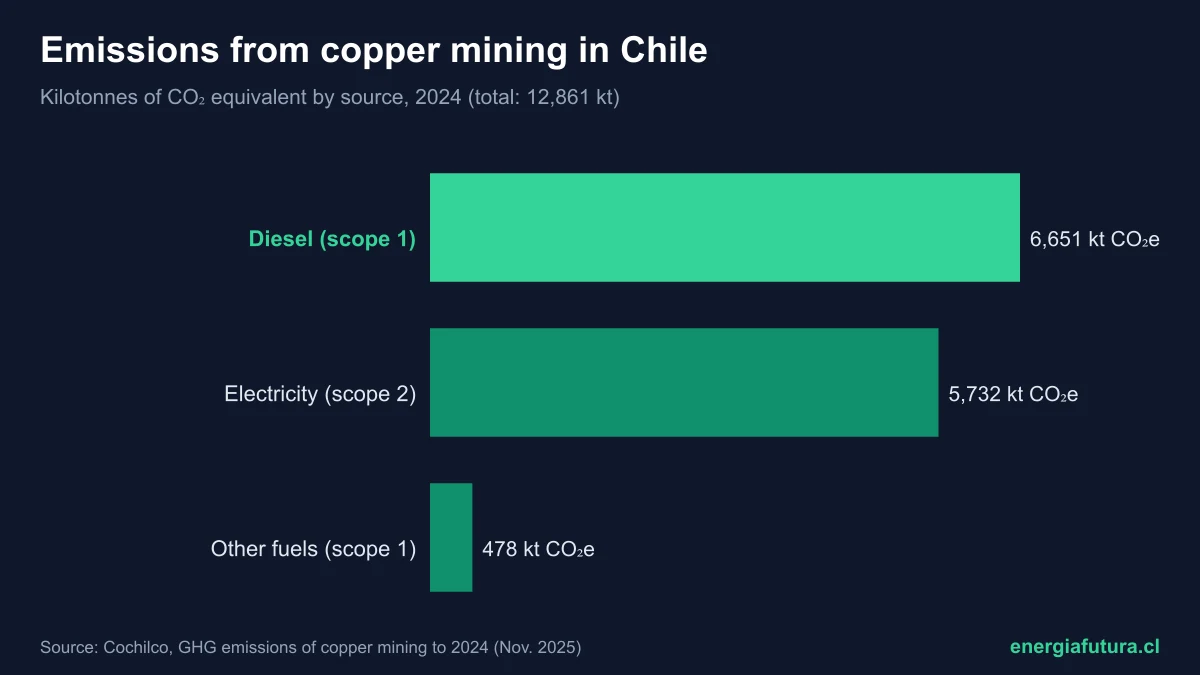
Carbon footprint of Chilean copper 2026: how much CO2 mining emits per tonne
Copper mining in Chile emitted 12,861 kt of CO2 equivalent in 2024, its lowest level since 2010, according to Cochilco: 2.33 tonnes per tonne of fine copper. Electricity is getting cleaner, but diesel is rising. Figures by source, process and product, and how it compares with the world average.