A home air purifier uses little power: the best-selling compact models draw between 27 and 33 W at full speed. Running 8 hours a day, a 27 W unit costs about CLP 1,650 a month and a 33 W one about CLP 2,000, with power at CLP 255.27 per kWh (CGE's BT1 residential rate in Chile since October 2026). Left on 24 hours a day, the cost rises to between CLP 5,000 and 6,100 a month. The biggest long-term cost is not electricity but the replacement filter.
This guide calculates the cost in Chilean pesos by hours of use, explains how to choose the right size using CADR, why a HEPA filter matters and at what times of year a purifier makes a difference in Chile, from winter pollution episodes to summer wildfire smoke.
How much electricity an air purifier uses
A purifier is essentially a fan that pushes air through one or more filters. Its consumption depends on speed: at full power it draws what the spec sheet says, and in night or automatic mode, much less. These are figures for models sold in Chile:
| Model | Maximum power | Particle CADR | Room size recommended by the maker | Price in Chile |
|---|---|---|---|---|
| Xiaomi Smart Air Purifier 4 Compact | 27 W | 230 m³/h | 16 to 27 m² | CLP 92,990 to 99,990 |
| Xiaomi Smart Air Purifier 4 Lite | 33 W | 360 m³/h | 25 to 43 m² | No verified price |
| SUMO Sense PA-1 (HEPA 13) | Not stated | Not stated | Not stated | CLP 119,990 |
| Mouvair Zen (HEPA H13) | Not stated | Not stated | Not stated | CLP 129,990 |
Power and CADR of the 4 Lite from Xiaomi's official page, which states 0.8 kWh in 24 hours at full power; 4 Compact figures from the BHR5860EU spec sheets at retailers such as Galaxus. Prices from Falabella's search on 28 October 2026.
How much an air purifier costs to run each month
The calculation is power times hours of use times the price per kWh. Because units rarely run at full speed all the time, these figures are the ceiling: in automatic mode, with clean air, the fan slows down and uses less.
| Unit | 8 hours a day | Cost a month (8 h) | 24 hours a day | Cost a month (24 h) |
|---|---|---|---|---|
| Compact 27 W | 6.5 kWh a month | CLP 1,654 | 19.4 kWh a month | CLP 4,962 |
| Mid-size 33 W | 7.9 kWh a month | CLP 2,022 | 23.8 kWh a month | CLP 6,065 |
| Large 50 W | 12 kWh a month | CLP 3,063 | 36 kWh a month | CLP 9,190 |
Energía Futura calculations at full power, with 30-day months and power at CLP 255.27 per kWh, rounded. The 50 W unit is an example for large rooms. The price per kWh varies by city in Chile, as shown in the price of electricity per kWh in Chile by city and utility.
For scale: a compact unit running all night adds about 6.5 kWh a month, less than 4% of the 180 kWh a month that Chile's National Energy Commission uses as the benchmark for a typical home. That is similar to a pedestal fan used for the same time, and far below an electric heater or a dehumidifier.
Which air purifier to choose: CADR and room size
The key figure for a purifier is not power but CADR (clean air delivery rate): how many cubic metres of filtered air it delivers per hour. A small unit in a large room barely makes a difference. The rule used by agencies such as Health Canada is that CADR, in cubic feet per minute, should be at least two thirds of the room's area in square feet, with ceilings of about 2.4 metres.
Converted to metric, that rule means about 12 m³/h of CADR per square metre of room, or roughly five air changes per hour. Higher ceilings call for a bigger unit.
| Room area | Recommended minimum CADR | Example |
|---|---|---|
| 10 m² (small bedroom) | 120 m³/h | Any compact unit |
| 15 m² (bedroom) | 180 m³/h | 230 m³/h compact |
| 20 m² (large bedroom) | 240 m³/h | High-end compact or mid-size |
| 30 m² (living room) | 360 m³/h | 360 m³/h mid-size |
| 45 m² (living and dining room) | 540 m³/h | Large unit |
Energía Futura calculation based on the two-thirds rule, with 2.4-metre ceilings. Manufacturers' recommended room sizes tend to be more generous because they assume fewer air changes per hour.
HEPA, activated carbon and what to avoid
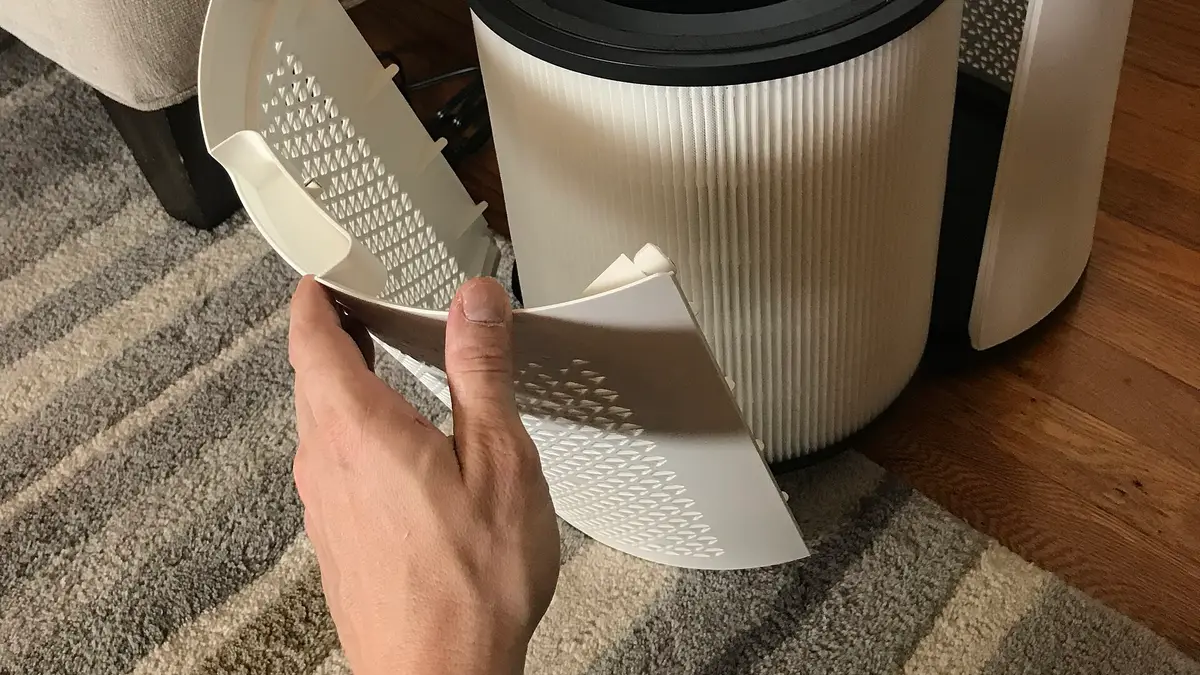
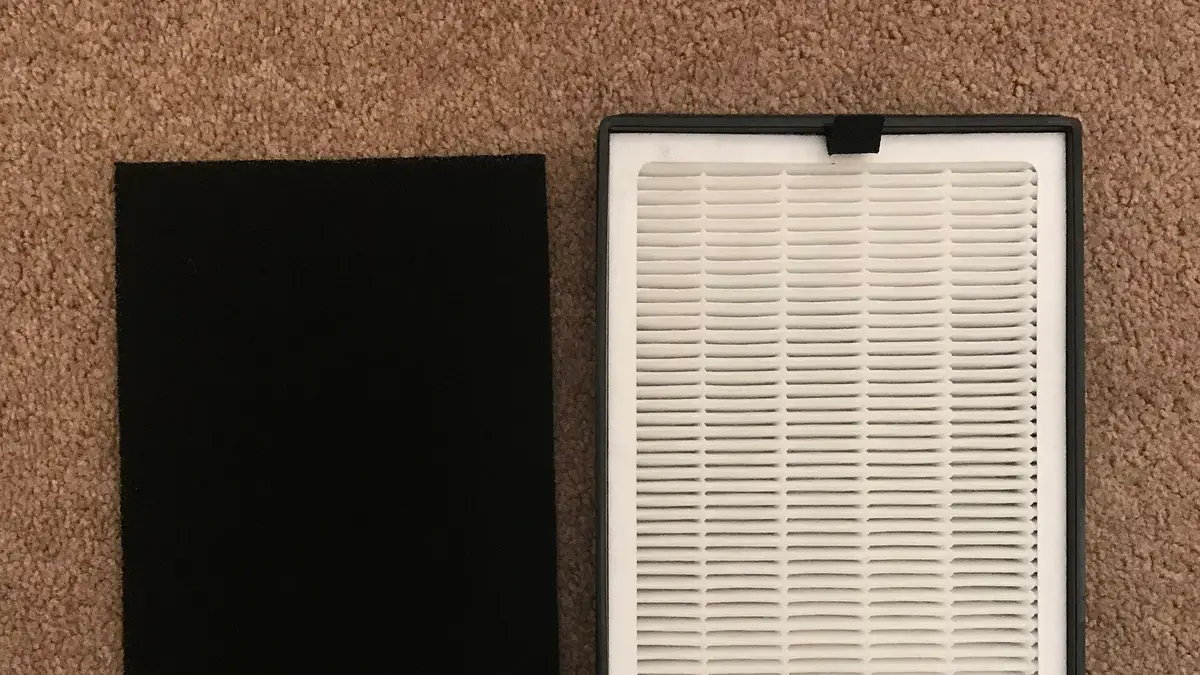
A true HEPA filter captures at least 99.97% of particles of 0.3 microns, the hardest size to trap, according to the definition used by the US Environmental Protection Agency (EPA). It is the filter that works against PM2.5, the fine particulate matter from wood smoke, traffic and wildfires. Activated carbon complements HEPA against odours and some gases, but does not replace the particle filter.
Health Canada advises avoiding devices that produce ozone, such as some ionisers and ozone generators sold as purifiers, because ozone irritates the airways. The best choice is a purifier with a mechanical HEPA filter and no ozone functions.
When it makes sense in Chile: winter smog and wildfire smoke
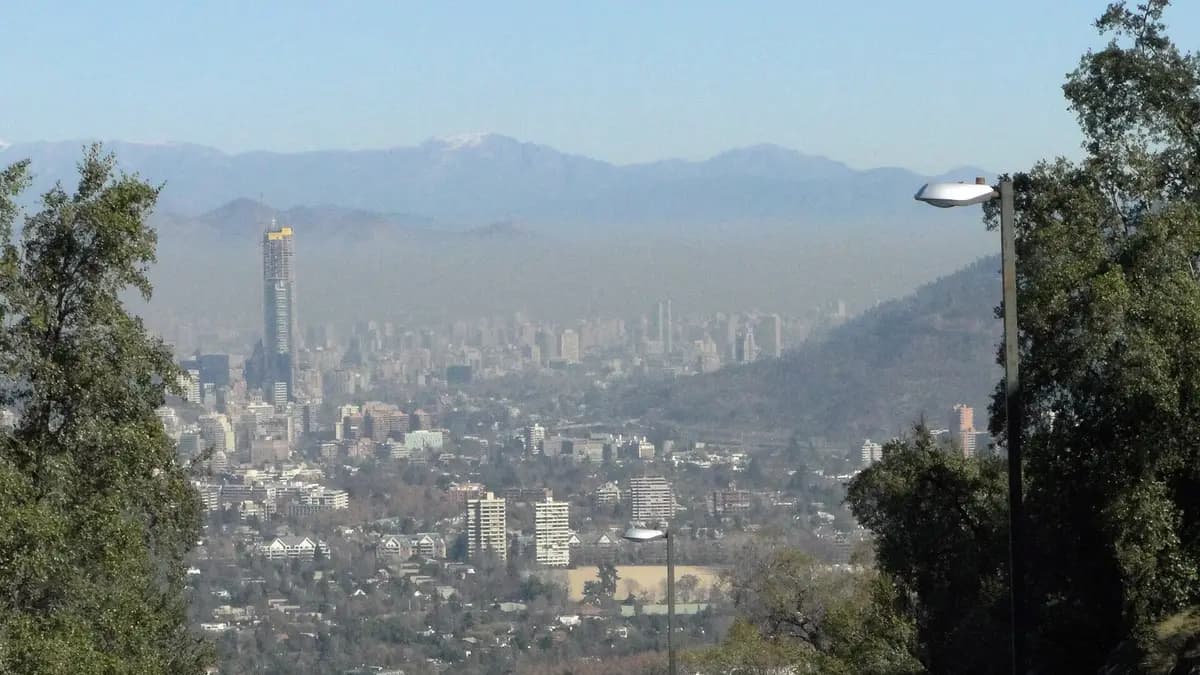
In the Santiago Metropolitan Region, the 2026 critical-episode management season, from 1 May to 31 August, recorded 21 PM2.5 episodes (18 alerts and 3 pre-emergencies) and 282 hours in episode, according to the assessment presented by Chile's Environment Ministry and published by the environmental regulator SMA. It was the third-best winter since the city's decontamination plan began, yet there were still weeks of poor air, especially in May and June.
In southern Chile, where homes are heated with firewood, winter pollution episodes are more frequent; indoors, unvented combustion heaters such as kerosene ones also pollute, as we note in what a kerosene heater costs to run. And in summer the risk changes source: wildfire smoke. Chile's disaster agency Senapred and forestry agency Conaf have warned of a difficult summer due to El Niño and extreme heat, as reported by Revista Electricidad on 27 October 2026. Health Canada recommends HEPA purifiers precisely as a way to create a clean-air room during smoke episodes.
- Keep it in the bedroom, with doors and windows closed during episodes: that concentrates its effect.
- Use automatic mode if it has a particle sensor: it slows down when the air is clean and uses less.
- Replace the filter on time: sellers of the 4 Compact state a lifespan of 6 to 12 months, depending on use. A clogged filter filters less.
- It does not replace ventilation: on days with good air quality, open the windows to refresh the air and lower humidity.
In winter, the purifier works alongside heating and humidity. If the house has condensation on the windows, the appliance that solves that problem is a different one: we explain it in how much a dehumidifier uses and which to choose.
Does your company sell air purifiers, filters or air-quality solutions? Reach Energía Futura's readers.
See advertising optionsFrequently asked questions
How much electricity does an air purifier use?
The best-selling compact units draw between 27 and 33 W at full power. Running 8 hours a day, a 27 W unit uses about 6.5 kWh a month.
How much does an air purifier add to the electricity bill?
Between CLP 1,650 and 2,000 a month if it runs 8 hours a day, and between CLP 5,000 and 6,100 if it runs all day at full power, with power at CLP 255.27 per kWh.
What is an air purifier's CADR?
It is the clean air delivery rate, in m³/h. As a rule, aim for about 12 m³/h per square metre of room: a 15 m² bedroom needs at least 180 m³/h.
Does an air purifier help with wildfire smoke?
Yes, if it has a HEPA filter and is the right size for the room. Health Canada recommends it to create a clean-air room during smoke episodes, with doors and windows closed.
Is a purifier with an ioniser or ozone a good idea?
No. Health agencies recommend avoiding devices that produce ozone and choosing ones with a mechanical HEPA filter.