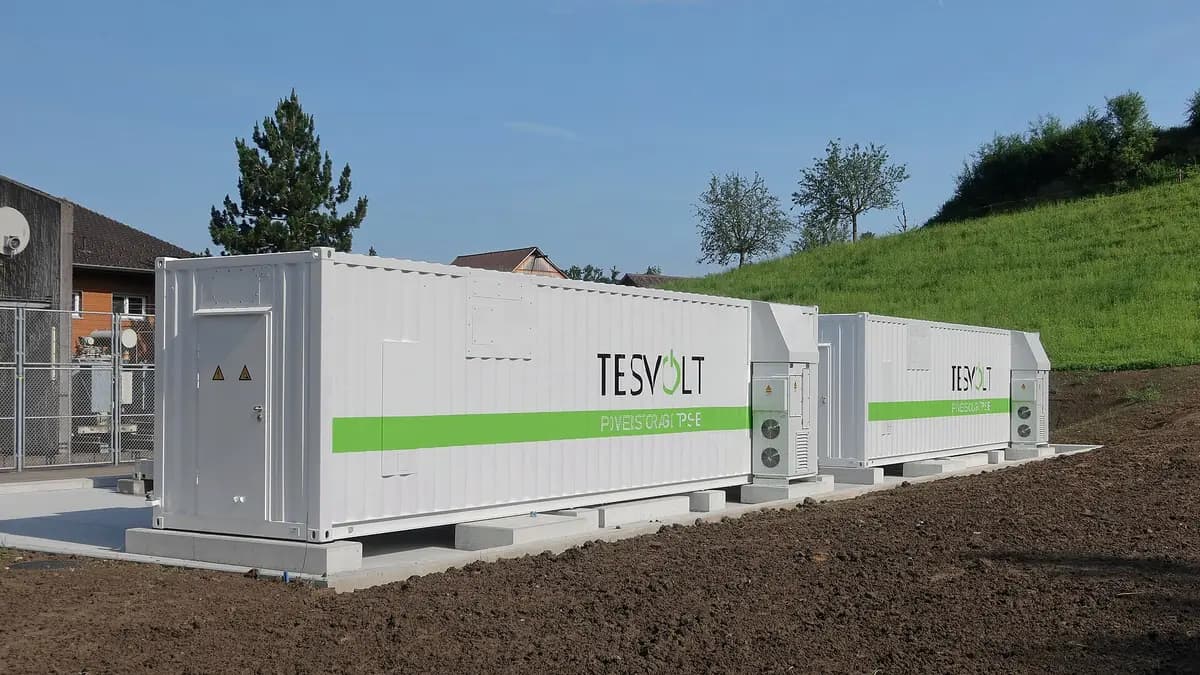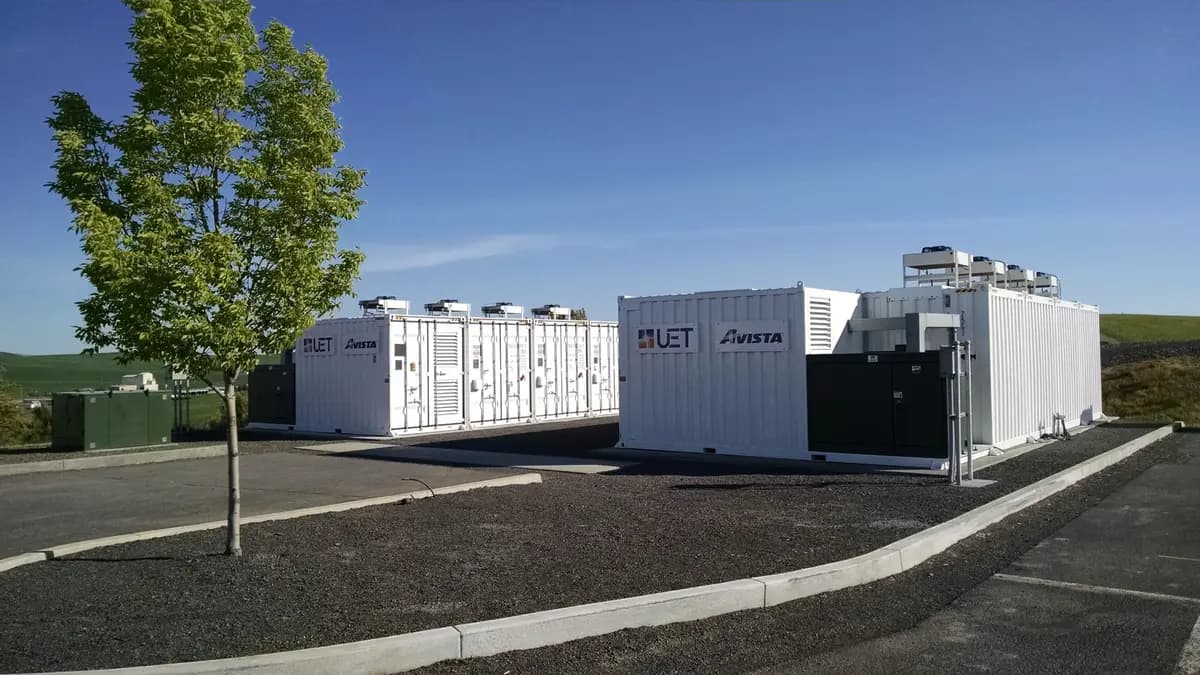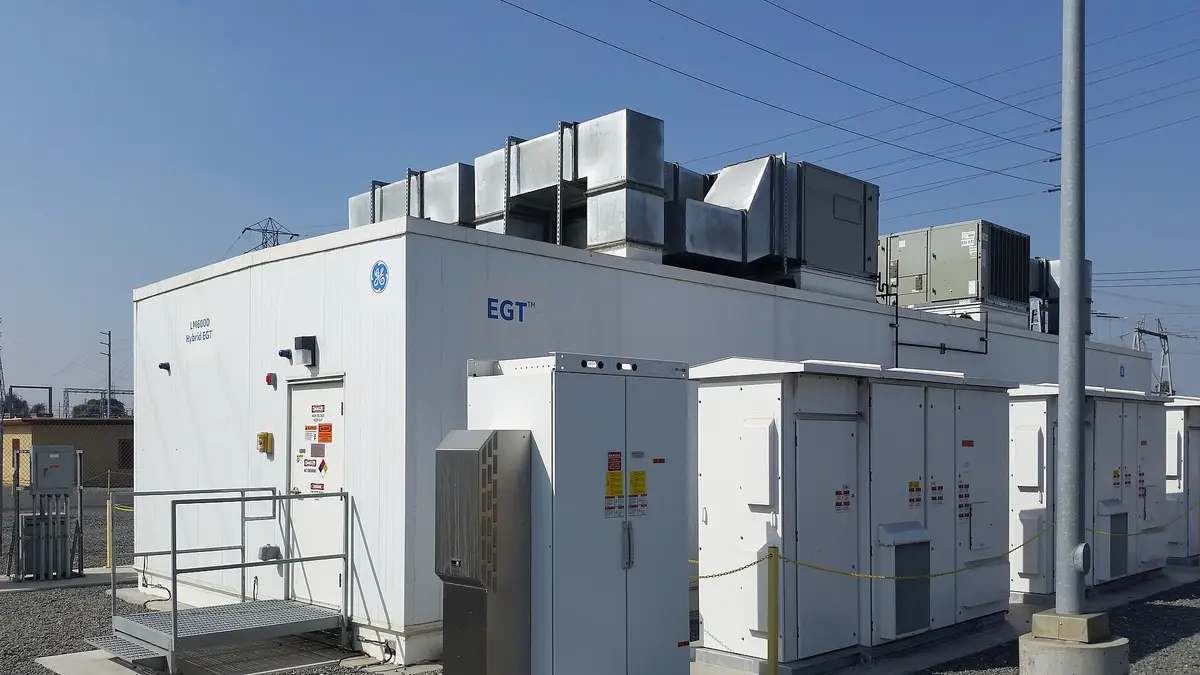
Chile has 32 battery projects under construction, adding up to 3,702 MW of power and 15,398 MWh of storable energy, with an investment of US$3.172 billion. The figure appears in the Ministry of Energy's September 2026 Report on Projects under Construction and Investment, with data as of September 30, and was highlighted on October 26 by the mining magazine REDIMIN.
The striking part is the comparison with generation. At the same cut-off date, the country is building 40 power plants totaling 1,892 MW and US$2.840 billion. In other words, Chile is currently investing more money in batteries than in new power plants: storage systems account for about 53% of the US$6.012 billion of both groups combined, according to an Energía Futura calculation based on the ministry's figures.
Battery projects under construction, in figures
The report breaks storage systems down by stage. Projects under construction are joined by those that have finished construction and are in the testing phase before the National Electricity Coordinator, and those already in commercial operation. With all three stages together, Chile has 10,284 MW of batteries in progress, although not all of that capacity is available to the grid today.
| Stage (as of September 30, 2026) | Projects | Power | Energy | Investment |
|---|---|---|---|---|
| In operation | — | 3,123 MW | — | — |
| In testing | 26 | 3,459 MW | 15,500 MWh | — |
| Under construction | 32 | 3,702 MW | 15,398 MWh | US$3.172 billion |
| Total in progress | — | 10,284 MW | — | — |
The ratio between energy and power shows that the new projects are long-duration. Those under construction average about 4.2 hours of discharge at full power (15,398 MWh divided by 3,702 MW), and those in testing about 4.5 hours. That is the format that lets midday solar energy be stored and released at night. Dividing investment by energy, the average cost of the projects under construction is around US$206 per installed kWh, our own calculation that includes equipment, civil works and grid connection.
What the 6,000 MW goal is and when it would be met
The ministry writes in its report that the 6,000 MW storage goal "by 2030" is 52% complete, with 3,123 MW in operation, and that it is expected to be met by early 2027, because all projects in testing and under construction are scheduled to start operating between 2026 and 2027. If that happens, the goal would be reached about three years ahead of schedule.
There is a discrepancy in dates worth clarifying. Some outlets, such as REDIMIN, present the 6,000 MW as a goal set for 2050. The Ministry of Energy's official document, however, dates it to 2030, as did then-minister Diego Pardow in 2025. The original goal in the National Energy Policy was more modest: 2,000 MW by 2030, which Chile has already exceeded, according to the sector's 2026 annual public account. When reports say the country would be "23 years" early, they are using the 2050 date.
The jump shows in the recent trend. Energía Futura had already reported that Chile surpassed 3,000 MW of BESS batteries in mid-October. A year earlier, operating capacity was a fraction of that figure.
The largest battery projects under construction and in testing
The report names the largest projects in each stage. Most combine a photovoltaic plant with a battery energy storage system (BESS), and all of them are between Tarapacá and Atacama, where solar generation is concentrated and where the most energy is lost due to a lack of transmission.
| Project | Region | Stage | Solar | Batteries |
|---|---|---|---|---|
| PV + BESS Monte Águila | Atacama | Construction | 240 MW | 233 MW / 932 MWh |
| PV + BESS Tarapacá | Tarapacá | Construction | 168 MW | 336 MW / 1,344 MWh |
| Cristales PV plant + BESS | Antofagasta | Testing | 400 MW | 340 MW / 1,360 MWh |
| BESS Elena Phase I | Antofagasta | Testing | — | 430 MW / 3,010 MWh |
BESS Elena Phase I stands out for its duration: 3,010 MWh for 430 MW is about 7 hours of discharge, well above the 4-hour standard. To compare these sizes with the largest projects on the planet, see our ranking of the largest battery in the world, led by systems in China, the United States and Saudi Arabia.
Does your company develop, finance or supply energy storage projects? Reach Energía Futura's readers.
See advertising optionsWhat comes next: battery projects in environmental review
The pipeline does not end with what is under construction. As of September 30, the Environmental Impact Assessment System (SEIA) had 12 stand-alone storage projects under review, with 2,401 MW, 13,719 MWh and US$2.823 billion. The Atacama Region accounts for most of them, and the ministry highlights the Atacama Pumped Renewable Energy Storage Plant, which would use water rather than batteries.
| Stand-alone storage projects in the SEIA (September 2026) | Projects | Power | Energy | Investment |
|---|---|---|---|---|
| Submitted in September | 1 | 441 MW | 1,765 MWh | US$266 million |
| Under review as of September 30 | 12 | 2,401 MW | 13,719 MWh | US$2.823 billion |
| Approved in September | 3 | 1,140 MW | 5,865 MWh | US$998 million |
Batteries are also now part of the design of almost every new power plant. Of the 9 generation projects approved in September (1,180 MW and US$2.270 billion), 100% include a storage component, and the same goes for the 2 solar projects submitted to the SEIA that month (437 MW). The environmental review of the approved storage projects took between 183 and 466 business days.
What batteries are changing in the power system
The effect is already visible in operations. According to the September bulletin of the Chilean Renewable Energy and Storage Association (ACERA), batteries injected 584 GWh in September, 7.9% of the system's energy that month, and 5.1% between January and September. We explained it in detail in our story on how batteries already supply 5.1% of Chile's electricity.
There are caveats. A finished project is not guaranteed to use all its capacity: the National Electricity Coordinator requires tests before connection, during commissioning and in operation, and transmission in the north remains congested. ACERA calculated 3,546 GWh of curtailed renewable energy between January and September, 4.6% less than in the same period of 2025; part of that decline is explained by batteries, but not all of it.
Across the whole system, installed capacity in operation reached 39,217 MW in September, 70% of it renewable, and the ministry projects 40,392 MW (71% renewable) by December 2026.
Frequently asked questions
How many battery projects are under construction in Chile?
32, with 3,702 MW, 15,398 MWh and US$3.172 billion, according to the Ministry of Energy as of September 30, 2026.
How many MW of batteries operate in Chile today?
3,123 MW in operation at the end of September, plus 3,459 MW in the testing phase.
Is the 6,000 MW goal for 2030 or for 2050?
The Ministry of Energy's official report dates it to 2030. Some outlets present it as a 2050 goal. The National Energy Policy goal was 2,000 MW by 2030, and it has already been exceeded.
Which is the largest battery project in testing?
By energy, BESS Elena Phase I, in Antofagasta, with 430 MW and 3,010 MWh.