Batteries now carry weight in Chile's electricity mix. Between January and September 2026, storage systems injected 5.1% of the power system's energy, more than small run-of-river hydro plants (2.9%), biomass (1.5%), biogas (0.2%) and geothermal (0.2%), according to the September statistical bulletin of the Chilean Renewable Energy and Storage Association (ACERA), published on Thursday 22 October by REDIMIN.
In September alone, batteries injected 584 GWh, 7.9% of the energy recorded in the month. That is an increase of 216.3% on September 2025, when storage was still marginal, and of 3.9% on August.
Batteries compared with other technologies
The table shows each technology's share of energy injected into the system between January and September 2026. Storage is already approaching conventional run-of-river hydro plants, which total 6.5%:
| Technology | Share of energy injected (January to September 2026) |
|---|---|
| Solar photovoltaic | 23.8% |
| Coal | 14.9% |
| Natural gas | 14.5% |
| Wind | 14.4% |
| Reservoir hydro | 14.1% |
| Run-of-river hydro | 6.5% |
| Batteries (storage) | 5.1% |
| Small run-of-river hydro | 2.9% |
| Biomass | 1.5% |
| Biogas | 0.2% |
| Geothermal | 0.2% |
Source: ACERA, September 2026 statistical bulletin, reported by REDIMIN. Renewables (non-conventional renewables plus conventional hydro) totalled 63.5% and thermal plants 31.4%. Storage is counted separately.
There is an important caveat: batteries do not generate energy, they store it. What they deliver at night was charged earlier, usually with midday solar power. That is why their share cannot be added to renewables as if it were a new source, and the renewable origin of the charging energy must be documented to back up decarbonisation claims, the report warns.
How many batteries Chile has
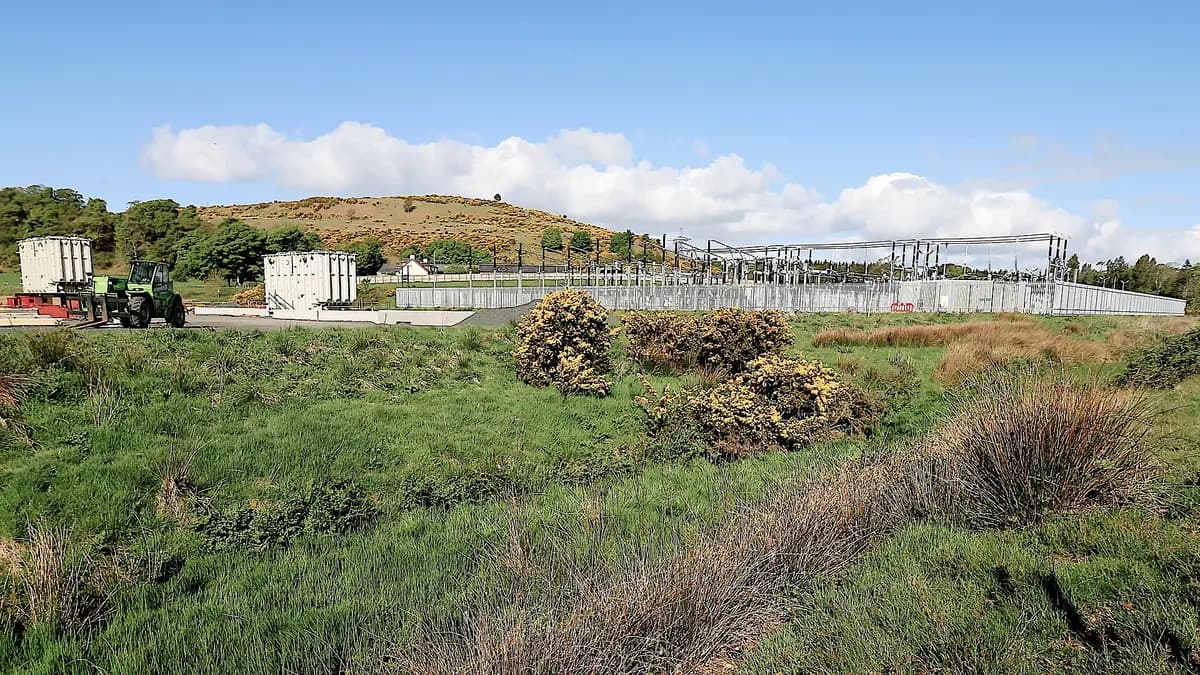
As of September 2026 there were 3,125 MW and 13,555 MWh of storage in operation, according to ACERA. Another 3,017 MW were in testing and 5,130 MW under construction. For comparison, at the end of 2025 there were 1,575 MW in operation: capacity doubled in nine months.
| Status | Power | Energy | Comment |
|---|---|---|---|
| In operation | 3,125 MW | 13,555 MWh | Average duration of about 4.3 hours |
| In testing | 3,017 MW | 13,735 MWh | Not yet in commercial operation |
| Under construction | 5,130 MW | 22,123 MWh | 76% hybrid with solar plants and 24% standalone |
| Total across the three stages | 11,272 MW | 49,413 MWh | Not all commercially available |
Source: ACERA, September 2026; the total and average duration are Energía Futura calculations based on those figures. The end-2025 figure is from ACERA's annual review.
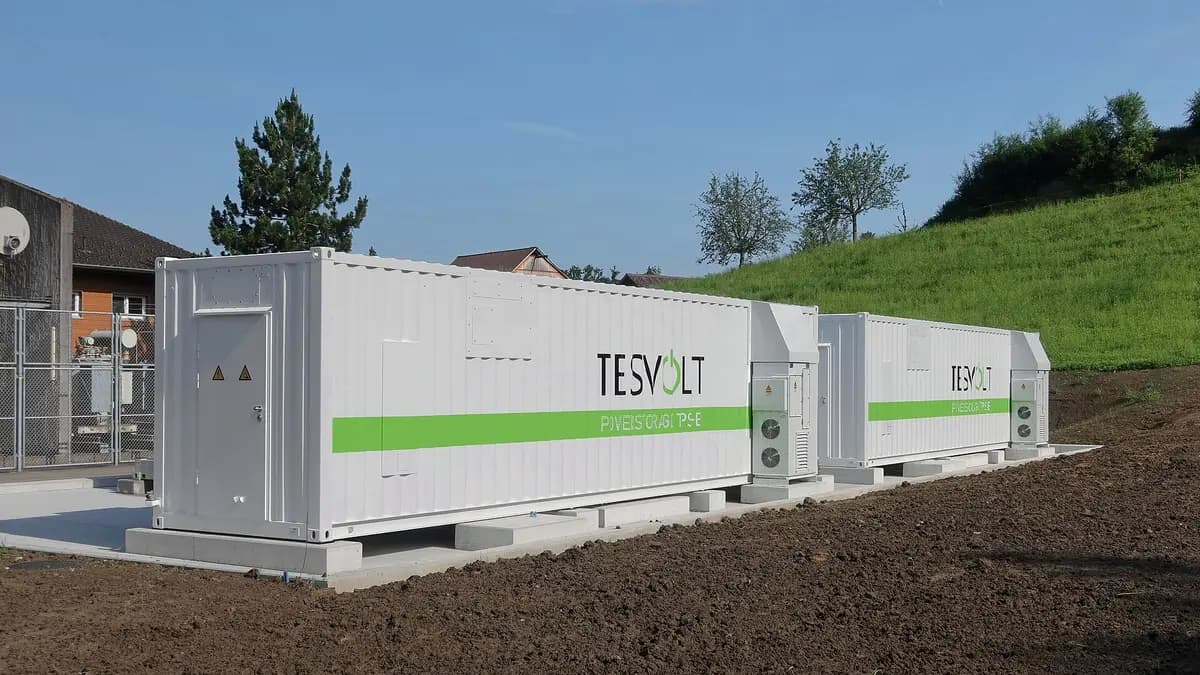
A 100 MW, 400 MWh system can, in theory, deliver its rated power for four hours, the standard for many Chilean projects. The newest ones aim for more hours: Engie's BESS Lile in Mejillones, with 142 MW and 802 MWh, discharges for about five hours. We detailed the growth in capacity and the pipeline in our story on the 3,000 MW of batteries.
Batteries and curtailment: what the data show
Curtailment of wind and solar power, the energy lost because the grid cannot absorb it, totalled 3,546 GWh between January and September 2026, 4.6% less than in the same period of 2025, according to ACERA. Batteries can help reduce it, because they charge precisely during hours of solar oversupply.
But the report is cautious: the data do not allow the decline to be attributed solely to storage, because demand, transmission and system operation also play a role. Transmission is the other bottleneck, as we explained in our story on the Deloitte report.
What ACERA proposes for storage
The association proposes improving the dispatch scheduling of storage, better representing the opportunity costs of stored energy and strengthening coordination mechanisms to decide when to charge and when to discharge. Today the grid operator decides how batteries operate within the system's economic dispatch.
For mining, the issue is key: mine sites operate 24 hours a day and many have signed renewable power contracts that must also be met at night. Batteries make it possible to deliver solar energy outside sunlight hours, although their autonomy is limited and they do not guarantee continuous supply on their own. The trend, in any case, is clear: with 5,130 MW under construction, storage could overtake run-of-river hydro in the coming months.
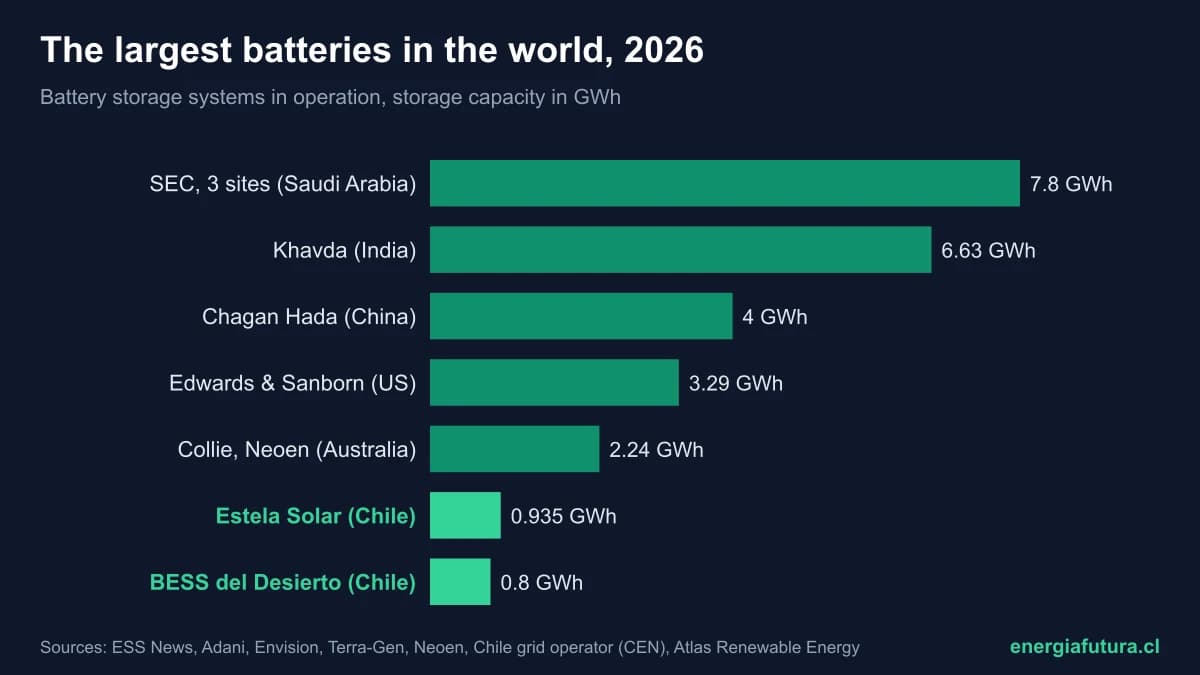
Chile already ranks among the most active storage markets in the world. In September 2026 batteries injected 7.9% of the energy, a figure few countries reach. The planet's largest projects, including Grenergy's in Atacama, are in our ranking of the largest batteries in the world.
How the mix was split in September
In September 2026 the mix was split as follows, according to ACERA: non-conventional renewables (solar, wind, small hydro, biomass and geothermal) contributed 46.2%, conventional hydro 32.2% and thermal plants just 13.8%. Batteries, counted separately, injected 7.9%.
Monthly variation depends on hydrology, solar radiation, wind, demand and unit scheduling. September combines more sun and snowmelt with lower demand than in winter, so thermal plants run less. The challenge will be to sustain that pattern in dry months and in years with little rain, when batteries will have to replace part of night-time hydro generation.
Does your company develop, finance or integrate energy storage? Reach Energía Futura's readers.
See advertising optionsFrequently asked questions
How much energy do batteries supply in Chile?
5.1% of the energy injected between January and September 2026, and 7.9% in September, according to ACERA.
How many MW of batteries does Chile have?
3,125 MW in operation as of September 2026, plus 3,017 MW in testing and 5,130 MW under construction.
Are batteries renewable energy?
They do not generate energy: they store energy produced earlier. They are renewable only if charged with renewable energy, which must be documented.
Do batteries reduce curtailment?
They can help, because they charge during hours of solar oversupply. Curtailment fell 4.6% in 2026, but transmission and demand also play a role.