The Ceibo photovoltaic solar park, with 250 MW and a battery system, won environmental approval from the Atacama region's Evaluation Commission. The project, located in the municipality of Vallenar, involves an investment of US$220 million, according to its file at Chile's Environmental Assessment Service (SEA), which lists it as “Approved”.
The project holder registered with the SEA is Energía Renovable Violeta SpA, and the approval was reported as a project of developer Orion Power by Electrominería on 16 October. Ceibo will install 496,800 photovoltaic modules and lithium-ion batteries to supply the national grid during peak-demand hours.
The Ceibo solar park in numbers
These are the main figures for the Ceibo solar park, according to the SEA file and what the company reported to the agency:
| Ceibo photovoltaic solar park | Figure |
|---|---|
| Nominal capacity | 250 MW |
| Investment | US$220 million |
| Photovoltaic modules | 496,800 |
| Storage | Lithium-ion batteries (BESS), 42 banks |
| Grid connection | 220 kV line of about 4.5 km to Algarrobal substation |
| Workers at peak construction | 600 |
| Useful life | 35 years |
| Location | Vallenar, Atacama region |
| Type of review | Environmental Impact Study (EIA) |
Sources differ: the subtitle of the Electrominería article mentions 225 MW, while its text and the official SEA file state a nominal capacity of 250 MW. This article uses the SEA figure.
How the solar park's batteries will work
The storage system will consist of 42 battery banks, each made up of 20-foot containers with lithium-ion cells. According to what the company told the SEA, as cited by Electrominería, each bank starts with 16 containers, and in years 10 and 20 of operation containers are added until it reaches 17 and 18, to offset the natural loss of capacity as the cells age.
That design, with scheduled expansions, is increasingly common in Chile's hybrid projects. Batteries store midday energy and sell it in the afternoon and evening, when prices are higher. Chile already has more than 3,000 MW of batteries, as we reported in Chile surpasses 3,000 MW of BESS.
Two environmental impact studies
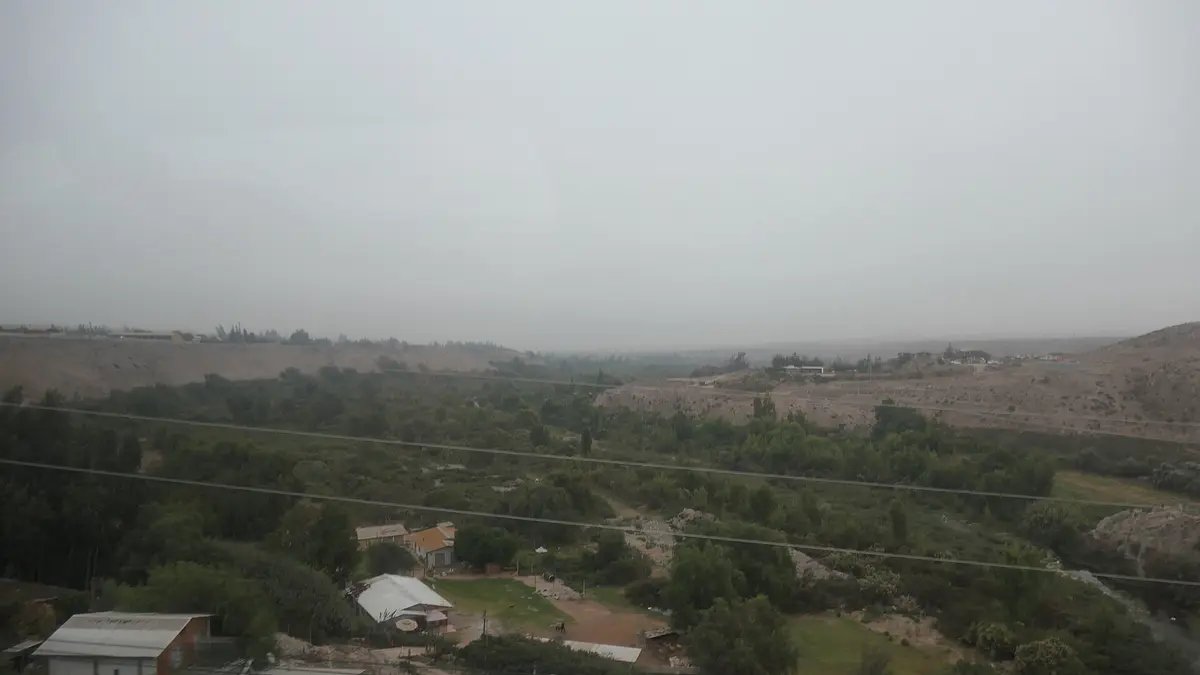
Ceibo did not have a direct path. A first Environmental Impact Study, filed on 9 March 2023, ended up “not qualified”, according to the SEIA search engine. The holder filed it again on 28 September 2023, and that second version is the one that was approved. During the review there were public participation activities, including a meeting at the Canto del Agua neighbourhood council in November 2023, according to the SEA record.
| Milestone | Date | Source |
|---|---|---|
| First EIA filed | 9 March 2023 | SEIA |
| First EIA | Not qualified | SEIA |
| Second EIA filed | 28 September 2023 | SEIA |
| Public participation meeting | 7 November 2023 | SEA |
| Approval reported | 16 October 2026 | Electrominería |
Environmental approval does not mean the park will be built immediately. The project still needs sector permits, financing and, in many cases, a power sales contract. Electrominería reported that the company expects to finish construction next year, a timeline that will depend on those steps.
Atacama, a solar hub that needs more transmission
The Algarrobal substation, where Ceibo will connect, is an increasingly busy point. Spain's Grenergy financed its Algarrobal solar and battery project this year, as we reported in Grenergy closes US$457 million for Algarrobal and Palmas. In the same region, the 390.7 MW Sol de Algarrobal project also entered environmental review with batteries.
The concentration of solar projects in the north has a limit: transmission. A Deloitte report published on Monday estimated that 6,205 GWh of renewable energy was lost to curtailment in 2025, 71% of it solar. That is why almost every new project, like Ceibo, adds batteries to shift its output to the evening.
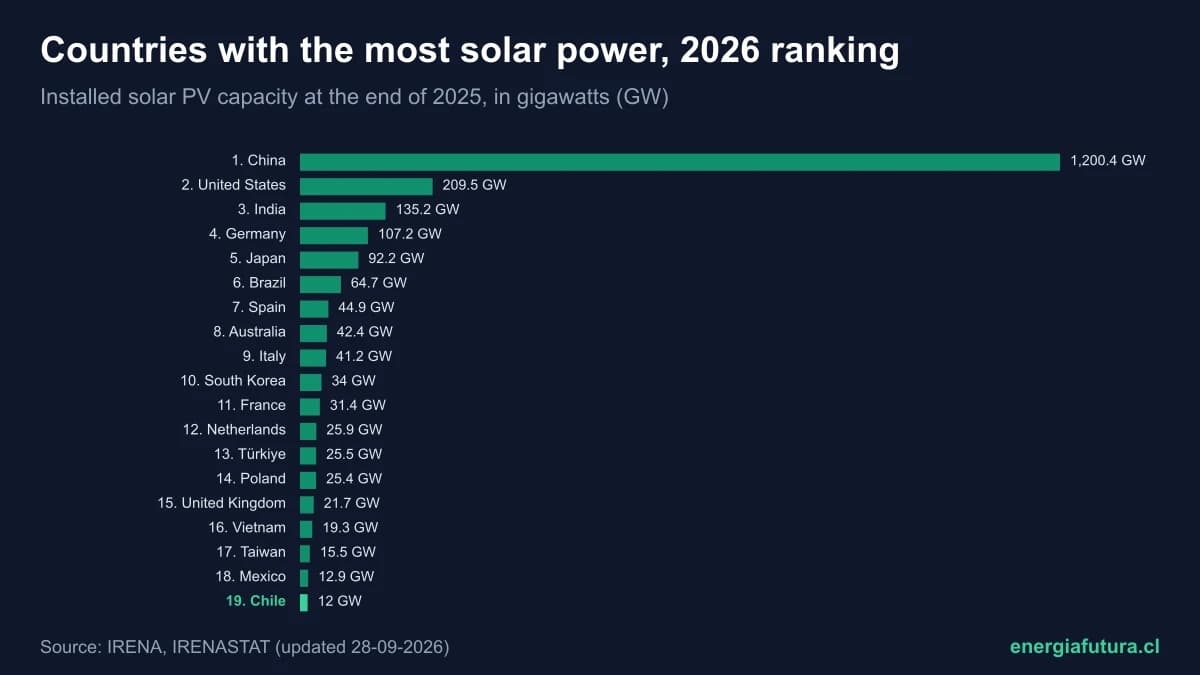
According to the monthly report by GIE and Systep, at the end of August 2026 Chile's installed solar capacity was 12,530 MW, the largest of any technology, and batteries totalled 2,929 MW, excluding projects in testing.
The Ceibo solar park among the projects approved in 2026
Ceibo joins a long list of energy approvals in 2026. Between 1 August and 28 September alone, the environmental system approved solar parks, wind farms and battery systems worth several hundred million dollars each, according to the GIE and Systep report. These are some of the largest:
| Approved project (August-September 2026) | Holder | Region | Investment |
|---|---|---|---|
| Cuatro Vientos wind farm | Colbún | Los Lagos | US$540 million |
| Las Fresias wind farm | Parque Eólico Las Fresias SpA | Ñuble and Biobío | US$500 million |
| BESS Lo Prado | Lader Energy Chile | Metropolitan | US$443 million |
| Las Mellizas PV plant | Las Mellizas Generación | Ñuble | US$400 million |
| Loma Verde wind farm | Engie Energía Chile | Los Lagos | US$212 million |
The trend is clear: solar projects in the north are paired with batteries, and wind farms are moving south, where there is more wind and less congestion during sunlight hours. The full picture of the country's solar generation, with the largest parks and their output, is in solar energy in Chile in numbers.
Does your company develop or supply solar parks in Chile? Reach Energía Futura's readers.
See advertising optionsFrequently asked questions
Where will the Ceibo solar park be?
In the municipality of Vallenar, Atacama region, connected to the 220 kV Algarrobal substation.
How much does the Ceibo solar park cost?
The investment declared to the SEIA is US$220 million.
How much power will it generate?
It has a nominal capacity of 250 MW and batteries to supply energy at peak hours. The SEA file does not state expected annual generation.
How many jobs will it create?
Up to 600 people at the peak of construction.