Spain's Grenergy closed senior non-recourse financing of US$457 million for 446 MW of solar and 1.8 GWh of battery storage in Chile, the largest financial close in its history, according to the company's statement of October 9, 2026. The statement's headline says 460 million; according to Energías Renovables, the figure includes US$26 million in credit lines.
The money goes to two projects: Algarrobal, the fifth phase of the Oasis de Atacama platform, and the Palmas cluster, a group of 21 small solar plants spread across northern and central Chile.
Grenergy's financing: what it includes
| Project | Solar | Storage | Status |
|---|---|---|---|
| Algarrobal (phase 5 of Oasis de Atacama, Antofagasta) | 242 MW | ~1.5 GWh (1,480 MWh) | 12-year hybrid PPA from January 1, 2028 |
| Palmas cluster (21 PMGD plants) | 204 MW | 289 MWh | Plants in operation; 6 are adding 5-hour batteries |
| Total | 446 MW | ~1.8 GWh | US$457 million |
BNP Paribas coordinated and underwrote the deal, with the participation of BBVA, J.P. Morgan Chase Bank, MUFG Bank, Santander and The Bank of Nova Scotia. It is *non-recourse* financing: the banks are repaid from the projects' own revenue, not from the parent company's balance sheet.
*"This is the largest financial close in our history"*, said David Ruiz de Andrés, CEO of Grenergy. According to the company, the deal puts it at about 40% of its project finance debt target under its 2026-2028 strategic plan.
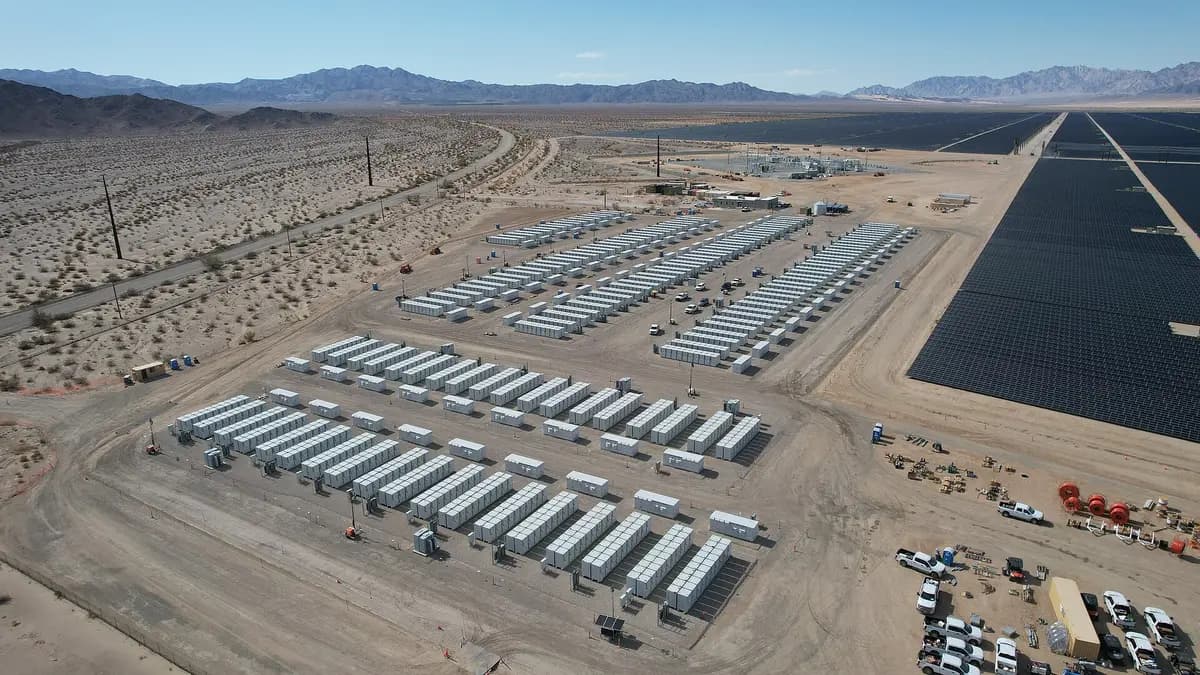
Algarrobal: the fifth phase of Oasis de Atacama
Algarrobal has a 12-year hybrid power purchase agreement (PPA) with an investment-grade buyer, starting on January 1, 2028. With a ratio of about 6 MWh of batteries for every solar MW, the plant will be able to store midday energy and sell it at night, when prices rise and the sun is down. At that size, Algarrobal would rank among the largest battery systems in the country, as shown in Chile surpasses 3,000 MW of battery storage.
Oasis de Atacama is Grenergy's main platform in Chile. Together with Central Oasis, it adds up to 3.9 GW of solar and 19.2 GWh of storage at various stages, according to the company. The four previous phases of Oasis de Atacama are already operating, according to PV Tech.
| Grenergy in figures (October 2026) | Data |
|---|---|
| Cumulative non-recourse financing in Chile | More than US$2.4 billion |
| Oasis de Atacama + Central Oasis | 3.9 GW of solar and 19.2 GWh of storage |
| Global portfolio | 11 GW of solar and 63 GWh of storage |
| Employees | More than 600 |
Palmas: small solar plants adding batteries
The Palmas cluster groups 21 small distributed generation plants (PMGD), plants of up to 9 MW that connect to distribution grids and sell their energy at a stabilized price. All are in operation. Six will add batteries with five hours of storage. The deal also refinances 14 of those 21 plants, originally financed with US$85 million.
Adding batteries to existing plants (*hybridization*) is one of the trends of the year: it makes use of the connection and the land, and allows energy to be sold at higher-value hours.
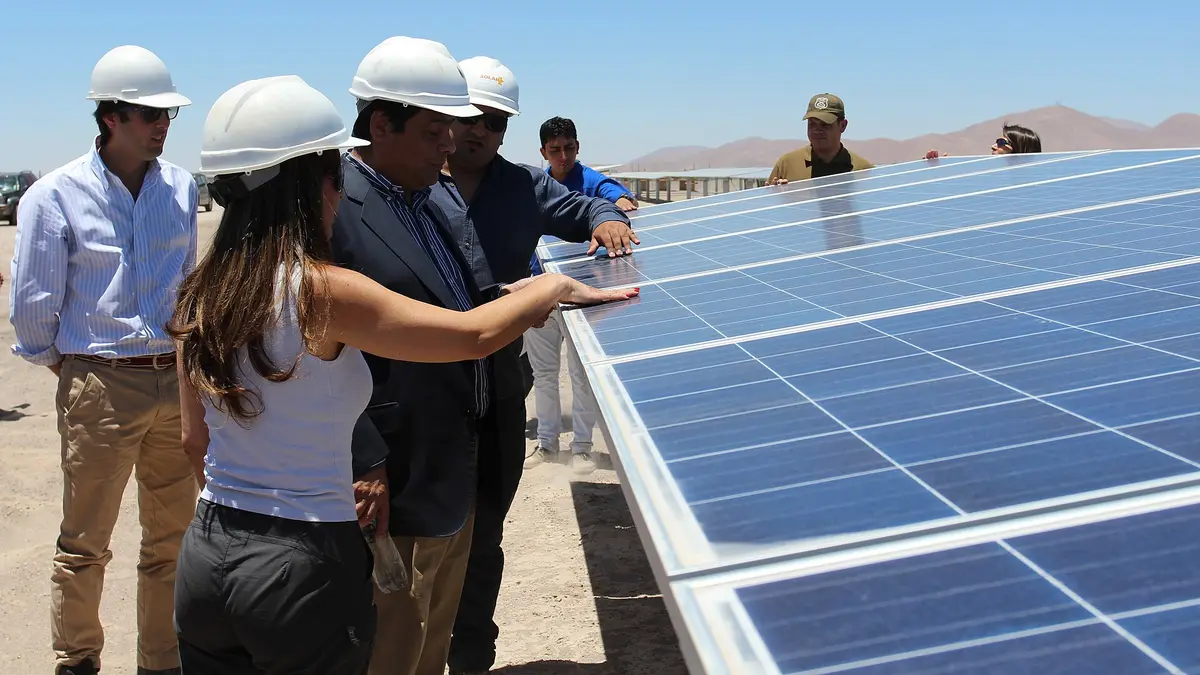
Why battery storage is growing in Chile
The reason is curtailment: during sunny hours, solar plants produce more than the system can use or transport, and that energy is lost. Between January and July 2026, solar and wind curtailment totaled 2,680 GWh, according to Acera data cited by El Mercurio. In the same period, batteries injected about 2,400 GWh, almost as much as was lost.
The pipeline is growing fast. As of July 2026 there were 4.7 GW of storage under construction in the country, according to pv magazine. The grid planner is also turning to batteries: the CNE included a 200 MW battery among its urgent transmission works, as we reported in the CNE approves urgent transmission works with a battery in Tineo.
Does your company develop or finance storage projects? Reach the energy industry at Energía Futura.
See advertising optionsWhat Grenergy's financing means for the power system
Each solar-plus-battery project that enters the system reduces the need for thermal plants at night and helps use energy that is lost today. Solar has become the largest source of capacity in the country, as we show in solar energy in Chile in figures.
Algarrobal's PPA starts in 2028, so the plant should be built before that date. The company did not report the construction schedule.
How non-recourse financing like Grenergy's works
In non-recourse *project finance*, each project is organized as its own company. The banks lend against that company's future cash flows: energy sales under the PPA, capacity payments and, for batteries, arbitrage between cheap and expensive hours. If the project underperforms, the banks cannot claim from the parent company beyond what was committed.
That is why Algarrobal's 12-year PPA is key: a long contract with an investment-grade buyer gives the banks predictable income. The scheme lets developers like Grenergy build more projects with less of their own capital, and explains why the company has more than US$2.4 billion financed this way in Chile.
Grenergy and the wave of solar-plus-battery projects in Chile
The financing comes at a time of high activity. Since August, the Environmental Assessment Service has approved 17 projects with 1,358.12 MW of solar and at least 15,370.65 MWh of storage, according to pv magazine. Most combine panels with batteries, the same model as Algarrobal.
Grenergy itself has another large-scale project under construction in the area, BESS Elena Phase I, with 430 MW and 3,010 MWh, which pv magazine identified in July as the largest storage project under construction in the country.
Frequently asked questions
How much financing did Grenergy secure in Chile?
US$457 million in senior non-recourse financing, including US$26 million in credit lines. The statement rounds it up to 460 million.
What is Algarrobal?
The fifth phase of Oasis de Atacama: 242 MW of solar and about 1.5 GWh of batteries in the Antofagasta Region, with a 12-year energy sales contract from 2028.
Which banks are involved?
BNP Paribas as coordinator and underwriter, plus BBVA, J.P. Morgan, MUFG, Santander and Scotiabank.
What is a PMGD?
A small distributed generation plant: a plant of up to 9 MW connected to the distribution grid, like the 21 in the Palmas cluster.