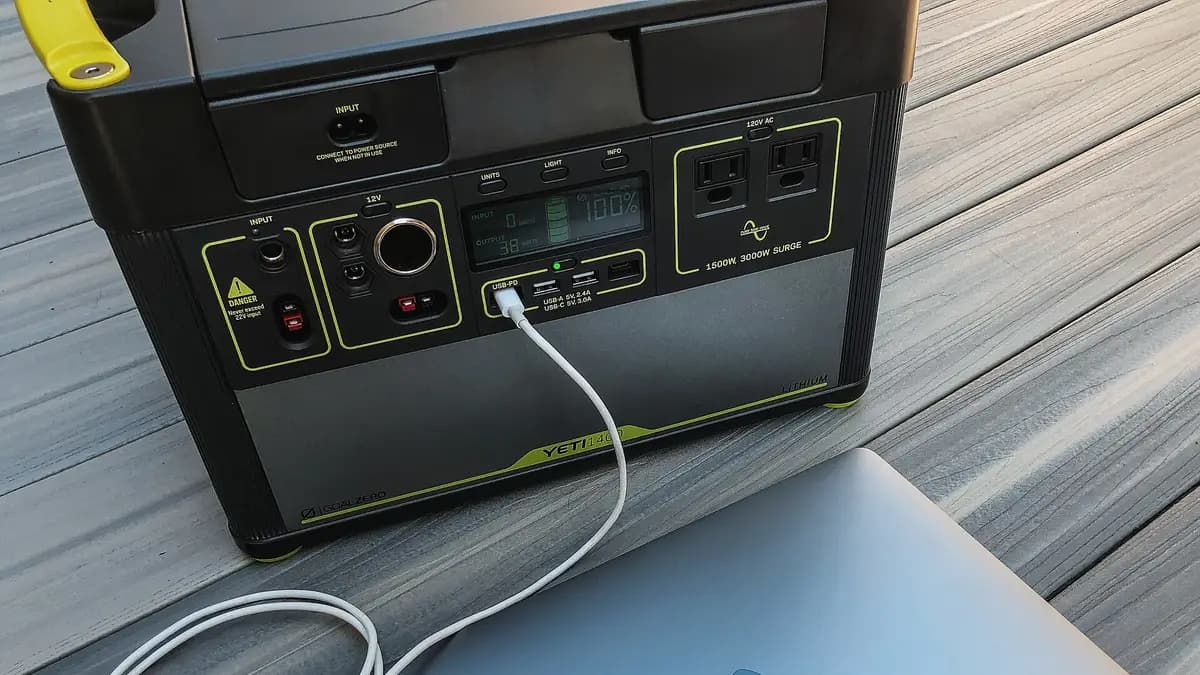
An emergency solar kit is a portable power station: a lithium battery with outlets, USB ports and a built-in inverter that can be recharged from the grid or with a foldable solar panel. It keeps the essentials running during a power outage: the router, phones, lighting and, for a few hours, even the refrigerator.
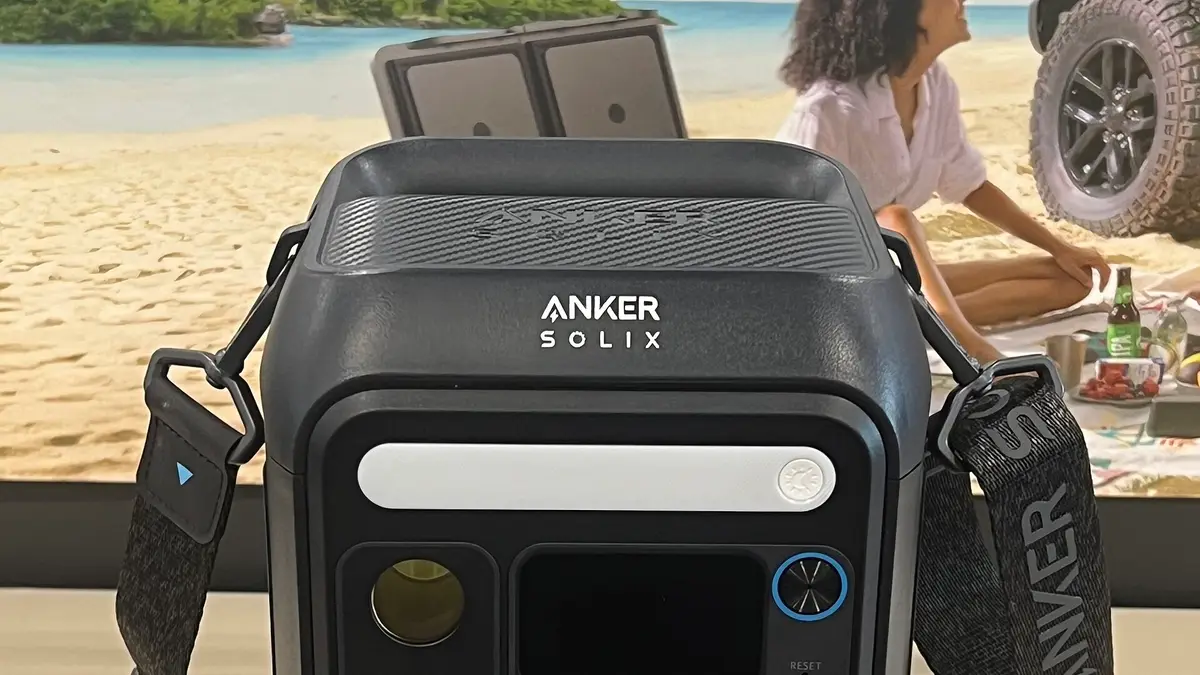
In Chile, a 500 to 900 Wh station costs between CLP 419,990 and CLP 639,200 at specialized stores, according to prices published in October 2026. After this year's outages, it is one of the simplest ways to have backup without installing anything in the home.
What an emergency solar kit is and what it includes
| Component | What it does |
|---|---|
| Power station (lithium battery) | Stores energy. Its capacity is measured in Wh |
| Built-in inverter | Delivers 220 V for standard outlets. Its power in W limits what you can plug in |
| USB and USB-C ports | Charge phones, laptops and LED lights |
| Foldable solar panel (optional) | Recharges the station with sunlight, without the grid |
Two numbers matter: capacity (Wh), which determines how long it lasts, and power (W), which determines which appliances you can plug in at the same time.
How much an emergency solar kit costs in Chile
| Model | Capacity | Store | Published price |
|---|---|---|---|
| Bluetti AC50P | 504 Wh (700 W) | Overland Riders | CLP 419,990 |
| EcoFlow River 2 Pro | 768 Wh | HDPRO | CLP 574,000 (reference: CLP 820,000) |
| Bluetti AC70P | 864 Wh | HDPRO | CLP 639,200 (reference: CLP 799,000) |
| Bluetti Premium 30 V2 | 320 Wh | Overland Riders | CLP 318,990 |
Discounted prices may be temporary offers: check the current price before buying. The foldable solar panel is usually sold separately.
How many hours a portable station lasts during an outage
The table estimates runtime using approximate consumption per appliance and assuming about 85% of the capacity is usable, because the inverter and the battery itself have losses. These are reference values: check the actual consumption on your devices' labels.
| Appliance (approx. consumption) | 504 Wh station | 768 Wh station | 864 Wh station |
|---|---|---|---|
| Wi-Fi router (10 W) | ~43 hours | ~65 hours | ~73 hours |
| LED bulb (9 W) | ~47 hours | ~72 hours | ~81 hours |
| Laptop (50 W) | ~8.5 hours | ~13 hours | ~14.7 hours |
| Phone charge (15 Wh per charge) | ~28 charges | ~43 charges | ~49 charges |
| Refrigerator (100 W average draw) | ~4.3 hours | ~6.5 hours | ~7.3 hours |
The refrigerator is the most demanding case: besides its average consumption, the compressor needs a higher power peak at start-up. Before plugging it in, make sure the inverter's power (W) can handle it. A closed refrigerator keeps cold for several hours, so you can power it in intervals.
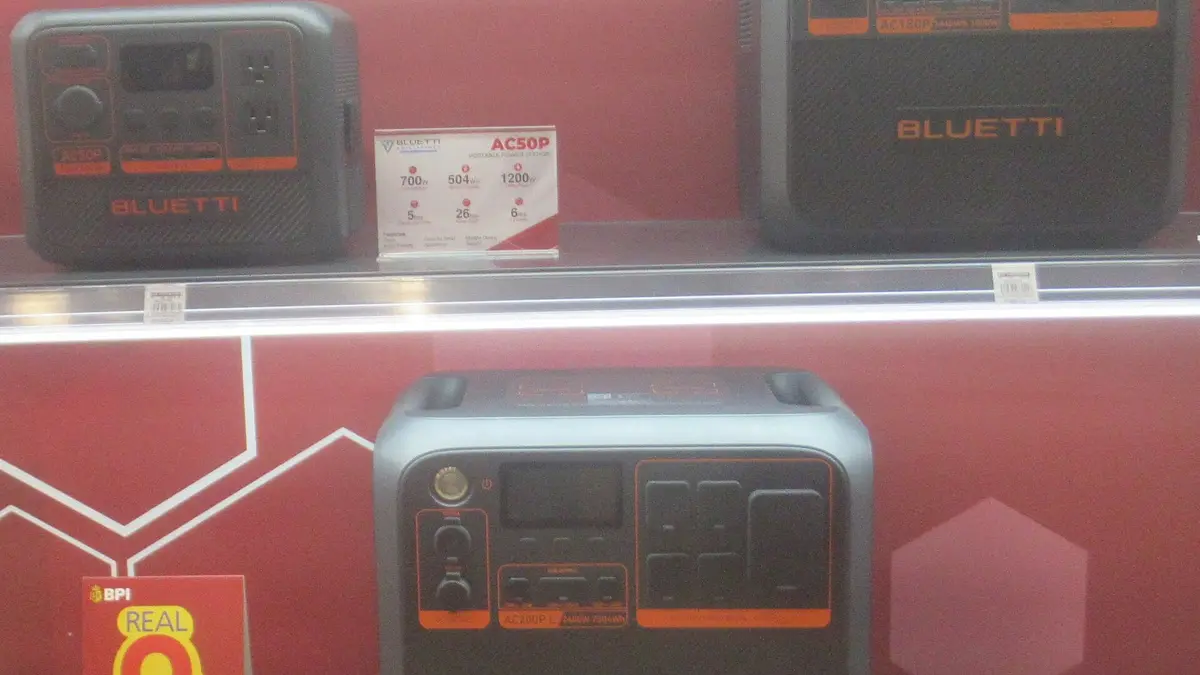
With or without a solar panel
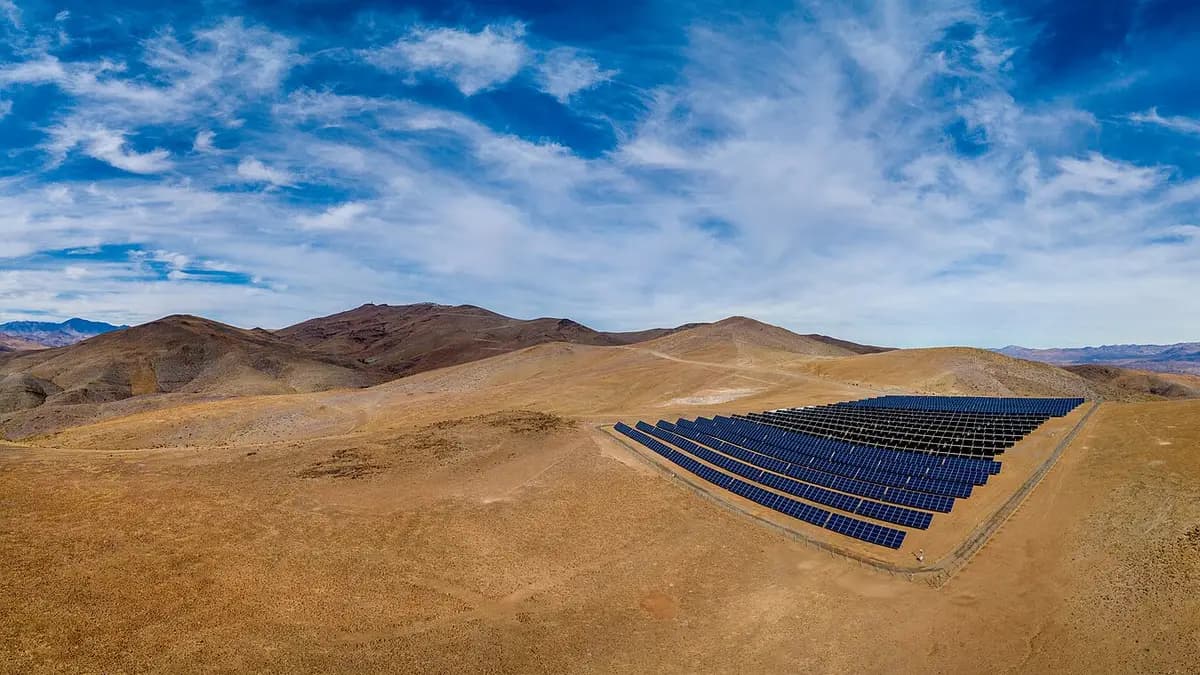
The station can be charged from an outlet when there is power, but during a long outage the solar panel is what lets you recharge it. Output depends on the panel's power and the available sun: on a clear summer day, a 200 W foldable panel can restore a significant share of a mid-size station; in winter or under clouds, much less. In central Chile, winter solar output is between 35% and 50% lower than in summer.
Portable station, generator or fixed solar kit
| Option | Advantages | Disadvantages |
|---|---|---|
| Portable station | Silent, no fumes, can be used indoors | Limited capacity |
| Fuel generator | Lots of power and runtime | Noise and fumes: never use it indoors because of the risk of carbon monoxide |
| Fixed solar kit with batteries | Backs up the whole home and saves money every day | Larger investment and installation |
If you want to back up the whole home and also save on your bill, the option is a fixed system: see what a home solar kit includes.
How to choose your emergency solar kit
- List the essentials: router, phones, lights and perhaps the refrigerator.
- Add up the Wh: multiply each appliance's power by the hours you want to use it.
- Check the inverter power: it must exceed the total of what you will plug in at once.
- Prefer LiFePO4 batteries: they handle more cycles and are more stable.
- Check solar charging: make sure the station accepts the power of the panel you will use.
- Keep it charged: check its charge every one or two months.
October's outages affected more than 60,000 customers; see how to file a claim and what compensation exists.
Do you sell power stations or portable solar kits? Reach readers looking for backup on Energía Futura.
See advertising optionsLiFePO4 or NMC lithium: which battery to choose
| LiFePO4 (lithium iron phosphate) | NMC (nickel manganese cobalt) | |
|---|---|---|
| Cycle life | Higher, typically thousands | Lower |
| Thermal stability | Higher | Lower |
| Weight per Wh | Somewhat heavier | Lighter |
| Best use | Home backup, frequent use | Highly portable devices |
For home backup, most current stations use LiFePO4, which handles more charge cycles and is more stable at high temperatures.
In what order to plug in appliances during an outage
- First, communication: router and phones, to receive alerts and stay connected.
- Then, lighting: low-consumption LED bulbs.
- Next, food: the refrigerator in intervals, if the outage drags on.
- Finally, the rest: laptop, TV or other devices.
- Avoid electric heaters and kettles: they draw so much that they drain the station in minutes.
How to care for your power station
- Store it somewhere cool and dry, away from direct sun.
- Do not leave it discharged for months: check its charge every one or two months.
- Use it now and then, for example on a trip, to make sure it works.
- Respect the inverter's maximum power so its protections do not trip.
Frequently asked questions
What is an emergency solar kit?
A portable power station with a lithium battery and inverter, recharged from the grid or a foldable solar panel, used as backup during power outages.
How much does an emergency solar kit cost in Chile?
Stations of 500 to 900 Wh cost between CLP 419,990 and CLP 639,200 at specialized stores, according to October 2026 prices.
How long can a portable station run a refrigerator?
An 864 Wh station can run a refrigerator with a 100 W average draw for about 7 hours, if the inverter can handle its start-up.
Can I use a gasoline generator indoors?
No. It produces carbon monoxide, a gas that can be deadly. Only use it outdoors.