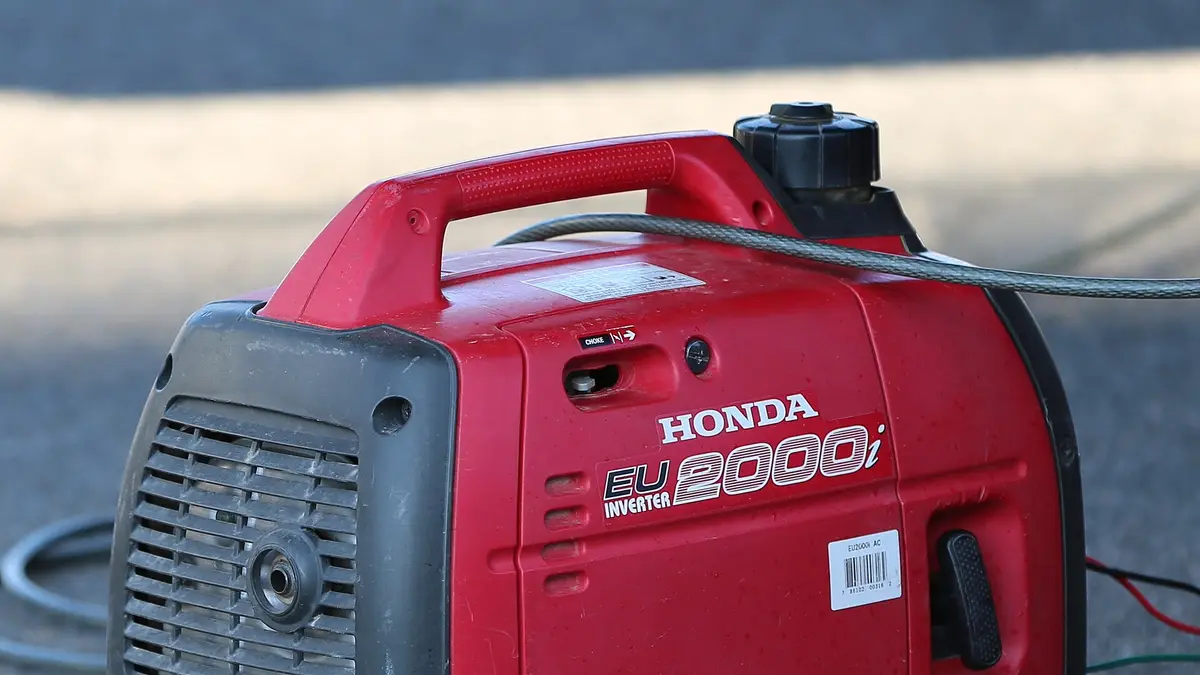
A portable home generator of about 1,800 W burns close to 1 litre of petrol per hour at full load, and about 0.44 litres per hour at a quarter load. With 93-octane petrol at an average of CLP 1,498 per litre in the Santiago Metropolitan Region (18 October 2026, CNE data compiled by preciocombustible.cl), running it costs between CLP 665 and 1,630 per hour.
With power cuts during every cold front, many households are considering a generator. Here is how much fuel it uses, what each kWh it produces costs, what size to choose for what you want to plug in, and how to use it without putting your family or grid workers at risk.
How much fuel a home generator uses
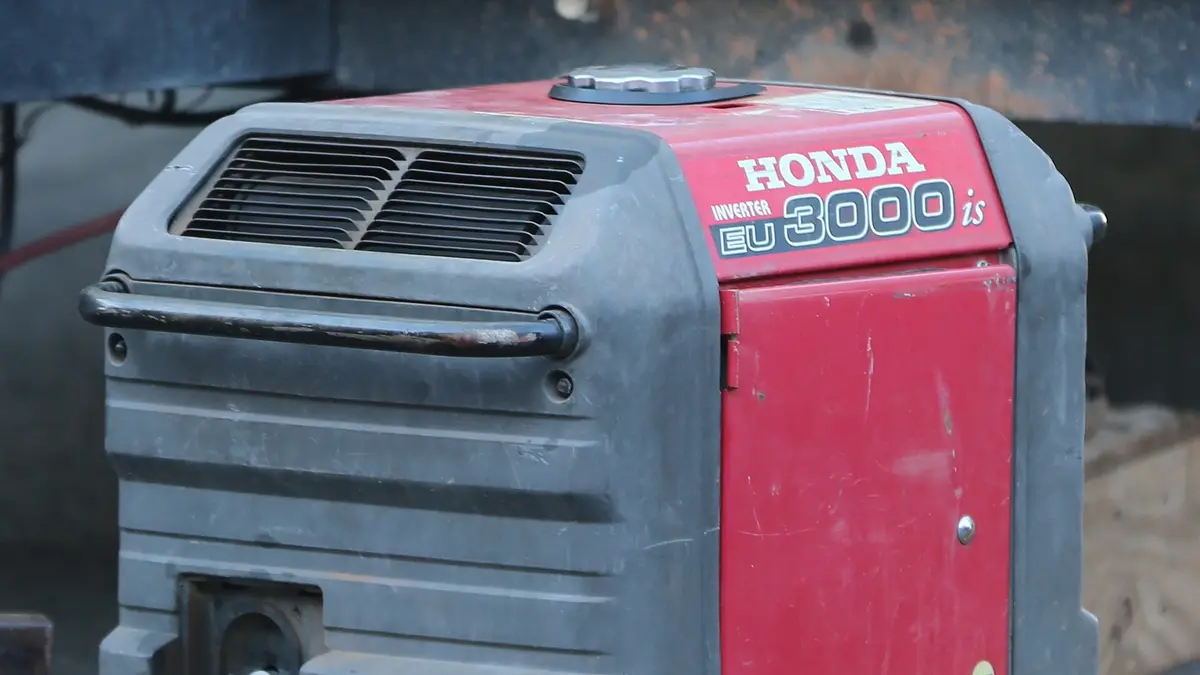
Petrol consumption depends on the generator's size and how much load you put on it. One example with published specs is the Honda EU22i, an inverter generator rated at 1,800 W with a 2,200 W maximum and a 3.6-litre tank. According to Honda and its dealers, it runs about 8.1 hours at a quarter load and about 3.3 hours at rated load, as the spec sheet from Honda South Africa shows.
| 1,800 W inverter generator | At 1/4 load (~450 W) | At full load (1,800 W) |
|---|---|---|
| Run time on 3.6 litres | ~8.1 hours | ~3.3 hours |
| Petrol consumption | ~0.44 L/h | ~1.09 L/h |
| Cost per hour (petrol at CLP 1,498) | ~CLP 665 | ~CLP 1,630 |
| Energy produced per hour | ~0.45 kWh | ~1.8 kWh |
| Cost per kWh produced | ~CLP 1,480 | ~CLP 905 |
The consumption and cost figures are Energía Futura calculations based on the spec sheet and the average petrol price. Real figures vary with temperature, altitude, engine condition and type of load.
An example: for an eight-hour outage with the 1,800 W generator at a quarter load (fridge, lights and router), consumption would be about 3.6 litres, one full tank, costing about CLP 5,390 in petrol. At full load, the same tank lasts just over three hours.
How much electricity from a home generator costs
The key comparison is cost per kWh. Grid electricity costs about CLP 255 per kWh in municipalities such as Rancagua or Concepción (CGE's October 2026 tariff). A generator's costs between CLP 905 and 1,480 per kWh: 3.5 to 6 times more. That is why a generator is a backup for outages, not a regular power source.
A counter-intuitive detail: a generator is more expensive per kWh at low load, because the engine burns a fixed amount of fuel just to keep turning. If you only use it to charge a phone, each kWh is extremely expensive. It pays to group loads: run the fridge and charge batteries at the same time, in blocks of one or two hours.
| Electricity source | Approximate cost per kWh |
|---|---|
| Grid (CGE, base tier, October 2026) | ~CLP 255 |
| Inverter generator at full load | ~CLP 905 |
| Inverter generator at 1/4 load | ~CLP 1,480 |
What size of home generator to choose
Size is chosen by adding up what you want to run at the same time, with a margin for motors starting up. A fridge, for example, uses little power while running but needs several times that for an instant when the compressor starts. These are typical reference ratings:
| Appliance | Approximate power | Note |
|---|---|---|
| LED bulb | 5 to 10 W | Several fit easily |
| Wi-fi router | 10 to 20 W | Key to staying online |
| Phone charger | 5 to 20 W | — |
| LED TV | 50 to 150 W | Depends on size |
| Fridge | 100 to 200 W running | Start-up several times higher |
| Microwave | ~1,270 W input | Short use |
| Electric kettle | 1,500 to 2,200 W | Can exceed a small generator |
| Electric heater | 1,000 to 2,000 W | Uses almost the whole generator |
- Up to 1,000 W: lights, router, phones and TV. Enough for a flat during a short outage.
- 1,800 to 2,200 W: all of the above plus the fridge, or the microwave for short periods (not everything at once).
- 3,000 W or more: adds a kettle or a water pump, at the cost of more fuel and noise.
- Over 5,000 W: for homes with a well pump, electric heating or work equipment; usually fixed units with professional installation.
The power use of each appliance is detailed in our consumption guides, such as how much electricity a fridge uses or how much a microwave uses. The safest option is to check each appliance's rating plate or label.
Inverter or conventional generator
An inverter generator converts power into a stable current suitable for computers, TVs and chargers, and adjusts engine speed to the load, saving fuel and reducing noise. A conventional generator always runs at the same speed: it is cheaper per watt, but louder, burns more at low load and its current is less stable for sensitive electronics.
How to connect it safely
Safety comes first, and there are two serious risks:
- Carbon monoxide: the engine emits an odourless toxic gas. The generator must never run inside the house, in the garage, in a closed shed or near open windows.
- Backfeeding the grid: never connect the generator to a household socket with a double-ended plug. Electricity can flow back into the grid and electrocute workers repairing the lines, as well as damage your wiring.
- Correct use: plug appliances directly into the generator with extension leads rated for the load, or have a transfer switch installed by an SEC-licensed electrician.
- Fuel: refuel with the engine off and cool, and store petrol in approved containers outside the house.
For a fixed connection to the home's wiring, the SEC regulates self-generation systems in its technical standard RIC No. 09, and installation must be done by a licensed installer. A transfer switch disconnects the house from the grid while the generator runs.
Alternatives: portable power station or battery
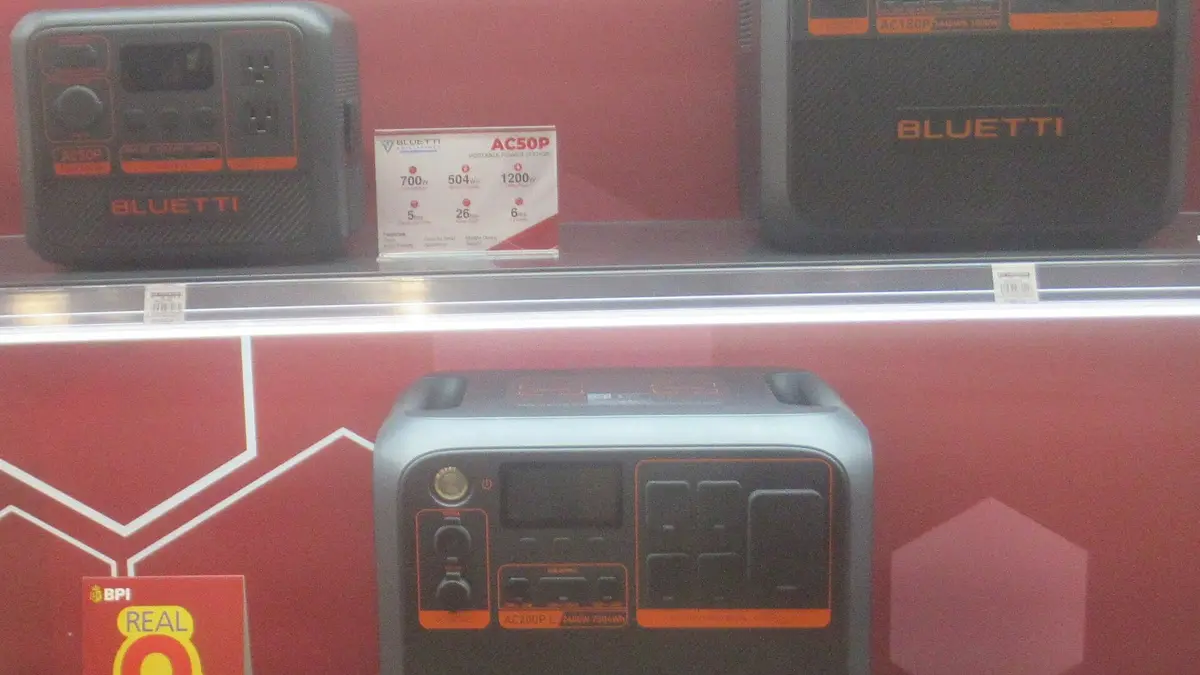
A generator is not the only backup option. Portable power stations with lithium batteries are silent, emit no fumes and can be used indoors, but they hold less energy: a 1 kWh unit keeps a router and lights going for many hours, but not a fridge for days. We compare them in the emergency solar kit for power outages.
| Backup option | Advantage | Disadvantage |
|---|---|---|
| Petrol generator | Plenty of energy while fuel lasts | Noise, fumes, outdoor use only |
| Portable power station | Silent, no fumes, indoor use | Limited energy; recharged from grid or panel |
| Fixed home battery | Automatic and wired to the house | Higher investment and installation |
For short outages and basic loads (lights, internet, phones), a portable station is usually enough. For long outages with a fridge and water pump, the generator is still the most common choice. For homes with solar panels, a fixed battery can cover both cases, at a higher upfront cost.
How to use less petrol with a generator
- Choose the right size: a large generator running at low load costs more per kWh.
- Use the economy mode (eco-throttle) on inverters when the load is low.
- Group loads in blocks: cool the fridge, charge batteries and switch off.
- Maintain the engine: oil, air filter and spark plug in good condition; drain or stabilise the petrol if you will not use it for months.
A closed fridge stays cold for several hours. That is why, in a long outage, many households run the generator in blocks to cool the fridge and charge batteries rather than leaving it on all day, which cuts both fuel use and noise.
Does your company sell generators, batteries or backup power? Reach Energía Futura's readers.
See advertising optionsFrequently asked questions
How much petrol does a home generator use per hour?
A 1,800 W inverter uses about 0.44 litres per hour at a quarter load and close to 1.1 litres at full load.
How much does it cost to run a generator per hour?
Between CLP 665 and 1,630 per hour with 93-octane petrol at CLP 1,498 per litre, depending on load.
What generator do I need for a fridge?
At least 1,800 to 2,000 W, to handle the compressor start-up and leave room for lights and a router.
Can I plug the generator into a household socket?
No. It is dangerous for you and for grid workers. Plug appliances directly into the generator or have a transfer switch installed by a licensed electrician.
Can a generator be used indoors?
Never. The carbon monoxide from the engine is toxic and odourless. It must run outdoors and away from windows.