Chile's wind farms will have, for the first time, a method of their own to measure noise. Supreme Decree No. 14 of 2024 from the Ministry of the Environment, which replaces the noise standard in force since 2011, requires turbine emissions to be measured in 10-minute readings and related to wind speed at hub height. The rule will start to apply on 27 August 2027 to projects entering the Environmental Impact Assessment System (SEIA).
The change is written into the decree published in the Official Gazette on 27 February 2026, but one piece is still missing before it can be applied: the measurement protocols that the Superintendency of the Environment (SMA) must issue. As Reporte Minero reported on 23 November, the ministry is still reviewing the 208 comments received on the technical proposal.
View the data as a table
| Length of each measurement | 10 min |
| Minimum noise-wind correlation | R² 0.6 |
| Comments on the protocols | 208 |
| Lowest rural night-time limit | 40 dBA |
What changes in the noise standard for wind farms
Until now, a wind farm has been measured like a factory or a nightclub: with the equivalent sound pressure level over a few minutes and with corrections for background noise. The problem is that a turbine's sound changes with the wind, and the wind itself makes noise. In the countryside at night, separating the whoosh of the blades from gusts and trees is not easy.
Article 17 of the new decree tackles this with a specific procedure. Outdoor measurements use 10-minute readings of the 90th percentile level (L90), the level exceeded 90% of the time, which filters out short sounds. Those values are crossed with wind speed at hub height to build a regression curve, which must have an R² of at least 0.6. The farm's emission level is the one given by that curve.
If the correlation falls short of 0.6 and the levels are below the limit, the farm is deemed compliant. If it falls short and there are doubts, noise predictions with models may be used, as set out in the protocols. Unlike other sources, a wind farm's outdoor level is not corrected for background noise.
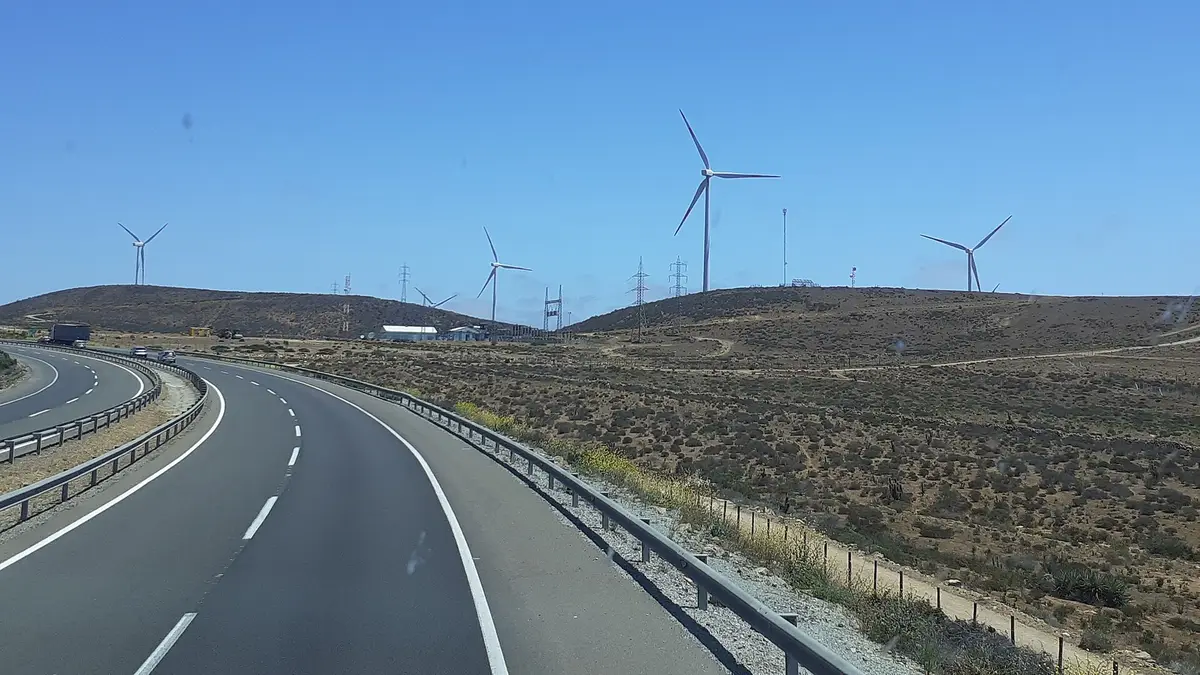
The noise limits they will have to meet
The limits are not specific to wind power: they depend on where the affected person, the receptor, lives. In cities, the decree sets four zones based on land use. In the most protected, Zone I, the maximum is 55 dBA by day and 45 dBA at night. In Zone IV, with productive activities, it is 70 dBA at both times.
| Zona I | 55 | 45 |
| Zona II | 60 | 45 |
| Zona III | 65 | 50 |
| Zona IV | 70 | 70 |
| Rural | 40 to 65 | 40 to 50 |
Most wind farms are in the countryside, and that is where the decree changes most. The rural limit depends on the background noise measured at the nearest home: where it is 32 dBA or less, the maximum is 40 dBA day and night; where background noise exceeds 38 dBA, the night limit rises to 50 dBA. The standard also lengthens the time needed to measure that background noise to a minimum of 15 minutes and a maximum of 30.
| Rural background noise | Day limit (7:00-20:59) | Night limit (21:00-6:59) |
|---|---|---|
| ≤ 32 dBA | 40 dBA | 40 dBA |
| 33 to 37 dBA | 45 dBA | 45 dBA |
| 38 to 42 dBA | 50 dBA | 50 dBA |
| 43 to 47 dBA | 55 dBA | 50 dBA |
| 48 to 52 dBA | 60 dBA | 50 dBA |
| ≥ 53 dBA | 65 dBA | 50 dBA |
Source: Supreme Decree No. 14 of 2024, tables 6 and 7. For projects assessed in the SEIA, the rural background noise is the one set in their assessment or environmental approval.
The SMA protocols, the missing piece
The decree gave the SMA six months from publication to issue the protocols, that is, until 27 August 2026. There must be at least three: one for general fixed sources, one for wind farms, with the criteria to process the data and build the regression curve, and a third for transmission infrastructure. Before that, the Ministry of the Environment had to draft a technical proposal and put it out for public comment.
That consultation closed on 27 May with 208 comments from 26 participants, including individuals, companies, industry groups and consultancies, according to Reporte Minero. The ministry is still processing them before sending the proposal to the SMA, so the August deadline has passed without protocols. Since the standard only applies from 2027 there is still time, but developers are designing projects today that will be measured under those rules.
- 2011DS 38: current standardNo specific method for wind turbines.
- 1 Apr 2024DS 14 is signed
- 27 Feb 2026Published in the Official Gazette
- 27 May 2026Protocol consultation closes208 comments from 26 participants.
- 27 Aug 2026SMA deadline for the protocolsSix months from publication; still under review.
- 27 Aug 2027Applies to new SEIA projects
- 27 Aug 2028Applies to all; DS 38 repealed
There are two start dates. For projects that entered the SEIA after publication, the standard applies 18 months later, on 27 August 2027. For all other sources, including farms already operating, it applies after 30 months, on 27 August 2028. On that day DS 38 of 2011 is repealed.
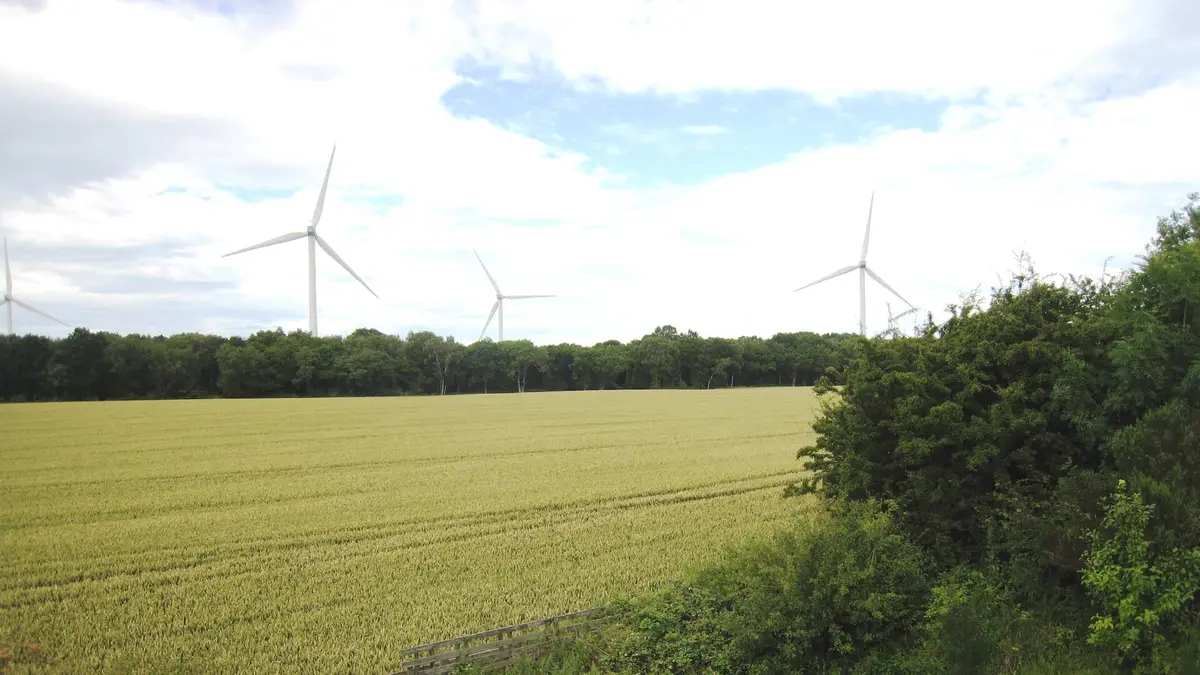
What the noise standard means for wind farms in the pipeline
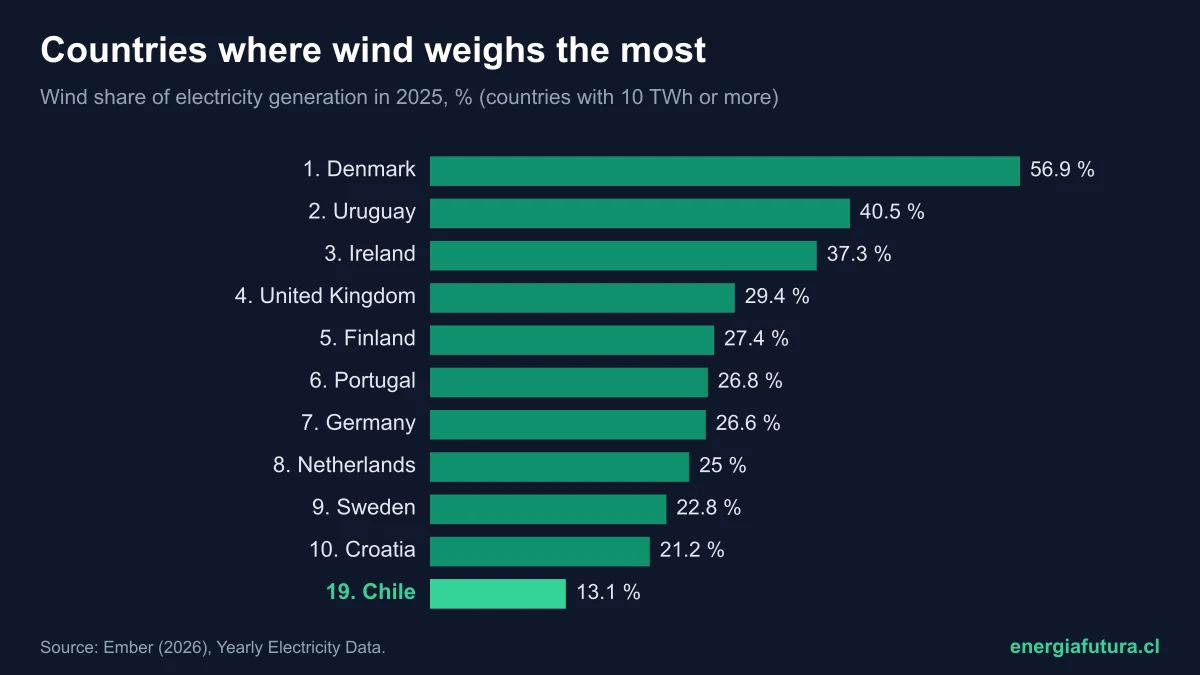
Wind power adds up to about 6,300 MW in Chile, based on the shares in the CNE's September report, and several more gigawatts are under assessment. The Horizonte farm in Taltal has 816 MW, one in eight wind MW in the country, as we reported on its first year in operation. In central and southern Chile, by contrast, farms tend to sit closer to rural homes, where background noise is low.
In Los Lagos, for example, four farms totalling 1,202 MW are under environmental assessment, as we detailed in our story on the region's wind projects. Projects that entered the SEIA after 27 February 2026 will have to meet the new standard from August 2027, and those already running, from August 2028.
For developers, a more precise method brings clarity: they will be able to work out at the design stage how far to place each turbine from homes. In exchange, measuring will cost more, because it requires logging noise and wind at the same time over different periods. A farm that does not comply may have to curtail some turbines at night or move them. Design changes during assessment are common: Enel's Cerro Los Loros in Ovalle was approved with 64 MW.
The specialists quoted by Reporte Minero point to two limits of the method. One is wind direction, which changes how sound travels even at the same speed. The other is perception: blade noise fluctuates, and that can annoy people even when it stays under the legal limit. In other words, meeting the standard does not guarantee there will be no complaints.
Does your company carry out acoustic, environmental or wind studies for energy projects? Reach Energía Futura's readers.
See advertising formatsFrequently asked questions
When does Chile's new wind farm noise standard apply?
From 27 August 2027 for projects entering the SEIA after the decree was published, and from 27 August 2028 for all other sources.
What is L90?
It is the sound level exceeded 90% of the time during a measurement. It leaves out short, loud noises and shows the source's steady sound.
What is the night-time noise limit in the countryside?
It ranges from 40 to 50 dBA, depending on the background noise measured at the receptor. In the quietest places, with background noise of 32 dBA or less, it is 40 dBA.
Who enforces wind farm noise rules?
If the farm has an environmental approval, enforcement lies exclusively with the SMA, which must also issue the measurement protocols.