Chile has 4,757,462 homes suitable for solar panels, but only 32,853 have them: 0.69%. That is the headline figure of the report State of distributed generation for residential self-consumption in Chile 2026, published by the think tank Uno Punto Cinco using records from the Superintendency of Electricity and Fuels (SEC) to December 2025 and the 2024 Census. Those rooftops generate 0.89% of the electricity used by the country's households.
The figure contrasts with the resource: 62% of Chilean homes meet the conditions to install panels, and in the north each kW installed yields more than 2,100 kWh a year. That is what the Uno Punto Cinco report highlights, as reported on Monday by pv magazine.
View the data as a table
| Suitable homes with panels | 0.69% |
| Share of residential use they cover | 0.89% |
| Solar capacity on homes | 105.5 MW |
| Homes in the country suitable for panels | 62% |
How many homes have rooftop solar in Chile
The report counts a home as suitable if it is a house with a roof of solid materials (zinc, tiles, slab or fibre cement) and solid walls. Flats, houses with tar-paper or makeshift roofs and dwellings without a solid roof are excluded. On that definition, the share of suitable homes ranges from 48% in Tarapacá to 74% in Magallanes; in the municipality of Santiago, full of apartment blocks, it is just 7%.
Solar capacity on homes totals 105.5 MW, only 23.7% of the 445.6 MW of distributed self-consumption generation registered by 2025 under net billing, the scheme that allows surplus power to be fed into the grid. The rest is on farms, shops, industry and schools. Each residential system averages 3.2 kW, six to eight panels; in the central zone, 3.9 kW.
View the data as a table
| Net billing (MW) | |
|---|---|
| 2015 | 1 |
| 2016 | 5 |
| 2017 | 12 |
| 2018 | 21 |
| 2019 | 42 |
| 2020 | 74 |
| 2021 | 108 |
| 2022 | 162 |
| 2023 | 222 |
| 2024 | 310 |
| 2025 | 446 |
The growth is recent. Until 2020 there were fewer than 75 MW of self-consumption in the whole country; in 2025 alone 135 MW were added, along with 10,818 installations, almost twice as many as in 2024. Homes accounted for 9,815 of those new installations. With partial 2026 data, cumulative capacity was already above 527 MW.
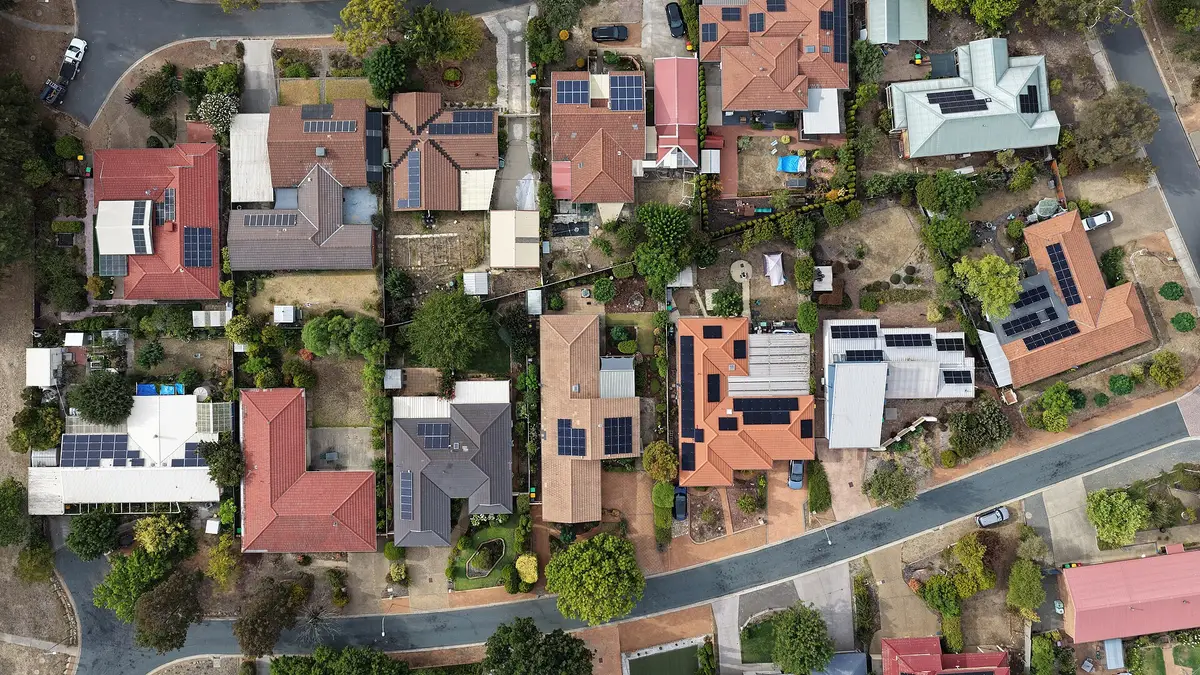
The regions and municipalities with the most rooftop solar
By region, the highest rate is in Atacama: 3.0% of its suitable homes have panels, with 2,402 installations. It is followed by Antofagasta (1.3%) and Ñuble (0.86%). At the other end are Tarapacá (0.13%) and Magallanes (0.16%). The Santiago Metropolitan Region has the largest number, 11,687 installations, but its rate is 0.75%, close to the national average.
View the data as a table
| Atacama | 3 · 2,402 installations |
| Antofagasta | 1 · 1,862 installations |
| Ñuble | 1 · 1,471 installations |
| Maule | 1 · 2,771 installations |
| Valparaíso | 1 · 3,748 installations |
| O'Higgins | 1 · 2,196 installations |
| Metropolitana | 1 · 11,687 installations |
| Biobío | 1 · 2,552 installations |
| Los Ríos | 1 · 706 installations |
| La Araucanía | 0 · 1,465 installations |
| Aysén | 0 · 123 installations |
| Arica y Parinacota | 0 · 165 installations |
| Los Lagos | 0 · 932 installations |
| Coquimbo | 0 · 591 installations |
| Magallanes | 0 · 89 installations |
| Tarapacá | 0 · 93 installations |
Among municipalities, Colina leads with 1,802 solar rooftops, 4.04% of its suitable homes, and its panels already cover 10.77% of its households' electricity use. It is followed by Copiapó (1,667), Puente Alto (1,506) and Las Condes (1,176). The highest rates are in small municipalities of Antofagasta that received the regional government's Casa Solar Social programme: Sierra Gorda (21.8%), Tocopilla (13.8%) and Taltal (10.8%).
The starkest contrast is in the big northern cities, with the best sun in the country. In the municipality of Antofagasta only 0.27% of suitable homes have panels (232 of 84,883), in Coquimbo 0.15% and in Arica 0.32%. In Maipú, with 139,302 suitable homes, the rate is 0.46%, against 4.04% in Colina, which has similar potential. In addition, 33 of the 345 municipalities have no residential system registered at all, and 24 municipalities account for half of all installations.
| Municipality | Region | Suitable homes | Solar rooftops | Installation rate |
|---|---|---|---|---|
| Colina | Santiago Metropolitan | 44,655 | 1,802 | 4.04% |
| Copiapó | Atacama | 41,245 | 1,667 | 4.04% |
| Las Condes | Santiago Metropolitan | 31,960 | 1,176 | 3.68% |
| Maipú | Santiago Metropolitan | 139,302 | 639 | 0.46% |
| Antofagasta | Antofagasta | 84,883 | 232 | 0.27% |
| Coquimbo | Coquimbo | 74,250 | 108 | 0.15% |
Source: Uno Punto Cinco, municipal database of the 2026 report, with SEC records to December 2025. The installation rate is the number of residential installations divided by suitable homes.
| North | 580,442 | 5,113 | 9,348 | 0.88% |
| Centre | 2,338,681 | 17,631 | 68,294 | 0.75% |
| South-Central | 994,042 | 6,794 | 19,160 | 0.68% |
| South | 844,297 | 3,315 | 8,714 | 0.39% |
Why there is so little rooftop solar
The study concludes that sunshine is not the main constraint. In the central zone each kW installed yields between 1,700 and 1,800 kWh a year; in Los Lagos and Aysén, about 1,100. What matters more is how homes are built, who owns them and the upfront cost. Only 61% of households own their home, down from 72.5% in 2002, and tenants rarely invest in someone else's roof.
The upfront cost also weighs. A 450 to 545 W panel costs about CLP 90,000 and a home using 180 kWh a month in Santiago needs about three, according to our guide to the price of a solar panel in Chile; on top of that come the inverter, the mounting, the installation and the TE4 filing with the SEC.
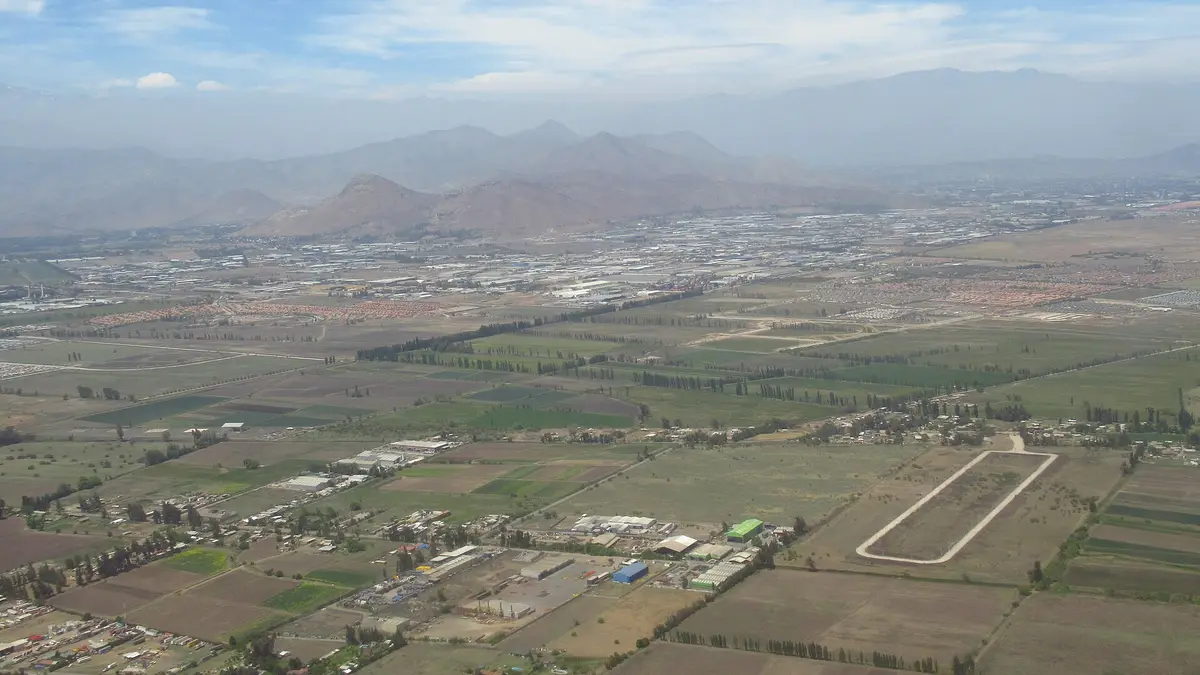
What the report proposes for rooftop solar
Uno Punto Cinco built a Municipal Potential Index that combines the solar resource, the share of suitable homes and ownership. With it, it identified 37 municipalities with high or very high potential and low or no uptake, totalling 577,868 suitable homes. It proposes steering existing subsidies towards them, starting with a pilot in the 17 largest, which hold 82% of those homes, and creating soft loans, leasing and payments linked to the power bill.
The report shows that subsidies work where they arrive. In Tocopilla, Mejillones, Taltal and Sierra Gorda, municipalities in the Casa Solar Social programme, there are 1,510 installations with 1,669 kW; the programme planned 1 kWp systems for 1,500 households. Nationally, the Ministry of Energy's Casa Solar programme co-finances kits through bulk purchasing; the Chamber of Deputies asked to expand it, as we reported in our story on the Casa Solar programme.
For anyone considering installing on their own, the simplest option is still a grid-connected system with net billing. A 3,000 W kit costs between CLP 990,000 and 2,735,000 depending on the batteries, as we detailed in our guide to solar kits for homes. The report is part of the Chile País Solar campaign by Uno Punto Cinco and the University of Chile's Energy Centre, with the Chilean Solar Energy Association (Acesol).
Does your company install solar panels or finance self-consumption systems? Reach Energía Futura's readers.
See advertising formatsFrequently asked questions
How many homes have solar panels in Chile?
32,853 homes had a solar installation registered with the SEC in December 2025, 0.69% of the 4.76 million suitable homes.
Which municipality has the most rooftop solar?
Colina, with 1,802 homes with panels. By rate, among the large municipalities, Colina and Copiapó stand out, both at 4.04%.
What counts as a home suitable for solar panels?
For the report, a house with a zinc, tile, slab or fibre-cement roof and solid walls. Flats are not counted, although they can join community projects.
How much electricity do home rooftops supply?
They cover 0.89% of the country's residential electricity use; in Colina, 10.77%.