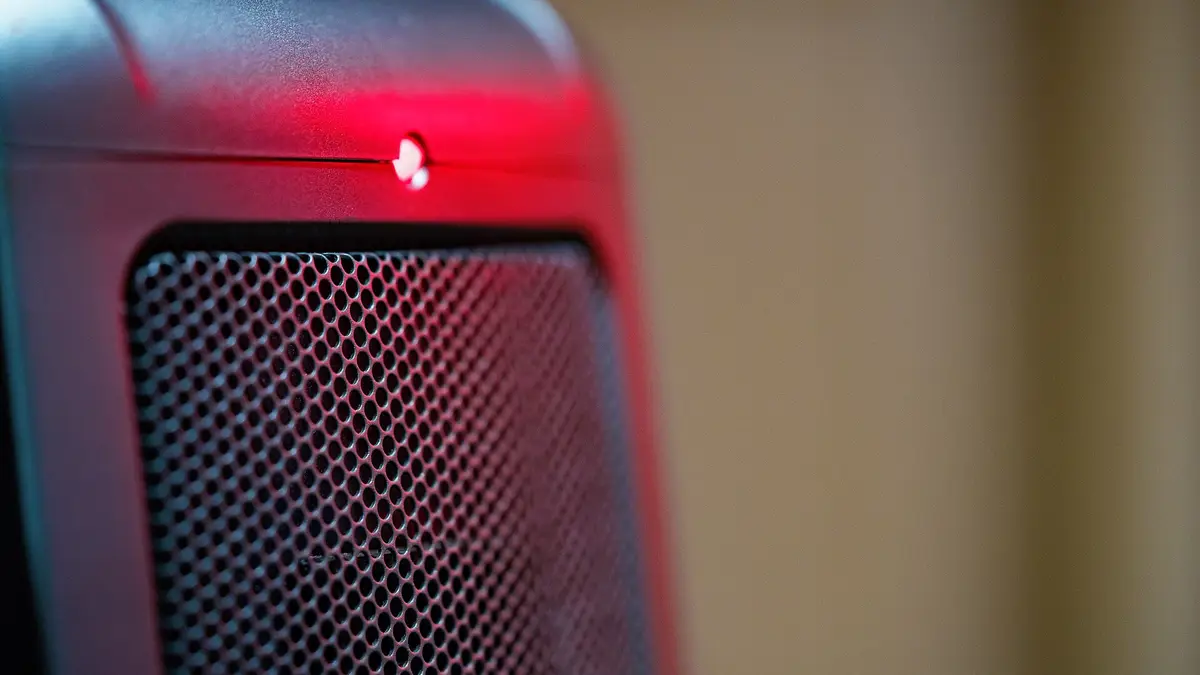
An electric heater costs according to its power: a 1,500-watt heater uses 1.5 kWh per hour, about CLP 383 an hour with the residential kWh at CLP 255.27 (CGE's price in municipalities such as Rancagua or Concepción since October 2026). Used four hours a day for a month, it adds about CLP 46,000 to the electricity bill.
The search for a "low-consumption electric heater" has a catch: all resistance heaters convert electricity into heat with the same efficiency. One that uses less, heats less. The only way to get more heat for the same cost is a different technology: the heat pump. Here are the figures.
How much a low-consumption electric heater costs per hour
The rule is simple: watts ÷ 1,000 = kWh per hour, and kWh × the kWh price = pesos per hour. At CLP 255.27 per kWh:
| Heater power | Consumption per hour | Cost per hour | Cost per month (4 h a day) |
|---|---|---|---|
| 400 W | 0.4 kWh | ~CLP 102 | ~CLP 12,250 |
| 800 W | 0.8 kWh | ~CLP 204 | ~CLP 24,500 |
| 1,000 W | 1 kWh | ~CLP 255 | ~CLP 30,630 |
| 1,500 W | 1.5 kWh | ~CLP 383 | ~CLP 45,950 |
| 2,000 W | 2 kWh | ~CLP 511 | ~CLP 61,260 |
| 2,500 W | 2.5 kWh | ~CLP 638 | ~CLP 76,580 |
In municipalities with a more expensive kWh, such as those at CLP 285.56 in CGE's schedule, the amounts rise by about 12%. Check your area's price in the price per kWh by city and utility. And note: if the heater pushes your consumption above 350 kWh a month, the public service charge moves up a bracket.
Why there is no such thing as a low-consumption electric heater
Halogen, quartz, ceramic and oil-filled heaters, fan heaters and convector panels all work the same way inside: they pass current through a resistance, which heats up. Almost 100% of the electricity becomes heat, regardless of the brand. What changes between them is how they deliver that heat:
| Type of electric heater | How it heats | Usual power | Best use |
|---|---|---|---|
| Halogen or quartz | Direct radiation toward what is in front of it | 400 to 1,200 W | Quick spot heating, for short periods |
| Ceramic (ceramic fan heater) | Hot air pushed by a fan | 1,000 to 2,000 W | Small rooms, instant heat |
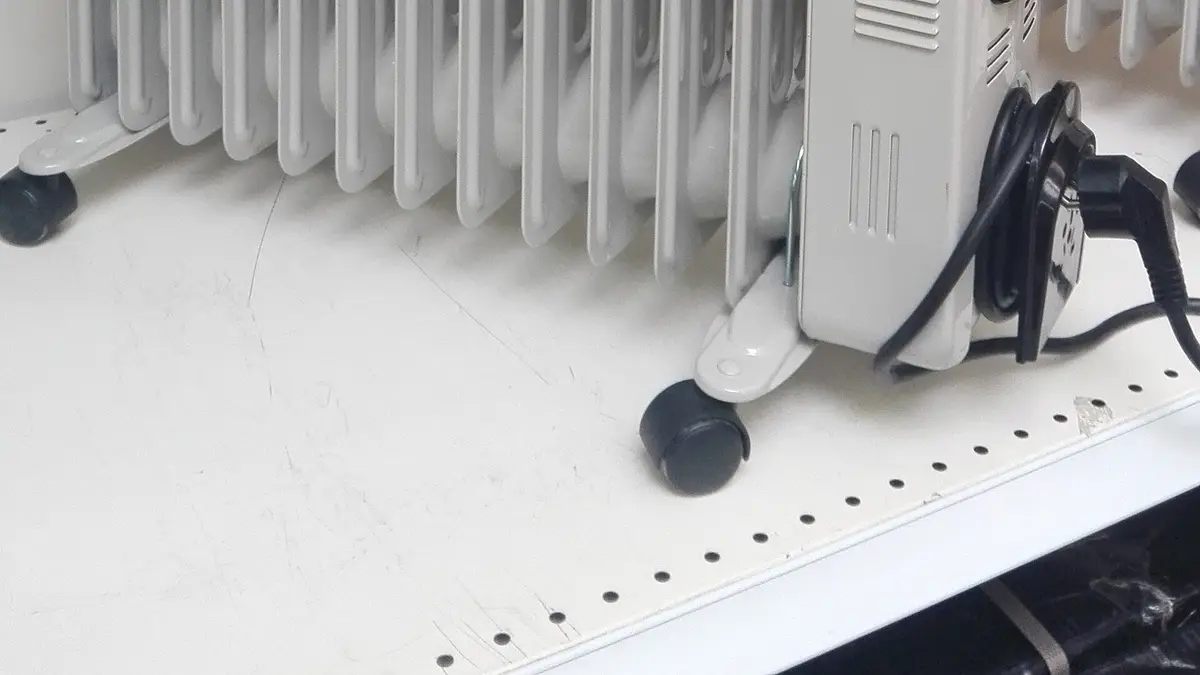
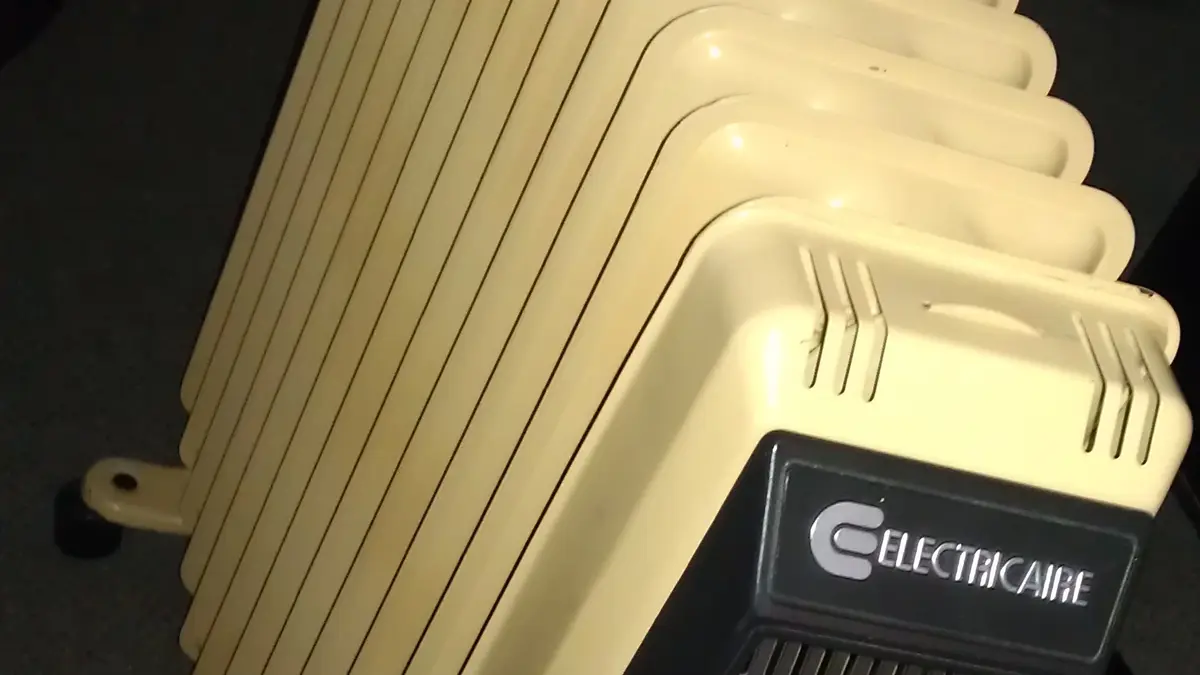
| Oil-filled radiator | Heats oil that radiates heat gradually | 1,000 to 2,500 W | Long use, keeps heat after switching off |
| Convector panel | Moves air by natural convection | 500 to 2,000 W | Even heat, often with a thermostat |
| Infrared panel | Radiation toward people and surfaces | 300 to 1,200 W | Direct heat with little air movement |
An 800 W heater costs half as much as a 1,600 W one, but delivers half the heat. What does save energy in a resistance heater is the thermostat: it switches the unit off when the room reaches the desired temperature, instead of heating non-stop.
The electric heating that really is low-consumption: the heat pump
An inverter air conditioner in heating mode is a heat pump: it does not generate heat with a resistance, but moves it from the outside air into the room. For each kWh of electricity, it delivers several times that energy as heat.
A study by the Fundación Energía para Todos, published in May 2026 and cited by BioBioChile, compared the hourly cost of heating a 40 to 50 m² living room with units of similar capacity. The 12,000 BTU air conditioner was four to five times cheaper per hour than a radiant electric heater:
| Heating system (40 to 50 m² living room) | Santiago | Concepción | Valparaíso |
|---|---|---|---|
| 12,000 BTU inverter air conditioner | CLP 220/h | CLP 235/h | CLP 276/h |
| Pellet (radiant convection) | CLP 243/h | CLP 243/h | CLP 243/h |
| Kerosene (wick heater) | CLP 265/h | CLP 258/h | CLP 261/h |
| Kerosene (laser heater) | CLP 281/h | CLP 273/h | CLP 277/h |
| 15 kg LPG | CLP 521/h | CLP 559/h | CLP 535/h |
| Natural gas | CLP 891/h | CLP 843/h | CLP 886/h |
| Radiant electric heater | CLP 909/h | CLP 967/h | CLP 1,138/h |
| Certified firewood (radiant) | CLP 1,033/h | CLP 557/h | CLP 557/h |
The figures use the tariffs in force at the time of the study, before July's increase; the foundation also projected values with that increase, slightly higher. The hourly cost in this table differs from the previous one because the study uses units sized to heat the whole living room, not small heaters. How to calculate your unit's cost is explained in how much electricity an air conditioner uses.
How many hours of heating CLP 10,000 buys
Another way to look at it: with CLP 10,000 of electricity (about 39 kWh at CLP 255.27), an 800 W heater runs about 49 hours, a 1,500 W one about 26 hours and a 2,000 W one about 20 hours. An inverter air conditioner, at the hourly cost in the Santiago study, would run about 45 hours heating a whole living room.
Which one to choose depending on use
- To heat a living room or bedroom for several hours a day: a heat pump (inverter air conditioner). It is the cheapest electric option per hour.
- For spot heat, for short periods: a low-power halogen or quartz heater, facing the person.
- For a bedroom at night: a convector panel or an oil-filled heater with a thermostat, which keep an even temperature.
- For the bathroom: a low-power fan heater with moisture protection, only while in use.
- For apartments without gas or firewood: combine a heat pump in the living room with a thermostat heater in the bedrooms.
How much a low-consumption electric heater costs per month
The monthly cost depends on the power, the hours of use and how many days it is switched on. Some scenarios with kWh at CLP 255.27:
| Scenario | Consumption per month | Cost per month |
|---|---|---|
| 800 W heater, 3 hours a day | 72 kWh | ~CLP 18,380 |
| 1,500 W heater, 4 hours a day | 180 kWh | ~CLP 45,950 |
| 2,000 W heater, 5 hours a day | 300 kWh | ~CLP 76,580 |
| Two 1,500 W heaters, 4 hours a day | 360 kWh | ~CLP 91,900 (plus the higher charge above 350 kWh) |
For scale: a 1,500 W heater used four hours a day uses 180 kWh a month, the same that the CNE considers the total electricity consumption of a typical household. In other words, it can double the electricity bill in winter, as we show in how much electricity a house uses in Chile per month.
Do you sell efficient heating? Reach households comparing options before winter at Energía Futura.
See advertising optionsHow to spend less on heating
- Use the thermostat and don't set it to maximum: each extra degree increases consumption.
- Heat only the room you use and close doors.
- Seal drafts around windows and doors: heat that escapes is money lost.
- Choose the right power: a heater too big for the room cycles on and off more, and one too small runs non-stop.
- Don't leave it on with no one in the room or while you sleep, unless the model has a thermostat and safety protections.
- Buy certified equipment: electrical appliances sold in Chile must be certified with the SEC. Check for the seal.
Electricity, kerosene or pellet: which is best
In cost per hour, the Fundación Energía para Todos study ranks the inverter air conditioner and pellet as the cheapest options, closely followed by kerosene. The radiant electric heater and natural gas are among the most expensive.
Price is not the only criterion. Javier Piedra, the foundation's director, warned that kerosene and LPG generate indoor pollution, because they burn fuel in the same space. Electricity emits no gases inside the home, and with a heat pump its hourly cost competes with the cheapest fuels.
Frequently asked questions about low-consumption electric heaters
How much does an electric heater cost per hour?
It depends on its power: a 1,000 W heater costs about CLP 255 an hour and a 2,000 W one about CLP 511, with kWh at CLP 255.27.
Is there such a thing as a low-consumption electric heater?
Not in the sense of giving more heat for less electricity: all resistance heaters have the same efficiency. A lower-power one costs less but heats less. The real low-consumption option is the heat pump.
Which electric heating is cheapest?
The inverter air conditioner in heating mode: CLP 220 an hour in Santiago for a 40 to 50 m² living room, compared with CLP 909 for a radiant electric heater, according to the Fundación Energía para Todos.
Which electric heater costs less: halogen, ceramic or oil-filled?
At equal power, they cost the same per hour. The difference is how they heat: halogen gives instant direct heat, ceramic heats the air quickly and oil-filled keeps the heat longer. With a thermostat, any of them costs less because it switches itself off.
How much does an electric heater raise the electricity bill?
A 1,500 W heater used four hours a day adds about 180 kWh and close to CLP 46,000 a month.