Competition in Chile's power sector got two regulatory proposals this week. The National Economic Prosecutor's Office (FNE), Chile's antitrust agency, asked the Competition Court (TDLC) to amend the rule governing how real estate projects connect to distribution grids. And the National Electric Coordinator, the grid operator, proposed eight measures so that companies related to an asset owner can bid in transmission expansion tenders, Electrominería reported on October 16.
Both point to the same problem: in a market where one company controls access to the grid, whoever connects or tenders has an information advantage over competitors.
What the FNE proposes for connecting real estate projects
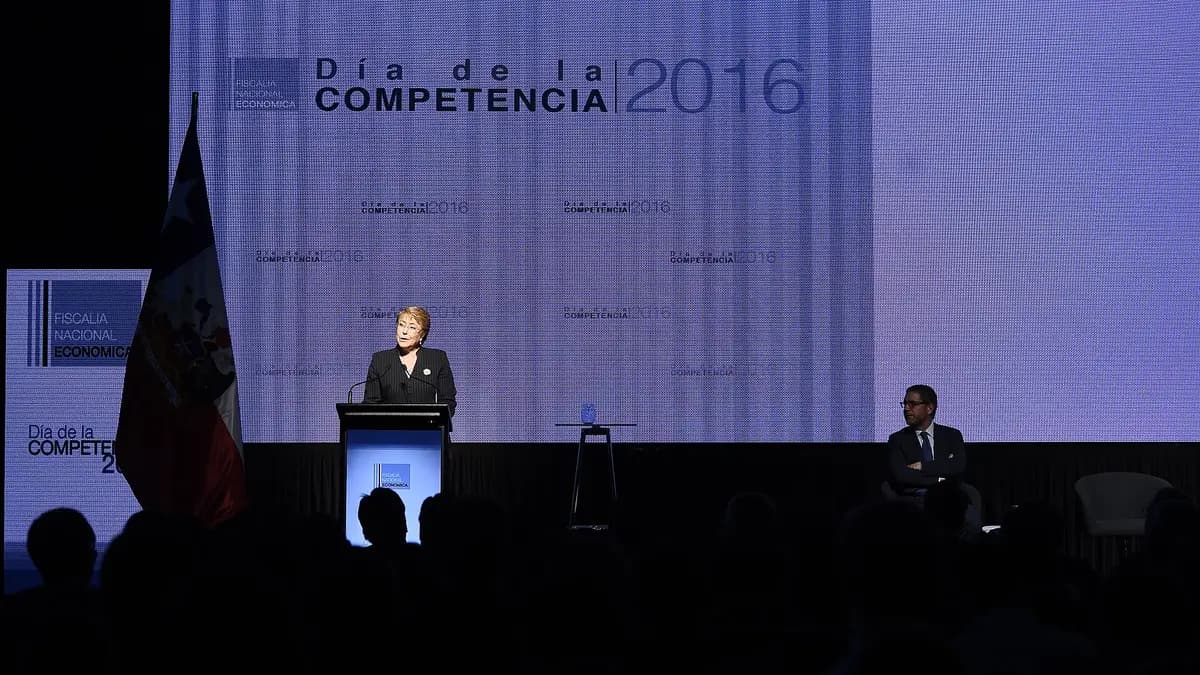
The proposal was presented at a TDLC hearing on a consultation filed by the Real Estate Developers Association and the Chilean Chamber of Construction, which asked whether the 2024 Technical Standard on Security and Quality for Distribution Systems, issued by the National Energy Commission (CNE), protects competition when buildings and housing developments connect. It was presented by Anita Reyes Mella, a lawyer in the FNE's Antitrust Division.
The FNE acknowledges that the 2024 standard reduced the discretion of distribution companies, but argues that some aspects could still affect competition. It made five recommendations:
- Identify the associated services distributors provide in the connection process, distinguishing whether they have regulated rates.
- Make relevant information transparent about those services and the connection processes, so customers can compare and choose.
- Strengthen safeguards on the use of commercially sensitive information by electrical installers related to the distributors.
- Strengthen the electronic file for each connection, with milestones, stages and parties, so the SEC can supervise in time.
- Align the standard with tariff regulation, so that milestones, requirements, deadlines and rates are consistent.
Expansion tenders and the problem of related companies
In transmission, the owner of an existing facility runs the tender for the expansion works set by the expansion decree. The risk is that a company from the same group bids with an advantage. In August 2025, the Coordinator's Competition Monitoring Unit (UMC) had recommended an explicit ban on related companies. Now, in its Report No. 2, dated October 8, 2026, it revisited that position.
The change reflects weak competition in the tenders under expansion decree No. 266/2025:
| Tender results (decree 266/2025) | Works |
|---|---|
| Total works tendered | 27 |
| Works with a single bid | 9 |
| Works declared void (bids above the maximum value) | 11 |
| Works awarded with 5 bids | 1 |
| Works awarded with 4 bids | 5 |
| Works awarded with 3 bids | 4 |
| Works awarded with 2 bids | 3 |
With so few bidders, banning related companies could leave even more works void. So the UMC proposes allowing them to take part, with conditions. The law does not set an absolute ban, according to the cited analysis of article 95 of the General Law of Electric Services.
The Coordinator's 8 measures to protect competition
- Competitive Neutrality Plan: functional, IT and physical separation between whoever runs the tender and the related company.
- Equal access to technical information, published to everyone at the same time.
- Sworn statement of information parity signed before bids close.
- Temporary confidentiality of bidder identities until the administrative opening.
- Greater traceability in technical evaluations.
- Confidential economic file delivered directly to the UMC, with the related company's price calculation.
- Auditable digital record during the process and for five years after the work starts operating.
- Formal complaints channel for competitors to report asymmetries or discriminatory treatment.
Breaching these obligations could lead to the bid being declared inadmissible or excluded. The Coordinator keeps its review functions, without prejudice to the FNE's powers. Transmission tenders are also behind another recent case: the Supreme Court overturned a fine against the grid operator over a transmission tender from 2022.
What changes for households and companies
For anyone buying a new home, the project's power connection affects construction times and costs. If the TDLC accepts the FNE's recommendations, developers would have more information to compare connection services and the SEC more tools to supervise. In transmission, more competition in tenders should mean cheaper works, a cost that ultimately shows up in the power bill, which according to the CNE's preliminary figures would fall 4.3% on average in January 2027.
Competition in the power sector: the two proposals side by side
| Proposal | Who makes it | Before whom | Status |
|---|---|---|---|
| Changes to the connection standard for real estate projects | FNE | Competition Court (TDLC) | Consultation under way |
| 8 measures for related companies in expansion tenders | Coordinator's Competition Monitoring Unit | Tender rules for expansion works | Proposal (Report No. 2, October 8, 2026) |
Neither proposal is in force. For the distribution standard, the TDLC must rule on the real estate associations' consultation; for the tenders, the measures would have to be written into the rules of upcoming processes. The transmission works tendered in these processes are the same ones the CNE includes in its plans, such as the urgent transmission works for 2026.
The debate comes at a time of change in power distribution. Companies and the regulator are discussing a modernization of sector regulation, and electricity rates come after years of increases following the tariff freeze. Faster, more transparent connections for real estate projects and transmission tenders with more bidders are two pieces of the same adjustment.
Does your company work in transmission, distribution or power regulation? Reach Energía Futura readers.
See advertising optionsFrequently asked questions
What did the FNE request regarding the distribution standard?
Changes to the 2024 Technical Standard on Security and Quality for Distribution Systems in the section on connecting real estate projects: more transparency, information safeguards and an electronic file for each connection.
Will related companies be able to bid in transmission tenders?
That is what the Coordinator's Competition Monitoring Unit proposes, as long as they comply with eight mitigation measures. It is a proposal, not a rule in force.
Why were so many works declared void?
Under expansion decree 266/2025, 11 of the 27 works were declared void because bids exceeded the set maximum value.