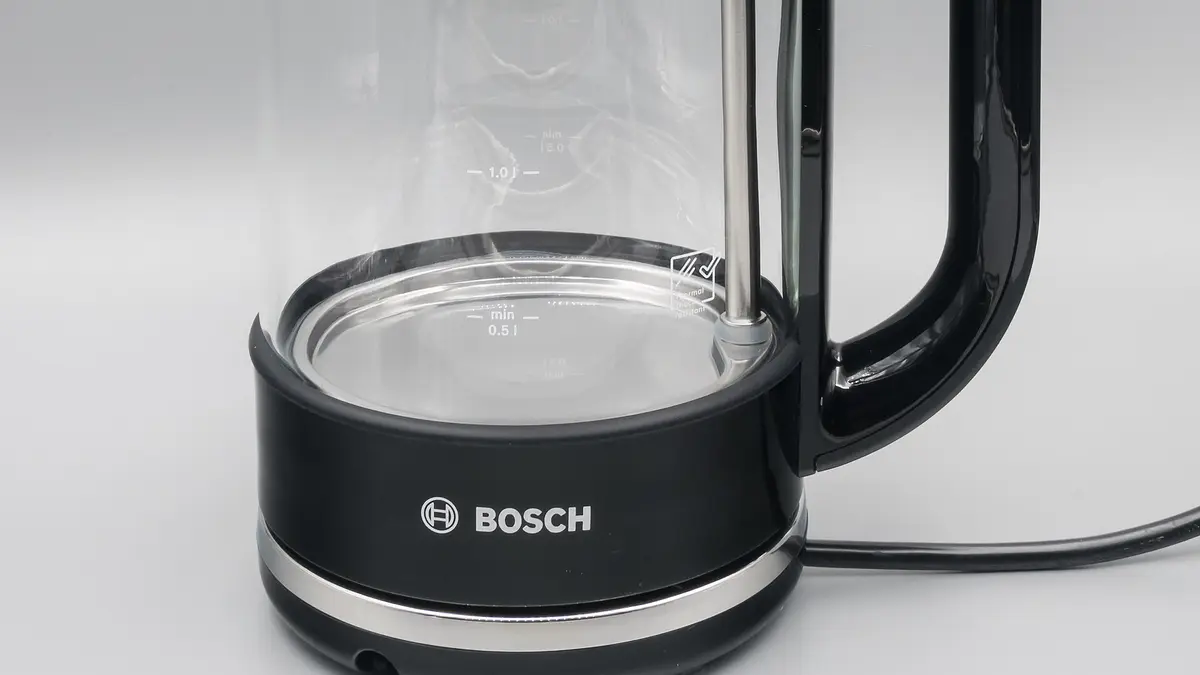
Boiling one litre of water in an electric kettle uses about 0.11 kWh, around CLP 28 with electricity at CLP 255.27 per kWh (CGE's BT1 residential rate in cities such as Rancagua and Concepción since October 2026). A 250 ml cup costs about CLP 7, and a full 1.7-litre kettle about CLP 48. Although its power is high, 1,850 to 2,200 W, it only runs for a few minutes, which makes it one of the cheapest kitchen appliances to use.
This guide explains where those figures come from, what a kettle adds to the monthly bill, how long it takes depending on its power and how to spend less.
How much power an electric kettle uses
The energy needed to boil water comes from basic physics: raising 1 litre of water by 1 °C takes 4.186 kilojoules. Taking a litre from about 15 °C, typical tap water temperature, to 100 °C requires 4.186 × 85 = 356 kJ, or 0.099 kWh.
No appliance is perfect: some heat is lost through the kettle body and into the air. The electric kettle is one of the most efficient options because the element is in direct contact with the water. Assuming 90% of the energy reaches the water, a litre uses about 0.11 kWh. That assumption matches experience: a 2,200 W kettle takes about 3 minutes to boil a litre, and 2.2 kW for 3 minutes is exactly 0.11 kWh.
| Amount of water | Energy (from 15 °C, 90% efficiency) | Cost (CLP 255.27/kWh) |
|---|---|---|
| One cup (250 ml) | 0.027 kWh | CLP 7 |
| Two cups (500 ml) | 0.055 kWh | CLP 14 |
| One litre | 0.11 kWh | CLP 28 |
| Full kettle (1.7 litres) | 0.187 kWh | CLP 48 |
In winter, when tap water is colder, consumption rises slightly: from 10 °C, a litre needs about 0.116 kWh, close to CLP 30. The difference is small, but noticeable for a family that boils water many times a day.
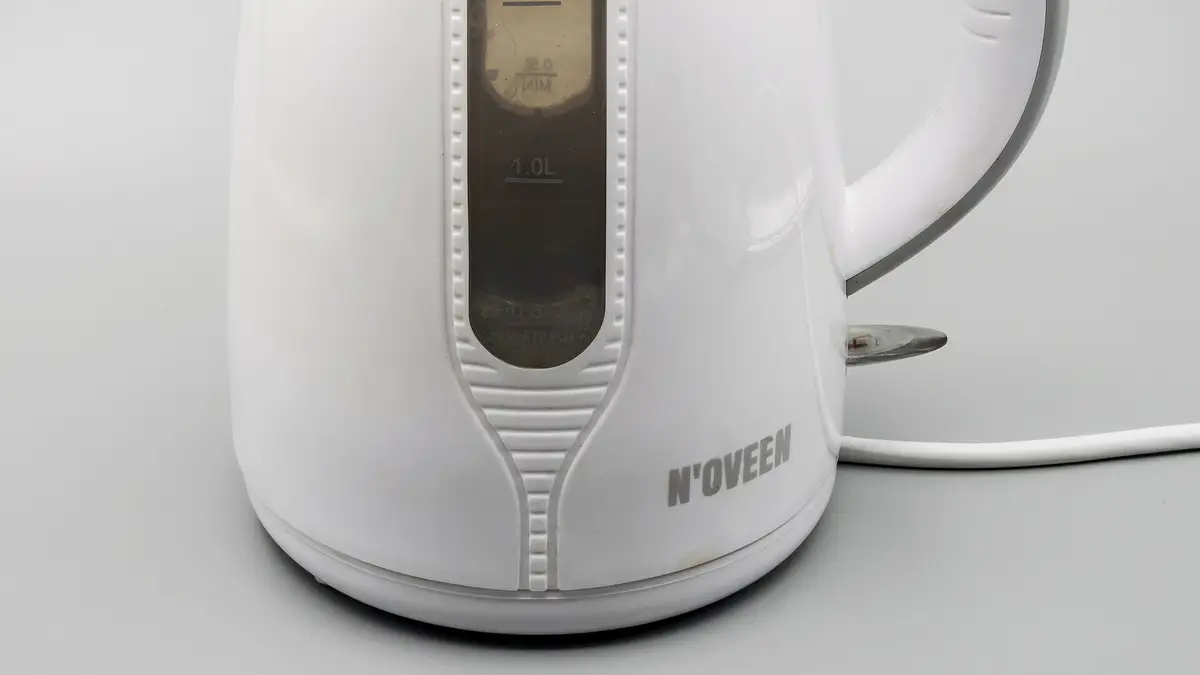
How long an electric kettle takes by power rating
Power does not change the energy the water needs, but it does change the time. A more powerful kettle boils faster and uses practically the same. These are examples of models sold in Chile, with the power stated in retailers' listings:
| Model (example) | Capacity | Power | Estimated time for 1 litre |
|---|---|---|---|
| Oster BVSTKT4177 | 1.7 litres | 1,850 W | ~3.6 minutes |
| Thomas TH-4330 | 1.8 litres | 2,200 W | ~3 minutes |
| Travel kettle | 0.5 to 0.8 litres | 600 to 1,000 W | 6.5 to 11 minutes |
The times are estimates using the same 90% efficiency and water at 15 °C. The Oster's power comes from its listing on Paris.cl; the Thomas's, from the name under which it is sold. A low-power travel kettle uses almost the same per litre, but takes much longer.
What power does change is the peak on the panel. A 2,200 W kettle switched on together with the oven or the microwave can trip the breaker in homes with small service connections. In that case, avoid using them at the same time.
What an electric kettle adds to the electricity bill
The monthly cost depends mainly on how much water is boiled and whether more is boiled than needed. These are typical scenarios, at 0.11 kWh per litre:
| Kettle use | Litres a day | kWh a month | Cost per month |
|---|---|---|---|
| One person, 3 cups a day | 0.75 | 2.5 | CLP 632 |
| Couple, breakfast and afternoon tea | 1.5 | 5 | CLP 1,264 |
| Family of four, several times a day | 4 | 13.2 | CLP 3,370 |
| Family filling the kettle every time (5 times a day) | 8.5 | 28 | CLP 7,160 |
The last row shows the most common mistake: filling the kettle to make one or two cups. Boiling only the water you need can cut the cost by half or more. For a home using about 180 kWh a month, a couple boiling 1.5 litres a day spends less than 3% of the bill on the kettle.
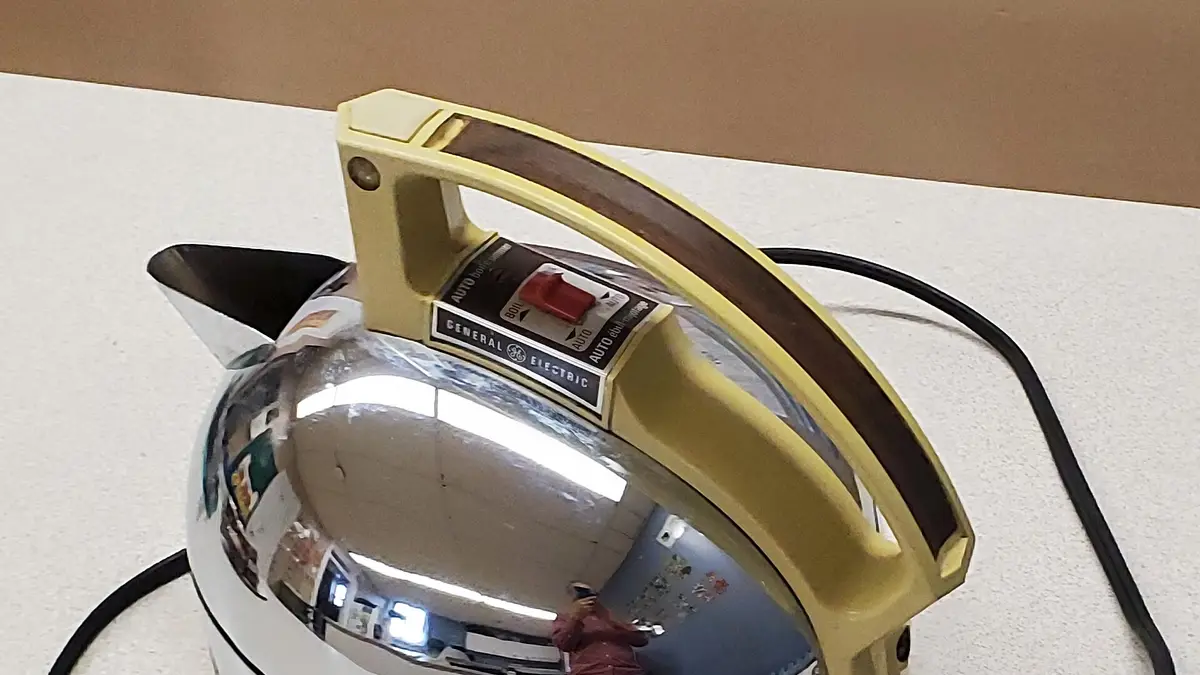
Electric kettle, microwave, gas stove or water heater
For heating water, the kettle is hard to beat. The microwave heats water without an element, but turns only part of the electricity it draws into heat: an oven rated at 800 W of output draws about 1,270 W, as we explained in how much a microwave uses. So a cup in the microwave costs somewhat more than in the kettle.
| Way to heat a cup (250 ml) | How it works | Estimated cost |
|---|---|---|
| Electric kettle | Immersed element, high efficiency | ~CLP 7 |
| Microwave | Waves heat the water; part of the energy is lost in the appliance | ~CLP 10 |
| Gas stove | Flame under the kettle; much of the heat escapes around the sides | Depends on the price of LPG or natural gas |
| Hot water dispenser | Keeps water hot for hours | Adds consumption while it holds the temperature |
The microwave cost is an Energía Futura calculation assuming 63% of the electricity reaches the water (800 W of output over 1,270 W drawn). On a gas stove, the cost depends on the price of the cylinder and the flame: a flame that spills past the base of the kettle wastes heat.
For shower or kitchen hot water, a kettle does not replace a gas heater or an electric water heater, which handle much larger volumes. How much an electric water heater costs is in how much an electric water heater uses.
How to choose an electric kettle and use it to spend less
- Level markings by litre or cup: make it easy to boil only what you need.
- Automatic shut-off on boiling and protection if switched on empty.
- 1,800 to 2,200 W: boils fast and uses the same per litre as a slower one.
- Double-wall or insulated steel body: keeps water hot longer after boiling.
- Temperature control: some heat to 70 or 80 °C for green tea or coffee, which saves energy compared with boiling to 100 °C.
Care that extends a kettle's life
Limescale building up on the element or base acts as insulation and makes the kettle slower and slightly more costly to run. In hard-water areas, such as much of Santiago, descale it every one or two months with white vinegar or citric acid diluted in water, leave it to stand and rinse well before using it again.
The price per kWh varies by municipality and utility, and also by the consumption bracket on your bill. To recalculate, multiply the kWh in the tables by the price on your bill, or check electricity prices in Chile by municipality.
You don't always need to boil
For green tea, many herbal infusions or French-press coffee, water at 70 or 80 °C is recommended rather than boiling. Heating water from 15 °C to 80 °C takes 65 degrees instead of 85, about 24% less energy than taking it to 100 °C. A kettle with temperature control captures that saving without guesswork, and you don't have to wait for the water to cool before serving.
Nor is it a good idea to reboil the same water left in the kettle several times: each time it cools, you spend the energy again to reheat it. If the family drinks tea at different times in the afternoon, a good vacuum flask to keep hot water uses less than switching on the kettle every half hour.
For safety, use the kettle on a firm surface, away from the edge of the worktop and from wall cabinets, because steam damages wood over time. Never switch it on empty or above the maximum mark, and keep the cord out of children's reach. If the base or the plug gets hotter than usual, it is time to replace it.
Do you sell energy-efficient appliances? Reach Energía Futura's readers.
See advertising optionsFrequently asked questions about electric kettles
How much power does an electric kettle use?
About 0.11 kWh per litre boiled, around CLP 28 with electricity at CLP 255.27 per kWh. Its 1,850 to 2,200 W rating is only used for the minutes it takes to boil.
How much does it cost to boil a cup of water?
About CLP 7 per 250 ml cup.
Does a kettle or a microwave use more?
The microwave uses somewhat more to heat water, because part of its consumption is lost in the appliance itself: about CLP 10 per cup against about CLP 7 in the kettle.
Does a higher-wattage kettle use more?
Not per litre. It boils faster, but the energy the water needs is the same. What rises is the power peak on the panel.