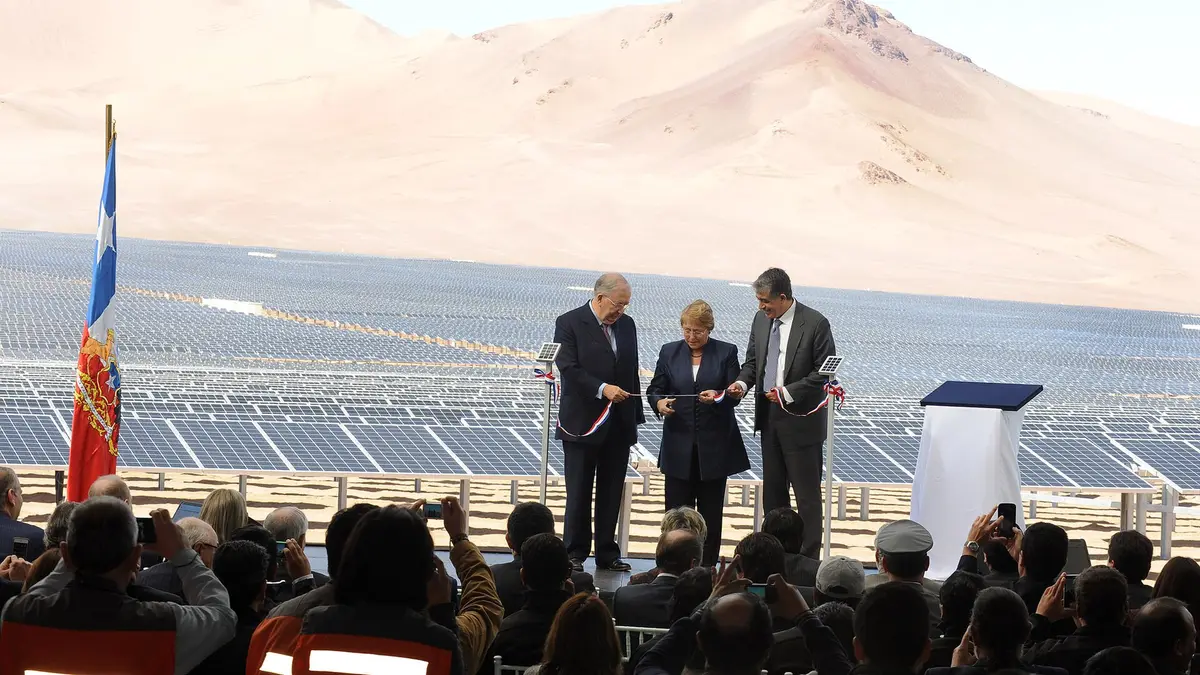
Colombia's Promigas has opened the Aurora solar-plus-battery plant in Pozo Almonte, in Chile's Tarapacá Region, a US$224 million investment with 221 MW of solar capacity and a 187 MW storage system with five hours of duration. It is the first of three projects in a Tarapacá energy hub totalling more than US$1.06 billion, Chile's Ministry of Energy and Revista Electricidad reported.
At the ceremony, the company also launched Krelo, its new energy solutions brand for commercial, industrial and utility-scale customers in Chile, Colombia and Peru, which groups the assets it bought from Spain's Zelestra. With Aurora, Promigas formally enters the Chilean power market as a generator.
Aurora plant in figures
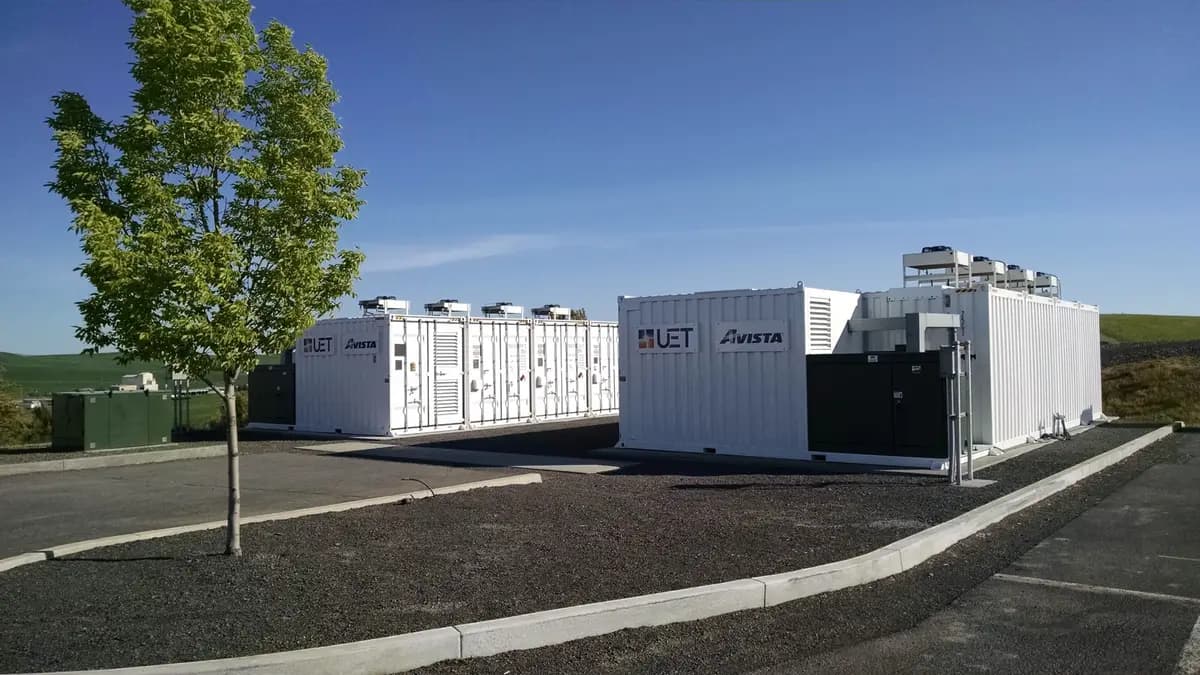
The plant combines solar panels with a large battery system that charges with solar power during the day and discharges at night. Deputy Energy Minister Hugo Briones said the project “makes it possible to deliver energy to the system even when there is no sun”.
| Aurora plant (Pozo Almonte) | Figure | Source |
|---|---|---|
| Investment | US$224 million | Ministry of Energy |
| Installed solar capacity | 221 MW | Revista Electricidad |
| Battery power | 187 MW, 5-hour duration | Ministry of Energy |
| Solar panels | 355,000 | La Tercera |
| Battery containers | 204 | La Tercera |
| Land area | 476 hectares | La Tercera |
| Construction time | 10 months | La Tercera |
| Jobs over its life cycle | More than 500 people | Revista Electricidad |
| Long-term offtakers | Abastible and Engie | Revista Electricidad and La Tercera |
The battery figure is what puts it among the largest in the country. At 187 MW for five hours, its capacity is about 935 MWh. In the records of Chile's grid operator, the Coordinador Eléctrico Nacional, the plant appears as Estela Solar, and in its technical tests the battery delivered 919 MWh in a five-hour discharge, as we reported in the Estela Solar test results.
According to Deputy Minister Briones, quoted by La Tercera, with average consumption of 187 kWh a month per home, Aurora's output would be enough for some 300,000 homes.
Promigas' Tarapacá hub: Aurora, Ramaditas and Pampino
Aurora is the first piece of a cluster of three solar-plus-storage plants in the Pampa del Tamarugal, with a combined investment of more than US$1.06 billion. Promigas said it plans to stay in the area for 30 years.
| Tarapacá hub project | Planned capacity | Status (October 2026) |
|---|---|---|
| Aurora | 221 MW solar and 187 MW of batteries (5 hours) | Opened |
| Ramaditas | 400 MW solar and about 300 MW of storage | Awaiting permits from the Ministry of National Assets |
| Pampino | 250 MW of solar PV | Environmental approval granted; preparing construction for 2027-2028 |
Tarapacá thus adds another large solar-plus-battery project, a combination that has become standard in northern Chile because it allows energy to be sold at night, when prices rise. Chile has already passed 3,000 MW of batteries in operation, as we reported in our overview of BESS in Chile.
What Krelo is and Promigas' plans in Chile
Promigas, a Colombian natural gas company, bought Zelestra's Latin American platform in May for about US$1.1 billion, according to La Tercera. Those assets now operate under the Krelo brand, led by Diego Pérez. “Everything we do, we do with and from the communities,” Pérez said at the ceremony.
- Portfolio: more than 1,374 MW in operation and under construction in Colombia, Chile and Peru, according to Revista Electricidad.
- Development pipeline: about 3.1 GW.
- Target: 3,500 MW by 2030, with 40% to 50% in Chile, according to La Tercera.
- Planned investment: more than US$1.5 billion by 2030.
- Central Chile: projects near Santiago and talks with data centre companies, according to La Tercera.
Promigas president Juan Manuel Rojas said that “Aurora is much more than infrastructure” and that Chile has “a regulatory capacity that is today an example for Latin America”. On gas, the company said it is focusing on renewables in Chile for now and that, if it entered that business, it would be in transport and distribution.
Aurora and the grid challenge in northern Chile
In Pozo Almonte, Deputy Minister Briones said that “the energy transition is a comprehensive effort” and that grids must also be modernised to connect new investments. The north concentrates most of Chile's solar generation and is where the most energy is lost for lack of transmission capacity.
Batteries are the industry's answer to that problem: instead of curtailing midday solar power, they store it for the night. How much energy is wasted today because of grid limits is detailed in Deloitte's report on transmission and curtailment.
The ceremony was also attended by Tarapacá's regional presidential delegate, Adriana Tapia, who said the region “has enormous potential to attract investment”; the regional energy secretary, Juan Ignacio Boudon; and the mayor of Pozo Almonte, Richard Godoy.
Why five hours of batteries matter
A battery's duration shows how many hours it can deliver its maximum power. With five hours, Aurora can cover much of the late afternoon and early evening, when the sun sets and demand rises. Chile's first battery systems had one or two hours and mainly served to stabilise the grid; new projects in the north aim for four or five hours to sell solar power at night.
According to La Tercera, Aurora took ten months to build, while developing a project of this kind, with environmental and grid permits, usually takes three to four years, according to Krelo's chief executive. For the region, the project comes as the Ministry of Energy estimates that electricity bills in Tarapacá would fall 7.4% from January 2027, it reported on October 20.
Does your company develop solar or storage projects? Reach Energía Futura's readers.
See advertising optionsFrequently asked questions
Where is the Aurora plant?
In Pozo Almonte, in Chile's Tarapacá Region, about 50 kilometres from Iquique.
How much did Aurora cost?
US$224 million, according to the Ministry of Energy and Revista Electricidad.
What is Krelo?
Promigas' new brand for its renewable energy and energy solutions businesses in Chile, Colombia and Peru, built from the assets it bought from Zelestra.
What other projects does Promigas have in Tarapacá?
Ramaditas, with 400 MW of solar and about 300 MW of storage, and Pampino, with 250 MW of solar PV, which already has environmental approval.