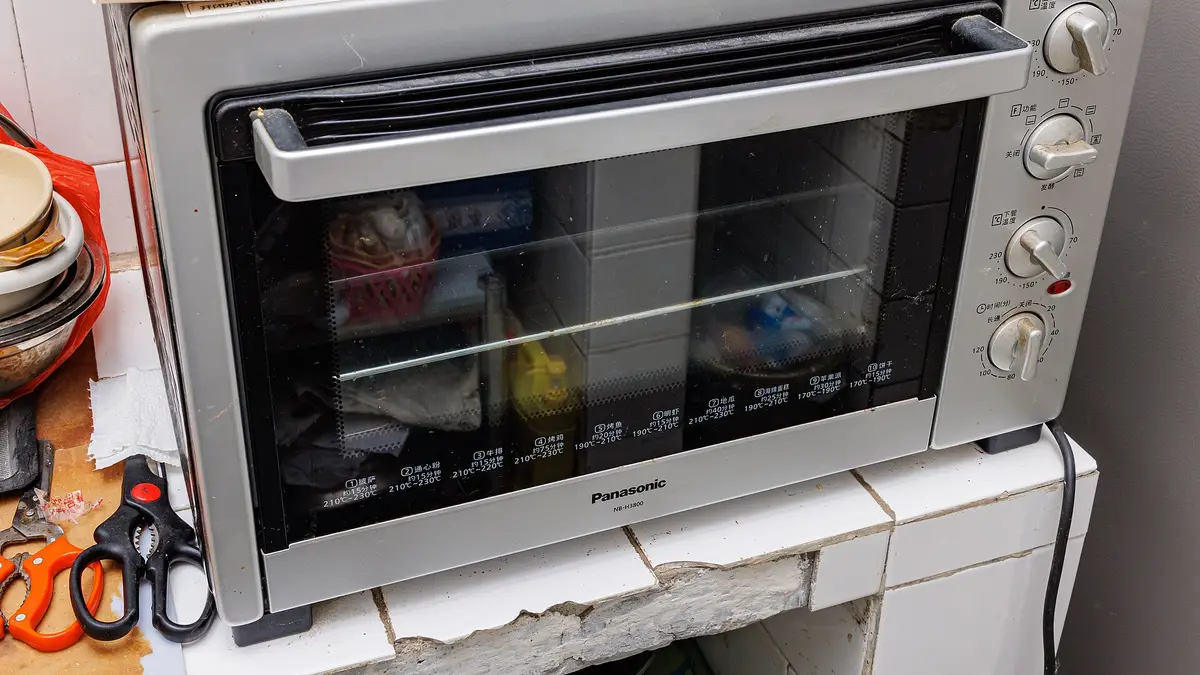
A 48-litre countertop electric oven, such as the Thomas TH-48N sold in Chile, has a power rating of 2,000 W. If it ran for a full hour at full power it would use 2 kWh, about CLP 511 with electricity at CLP 255.27 per kWh (CGE's BT1 residential rate in cities such as Rancagua and Concepción since October 2026). In practice it uses less, because the thermostat switches the heating elements on and off to hold the temperature: roasting a chicken costs around CLP 300.
This guide explains how much an electric oven uses by size, what each dish costs based on real lab measurements, and when another appliance, such as a microwave or an air fryer, makes more sense.
How much power an electric oven uses by size
An electric oven's power rating is on the label at the back or in the product sheet, in watts (W). For countertop models sold in Chile, it rises with capacity. These are examples from the Thomas brand, according to product sheets published by retailers Easy and Paris:
| Model (example) | Capacity | Power | Maximum cost per hour (CLP 255.27/kWh) |
|---|---|---|---|
| Thomas TH-16N01 | 16 litres | 1,500 W | CLP 383 |
| Thomas TH-25N01 | 25 litres | 1,500 W | CLP 383 |
| Thomas TH-48N | 48 litres | 2,000 W | CLP 511 |
| Thomas TH-62I | 60 litres | 2,200 W | CLP 562 |
| Typical built-in oven | 60 to 70 litres | 2,500 to 3,500 W | CLP 638 to 893 |
The maximum cost per hour assumes the elements stay on for all 60 minutes, which only happens while preheating. Once the oven reaches the set temperature, the thermostat cuts them and switches them back on when the temperature drops. Real consumption therefore depends on the temperature, how often the door is opened and how well the oven is insulated.
A large oven does not always use much more than a small one for the same dish, but it does take longer to preheat because it has more air and metal to heat. For one or two people, a 25 to 30-litre oven is usually enough.
How much an electric oven costs per dish: real measurements
British consumer group Which? measured in its lab, preheating included, how much energy a built-in electric oven (Bosch Serie 2) uses for four dishes, in a study published on October 16, 2026. We converted those figures into Chilean pesos:
| Dish (Which? test) | Time in the oven | Energy measured | Cost in Chile (CLP 255.27/kWh) |
|---|---|---|---|
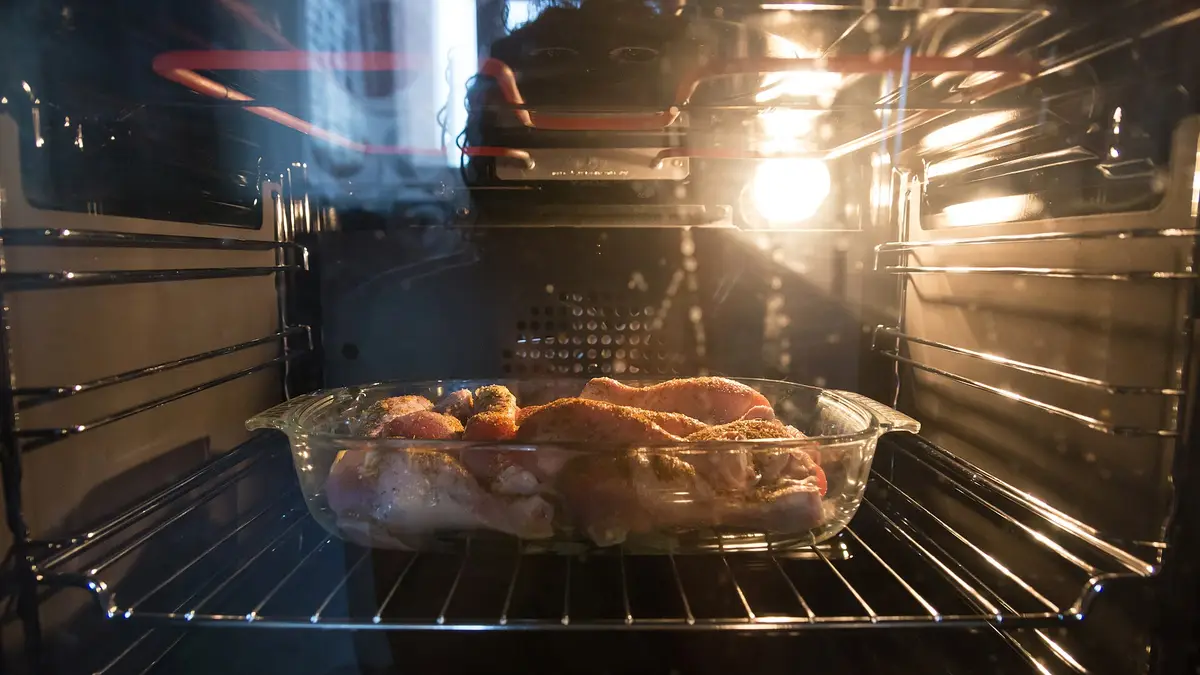
| Roast chicken, 1.3 to 1.4 kg | 76 minutes | 1.157 kWh | CLP 295 |
| Frozen chips (320 g) | 33 minutes | 0.863 kWh | CLP 220 |
| Jacket potato (~200 g) | 68 minutes | 1.084 kWh | CLP 277 |
| Three-egg sponge cake | 56 minutes | 0.71 kWh | CLP 181 |
The chicken figure shows the real average power: 1.157 kWh in 76 minutes is about 0.91 kW, far below the rated power of a built-in oven, typically 2,500 to 3,500 W. Frozen chips, on the other hand, are expensive for so little food: more than half the energy goes into heating the empty oven.
Countertop ovens have less volume than a built-in one and usually preheat faster, so they may use somewhat less for short dishes. We found no independent measurements of models sold in Chile, so the Which? figures are the best reference available.
What an electric oven adds to the monthly electricity bill
The monthly cost depends on how many hours it is used. These scenarios assume the oven averages 1 kW while cooking, like the oven in the Which? test, and compare them with the worst case of a 2,000 W oven at full power the whole time:
| Oven use | Hours a month | Consumption (1 kW average) | Cost per month | Worst case (2,000 W) |
|---|---|---|---|---|
| A cake at the weekend | 4 | 4 kWh | CLP 1,021 | CLP 2,042 |
| 3 times a week, 1 hour | 13 | 13 kWh | CLP 3,318 | CLP 6,637 |
| Every day, 1 hour | 30 | 30 kWh | CLP 7,658 | CLP 15,316 |
| Every day, 2 hours | 60 | 60 kWh | CLP 15,316 | CLP 30,632 |
For a home using about 180 kWh a month, using the oven three times a week adds roughly 7% to the bill. The oven is not the biggest energy user in a home, but it is one of the most powerful appliances, along with electric heaters and water heaters. How a typical home's consumption breaks down is in how much electricity a home in Chile uses per month.
Contracted capacity also matters. A 2,000 to 3,500 W oven running at the same time as a kettle and a microwave can exceed 6,000 W and trip the breaker in homes with small service connections. If that happens often, have the panel checked by an SEC-licensed electrician.
Electric oven, microwave or air fryer: which makes sense
The oven is the best choice for large dishes, such as a family roast, several trays of biscuits or bread. For small portions, other appliances use much less energy because they do not have to heat a large cavity:
| Appliance | Typical power | Best for | Consumption example |
|---|---|---|---|
| Electric oven | 1,500 to 3,500 W | Roasts, baking, several portions | Chicken: 1.157 kWh (Which?) |
| Air fryer | 1,300 to 1,700 W | Small portions, chips, reheating crispy food | Chicken: 0.54 kWh (Which?) |
| Microwave | 1,000 to 1,500 W drawn | Reheating, defrosting, steaming vegetables | One plate: about 0.06 kWh |
In the same Which? study, the air fryer used 53% to 69% less energy than the oven across the four dishes. Reheating a plate of food in the microwave costs about CLP 16, as we explained in how much a microwave uses. The full air fryer versus oven comparison is in how much an air fryer uses.
How to choose a low-consumption electric oven
We found no energy efficiency label in force in Chile for countertop electric ovens, like the one fridges and washing machines carry. Europe does have one for built-in ovens, which measures the energy used in a standard cooking cycle. Without that label, these are the useful criteria:
- Choose the right size: a 25 to 30-litre oven is enough for one or two people; a 45 to 60-litre one, for a family that bakes often.
- Look for convection: the fan spreads heat and lets you cook at about 20 °C less or in less time.
- Double-glazed door and good insulation: less heat loss, so the thermostat cuts in more often.
- Timer with automatic shut-off: avoids costly oversights.
- Compare power: at the same capacity, more power does not mean more cost per dish, but it does mean a higher peak on the panel.
Tips to make an electric oven use less
- Don't keep opening the door: each time, part of the stored heat escapes.
- Preheat only when the recipe requires it: roasts and stews can start in a cold oven.
- Use the heat: cook two dishes in a row, or one tray above another.
- Switch off a few minutes early: residual heat finishes the cooking.
- Keep the inside and the door seal clean: grease and a worn seal reduce insulation.
The price per kWh varies by municipality and utility: in Enel's areas of Santiago it differs from CGE's. To recalculate with your own tariff, multiply the kWh in the tables by the price on your bill, or check electricity prices in Chile by municipality.
A common question: under the BT1 residential tariff, which most homes have, a kWh costs the same at any time of day. Baking at night or in the morning does not change the cost of a dish; what changes it is how many kWh you use. Only the few customers on time-of-use tariffs pay differently by hour.
Do you sell energy-efficient appliances? Reach Energía Futura's readers.
See advertising optionsFrequently asked questions about electric ovens
How much does an electric oven use per hour?
At most, its rated power: a 2,000 W oven uses up to 2 kWh an hour, about CLP 511. With the thermostat cycling, real use is usually much lower; in the Which? test, a built-in oven averaged 0.91 kW while roasting a chicken.
How much does it cost to roast a chicken in an electric oven?
About CLP 295, based on the consumption measured by Which? (1.157 kWh) and electricity at CLP 255.27 per kWh.
Does an electric oven use more than a microwave?
Yes, for small portions. The microwave heats only the food and costs about CLP 16 per plate; the oven has to heat the whole cavity.
What size electric oven should I buy?
For one or two people, 25 to 30 litres. For a family that bakes often, 45 to 60 litres, ideally with convection.