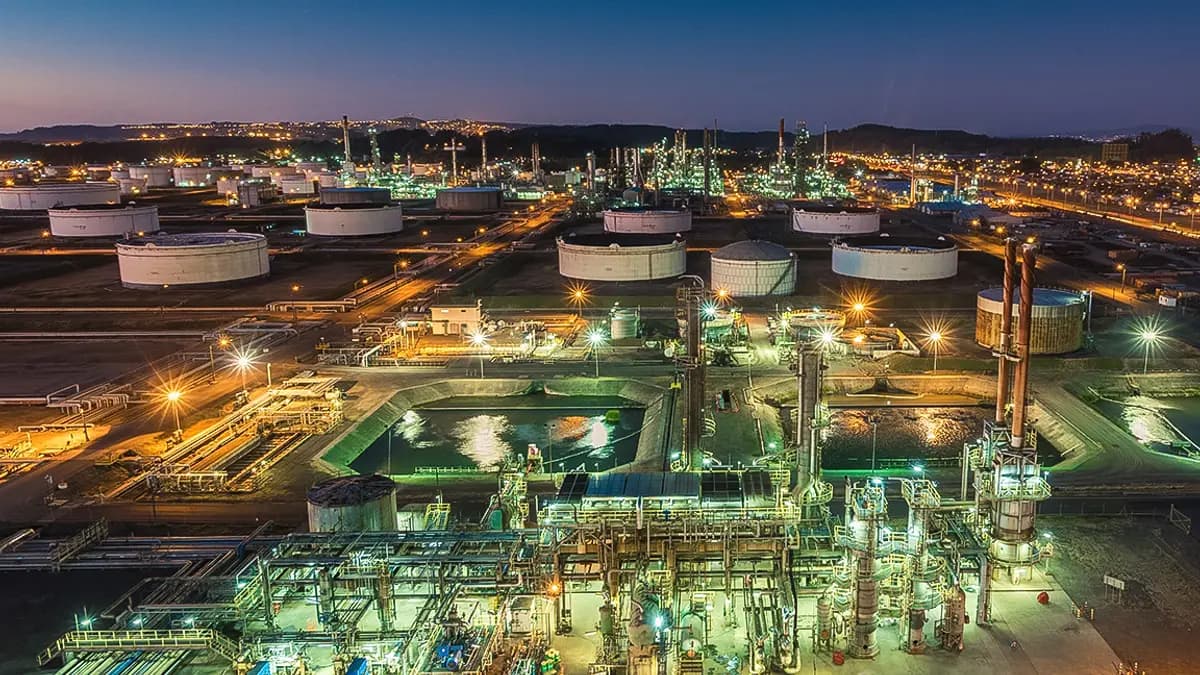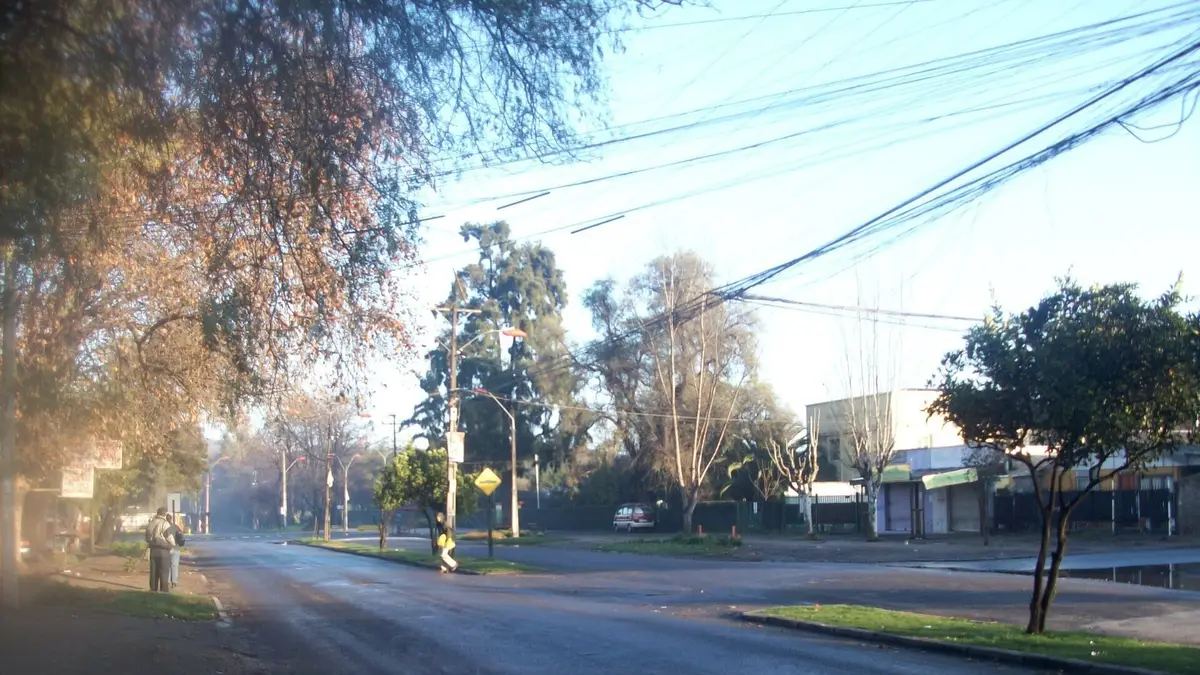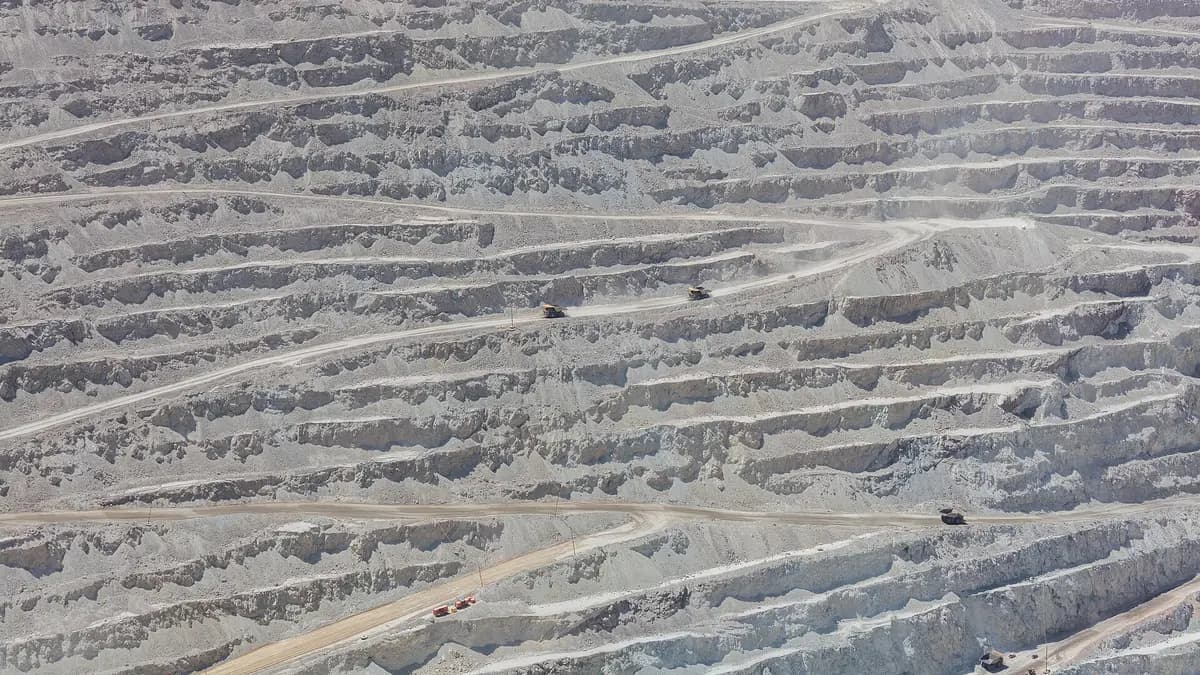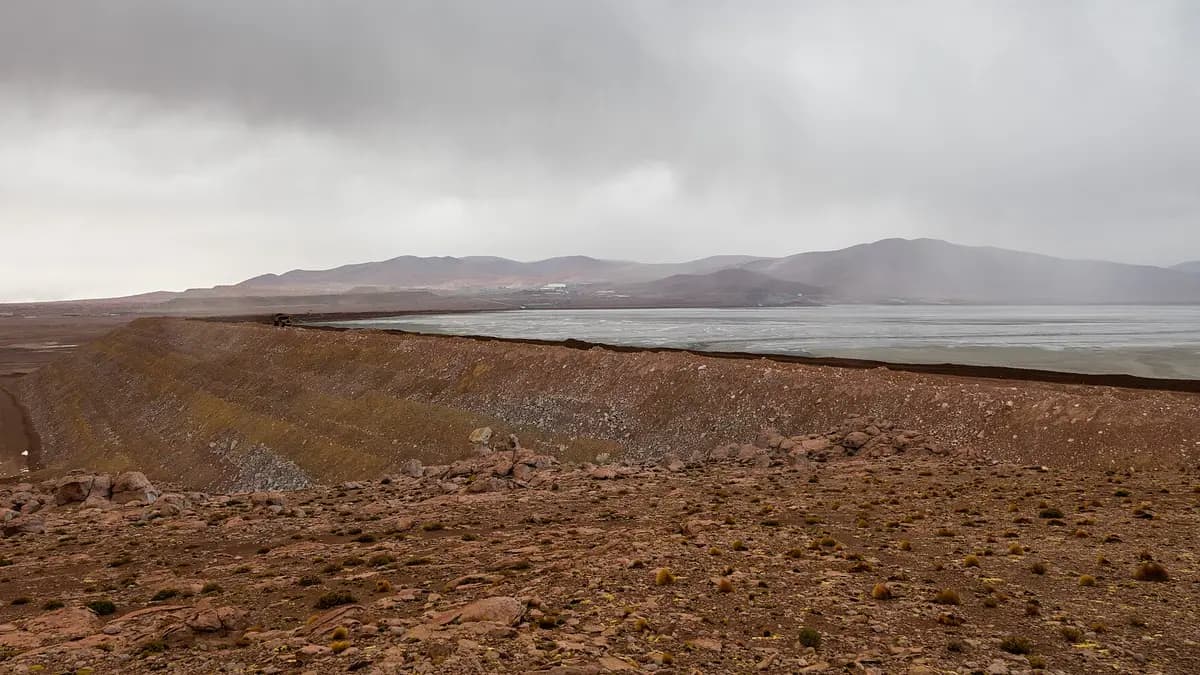
Anglo American produced 174,900 tonnes of copper in the third quarter of 2026, 6% less than in the same period a year earlier. In Chile, its output also fell 6%, to 94,200 tonnes, because of what the company described as “unprecedented extreme weather events during the Chilean winter”, as well as lower ore grades, according to its quarterly report as summarised by Reporte Minero on October 20.
The decline comes with copper prices at historic highs, so every tonne not produced weighs more on miners' revenue and on Chile's exports. The company kept its production guidance for 2026 at 700,000 to 760,000 tonnes.
Anglo American copper production, mine by mine
In Chile, Anglo American operates Los Bronces (Metropolitan Region) and El Soldado (Valparaíso), and owns 44% of Collahuasi (Tarapacá). In Peru it operates Quellaveco. These are its figures for the quarter:
| Operation | Copper output, Q3 2026 | Year-on-year change | Main cause |
|---|---|---|---|
| Los Bronces (Chile) | 42,500 t | +2% | Record snowfall and unplanned maintenance at the end of the quarter |
| Collahuasi (Chile, 44%) | 42,000 t | -11% | Weather in Tarapacá and lower grades |
| El Soldado (Chile) | 9,700 t | -12% | Transition between pit phases, with lower grades |
| Total Chile | 94,200 t | -6% | |
| Quellaveco (Peru) | 80,700 t | -3% | Planned cut-off grades |
| Total Anglo American | 174,900 t | -6% |
Los Bronces managed a 2% year-on-year increase, but its processing and mining rates fell more than 10% from the previous quarter because of the snow. At Quellaveco, metallurgical recovery rose to as much as 85.6%, partly offsetting the lower ore grade.
Why the weather hit copper production in Chile
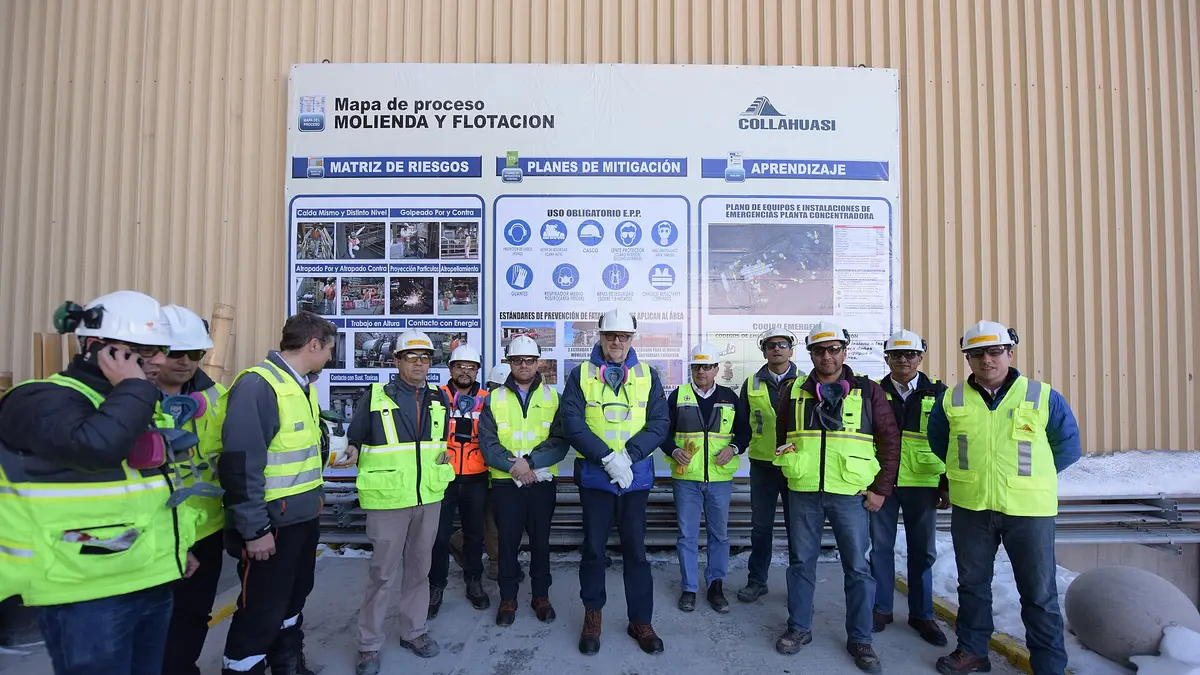
The 2026 winter brought a string of cold fronts and snowfall to central Chile, where Los Bronces and El Soldado are located, and bad weather on the Tarapacá high plateau, where Collahuasi operates above 4,000 metres. High-altitude operations must halt shovels and trucks when snow or wind require it, and access roads are closed.
The extreme conditions also hit the power grid. In July, a storm left more than 600,000 customers without power nationwide, according to the SEC, and cold fronts continued in October: Tuesday's pushed outages above 127,000 customers, as we detailed in the cold front power outages.
Other miners: Sierra Gorda up 11%
Not every miner went backwards. Australia's South32 reported an 11% increase in copper-equivalent production at Sierra Gorda, in Antofagasta, thanks to its fourth grinding line, according to Reporte Minero. Northern operations, less exposed to snow, suffered less from the winter.
| Company and operation | Q3 2026 result |
|---|---|
| Anglo American, total | 174,900 t of copper (-6%) |
| Anglo American, Chile | 94,200 t (-6%) |
| South32, Sierra Gorda (Antofagasta) | Copper equivalent +11% |
Chile is the world's largest copper producer, with about a quarter of the total, according to the US Geological Survey. Each country's position is in the ranking of the world's largest copper producers.
What lower copper production means for Chile
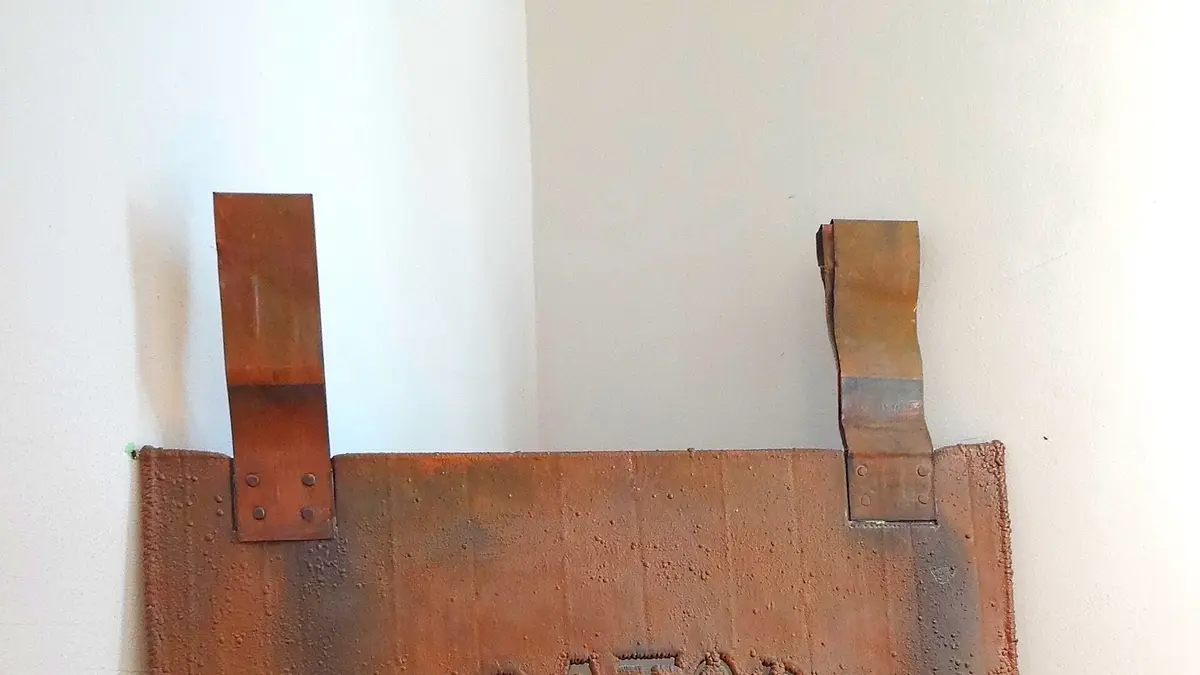
With copper at record prices, output is the variable that matters most for exports. In London, the metal reached US$14,595 a tonne this month, as we reported in the copper price record. At that price, the roughly 6,000 tonnes Anglo American did not produce in Chile compared with a year earlier are worth about US$88 million in sales, according to a simple Energía Futura calculation based on the 6% decline.
For the power system, mining is Chile's largest electricity consumer, and its renewable supply contracts underpin many new solar and wind projects. Lower output for weather reasons does not change those long-term contracts, but it is a reminder that mining operations and the grid are exposed to the same extreme events.
On the corporate side, Anglo American expects to close its merger with Canada's Teck around March 2027, pending approval from China's competition authority, and agreed to sell its Australian steelmaking coal business to Dhilmar for up to US$3.875 billion in cash, with closing expected in the first quarter of 2027.
Anglo American's copper costs and production guidance
The report also updated costs. In Chile, the unit cost was unchanged at 210 US cents per pound for 2026, while in Peru it fell to about 50 cents, thanks to Quellaveco. The gap reflects ore grades: Chile's older operations must move more rock to obtain the same amount of copper.
| Anglo American indicator | Value |
|---|---|
| 2026 copper production guidance | 700,000 to 760,000 t |
| Third-quarter production | 174,900 t |
| 2026 unit cost in Chile | 210 US cents per pound, unchanged |
| 2026 unit cost in Peru | About 50 US cents per pound, falling |
| Metallurgical recovery at Quellaveco | Up to 85.6% |
Collahuasi, the operation with the sharpest drop, is a joint venture: Anglo American and Glencore each own 44%, and a Japanese consortium led by Mitsui holds the remaining 12%. That is why the report's 42,000 tonnes are only Anglo American's attributable share, not the mine's total output.
Does your company work with mining and energy? Reach Energía Futura's readers.
See advertising optionsFrequently asked questions
How much copper did Anglo American produce in the third quarter?
174,900 tonnes, 6% less than a year earlier. In Chile, 94,200 tonnes.
Which mine fell the most?
El Soldado, down 12%, followed by Collahuasi, down 11% in Anglo American's attributable share.
Why did production fall?
Because of extreme weather during the Chilean winter, such as record snowfall at Los Bronces, and lower ore grades at Collahuasi and El Soldado.
Did Anglo American change its annual guidance?
No. The company keeps its 2026 guidance of 700,000 to 760,000 tonnes of copper.