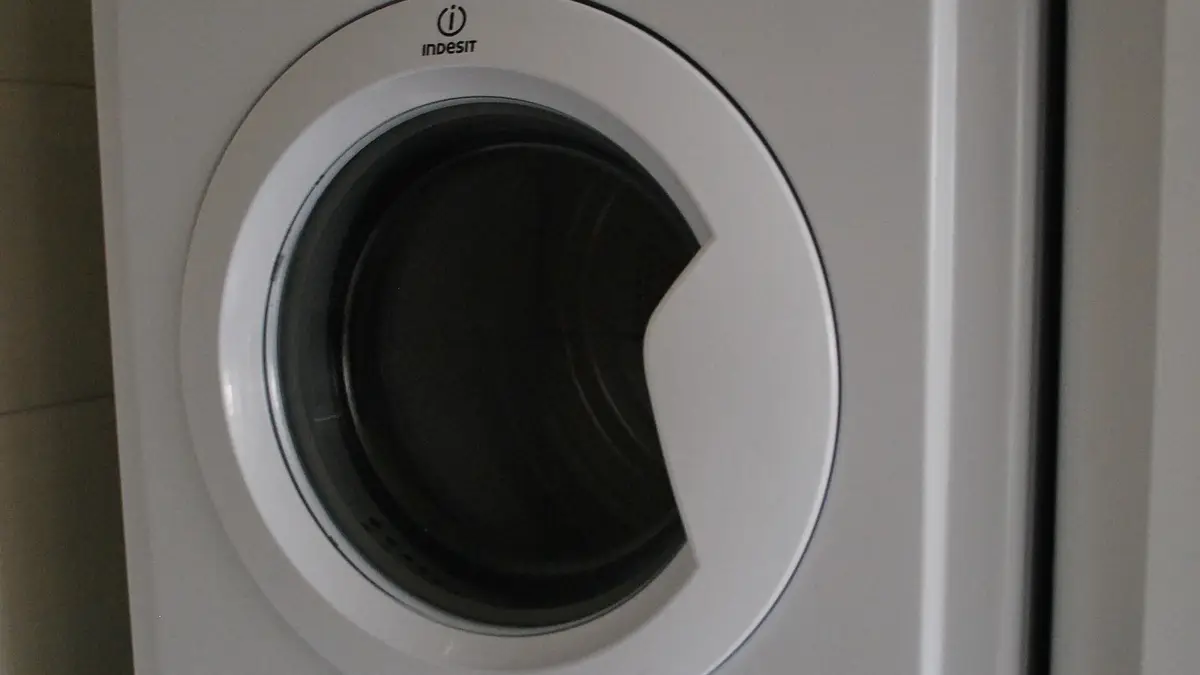
An energy-efficient clothes dryer today means a heat pump dryer. According to tests by Spanish consumer organization OCU, a heat pump dryer uses 1.33 kWh on a cotton programme, versus 2.75 kWh for a resistance dryer: less than half. With a kWh at CLP 255.27, that is about CLP 340 per cycle versus about CLP 700.
In this guide we explain the three types of dryer, what each costs in pesos per cycle and per month, what they cost in Chilean stores and how many years it takes to recover the price difference of an efficient model. The kWh price is the BT1 residential rate including VAT from CGE's tariff schedule in force since October 2026 for cities such as Rancagua, Talca and Concepción.
The three types of dryer
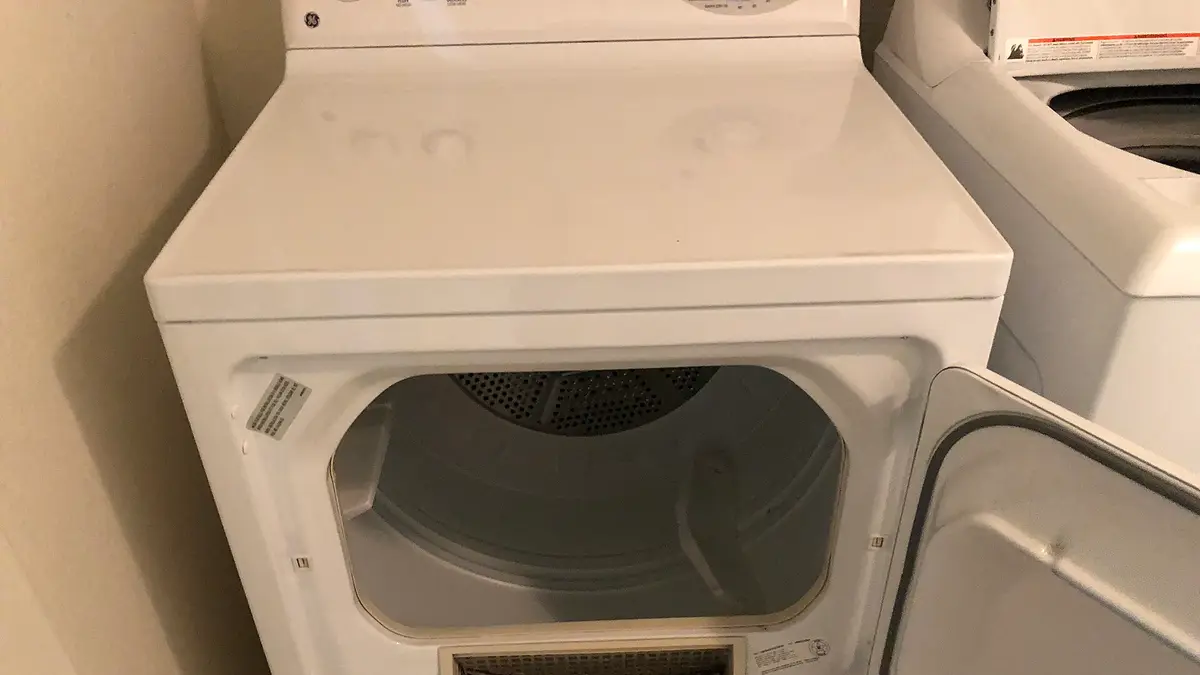
- Vented: heats air with an element and blows the moist air outside through a duct. It is the cheapest and the one that uses most energy.
- Condenser: also uses an element, but cools the moist air inside the machine and collects the water in a tank or sends it down the drain. No duct needed.
- Heat pump: uses a refrigeration circuit, like an air conditioner, to heat the air and condense the moisture. It dries at a lower temperature and reuses the heat. It uses the least energy.
Heat pumps come at a cost: cycles are longer. In OCU's tests, the cotton programme took 132 minutes in a heat pump dryer and 86 minutes in a resistance dryer.
How much an energy-efficient clothes dryer uses per cycle
OCU publishes the measured consumption of the dryers in its comparison by European energy label class. Converted to Chilean pesos with a kWh at CLP 255.27:
| Dryer (European label) | Consumption on cotton programme (OCU) | Duration | Cost per cycle in Chile |
|---|---|---|---|
| Heat pump A+++ | 1.12 kWh | 144 min | CLP 286 |
| Heat pump A++ | 1.33 kWh | 132 min | CLP 340 |
| Heat pump A+ | 1.5 kWh | 125 min | CLP 383 |
| Class B | 2.8 kWh | 84 min | CLP 715 |
| Resistance (average) | 2.75 kWh | 86 min | CLP 702 |
With a full load, consumption goes up. Guides from European utilities, such as TotalEnergies, use as a reference for an 8-kilo dryer 4.8 kWh per cycle for vented, 4.2 kWh for condenser and 2.2 kWh for heat pump. These are reference values; each model's real consumption is in its data sheet.
How much a dryer costs per month in pesos
Using full-load 8-kilo values and a kWh at CLP 255.27, this is the monthly cost depending on how many times a week the dryer is used (our calculation):
| Dryer type (8 kg, full load) | Consumption per cycle | Per month with 3 cycles a week (12 cycles) | Per month with 5 cycles a week (20 cycles) |
|---|---|---|---|
| Vented | 4.8 kWh | CLP 14,700 | CLP 24,500 |
| Condenser | 4.2 kWh | CLP 12,900 | CLP 21,400 |
| Heat pump | 2.2 kWh | CLP 6,700 | CLP 11,200 |
The annual difference between a vented dryer and a heat pump dryer, with three cycles a week, is about 374 kWh, close to CLP 95,600 a year. With five cycles a week, the difference rises to about CLP 159,000 a year. To see how a dryer compares with other appliances, check how much a refrigerator uses, another of the big consumers at home.
Clothes dryer prices in Chile
We reviewed dryer search results at Sodimac on October 17, 2026. Published prices, including offers, show the gap between technologies:
| Model (as listed) | Type | Published price |
|---|---|---|
| Thomas TH-D10KV, 10 kg | Vented | CLP 279,990 |
| Ursus Trotter UT G9K-15P, 9 kg | Condenser | CLP 425,590 |
| Mabe 20 kg SME26N5MNBCL0 | Electric, large capacity | CLP 579,990 |
| Thomas TH-D9KCBC, 9 kg | Heat pump | CLP 699,990 |
| Samsung Bespoke AI 17 kg | Heat pump | CLP 919,990 to 939,990 |
The most direct comparison is within the same brand: Thomas's 10-kilo vented dryer costs CLP 279,990 and its 9-kilo heat pump model CLP 699,990. That is a CLP 420,000 difference.
In practice, the cheapest heat pump dryer in the listing costs 2.5 times as much as the vented model from the same brand. The question is whether the monthly saving covers that difference over the appliance's life, which for white goods is usually more than ten years.
Is an energy-efficient dryer worth the extra cost?
It depends on use. With a CLP 420,000 price difference and savings of about CLP 95,600 a year at three cycles a week, the heat pump dryer pays for itself in about 4.4 years. If the family dries clothes five times a week, the payback drops to about 2.6 years. If it is used only occasionally, for example in the rainy months, a vented dryer may still be the sensible choice.
| Dryer use | Annual saving of heat pump vs vented | Years to recover CLP 420,000 |
|---|---|---|
| 2 cycles a week | CLP 63,700 | 6.6 years |
| 3 cycles a week | CLP 95,600 | 4.4 years |
| 5 cycles a week | CLP 159,300 | 2.6 years |
There is another factor: vented dryers need an air outlet to the outside, which is hard in many flats. There, the real choice is between condenser and heat pump, and the consumption gap between them is large.
How to spend less when drying
- Spin harder in the washing machine: the less water in the clothes, the less energy the dryer uses.
- Fill the dryer without overloading it: half a load uses almost as much as a full one.
- Clean the lint filter every cycle and the condenser as the manual says: a clogged filter lengthens drying.
- Use the moisture sensor instead of timed programmes, so the machine stops when clothes are dry.
- Separate fabrics: towels and synthetics do not dry at the same pace.
- Use the sun in summer: the clothesline is still free.
In Chile, washing machines carry a mandatory energy label; for dryers, check the data sheet or the European label when the model has one.
How much the dryer weighs on the power bill
Chile's National Energy Commission uses 180 kWh a month as its typical household consumption, about CLP 45,950 at CLP 255.27 per kWh, as we detail in how much electricity a house uses in Chile. With three cycles a week, a vented dryer would add 57.6 kWh to that bill, 32% more. A heat pump dryer would add 26.4 kWh, 15% more.
In winter, dryers are used more and it shows on the bill. If a household with children uses the dryer every day, a vented model can add more than 140 kWh a month, almost as much as the rest of the typical home. That is why it is one of the appliances where efficient technology pays back fastest.
What dryer capacity to choose
The rule is that the dryer should have at least the same capacity as the washing machine, because wet clothes take up more space and need room to tumble. If the washer takes 8 kilos, an 8- or 9-kilo dryer makes sense. The 17- to 20-kilo models in stores are designed for large families or for washing blankets and duvets at home.
- 7 to 8 kg washer: 8 to 9 kg dryer.
- 10 to 12 kg washer: 10 kg dryer or more.
- Washer-dryer (all in one): saves space but only dries well half the load it washes; check its full-cycle consumption in the data sheet.
If the home has solar panels, running the dryer at midday lets much of its consumption be covered by your own generation. We explain how to size a system in our home solar kit guide.
Do you sell efficient appliances? Reach Energía Futura readers who compare consumption before buying.
See advertising optionsFrequently asked questions
Which clothes dryer uses the least energy?
A heat pump dryer. In OCU's tests it used 1.33 kWh per cotton cycle, less than half of a resistance dryer.
How much does a dryer cost per cycle in pesos?
With a kWh at CLP 255.27, between CLP 286 and 383 for a heat pump dryer and about CLP 700 for a resistance dryer on a cotton programme. With a full 8-kilo load, CLP 560 to 1,225 depending on type.
How much does a heat pump dryer cost in Chile?
In the Sodimac listing reviewed on October 17, 2026, from CLP 699,990 (Thomas, 9 kg) to CLP 939,990 (Samsung, 17 kg).