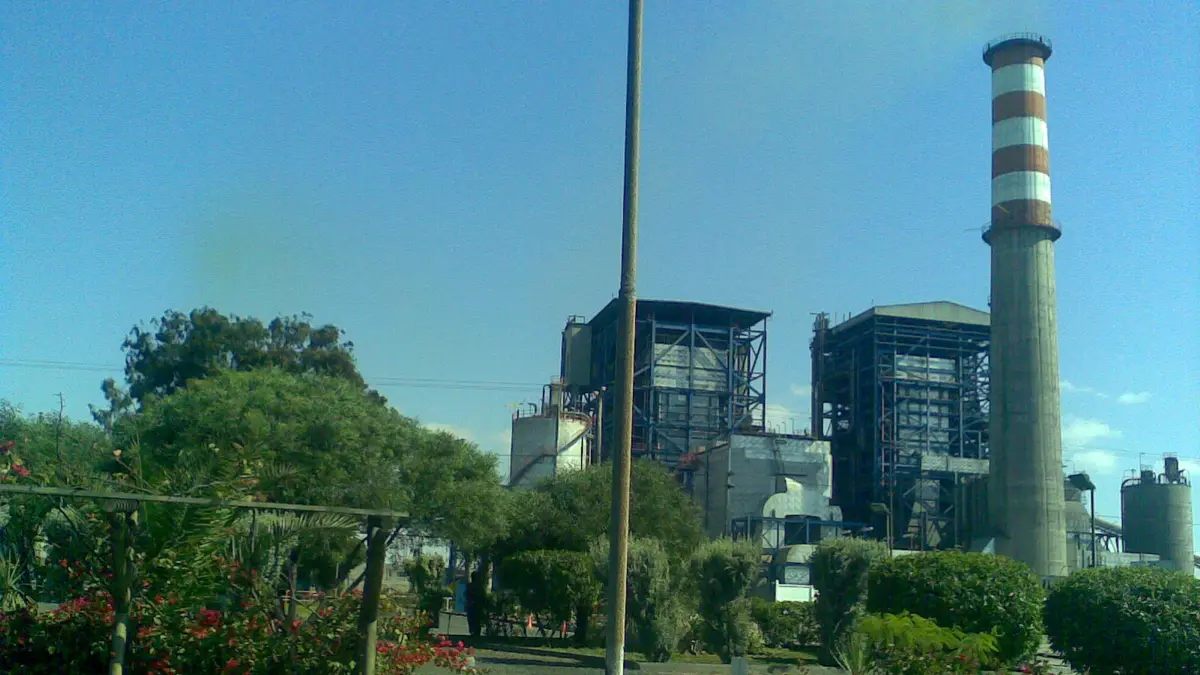
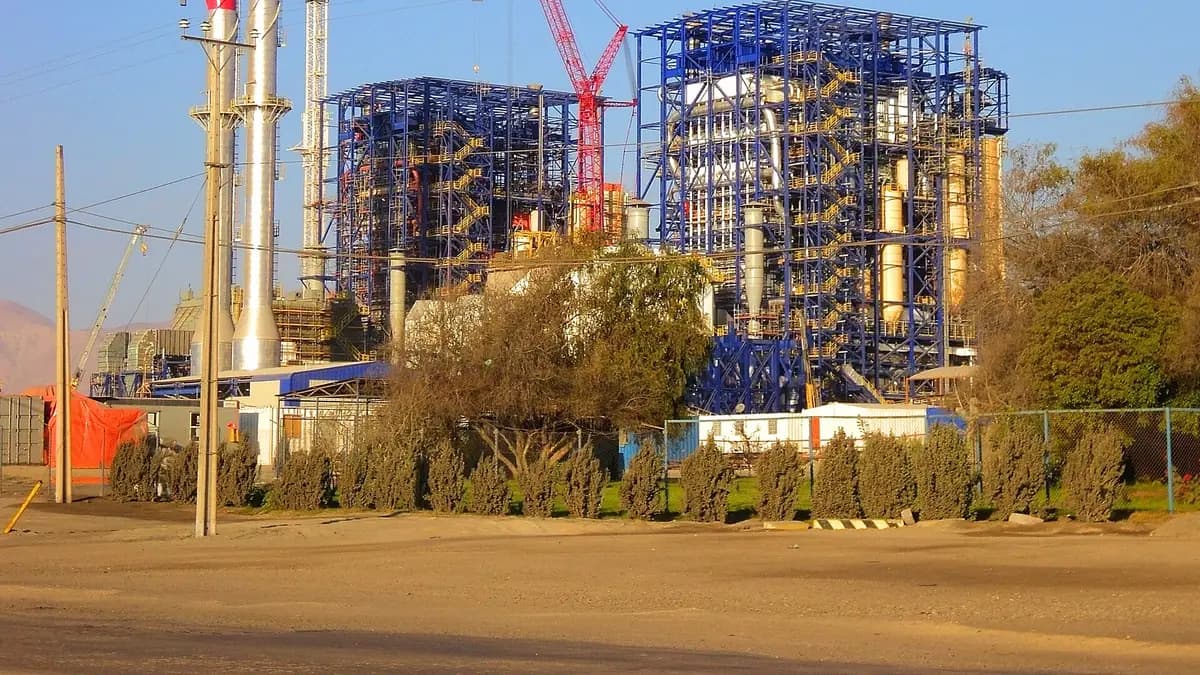
Engie Energía Chile completed the country's first conversion of a coal-fired power plant to run on natural gas. The Infraestructura Energética Mejillones (IEM) unit, with 377 MW, reached commercial operation on gas after an investment of US$78 million, the company announced on October 15, 2026 to outlets such as Diario Financiero and Revista Electricidad.
The plant keeps its capacity but changes fuel. It is a step in the coal phase-out plan in northern Chile, where much of the country's thermal generation is concentrated.
IEM plant conversion: the figures
| IEM plant data | Value |
|---|---|
| Location | Mejillones Energy Complex, Antofagasta Region |
| Capacity | 377 MW (unchanged after the conversion) |
| Investment | US$78 million |
| Start of works | April 2024 |
| Disconnection from the grid | December 31, 2025 |
| Authorization by the National Electric Coordinator | September 29, 2026 |
| Main fuel | Natural gas (previously coal) |
| In operation since | 2019 (on coal) |
The works included new dual burners, boiler adjustments and optimization of the associated systems, according to the company. In March 2024, through Exempt Resolution No. 117, the CNE approved the deadline exemption for the conversion, with natural gas as the main fuel and diesel as backup, according to the National Energy Commission.
The original schedule called for reconnecting the plant from July 1, 2026. Operation started about three months later, with the Coordinator's authorization on September 29.
How a coal plant is converted to natural gas
A plant like IEM produces electricity by burning fuel in a boiler, which heats water until it turns into steam; the steam drives a turbine connected to a generator. In the conversion, that chain stays the same: what changes is how and what is burned in the boiler.
- Dual burners: replace pulverized coal burners and allow natural gas to be used as the main fuel.
- Boiler adjustments: gas produces flame and heat differently from coal, so surfaces and controls are adjusted.
- Associated systems: coal and ash handling loses importance, and gas supply is reinforced.
- Backup: according to the CNE, the plant keeps diesel as a backup fuel.
Location helps: Mejillones has a liquefied natural gas (LNG) regasification terminal, which receives ships with imported gas and injects it into the area's pipelines. That infrastructure makes it possible for a plant on the bay to switch fuel without building a new long-distance pipeline.
What Engie said about the gas conversion
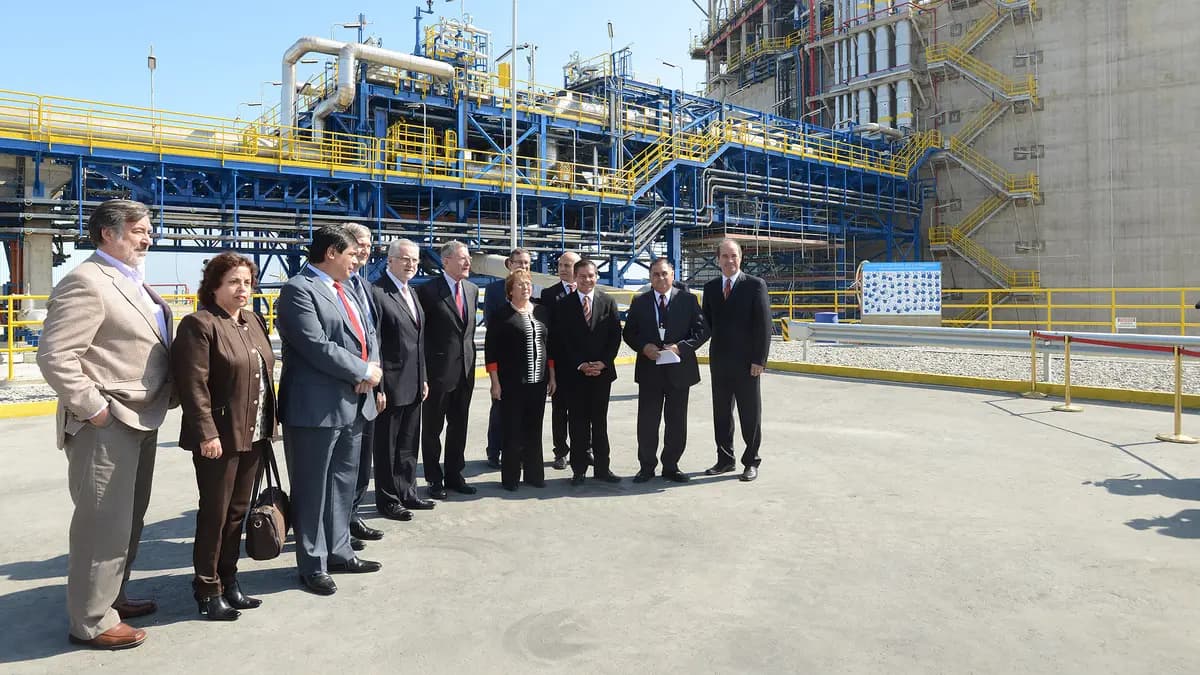
*"The conversion of IEM marks a before and after for our company and for the national energy industry"*, said Juan Villavicencio, CEO of Engie Chile, according to Diario Financiero.
*"The conversion of IEM shows that the exit from coal is not limited to disconnecting units"*, added Laïlla Ducousso, the company's managing director of generation.
December 31, 2025: the day Engie switched off 711 MW of coal
The IEM conversion is part of a broader move. On December 31, 2025, Engie disconnected three coal units at the Mejillones Thermal Complex, totaling 711 MW, according to its January statement:
| Unit | What happened on December 31, 2025 | Years in operation |
|---|---|---|
| CTM1 | Disconnected | ~29 years |
| CTM2 | Disconnected | ~27 years |
| IEM (377 MW) | Disconnected to convert it to gas | Since 2019 |
| Total disconnected | 711 MW of coal | — |
*"What we experienced this December 31 is a very important milestone for Chile's energy transition"*, Villavicencio said at the time. Two coal units remain at the complex, Andina (CTA) and Hornitos (CTH). For them, Engie submitted in December 2025 a US$59 million project to the Environmental Impact Assessment System to convert them to gas as well, according to Reporte Minero.
Why convert a coal plant instead of closing it
With the conversion, Engie keeps flexible backup capacity in the north, in a system where solar and wind generation grow every year but vary with the hour and the weather. Natural gas emits less CO2 than coal per unit of energy and almost no particulate matter, although it is still a fossil fuel. The company did not say how many emissions IEM will avoid.
The conversion also reuses existing infrastructure: the boiler, the turbine, the grid connection and the land. It is the same logic as another Engie project in the area, BESS Lile, which reuses thermal infrastructure to store energy in batteries. We covered the storage boom in Chile surpasses 3,000 MW of battery storage.
Is your company part of the energy transition in northern Chile? Show it to Energía Futura's readers.
See advertising optionsThe coal phase-out in Chile
In 2019, Chile committed to retiring its coal plants by 2040 at the latest, through voluntary agreements between the State and generators. Conversion to gas is one route, along with permanent closure and replacement by renewables with storage. The result shows in the power mix: solar alone is already a third of installed capacity, as we show in solar energy in Chile in figures.
The replacement is not automatic. The system needs plants that can start quickly at night or on windless days. That is why developers are pairing solar plants with large batteries, like the projects we described in Grenergy's financing for Algarrobal and Palmas.
Frequently asked questions
What is the IEM plant?
Infraestructura Energética Mejillones, a 377 MW Engie thermal power plant in the Antofagasta Region that ran on coal from 2019 and now uses natural gas.
How much did the gas conversion cost?
US$78 million, according to Engie.
Is it the first coal plant converted to gas in Chile?
Yes, according to the company, it is the first conversion of its kind in the country.
Which coal plants does Engie still have in Mejillones?
Andina (CTA) and Hornitos (CTH), which Engie also plans to convert to gas with a US$59 million project under environmental review.