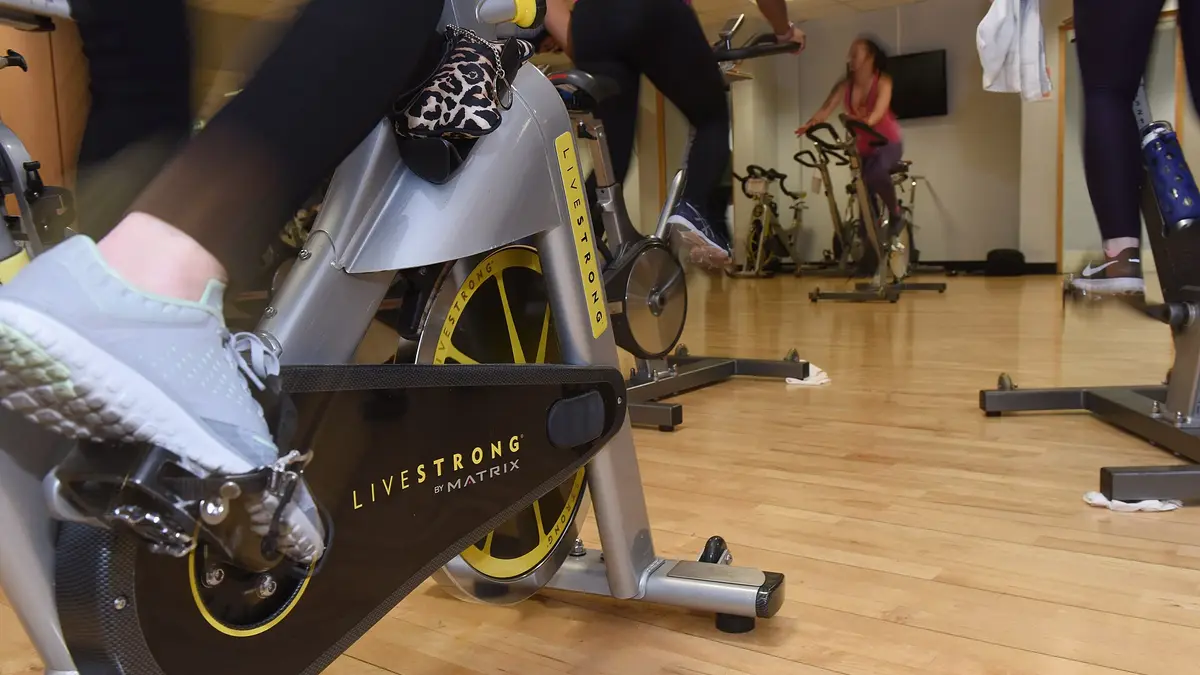
An exercise bike is one of the pieces of fitness equipment that use the least electricity. Mechanical and manually adjusted magnetic bikes, which are most of those sold in Chile, are not plugged in: the display runs on batteries. Magnetic bikes with an adapter draw around 4.5 W, about CLP 35 a month with an hour a day. Only connected bikes with a screen use a little more: up to CLP 384 a month if the adapter ran at full load for an hour every day.
This guide explains how much each type of exercise bike uses, why the standby mode of connected bikes can cost as much as using them, how it compares with a treadmill and which models and prices are available in Chile, checked at Falabella on 22 November 2026. Peso figures are Energía Futura calculations using CGE's November 2026 BT1 residential tariff of CLP 255.91 per kWh, according to its tariff schedule.
View the data as a table
| Mechanical or self-powered | $0 |
| Magnetic with adapter, 1 hour a day | $35 a month |
| Connected with screen, 1 hour a day (maximum) | $384 a month |
How much electricity an exercise bike uses by type
The resistance of an exercise bike, which is what makes pedalling hard, comes from the rider, not from the grid. So consumption depends only on the electronics: the display, the heart-rate sensor, the resistance adjustment and, in connected models, the built-in tablet with Wi-Fi and speakers.
| Type of exercise bike | How it works | Draw from the grid | Cost with 1 hour a day |
|---|---|---|---|
| Mechanical (pad or belt) | Resistance is friction on the wheel; the display uses batteries | 0 W | CLP 0 a month |
| Manually adjusted magnetic | Magnets moved towards the wheel with a knob; battery display | 0 W | CLP 0 a month |
| Self-powered | A generator in the wheel powers the console | 0 W | CLP 0 a month |
| Magnetic with adapter | Small motor that moves the magnets and a backlit console | 4.5 W (9 V and 0.5 A) | CLP 35 a month |
| Connected with screen | Built-in tablet, Wi-Fi, speakers and electronic resistance | Up to 50 W (12 V, 4.17 A adapter) | Up to CLP 384 a month |
Sources: the Schwinn 240 recumbent bike manual lists a 9 V, 500 mA adapter; replacement listings for the original Peloton Bike adapter list 12 V and 4.17 A, about 50 W, which is the adapter's maximum capacity rather than typical draw; Decathlon sells self-powered Domyos bikes, such as the EB900 B, that need no socket. Energía Futura calculations at CLP 255.91 per kWh.
The practical conclusion is simple: electricity cost should not weigh on the choice of an exercise bike. Even in the worst case, a connected bike used one hour a day costs less than leaving a 55-inch TV on for four hours a day.
Magnetic bikes: when they need a socket
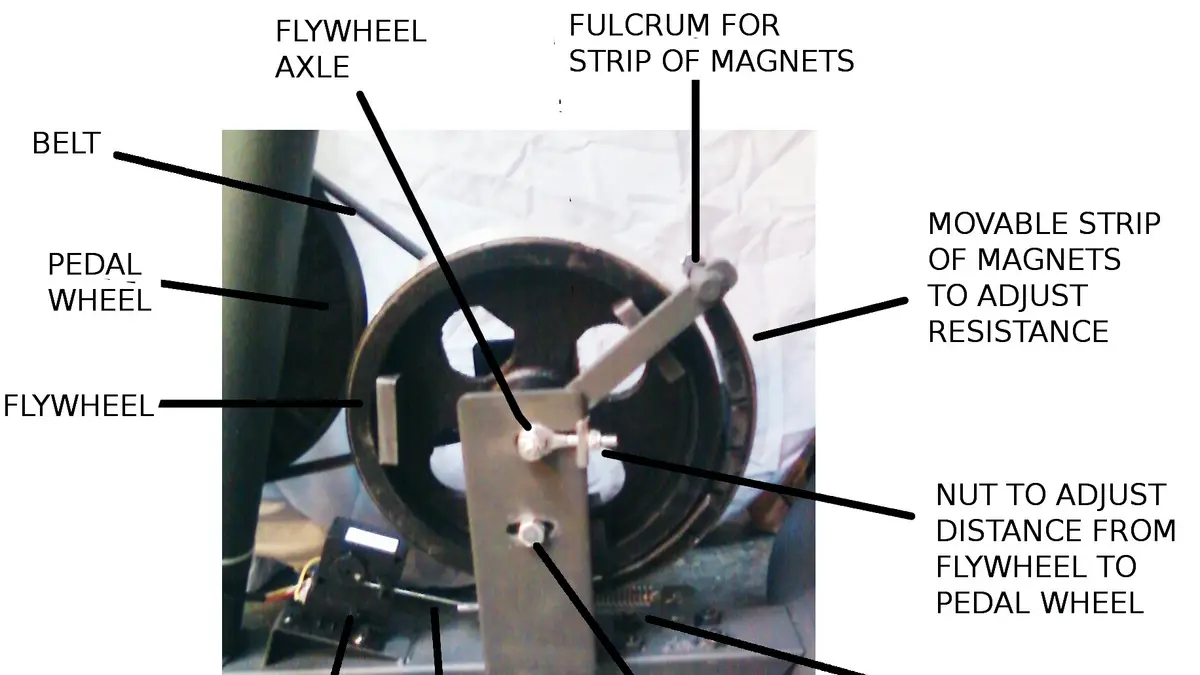
"Magnetic" does not mean electric. In most entry-level models, such as the 8-level magnetic bikes sold in Chile, the magnets are moved with a manual knob and the display runs on AA or AAA batteries. They have no cable.
The ones that do plug in are those that change resistance from the console, with buttons or a training programme: a small motor moves the magnets. Their adapter is low-power, like the 9 V, 0.5 A one in the Schwinn manual. Some high-end magnetic bikes, such as the 32-level M460 Elite 2.0 sold by Falabella, have a screen and fine adjustment; check the box to see whether they come with an adapter or run on batteries.
There is a third group, self-powered bikes: they carry a small generator that uses your pedalling to power the console. Decathlon promotes this in its Domyos EB900 B and EB 520 B models with the line that "you supply the energy". They can go in any corner, far from a socket.
Standby mode: the biggest cost of a connected bike
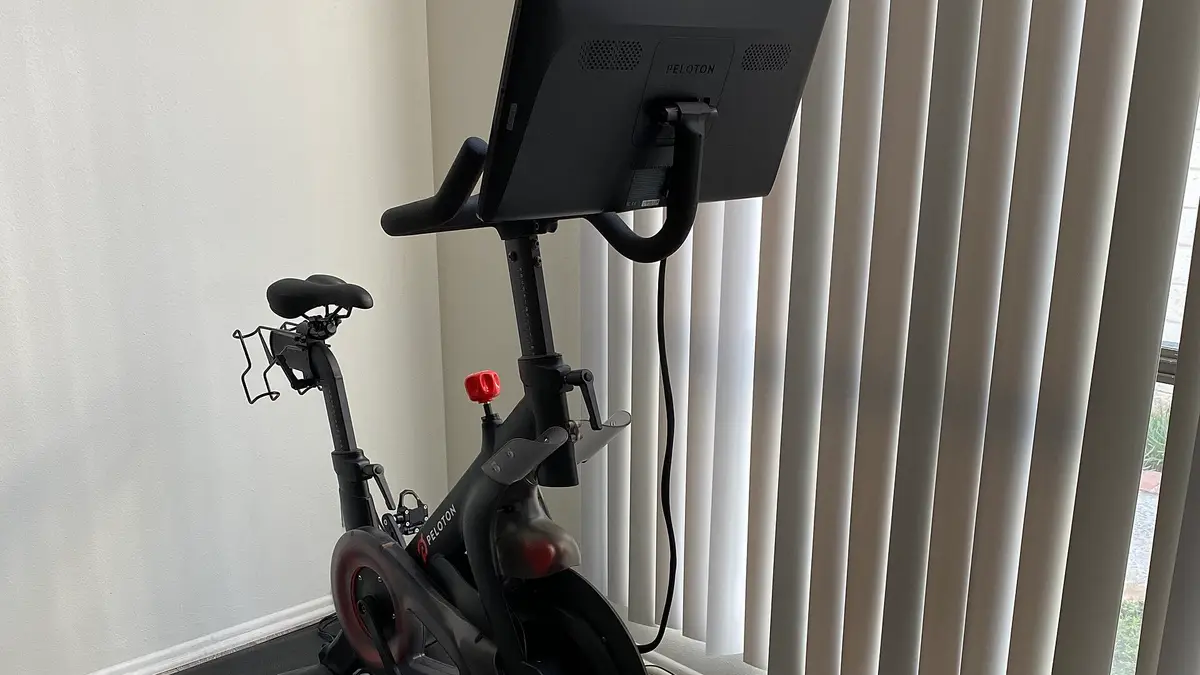
Bikes with a screen have a cost that goes unnoticed: standby mode. According to its manual, the Peloton Bike+ draws 1.91 W in networked standby and 0.39 W when switched off at the power switch. It seems small, but standby runs 24 hours a day.
| State | Power | Monthly consumption | Monthly cost |
|---|---|---|---|
| Pedalling 1 hour a day (adapter maximum) | 50 W | 1.5 kWh | CLP 384 |
| Networked standby the rest of the day | 1.91 W | 1.32 kWh | CLP 337 |
| Switched off at the switch the rest of the day | 0.39 W | 0.27 kWh | CLP 69 |
Source: standby and off-mode figures from the Peloton Bike+ manual; in-use power estimated from the adapter's capacity. Energía Futura calculation with 23 hours a day of standby and CLP 255.91 per kWh.
In other words, a connected bike left on standby can use almost as much without being used as when pedalling. Switching it off at the switch after each session saves about CLP 270 a month. The same thing happens with other devices, as we explain in our guide to the TV and its standby mode.
Bike or treadmill: which uses more electricity
The comparison with a treadmill is the one that matters most. A treadmill uses a motor to move the belt, and according to measurements by the manufacturer Lifespan Fitness, its conventional motor draws 240 W walking at 6 km/h and 480 W running at 12 km/h. An hour of running costs about CLP 123, against CLP 0 to 13 for an exercise bike. See the details in our guide to the electric treadmill.
For someone who trains one hour five times a week, a treadmill run at 12 km/h adds about CLP 2,660 a month in electricity. A magnetic exercise bike with an adapter, about CLP 25. In summer, add the fan many people place in front of them to keep cool: a 50 W pedestal fan uses as much as a connected bike.
Exercise bike prices in Chile
On 22 November 2026 we checked the best-selling exercise bikes at Falabella. We used the price without the store's card (event or online price). The cheapest, mechanical or basic spinning bikes, start at CLP 59,990; mid-range magnetic bikes sit around CLP 160,000 to 280,000, and magnetic spinning bikes with a screen and many levels exceed CLP 300,000.
| Ultimate Fitness E10 | Mechanical | 59,990 |
| Yepsport (estática) | Mechanical | 59,990 |
| Ten Series SBR40 | Spinning | 89,990 |
| Bianchi MP 500 plegable | Magnetic | 119,900 |
| Ultimate Fitness R200 Pro | Magnetic | 159,990 |
| Ten Series XT50 | Magnetic spinning | 169,990 |
| Ten Series X4000 (13 kg) | Spinning | 169,990 |
| Ten Series M2000R | Magnetic recumbent | 189,990 |
| Ultimate Fitness E500 Pro | Magnetic | 219,990 |
| Ten Series XT60 | Magnetic spinning | 224,990 |
| Ultimate Fitness R510 Pro | Magnetic | 279,990 |
| Ultimate Fitness M460 Elite 2.0 | Magnetic spinning, 32 levels | 329,990 |
| Ultimate Fitness R800 Pro | Magnetic | 449,990 |
| Ultimate Fitness M650 Elite 2.0 | Magnetic spinning | 549,990 |
| Price range | What you find | Examples (Falabella, 22 Nov 2026) |
|---|---|---|
| Up to CLP 100,000 | Mechanical, folding and light-flywheel spinning bikes | Ultimate Fitness E10 CLP 59,990; Ten Series SBR40 CLP 89,990 |
| CLP 100,000 to 200,000 | 8-level magnetic, 10 to 13 kg spinning and recumbent bikes | Bianchi MP 500 CLP 119,900; Ultimate Fitness R200 Pro CLP 159,990; Ten Series M2000R CLP 189,990 |
| CLP 200,000 to 350,000 | Mid-range magnetic and magnetic spinning | Ten Series XT60 CLP 224,990; Ultimate Fitness R510 Pro CLP 279,990; M460 Elite 2.0 CLP 329,990 |
| Over CLP 350,000 | High-end magnetic and spinning | Ultimate Fitness R800 Pro CLP 449,990; M650 Elite 2.0 CLP 549,990 |
Source: Falabella, prices without store card as of 22 November 2026. Falabella's listings do not state power consumption; they do state the resistance type.
The other way round: how much energy a rider generates
Many people wonder whether an exercise bike could generate electricity for the home. The maths is simple: pedalling at 100 W for an hour produces 100 Wh, or 0.1 kWh. At the residential tariff, that energy is worth about CLP 25.6.
View the data as a table
| One hour pedalling at 100 W | 100 Wh |
| What that energy is worth | $25.6 |
| Pedalling hours to charge a phone | 0.2 h |
That is enough to charge a phone several times, but not to run the house: a Chilean home uses about 6 kWh a day on average, as we explain in our guide to how much electricity a house in Chile uses, the equivalent of pedalling some 60 hours at that pace. Self-powered bikes use that energy only for their own screen.
How to choose an exercise bike
- Resistance type: magnetic is quieter and smoother than friction; spinning bikes with a heavy flywheel (10 to 13 kg) better imitate a road bike.
- Maximum user weight: entry-level bikes support 100 to 110 kg; mid-range, 120 to 150 kg.
- Space: folding and X-bike models take half the room; recumbent bikes more than double, but are easier on the back.
- Socket: if you want it somewhere without a socket, choose a mechanical, battery-powered magnetic or self-powered bike.
- If it is connected: switch it off at the switch after use to avoid the standby cost.
Does your company sell fitness equipment or efficient home products? Reach Energía Futura's readers.
See advertising optionsFrequently asked questions
How much electricity does an exercise bike use?
Most use none because they are not plugged in. Magnetic bikes with an adapter cost about CLP 35 a month with an hour a day, and connected bikes with a screen up to CLP 384.
Does a magnetic exercise bike need electricity?
Not always. Those adjusted with a manual knob run on batteries; only those that change resistance from the console use an adapter, of about 4.5 W.
Which uses more electricity, an exercise bike or a treadmill?
The treadmill, by far: about CLP 123 an hour running at 12 km/h, against CLP 0 to 13 for an exercise bike.
How much does an exercise bike cost in Chile?
At Falabella, as of 22 November 2026, from CLP 59,990 for mechanical bikes to over CLP 549,990 for high-end magnetic spinning bikes, without the store card.
Can you generate electricity with an exercise bike?
Yes, but little: an hour at 100 W produces 0.1 kWh, worth about CLP 25.6. Self-powered bikes use it for their own console.