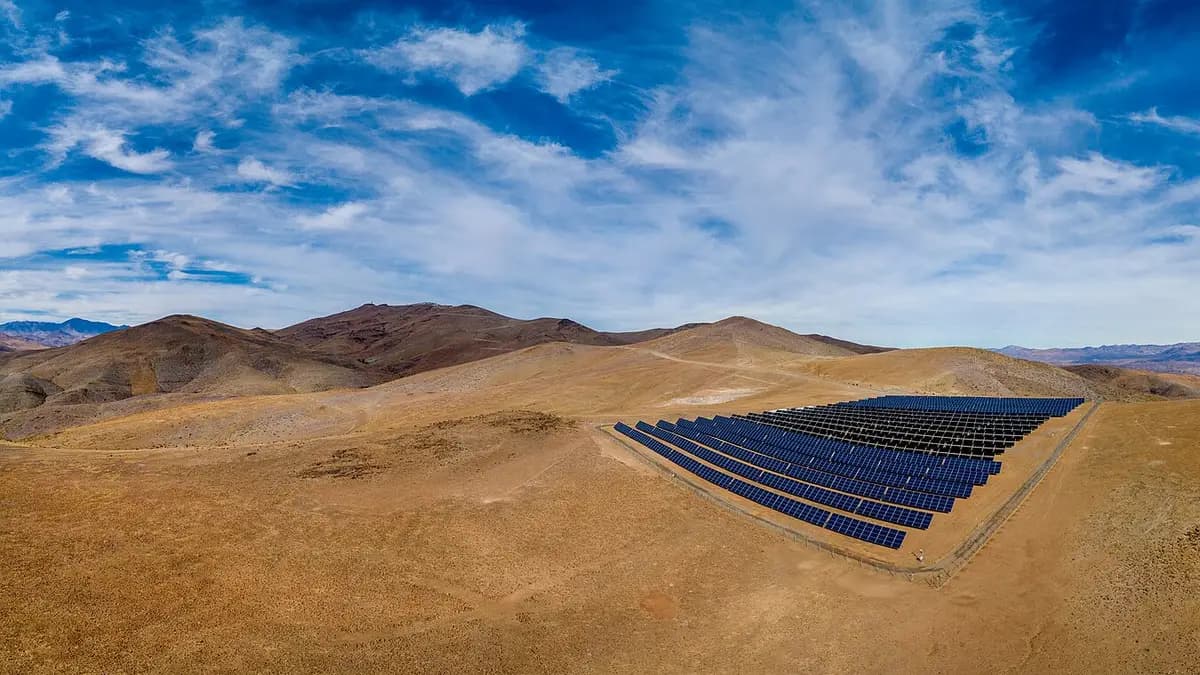
The Hemera solar park now has environmental clearance. The Environmental Assessment Commission of Chile's Maule Region approved the project at its session on Monday, October 19, 2026, and the decision was announced on October 20, according to the trade magazine REDIMIN on October 22. The plant will have 94.6 MW of installed capacity, about 157,680 solar panels and a battery energy storage system (BESS) of 541.44 MWh, with an estimated investment of US$130 million.
The formal owner is Bellavista Solar SpA, a company linked to the Greek group Metlen (formerly Mytilineos), which submitted the project to Chile's Environmental Impact Assessment System (SEIA) in February 2025. The plant will be located in the municipalities of Río Claro and San Rafael, in Talca province, and will cover about 216.4 hectares, according to the project file in the SEIA.
What the Hemera solar park looks like
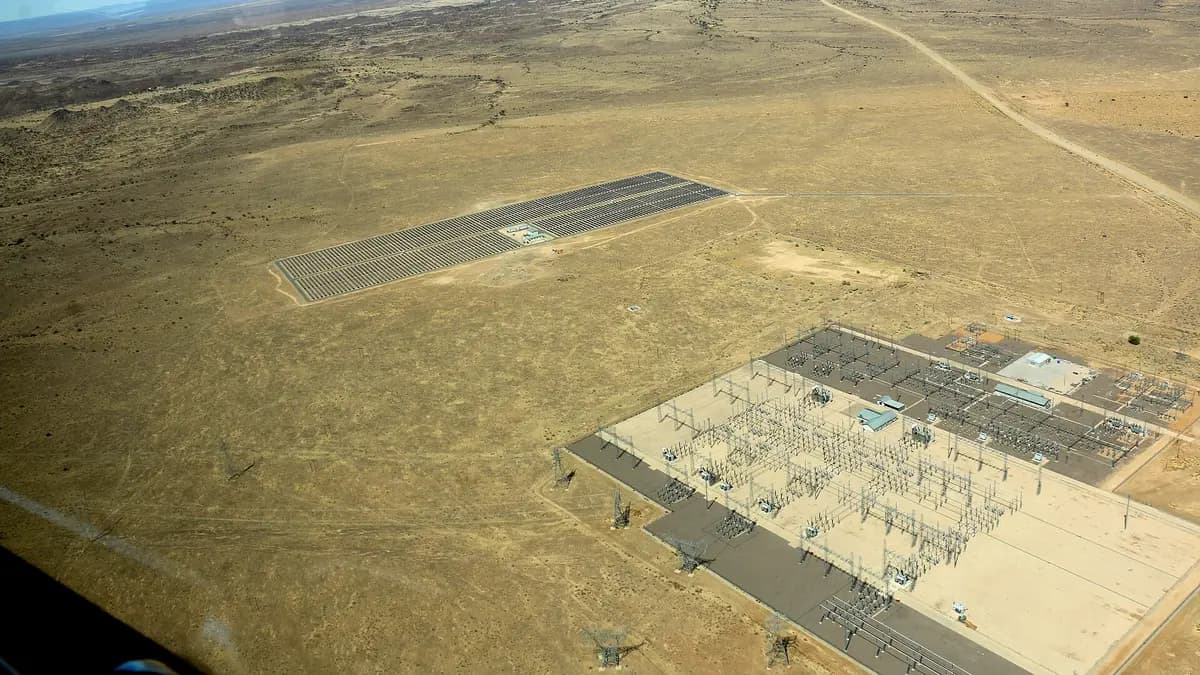
The notice published by the Maule office of the Environmental Assessment Service (SEA) in the Official Gazette on May 6, 2025, when public consultation opened, describes a 94.6 megawatt park with 157,680 panels, 144 lithium battery containers, an electrical substation and a 23 kilometer transmission line. The plant will sit about 11.7 km northeast of downtown Río Claro in a straight line, and the substation 1.1 km from San Rafael.
| Feature | Hemera solar park |
|---|---|
| Owner | Bellavista Solar SpA (Metlen group) |
| Location | Río Claro and San Rafael, Talca province, Maule Region |
| Installed capacity | 94.6 MW |
| Solar panels | 157,680 |
| Batteries (BESS) | 541.44 MWh in 144 lithium containers |
| Maximum battery injection | 90 MW for 5 hours |
| Area | 216.4 hectares |
| Grid connection | Hemera 33/66 kV substation and a 23 km line to the Los Maquis substation (CGE) |
| Estimated investment | US$130 million |
| Workers at construction peak | Up to 350 |
Sources: SEA Maule notice in the Official Gazette (May 6, 2025), Portal Minero (March 5, 2025) and REDIMIN (October 22, 2026). Investment and jobs are as declared by the developer.
Power will leave the plant through a Hemera step-up substation, raising voltage from 33 kV to 66 kV, and a single-circuit line of about 23 km to the Los Maquis substation, owned by the distributor CGE. Under the schedule the company filed, construction would take 18 months, and the developers expect to finish works by late 2027.
A solar park with batteries for the evening
The most relevant part of the design is storage. The 541.44 MWh of nominal capacity will allow up to 90 MW to be injected for five hours. In practice, the system will store part of the midday solar output, when there is a surplus, and deliver it at dusk, when the grid needs it and prices rise. The energy actually delivered will depend on the state of charge, conversion losses and operating restrictions, as REDIMIN's report notes.
The Hemera solar park permitting process, step by step
The project was filed as an Environmental Impact Declaration (DIA), the route for projects that do not cause the most serious effects defined by law. Its review took about 20 months, including a public consultation and an addendum answering questions from public agencies.
| Date | Milestone |
|---|---|
| February 2025 | DIA filed with the SEIA |
| April 28, 2025 | SEA Maule opens public consultation (exempt resolution No. 20250700155) |
| May 6, 2025 | Notice published in the Official Gazette |
| September 2026 | Developer submits an addendum |
| October 8, 2026 | Consolidated Evaluation Report (ICE) |
| October 19, 2026 | Maule Assessment Commission approves the project |
| Late 2027 | Completion projected by the company |
Sources: Official Gazette, Portal Minero and REDIMIN. Environmental approval does not mean the investment has been made or that construction has started: the project still needs sector permits and, based on public information, has not announced power supply, financing or construction contracts.
Why solar parks now come with batteries
Hemera follows the trend dominating new solar plants in Chile: almost all include storage. The reason is curtailment, the solar and wind energy that is lost because the grid cannot carry it or there is no demand at that time. Between January and September 2026, 3,546 GWh of renewable energy were curtailed, 4.6% less than in the same period of 2025, according to the September statistical bulletin of ACERA, the renewable energy and storage association.
Abundant midday energy also sinks prices. In October, the marginal cost at the Polpaico node hit its lowest weekly level since 2002, as we reported in the drop of the marginal cost to US$3.4 per MWh. For a solar generator without batteries, that means selling much of its output at prices close to zero.
Batteries change that equation. With five hours of storage, Hemera will be able to shift its output to the afternoon and night, when gas and coal plants usually set the price. The weight of this technology is already visible: storage systems supplied 5.1% of the energy injected between January and September 2026 and 7.9% in September, as we detailed in the rise of batteries in Chile's power mix.
Solar power moves to central and southern Chile
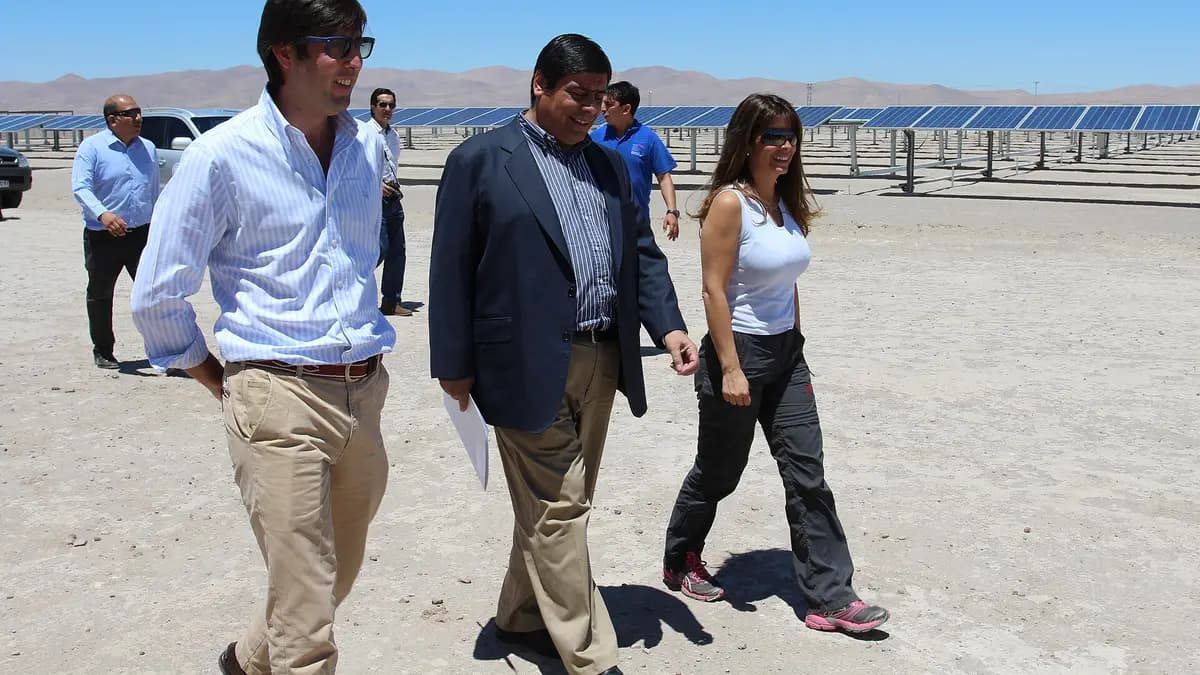
Most of Chile's solar capacity is in the north, in the Antofagasta, Atacama and Tarapacá regions, where solar radiation is among the highest in the world. But congestion on the transmission lines to the center of the country has pushed developers to look for land closer to the big consumption centers, such as Maule, O'Higgins and Ñuble. Hemera will connect to CGE's 66 kV network, that is, to a zonal grid and not to the large northern trunk lines.
Radiation in Maule is lower than in the desert, but being a few kilometers from demand reduces the risk of getting stuck behind a saturated line. In the same center-south zone, other plants also combine panels and batteries. The broader picture of the technology is in Chile's solar energy in figures.
Who Metlen is
Metlen Energy & Metals, known until 2024 as Mytilineos, is a Greek industrial group with businesses in metallurgy (aluminum), power generation and the development of solar and storage projects in several countries. In Chile it operates through project companies such as Bellavista Solar SpA, the registered owner of Hemera before the SEA.
In short, the Hemera solar park adds a mid-sized project, under 100 MW, but with a high storage ratio: more than 5.7 MWh of battery for every MW of solar installed. That design aims to sell energy in the highest-value hours rather than maximize midday output.
Does your company develop, build or finance solar and storage projects? Reach Energía Futura's readers.
See advertising optionsFrequently asked questions
Where will the Hemera solar park be?
In the municipalities of Río Claro and San Rafael, Talca province, Maule Region. The plant will be about 11.7 km northeast of downtown Río Claro.
How much energy will its batteries store?
The system will have 541.44 MWh of nominal capacity in 144 lithium battery containers, and will be able to inject up to 90 MW for five hours.
When will it start operating?
The developers expect to finish works by late 2027. Construction would take about 18 months, but it has not started yet and depends on sector permits and financing.
How many jobs will it create?
Up to 350 workers at the peak of construction. These are not permanent jobs: running a solar plant requires a much smaller team.