Chile's light pollution standard, Supreme Decree No. 1 of 2022 of the Ministry of the Environment, took full effect across the country on October 19, 2026. From that date, every new or replacement outdoor light fixture, in any municipality, must meet the standard's limits. Until now those requirements applied only in the so-called Special Protection Areas, where they have been in force since October 2024.
To prepare for the change, the Superintendency of the Environment (SMA) began a mass preventive notification: it sent official letters to the holders of regulated facilities, Revista Electricidad reported on October 22. Superintendent Emanuel Ibarra called the full entry into force «a key step for protecting the night sky».
What Chile's light pollution standard requires from October 19
The decree was published in the Official Gazette on October 18, 2023 and replaced the 2012 standard (DS 43/2011), which in turn succeeded the first rule from 1999, designed only to protect astronomical observation in the north. The current version adds two new goals, biodiversity and human health, which is why it became national, according to the Environment Ministry's presentation on the decree.
The standard regulates five aspects of outdoor lighting: the direction of light (it limits what is emitted toward the sky), spectral radiance (it restricts blue light), emission by reflection, the luminance of advertising screens and a time limit. These are its main figures:
| Requirement | Rest of the country | Special Protection Areas |
|---|---|---|
| Maximum blue light (spectral radiance) | 7% | 1% |
| Reference color temperature | Up to 3,000 K (warm light) | Stricter |
| Sports venues | Up to 5,000 K (special case) | Special case |
| Switch-off of advertising, ornamental and sports lighting | From 00:00 to 07:00, unless permitted | From 00:00 to 07:00, unless permitted |
| In force for new sources and replacements | From 10-19-2026 | From 10-19-2024 |
Source: Ministry of the Environment, presentation of DS 1/2022 (2024), and SMA. The color requirement is measured as color temperature, in kelvin (K): the lower the figure, the warmer and more orange the light, and the less blue it contains.
In practice, municipalities, companies and sign owners that replace a fixture will have to choose warm equipment with low emission in the blue spectrum, mounted so it does not throw light upward. Advertising signs, ornamental lights and sports-field lighting must be switched off from midnight and cannot be turned on until 7 a.m., unless they hold a permit. Regulated parties must report through the lighting module of the Environmental Monitoring System, Sisat Lumínica.
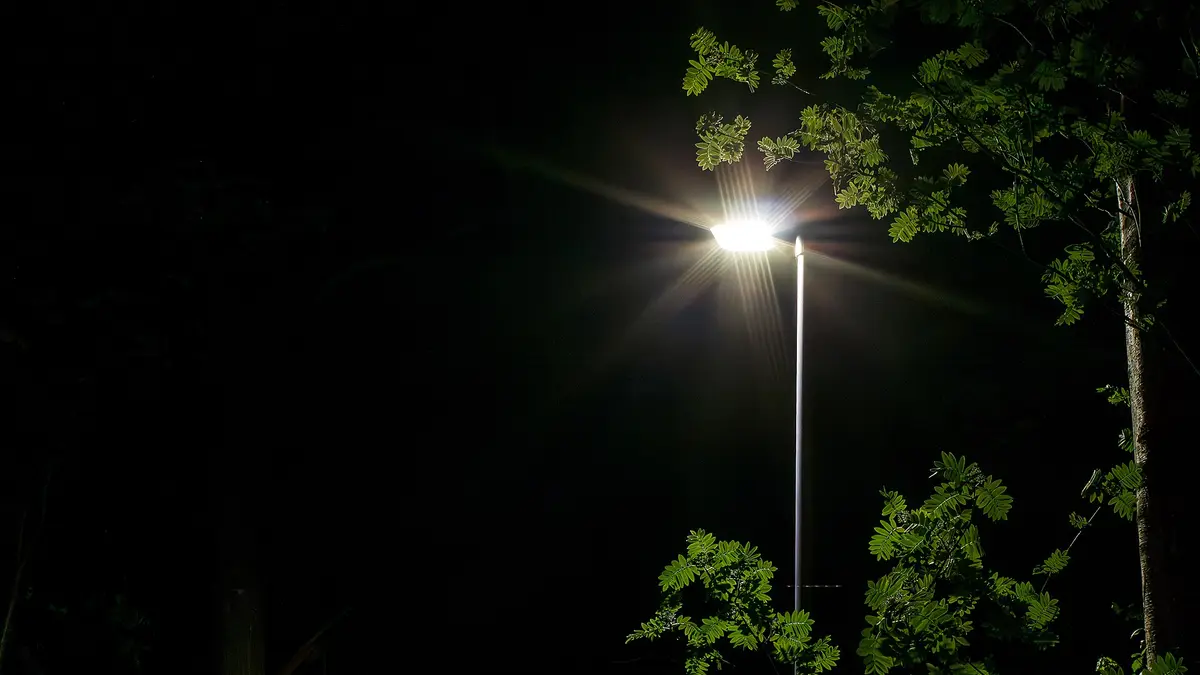
Deadlines of the light pollution standard for existing fixtures
The standard does not force all of the country's light fixtures to be changed at once. In most municipalities, existing sources must comply when they are replaced, with no maximum deadline. The exception is the municipalities closest to the astronomical observatories in the north, where there is a cutoff date. This is how the Ministry of the Environment details it:
| Zone | Example municipalities | Existing sources | Maximum blue light |
|---|---|---|---|
| Near observatories (0 to 100 km) | Antofagasta, Calama, San Pedro de Atacama, Vallenar, La Serena, Coquimbo, Ovalle, Vicuña | On replacement since 2024, final deadline 10-19-2029 | 1% |
| Far from observatories (100 to 150 km) | Mejillones, María Elena, Copiapó, Caldera, Illapel, Salamanca | On replacement since 2024, no final deadline | 1% |
| Biodiversity protection areas | National parks, nature sanctuaries, Ramsar sites and pink-footed shearwater zones | On replacement since 2024, no final deadline | 1% |
| Rest of the country | Santiago, Valparaíso, Concepción and other municipalities | On replacement from 10-19-2026, no final deadline | 7% |
Source: Ministry of the Environment, DS 1/2022 presentation, with municipal detail of the Astronomical Areas (DS 2/2022 of the Ministry of Science). The SMA has an interactive map of the standard to check the obligations and deadlines that apply to each location.
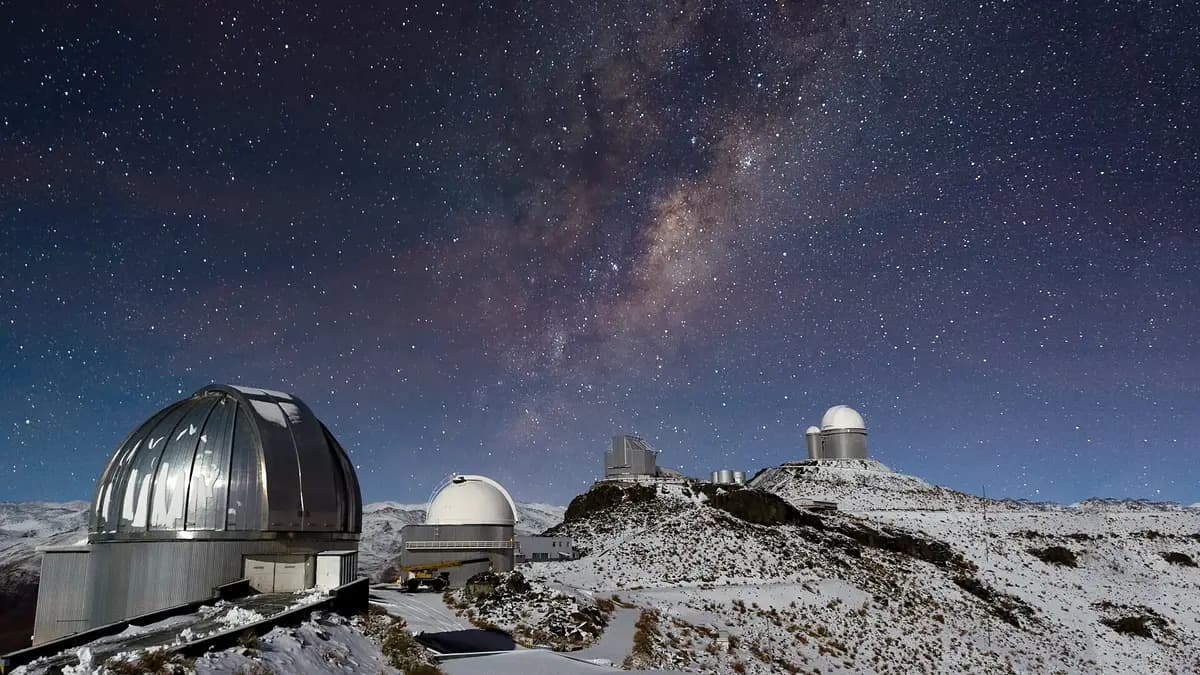
Northern Chile has a special reason to protect the darkness: it hosts some of the world's most important observatories and, at the same time, a large share of the country's solar parks. That dual use of the desert shows in solar energy in Chile in figures, where Antofagasta and Atacama hold the most installed capacity.
Complaints, inspections and penalties by the SMA
The SMA already has experience enforcing the standard in the zones where it has applied since 2024. These are the figures it reported when announcing the notification to regulated parties:
| Indicator | Figure | Period |
|---|---|---|
| Citizen complaints received | 324 | October 2024 to May 2026 |
| Complaints from the Metropolitan Region | 139 | Same period |
| Complaints from Coquimbo | 84 | Same period |
| Share of those two regions in the total | 69% | Same period |
| Environmental inspections carried out | 75 | October 2024 to May 2026 |
| Sanction proceedings opened | 6 | 2026, for advertising lighting |
Source: Superintendency of the Environment, cited by Revista Electricidad on October 22, 2026. Inspections included night checks of signs and billboards to verify they were switched off at the required hour. The six sanction proceedings of 2026 are concentrated in the Metropolitan Region and Coquimbo, and all concern advertising lighting.
The SMA is working on outreach with the Superintendency of Electricity and Fuels (SEC), the Ministry of Energy and the Ministry of the Environment. Coordination with the SEC matters because that agency certifies the electrical products sold in Chile, light fixtures among them.
Warm light and efficiency: what it means for power use
The standard sets no energy-saving targets, but some of its rules point that way. Switching off signs, lit facades and sports fields between midnight and 7 a.m. removes seven hours a day of consumption from that equipment. And the requirement not to light more than necessary avoids oversized installations.
The underlying change is about color. The spread of LED technology made lighting cheaper and cut consumption, but many of the first LED fixtures installed on streets and signs gave off cold light, with high blue content. According to the Ministry of the Environment, that blue light is what has driven most of the growth in light pollution in recent years, and it also affects species such as the pink-footed shearwater of the Juan Fernández archipelago and disrupts people's circadian cycle.
For a household, the standard does not change indoor bulbs. But if a house or a condominium installs new outdoor floodlights, it makes sense to choose low-power warm LEDs and point them downward. Each fixture's cost depends on its watts, the hours it stays on and the price of a kWh in each Chilean municipality: with CGE's BT1 rate for October 2026, of CLP 255.27 per kWh, a 20 W LED floodlight on 10 hours a day uses about 6 kWh a month, close to CLP 1,530.
That calculation helps size the weight of outdoor lighting on the bill. To see how it compares with the rest of the appliances, check the guide on how much electricity a home in Chile uses per month, which breaks down average household consumption.
Who the light pollution standard affects
The standard regulates outdoor lighting throughout the national territory. That includes pedestrian and vehicle lighting on streets and highways, industrial lighting, ornamental and decorative lighting, sports and recreational lighting, and advertising signs, both self-lit and externally lit. For industrial lighting, the reference for minimum levels is Chilean standard NCh3833/2:2023; for sports lighting, NCh3834:2023.
In practice, the first parties bound are municipalities, which manage most public lighting and, when they renew fixtures, will have to buy compliant equipment. Also companies with lit yards or worksites, shopping centers, owners of advertising screens and sports venues. The SMA recalled that all replacements and installations must meet the decree's parameters.
Does your company make or sell light fixtures, street lighting or energy efficiency solutions? Reach Energía Futura's readers.
See advertising optionsFrequently asked questions
Since when does the light pollution standard apply across Chile?
Since October 19, 2026. Before, it applied only in Special Protection Areas, from October 19, 2024, and in the rest of the country only to the switch-off of advertising, ornamental and sports lighting.
Do I have to change the fixtures I already have?
In most municipalities, not right away: existing sources must comply when they are replaced. Only in municipalities within 100 km of the observatories is there a final deadline, October 19, 2029.
What time must illuminated signs be switched off?
Advertising, ornamental and sports lighting must be off from 00:00 to 07:00, unless it has a permit.
What counts as warm light under the standard?
Light with low emission in the blue spectrum. The general reference is a color temperature of up to 3,000 K; sports venues are a special case, with up to 5,000 K.
Where can a non-compliant fixture be reported?
To the Superintendency of the Environment, which received 324 complaints between October 2024 and May 2026. The SMA map lets anyone check the obligations of each zone.