Linking Latin America's power grids could generate net benefits of between US$1 billion and US$5 billion a year by 2040, according to the Regional Electricity Interconnection Plan of the Latin American and Caribbean Energy Organization (Olacde). The study assessed 16 candidate interconnections and concluded that 12 belong to the optimal portfolio in the base scenario. Among the most valuable is the one that would join Peru and Chile.
The results were presented at Olacde's 11th Energy Week, in a session on the plan's progress toward 2040, according to Revista Electricidad, which published the details on October 22. The plan is driven by Olacde, the Community of Latin American and Caribbean States (Celac) and the European Commission, through the Euroclima program, and implemented by the German agency GIZ.
The figures of the regional power interconnection
The study did not stop at a single scenario. It tested each interconnection under six scenarios that combine different levels of demand, fuel prices, greater electrification and climate phenomena such as El Niño and La Niña, which change water availability for the region's hydropower plants. These are its main results:
| Indicator | Result |
|---|---|
| Candidate interconnections assessed | 16 |
| Scenarios analyzed | 6 |
| Interconnections in the optimal portfolio (base scenario) | 12 |
| Interconnections valuable in at least one scenario | 16 of 16 |
| Annual net benefit by 2040 | US$1 billion to US$5 billion |
| Benefit-cost ratio | 3.7 to 18.5 times, depending on the scenario |
| Plan horizon | 2040 |
Source: Olacde's Regional Electricity Interconnection Plan, presented at the 11th Energy Week, according to Revista Electricidad (10-22-2026) and El Economista (10-12-2026). The highest benefit corresponds to the scenario with the greatest regional electrification.
A benefit-cost ratio of 3.7 means the system saves 3.7 dollars for every dollar invested; in the most favorable scenario, 18.5. The benefits come from running the systems more efficiently, sharing surpluses and reserves between countries, and from better planning of investment in generation and storage. They are not guaranteed savings: they depend on countries reaching agreements and building the works.
How much it would cost and how much capacity it would add
When Olacde and Celac presented the plan in Montevideo in June 2026, they reported an initial investment of about US$3.5 billion to 2040, a target of 5,000 MW of optimal interconnection and a payback period of 2 to 6 years, according to El Dinero (June 19). Other coverage of that presentation cited close to US$3 billion, 5,835 MW and some 4,830 km of lines. Investment and capacity figures vary by source; the benefit figures do not.
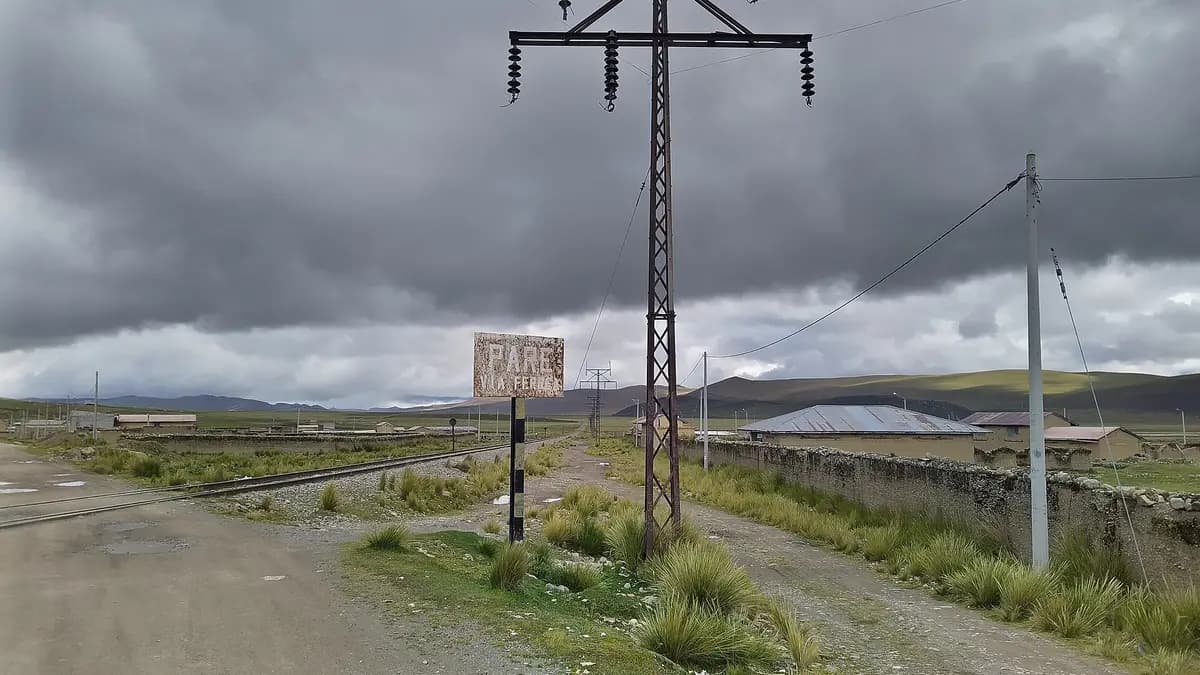
Peru-Chile and Panama-Colombia, the most valuable interconnections
According to the study, the most valuable interconnections are those that link entire subregions. Panama-Colombia would connect Central America with the Andean region, and Peru-Chile would join the Andean system with the Southern Cone. That was the explanation of Rodrigo Moreno, director of Civil Engineering in Energy at Universidad Adolfo Ibáñez and of the Enlace Energy Center, who presented the results.
For Chile, the link with Peru already has a first concrete step. EnorChile Transmisión filed with the Environmental Impact Assessment System a double-circuit 220 kV line between Arica and the border, as we detailed in the story on EnorChile's line to interconnect Chile and Peru. It is a 22 km, 250 MVA project, much smaller than a backbone interconnection, but it would allow exchanges between Arica and Tacna.
The other border under discussion is Bolivia's. In October, the presidents of both countries signed a declaration to advance energy integration and assess a power interconnection, as we reported in the story on the Chile-Bolivia declaration. Chile already has a connection with Argentina, the 345 kV Interandes line, which links Salta with the Andes substation in the Antofagasta Region and has been used intermittently.
What Chile would gain from power interconnection
Chile has a problem that integration could ease: it produces more solar energy than it can use during sunny hours. In 2025, curtailment of renewable energy reached 6,205 GWh, according to Deloitte, and in some weeks of 2026 the marginal cost at the Polpaico node fell to US$3.4 per MWh, the lowest level since 2002. Exporting those midday surpluses to neighboring countries and importing energy at night is one of the logics behind interconnections.
In the session's panels, Uruguay's Arianna Spinelli said integration lowers supply costs, and Myriam Ferrán, of the European Commission, argued that generation, transmission and interconnections must be planned together. Álvaro González, of ISA Energía Chile, said technical and regulatory planning must move in step, and named three conditions for these projects: trust, governance and adaptability.
Integration also touches prices. Chile has one of the region's most expensive residential electricity rates, as shown by the ranking of electricity prices in Latin America, although tariff differences between countries mostly reflect taxes, subsidies and distribution costs, not just the cost of generation.
The obstacles: agreements, rules and financing
The plan identifies where it makes sense to invest, but does not settle who pays or under which rules energy is traded. Blas Rozada, of Fonplata (the River Plate Basin development fund), stressed economic and financial viability, with an adequate sharing of risks between the public and private sectors. Olacde's executive secretary, Andrés Rebolledo, has proposed starting negotiations on an Energy Integration Treaty for Latin America and the Caribbean.
| Interconnection or initiative | Countries | Status in October 2026 |
|---|---|---|
| Peru-Chile corridor | Peru and Chile | Highlighted by Olacde's plan; EnorChile's Arica-border line under environmental review |
| Panama-Colombia corridor | Panama and Colombia | Highlighted by Olacde's plan as the link between Central America and the Andean region |
| Chile-Bolivia interconnection | Chile and Bolivia | Presidential declaration to assess it (October 2026) |
| Interandes line (345 kV) | Chile and Argentina | Existing, with intermittent use |
Source: Olacde, Revista Electricidad, SEIA and earlier Energía Futura stories. The table only summarizes the interconnections mentioned in this story; the full plan assessed 16.
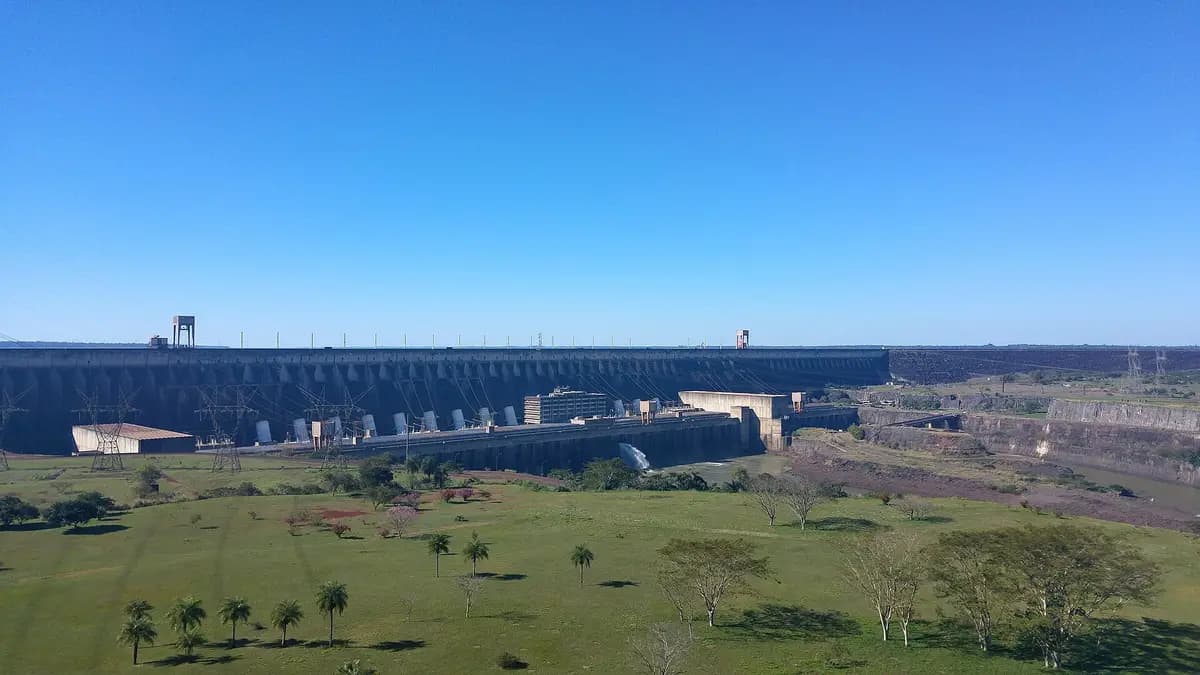
Regional experience shows integration is possible, but slow. The Itaipu dam, shared by Brazil and Paraguay, is the most cited example of binational power cooperation, and Central America has run a regional electricity market for years. In South America, by contrast, most existing connections are bilateral and of limited capacity, which explains why a regional plan seeks to set priorities toward 2040.
Does your company work in transmission, energy integration or infrastructure finance? Reach Energía Futura's readers.
See advertising optionsFrequently asked questions
What is the Regional Electricity Interconnection Plan?
A study by Olacde, with Celac, the European Commission (Euroclima) and GIZ, that identifies which power interconnections between Latin American countries are worth building by 2040.
How much could the region gain from power interconnection?
Between US$1 billion and US$5 billion a year in net benefits by 2040, depending on the scenario, with a benefit-cost ratio of 3.7 to 18.5.
Why is the Peru-Chile link among the most valuable?
Because it would join the Andean power system with that of the Southern Cone. According to the study, interconnections that link entire subregions create the most value.
Is Chile already connected to any country?
Yes, to Argentina, through the 345 kV Interandes line. With Peru there is a line under environmental review in Arica, and with Bolivia a presidential declaration to study an interconnection.