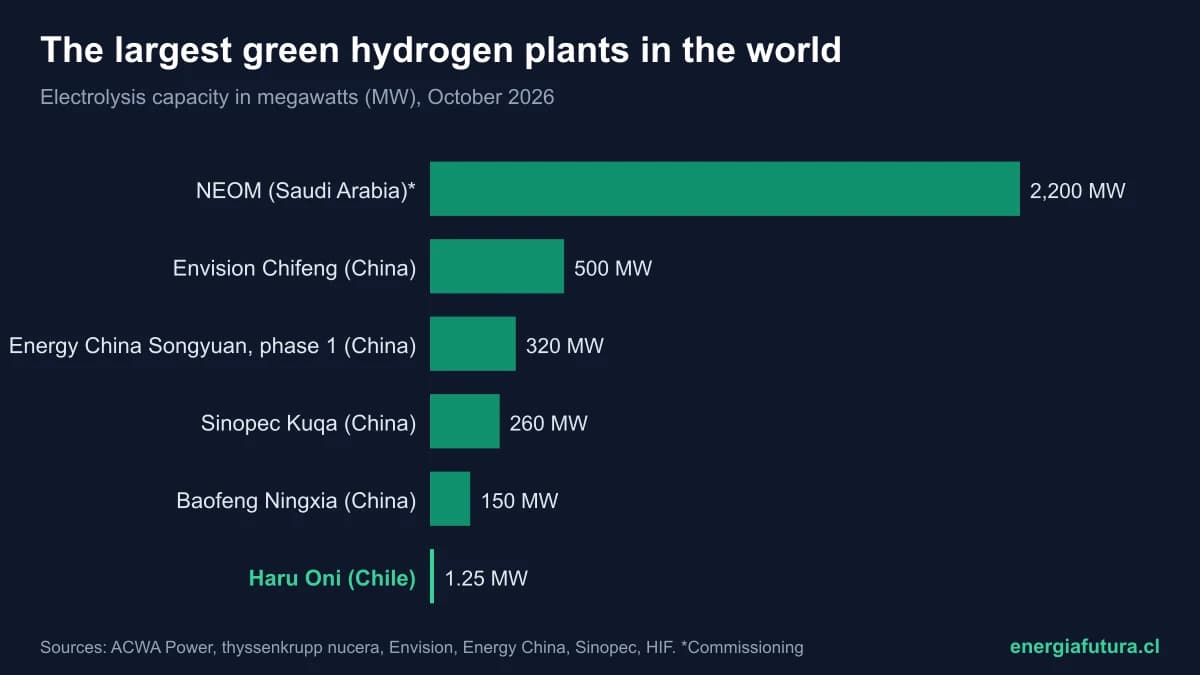
Updated on 28 October 2026. The largest green hydrogen plant in the world in operation is Envision's plant in Chifeng, Inner Mongolia (China), with 500 MW of electrolysis. It was commissioned in July 2025, runs only on wind power and batteries with no grid connection, and is designed to produce 320,000 tonnes of green ammonia a year, according to Hydrogen Insight and Gasworld.
The record is about to change hands. The NEOM complex in Saudi Arabia, with about 2.2 GW of electrolyzers, finished construction in August 2026 and is being commissioned, with commercial operation expected in 2027, according to Fertilizer Daily, citing ACWA Power. Chile, by contrast, has no large-scale plants in operation yet: its best-known plant, Haru Oni in Magallanes, is a pilot of about 1.25 MW.
Ranking of the largest green hydrogen plants in the world in 2026
The table ranks plants by installed electrolysis capacity, the measure the industry uses to compare green hydrogen projects. An electrolyzer splits water into hydrogen and oxygen using electricity; if that electricity is renewable, the hydrogen is called green. Only projects whose capacity has been reported by the company, or by trade media citing the company, are included.
| Rank | Plant | Country | Electrolysis | Status | Main product |
|---|---|---|---|---|---|
| — | NEOM Green Hydrogen | Saudi Arabia | ~2,200 MW | Commissioning (commercial in 2027) | Green ammonia (up to 1.2 Mt/year) |
| 1 | Envision Chifeng | China | 500 MW | Operating since July 2025 | Green ammonia (320,000 t/year) |
| 2 | Energy China Songyuan (phase 1) | China | 320 MW | Operating since 16 December 2025 | Hydrogen, ammonia and methanol (45,000 t of H₂/year) |
| 3 | Sinopec Kuqa | China | 260 MW | Operating since August 2023 | Hydrogen for a refinery (20,000 t/year) |
| 4 | Baofeng Ningxia | China | 150 MW | Operating since December 2021 | Hydrogen for coal chemicals |
| — | Haru Oni (HIF Global) | Chile | ~1.25 MW | Pilot operating since December 2022 | Methanol and synthetic gasoline |
Table sources: Fertilizer Daily and ACWA Power (NEOM), Hydrogen Insight and Gasworld (Chifeng), Global Times and FuelCellsWorks (Songyuan), S&P Global (Kuqa), Recharge with BloombergNEF data (Baofeng) and HIF Global (Haru Oni). NEOM has no rank number because it is not yet in commercial operation.
Envision Chifeng, the largest green hydrogen plant in operation
Envision's plant sits in the Chifeng Net Zero Industrial Park. Its most striking feature is that it does not depend on the power grid: it is fed by new wind turbines and a battery system that smooths out swings in the wind. The hydrogen is not sold as a gas but converted into green ammonia, which is easier to store and ship.
The company started with a pilot of about 35 MW and 20,000 tonnes of ammonia a year, according to the Ammonia Energy Association. Its goal is to reach 1.5 million tonnes of ammonia a year by 2028, with more than 2.5 GW of electrolysis, according to Gasworld. The International Energy Agency (IEA) also noted in its Global Hydrogen Review 2025 that Envision commissioned in July of that year what the company describes as the world's largest electrolyzer.
Songyuan, in second place
Second place goes to the China Energy Engineering (Energy China) project in Songyuan, Jilin province. Its first phase began operating on 16 December 2025, with 800 MW of its own wind and solar power and a design output of 45,000 tonnes of green hydrogen a year, which is turned into ammonia and methanol, according to Global Times. The first phase has about 320 MW of electrolysis, according to FuelCellsWorks, and the full project would reach 640 MW, according to the 2023 construction announcement reported by Hydrogen Insight.
The Kuqa case: size is not the same as output
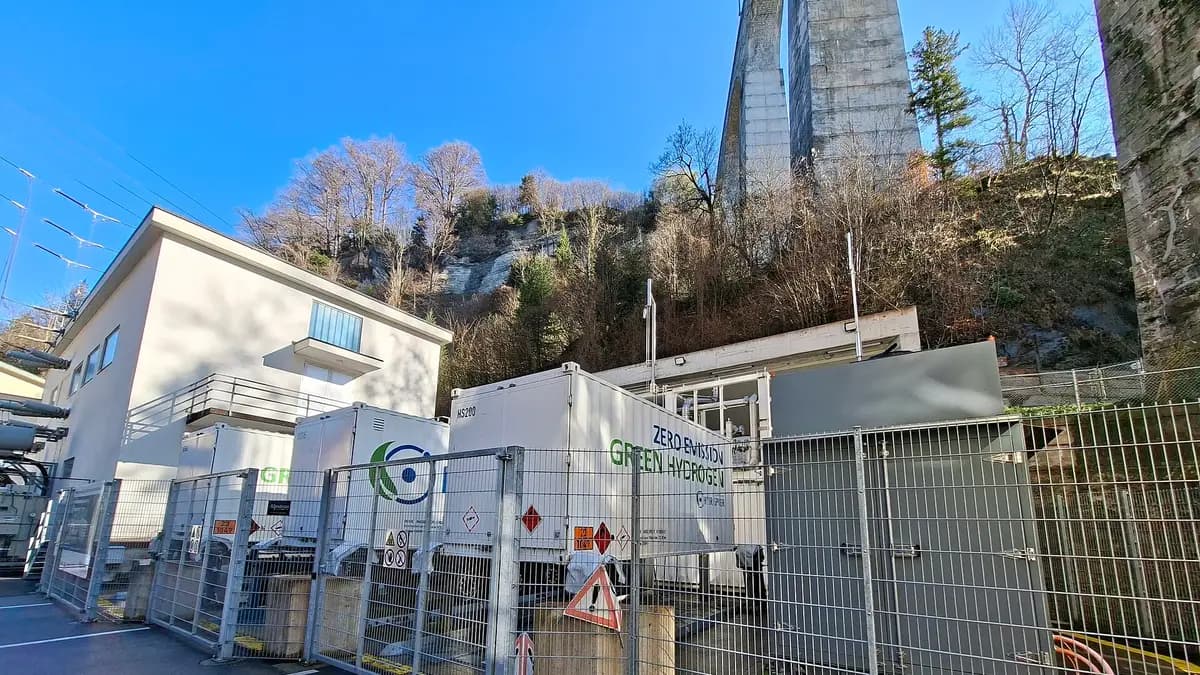
Sinopec Kuqa, in Xinjiang, was the largest green hydrogen plant in the world between 2023 and 2025. It has 260 MW of solar-powered electrolyzers and capacity for 20,000 tonnes of hydrogen a year, which is piped to a nearby refinery to replace hydrogen made from gas. Sinopec reported that the plant reached full operation on 30 August 2023, according to S&P Global.
But capacity does not guarantee output. A BloombergNEF analysis cited by Hydrogen Insight found that Kuqa was running at less than a third of its capacity, because of electrolyzer design problems and swings in solar power. That is why this ranking measures installed capacity rather than hydrogen produced: almost no plant publishes its actual output.
NEOM, the future largest green hydrogen plant in the world
NEOM Green Hydrogen Company is a joint venture of ACWA Power, Air Products and NEOM, with an investment of US$8.4 billion. Its plant, in the Oxagon industrial zone, will use about 4 GW of solar and wind power to produce up to 600 tonnes of hydrogen a day, which will be converted into ammonia for export. Air Products holds a 30-year contract for all the output, and in August 2026 Yara signed a marketing agreement for up to 1.2 million tonnes of ammonia a year, according to Fertilizer Daily.
The electrolyzers come from thyssenkrupp nucera, which in 2021 signed a contract for more than 2 GW in 20 MW modules, according to CHEManager. Construction ended in August 2026 and commercial operation was set for 2027, after earlier reports had placed it at the end of 2026. Once running, NEOM will have more than four times Chifeng's capacity.
| Global indicator | Figure | Source and date |
|---|---|---|
| Installed electrolysis capacity | More than 4 GW (doubled in 2025) | IEA, Global Hydrogen Review 2026 |
| Capacity under construction for 2026 operation | More than 2.5 GW | IEA, Global Hydrogen Review 2026 |
| Low-emissions hydrogen production | Almost 1 Mt in 2025 | IEA, Global Hydrogen Review 2026 |
| Largest plant in operation | 500 MW (Envision Chifeng) | Hydrogen Insight, July 2025 |
| Largest plant being commissioned | ~2.2 GW (NEOM) | Fertilizer Daily, August 2026 |
According to the IEA's Global Hydrogen Review 2026, installed electrolysis capacity worldwide doubled in 2025 to more than 4 GW, driven by a few large projects in China. The agency warns that growth is highly concentrated: a handful of plants account for most of the increase. Even so, low-emissions hydrogen remains a tiny share of the total used by industry.
Europe, with smaller plants
In Europe, projects are smaller. Galp's plant in Sines (Portugal), with 100 MW in ten 10 MW modules, finished installation in January 2026, and its supplier, Plug Power, presents it as the largest of its kind in Europe once it enters operation. The IEA expects Europe to account for about 2 GW of the projects under construction.
Where Chile stands in green hydrogen
Chile has large approved projects, but none at industrial scale in operation. Haru Oni, by HIF Global, on the outskirts of Punta Arenas, produced its first liters of synthetic gasoline in December 2022 with a 3.4 MW wind turbine and a Siemens Energy electrolyzer of about 1.25 MW. It is a pilot to validate the technology, not a commercial plant.
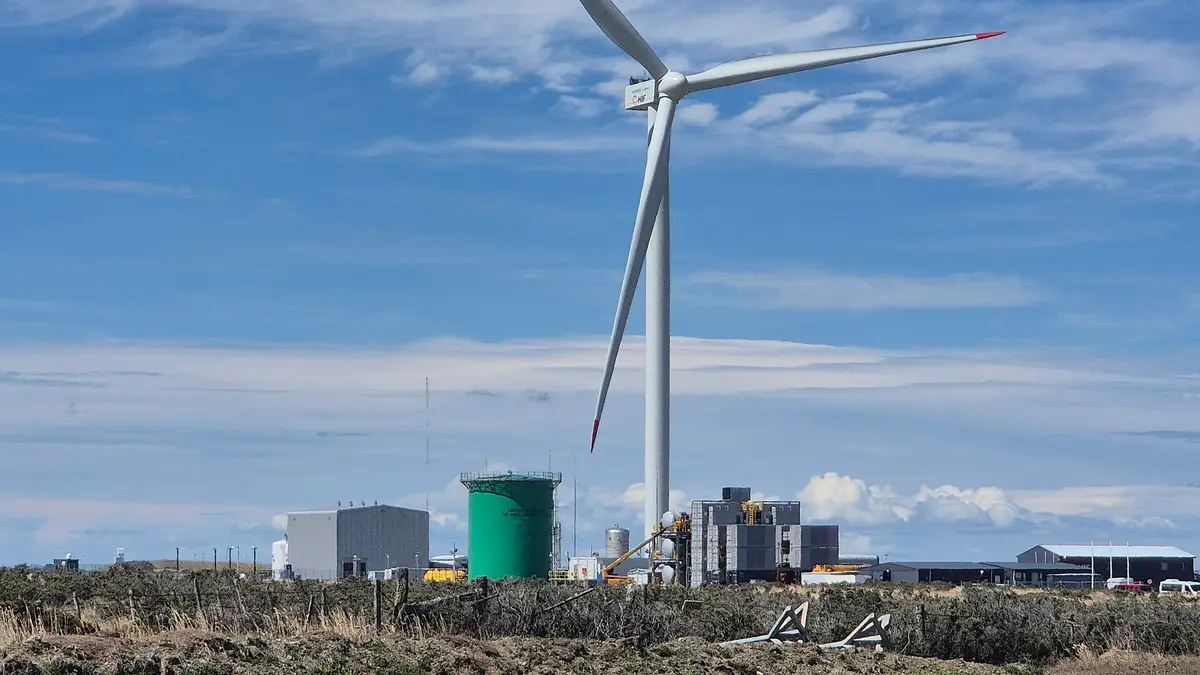
The leap would come with HNH Energy, in San Gregorio, Magallanes, which received its environmental approval in August 2026. It plans 3,000 MW of electrolysis in 150 alkaline electrolyzers of 20 MW, about 1.4 GW of wind power and 1.3 million tonnes of green ammonia a year, with an investment of US$11 billion, according to pv magazine Latin America. If built, it would surpass NEOM. Its owners say the investment depends on international demand for ammonia.
| Project in Chile | Region | Electrolysis | Status (October 2026) |
|---|---|---|---|
| Haru Oni (HIF Global) | Magallanes | ~1.25 MW | Pilot operating since 2022 |
| HNH Energy | Magallanes | 3,000 MW | Environmentally approved (August 2026) |
| H2 Magallanes (TotalEnergies) | Magallanes | No confirmed figure | Under environmental review since May 2025 (US$16 billion) |
| Quintero Bay (GNL Quintero and Acciona) | Valparaíso | 10 MW | Approved; in engineering |
Magallanes concentrates the projects because it has some of the best wind on the planet, as we explained in our ranking of the largest wind farm in the world.
In the north, the bet is on the Atacama Desert sun, the same resource behind the plants in our ranking of the largest solar power plant in the world.
Meanwhile, hydrogen is gaining ground in freight transport. The HyLog Biobío project plans ten green hydrogen trucks and a refueling station in Talcahuano, with public support.
Does your company develop green hydrogen, renewable energy or storage projects? Reach Energía Futura's readers.
See advertising optionsHow this ranking was built
The ranking considers electrolysis capacity in operation as of October 2026, using data from the companies or from trade media citing them. It does not include hydrogen plants that run on natural gas, even if they capture carbon. Chinese projects that appear in consultancy lists without confirmed start-up were excluded. Capacity figures vary between sources (for example, Kuqa is listed at 250 or 260 MW); the figure most cited by the company was used.
Frequently asked questions
What is the largest green hydrogen plant in the world?
In operation, Envision's plant in Chifeng (China), with 500 MW of electrolysis since July 2025. NEOM, in Saudi Arabia, with about 2.2 GW, is being commissioned and would start commercial operation in 2027.
Which country has the most green hydrogen?
China. The four largest plants in operation are there, and the IEA credits its projects with most of the capacity added in 2025.
Does Chile produce green hydrogen?
Yes, at pilot scale. Haru Oni, in Magallanes, has operated since 2022. Industrial projects such as HNH Energy (3,000 MW) are approved or under review, but not under construction.
What is the green hydrogen from these plants used for?
Mainly to make ammonia (fertilizer and shipping fuel), methanol, and to replace fossil hydrogen in refineries, as in Kuqa.
How to cite this data
Energía Futura (2026). The largest green hydrogen plant in the world 2026: ranking of the biggest electrolyzers. With data from the IEA, ACWA Power, thyssenkrupp nucera, Envision, Energy China, Sinopec, BloombergNEF and HIF Global, accessed on 28 October 2026. Available at https://energiafutura.cl/en/news/the-largest-green-hydrogen-plant-in-the-world-2026-ranking-of-the-biggest-electrolyzers. The cover chart may be reproduced with credit to Energía Futura and a link to this page.