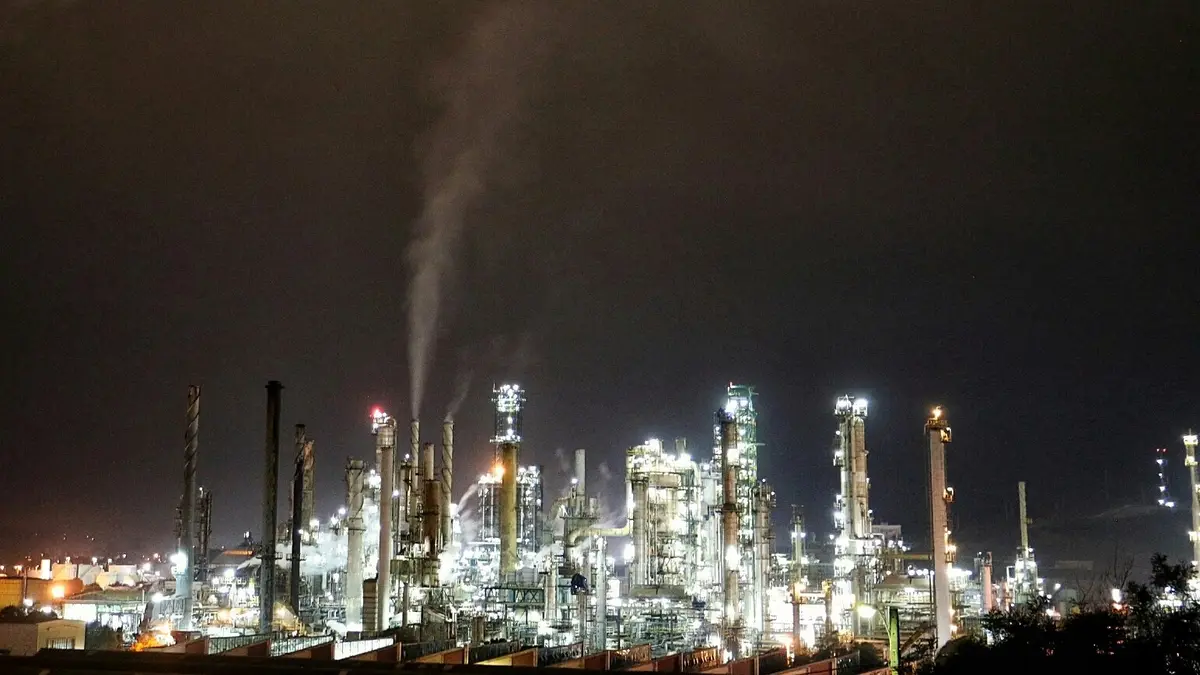
Chile's Superintendency of the Environment (SMA) filed four charges against Enap Refinerías S.A. over its Aconcagua Refinery, in Concón, Valparaíso Region. Two are classified as very serious (gravísimos) and relate to the alleged alteration of the data the refinery reported on its sulfur recovery system and its sulfur dioxide (SO2) emissions between 2023 and 2025. The other two are minor. The charges were reported on October 26, 2026, according to Revista Electricidad, and the sanction file is Case D-246-2026 in the National Environmental Enforcement Information System (SNIFA).
The charges concern the Atmospheric Prevention and Decontamination Plan (PPDA) for Concón, Quintero and Puchuncaví, set by Supreme Decree 105 of 2018 of the Ministry of the Environment, and the noise emission standard (Supreme Decree 38 of 2011). Filing charges is not a sanction: it opens a proceeding in which the company can submit a compliance program or present a defense.
The SMA's four charges against Enap's Aconcagua refinery
According to the details published by Revista Electricidad, the SMA's Sanctions and Compliance Division filed the charges based on findings by its Enforcement Division. The two very serious charges are preliminarily classified as such because of the alleged concealment, alteration and inaccuracy of technical data submitted to the authority.
| Charge | Classification | What the SMA alleges |
|---|---|---|
| Sulfur recovery | Very serious | Failing to meet the 98% minimum annual efficiency of the sulfur recovery units in 2023, 2024 and 2025, and allegedly manipulating data to simulate compliance |
| SO2 emissions | Very serious | Exceeding the annual limit of 1,145 tonnes of SO2 by leaving the flare stream (flaring) out of its reports |
| Continuous monitoring (CEMS) | Minor | Failing to validate the continuous monitoring system for particulate matter, SO2, NOx and gas flow at the catalytic cracking unit, three years after restarting it with a wet gas scrubber |
| Noise | Minor | Exceeding the nighttime limit of 45 dB(A) with up to 57 dB(A) in November and December 2025 |
Source: SMA, cited by Revista Electricidad (October 26, 2026). The PPDA requires the refinery to recover at least 98% of the sulfur it processes, so that it does not reach the atmosphere as SO2, a gas that irritates the airways and is one of the most closely monitored pollutants in the Concón, Quintero and Puchuncaví area.
Sulfur and SO2 figures recalculated by the SMA
The SMA recalculated the efficiency of the sulfur recovery system and concluded that it was below the 98% minimum in all three years reviewed. It also recalculated annual SO2 emissions including the stream of gas burned in flares, which according to the agency is the refinery's second most important emission source and was missing from the official reports.
| Year | Sulfur recovery efficiency (recalculated) | PPDA requirement | SO2 emissions (recalculated) | Annual limit |
|---|---|---|---|---|
| 2023 | 94.1% | 98% | 1,277 t | 1,145 t |
| 2024 | 90.5% | 98% | 1,168 t | 1,145 t |
| 2025 | 90.2% | 98% | n/a | 1,145 t |
Source: SMA, cited by Revista Electricidad. n/a: the published information does not include an SO2 recalculation for 2025. According to the agency, the inaccurate reports prevented it from exercising its powers in time.
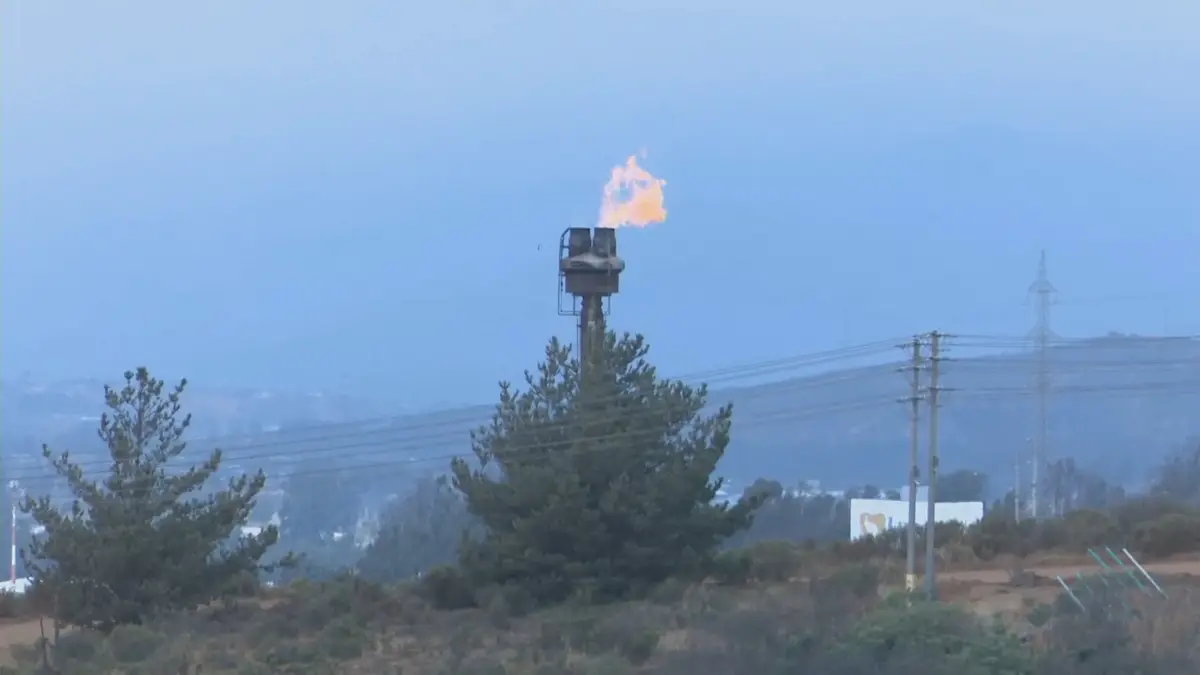
According to the SMA, the noise charge is linked to a history of 16 citizen complaints about noise, vibrations and operational instability in the flare system. Superintendent Emanuel Ibarra said that compliance with the Concón, Quintero and Puchuncaví decontamination plan is «not optional» and that, when the information received is not truthful or is incomplete, the SMA will use all its powers.
What Enap's Aconcagua refinery faces
The SMA's Organic Law allows, for very serious violations, the revocation of the environmental permit (RCA), closure or fines of up to 10,000 annual tax units (UTA) per charge. For minor ones, a written warning or fines of up to 1,000 UTA each. The theoretical maximum for the four charges is 22,000 UTA, about US$19 million, according to Revista Electricidad's estimate.
| Stage | Deadline or effect |
|---|---|
| Compliance program | 15 business days (extended ex officio) |
| Defense (descargos) | 22 business days |
| Maximum sanction per very serious charge | Revocation of the RCA, closure or up to 10,000 UTA |
| Maximum sanction per minor charge | Warning or up to 1,000 UTA |
| Referrals | Records sent to the Public Prosecutor's Office and the Comptroller General |
The SMA said it will send the records to the Public Prosecutor's Office and the Comptroller General's Office over possible crimes and other violations. Ibarra added that the agency cross-checks the data companies upload to different systems to detect false reports. Environmental enforcement is gaining weight in the energy sector: a few days ago Chile's light pollution standard, enforced by the SMA, also came fully into effect.
Does your company offer emissions monitoring, environmental compliance or industrial decarbonization solutions? Reach Energía Futura's readers.
See advertising optionsResponses from Enap and the government
In a statement reported by Revista Electricidad, Enap said it is analyzing the charges, that they are neither a sanction nor a final ruling, and that it will review the records to decide its next steps within the legal deadlines. The state-owned company stressed that the proceeding originated in irregularities that it detected and reported itself to the SMA and the Public Prosecutor's Office.
According to Enap, its internal controls were triggered in January 2026, when the refinery reported the inconsistencies to the parent company, which in turn informed the board. That month it dismissed eight workers; in June it restructured its environmental compliance area and dismissed eight more people, and in August, one more. The company says there is no evidence of an impact on the population, because nearby monitoring stations have met the primary air quality standards for SO2 and PM2.5 since 2019, and that its 2025 reports, delivered on January 30, 2026, already include the flares and comply with the SO2 limit. On sulfur recovery efficiency, it says it is reviewing the indicator with specialists and that it does not directly affect total emissions.
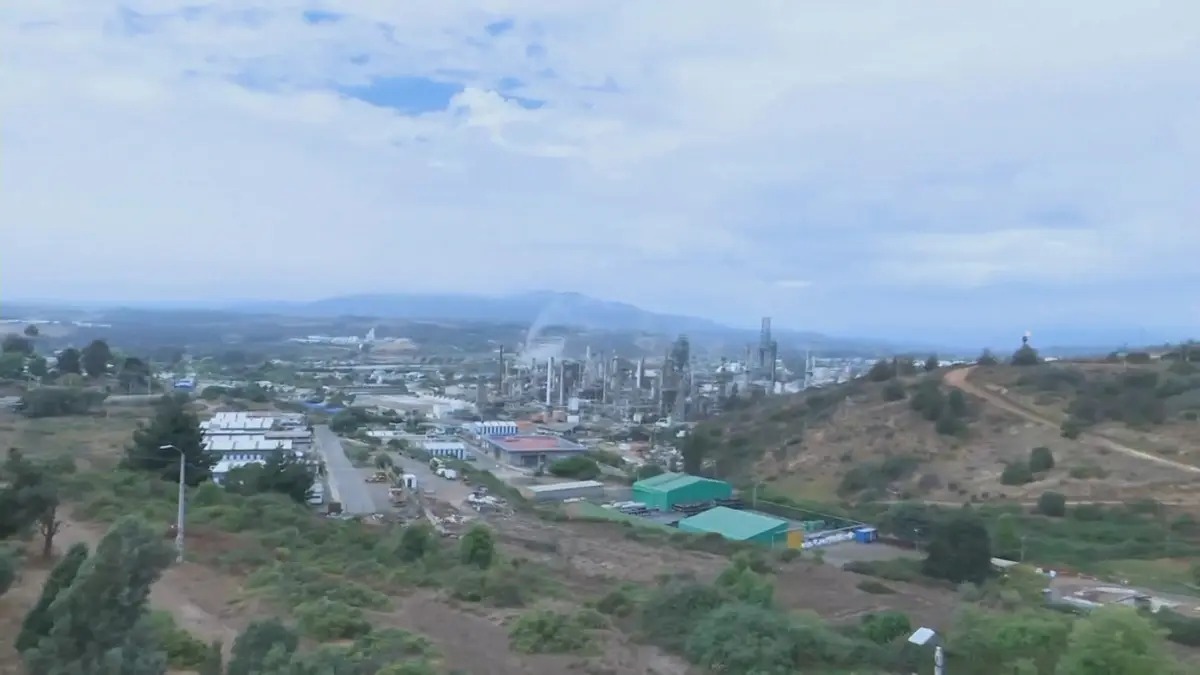
The Energy and Finance ministries issued a joint statement. According to Revista Electricidad, both ministries learned of the case on April 29 and instructed Enap's board to send the records to the Public Prosecutor's Office and the SMA. They called the irregularities unacceptable and asked the company to cooperate with the investigations, provide truthful information, strengthen controls over emissions measurement and report on its progress.
The case comes in a busy year for the state-owned company, which is also expanding its exploration and production business outside Chile, as with the purchase of Pluspetrol Ecuador for US$207 million. In Concón, the decontamination plan seeks to reduce emissions from the area's industries as a whole, including thermal power plants and fuel terminals in Quintero Bay.
Fossil fuels remain at the center of the energy system as the transition advances, and oversight of them is becoming more detailed. Another recent example is the daily monitoring by the grid operator of the Angamos power plant and its coal supply, in Mejillones.
Frequently asked questions
What does the SMA accuse Enap's Aconcagua refinery of?
Of failing to meet the 98% minimum sulfur recovery efficiency between 2023 and 2025, exceeding the annual limit of 1,145 tonnes of SO2 and allegedly altering the data it reported. Also of failing to validate a continuous monitoring system and exceeding the nighttime noise standard.
Has Enap already been sanctioned?
No. Filing charges starts a proceeding. Enap can submit a compliance program within 15 business days or a defense within 22 business days, and the SMA will rule afterwards.
What is the maximum fine?
Up to 10,000 UTA for each very serious charge and 1,000 UTA for each minor one, for a theoretical maximum of 22,000 UTA, about US$19 million. For the very serious charges, the law also allows closure or revocation of the environmental permit.
Who reported the irregularities?
According to Enap, the company itself detected the inconsistencies and reported them to the SMA and the Public Prosecutor's Office. The Energy and Finance ministries say they learned of the case on April 29, 2026.