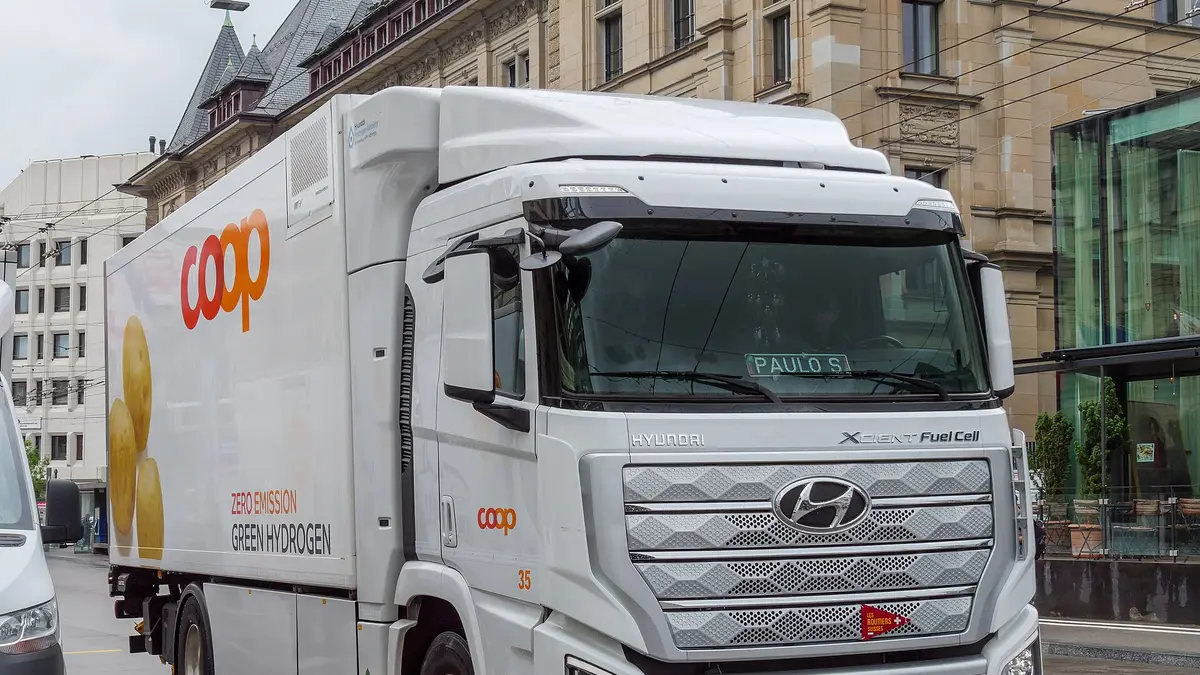
Freight transport with green hydrogen trucks has a new project in Chile. Shipping and logistics company Marítima Valparaíso (Marval) and the University of Concepción formalized on October 14 the HyLog-Biobío: Zero Emissions Transport project, which includes a hydrogen refuelling station in Talcahuano and a fleet of ten heavy-duty fuel cell trucks, Redimin reported on October 17.
The declared investment is US$9,372,750, of which Corfo, Chile's economic development agency, contributes US$5 million (about 53.35%) through its Industrial Rings program. The goal is for the trucks to reach a 700-kilometre range, enough to cover the roughly 550 km between Santiago and Concepción. The project was presented at the Biobío Energy Transition Summit in Hualpén.
What the hydrogen truck project includes
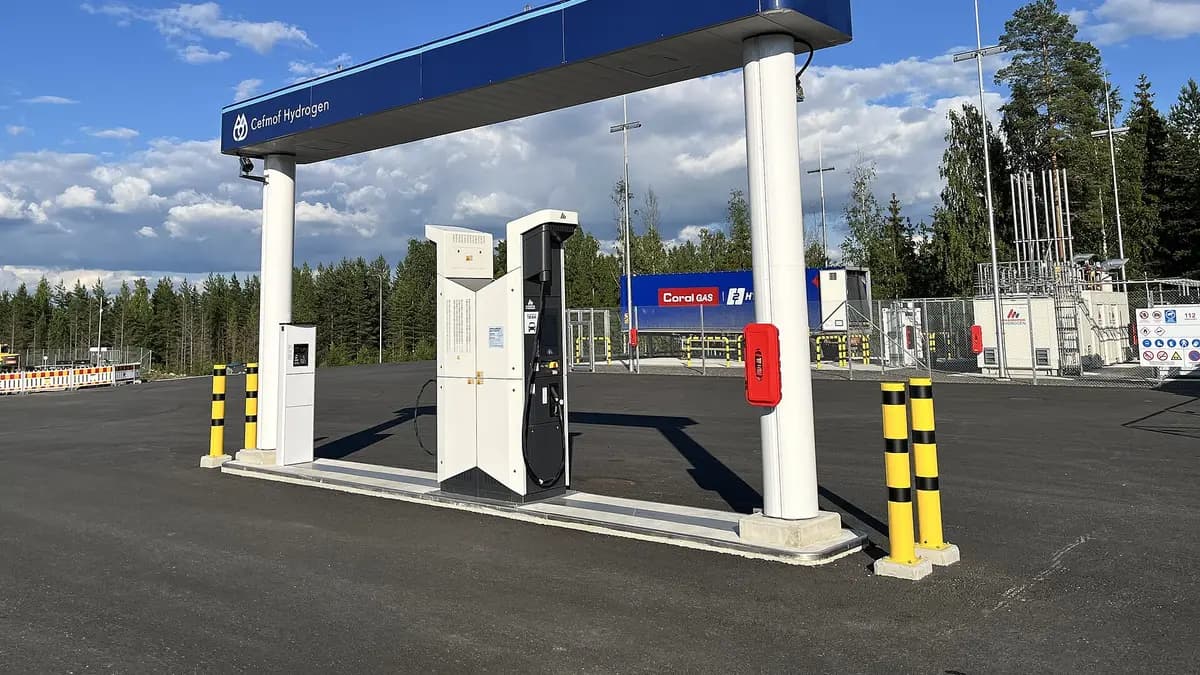
HyLog aims to test under real conditions whether hydrogen can replace diesel in heavy transport between industrial centres, ports and distribution areas. It has two parts: an industrial hydrogen refuelling station (HRS) in the Talcahuano industrial hub, and the truck fleet that will use it.
| Component | Detail |
|---|---|
| Name | HyLog-Biobío: Zero Emissions Transport |
| Developers | Marítima Valparaíso (Marval) and University of Concepción |
| Program | Corfo Industrial Rings |
| Total declared investment | US$9,372,750 |
| Corfo contribution | US$5 million (~53.35%) |
| Hydrogen station | Industrial HRS in Talcahuano, up to 350 tonnes per year |
| Hydrogen source | Residual hydrogen from industrial processes, purified |
| Fleet | 10 heavy-duty fuel cell trucks |
| Target range | 700 km |
| First operations | 36 to 48 months from October 2026 (2029-2030) |
An important detail: the initial hydrogen will not be produced by electrolysis from renewables but will come from residual hydrogen from local industrial processes, purified to the standard required by vehicle fuel cells. The station could sell part of its output to other companies.

Timeline: when the hydrogen trucks would arrive
The project has a long horizon. According to Redimin, about 20 months are expected to reach the investment decision, alongside engineering and technology selection. Then come equipment manufacturing, construction, assembly and commissioning. The fleet's first operations are projected 36 to 48 months from October 2026, that is, between 2029 and 2030.
Corfo's award is not new: it was announced on January 9, 2026, together with a Fosfoquim project using hydrogen for chemical processes linked to copper mining and pulp, according to Reporte Minero. Together they receive US$10 million in public funding. The October 14 event formalized the already selected project.
Mauricio Ramírez, Marval's manager of Development and New Business, said the project will allow testing the trucks under real operating conditions in Biobío, according to Redimin, which also notes that the Santiago-Biobío corridor is not yet running as a continuous commercial operation.
Why hydrogen competes with diesel on long routes
The case for hydrogen in heavy trucks rests on range and refuelling time. A battery able to move a 40-tonne truck 700 km weighs several tonnes and takes hours to charge; a hydrogen truck refuels in minutes. A study by the Catholic University of the Most Holy Conception published this year concluded that annual mileage is key to competitiveness and that interregional corridors, such as Biobío-Santiago Metropolitan Region, are the most favourable scenarios.
Prices help. Diesel has risen sharply since July and could climb another 90 pesos per litre on October 22, as we detailed in the projected diesel price hike. Each increase improves the cost comparison for zero-emission technologies. Gas is another option to cut diesel use, as Engie showed with the first coal plant conversion in Chile.
| Hydrogen freight project in Chile | Location | Key fact |
|---|---|---|
| HyLog-Biobío (Marval and UdeC) | Talcahuano-Santiago | 10 trucks, 350 t/year of H2, US$9.37 million |
| Hidrohaul (Walmart Chile, Copec and partners) | Quilicura, Santiago | Station opened on September 30, 2026; serves 2 trucks |
| Santiago-Valparaíso corridor (led by Colbún) | Santiago and Valparaíso regions | US$13.7 million investment, Corfo contribution of US$6 million |
The Quilicura station, part of the Hidrohaul program, opened on September 30 with Walmart Chile and Copec and Corfo support, and initially serves two trucks with a range of more than 600 km and refuelling in about 20 minutes, according to the same Redimin report.
Green hydrogen and the budget: the context
The project moves forward in a year of mixed signals for the energy transition. The draft 2027 budget cuts resources for the Energy Ministry and eliminates the just energy transition program, as we explained in the 2027 budget of the Energy Ministry. HyLog's funds, by contrast, come from Corfo and have already been awarded.
- Technology risk: heavy hydrogen trucks are still produced in low volumes worldwide.
- Hydrogen cost: using residual hydrogen lowers initial cost, but the project does not produce green hydrogen by electrolysis.
- Infrastructure: with one station in Talcahuano and another in Quilicura, the route would have refuelling at both ends.
- Regulation: safety rules for hydrogen stations in Chile are still being developed.
Does your company work in hydrogen, logistics or zero-emission fleets? Reach Energía Futura readers.
See advertising optionsFrequently asked questions
Are hydrogen trucks already running between Santiago and Concepción?
No. The corridor is not operating commercially. HyLog expects its first operations between 2029 and 2030.
How much does Corfo contribute to HyLog Biobío?
US$5 million, about 53% of the total US$9.37 million investment.
Where will the hydrogen come from?
From industrial processes in the Talcahuano hub that generate residual hydrogen, which will be purified for use in fuel cells.
What range will the trucks have?
The target is 700 km, enough for the roughly 550 km between Santiago and Concepción, subject to real operating conditions.