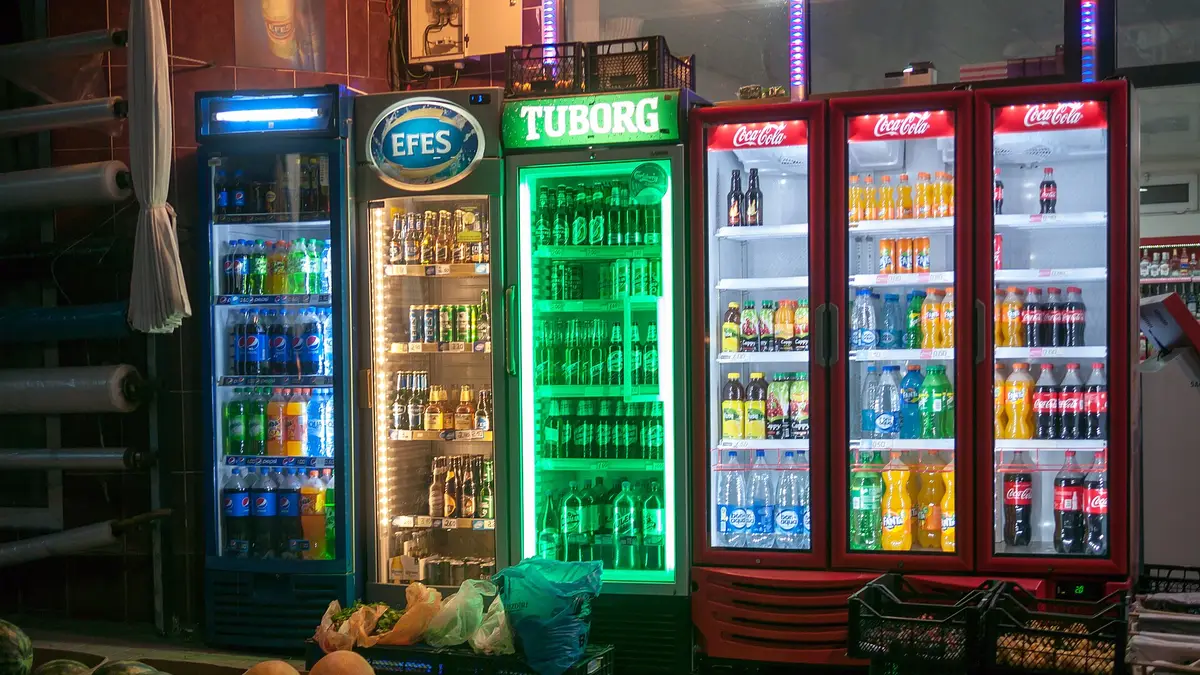
A single-door beverage cooler, known in Chile as a *visicooler*, uses between 0.8 and 3.4 kWh a day, according to the data sheets of the models sold by Ventus, one of the most common brands in Chilean corner stores and minimarkets. With electricity at CLP 255.27 per kWh, the BT1 rate of CGE for October 2026, that equals between CLP 6,126 and CLP 26,375 a month. A two-door cooler can exceed CLP 30,000.
The difference does not depend on size alone. Fan-cooled units (also called turbo cooling) use between 75% and 81% more than a static cooling model of similar capacity, and inverter models can save up to about CLP 20,000 a month compared with a conventional unit of the same size. This guide gathers the consumption and prices of 17 models, the monthly cost and which one suits each business.
View the data as a table
| 100-litre countertop | $6,126 a month |
| One door, 360 L, fan-cooled | $26,375 a month |
| Fan-cooled versus static | +81% |
| Savings of the 800 L inverter | $20,217 a month |
How much a beverage cooler uses by size
Manufacturers report consumption in kWh per 24 hours, measured under laboratory conditions. To convert it to pesos, multiply by 30 days and by the price per kWh. The table sorts the Ventus models with published consumption by size, with prices from its online store as of 10 November 2026.
| Ventus model | Capacity | Cooling type | Consumption (kWh/24 h) | Monthly cost | Price |
|---|---|---|---|---|---|
| LG-100 | 100 L, countertop | Static | 0.8 | CLP 6,126 | CLP 184,990 |
| VC-200 INV | 200 L | Fan, inverter | 1.14 | CLP 8,730 | CLP 401,990 |
| LG-260 | 260 L | Static | 1.47 | CLP 11,257 | CLP 294,990 |
| VC-240 INV | 240 L | Fan, inverter | 1.47 | CLP 11,257 | CLP 452,990 |
| LG-290 LED | 290 L | Static | 1.73 | CLP 13,249 | CLP 374,990 |
| VC-370 INV | 370 L | Fan, inverter | 1.86 | CLP 14,244 | CLP 679,990 |
| LG-360 LED | 360 L | Static | 1.9 | CLP 14,550 | CLP 445,990 |
| VC-540 INV | 540 L | Fan, inverter | 2.49 | CLP 19,069 | CLP 914,990 |
| LG-290 TC | 290 L | Fan | 3.027 | CLP 23,181 | CLP 419,990 |
| LG-500 TC | 500 L | Fan | 3.307 | CLP 25,325 | CLP 649,990 |
| LG-360 TC | 360 L | Fan | 3.444 | CLP 26,375 | CLP 479,990 |
| VC-540L | 540 L | Fan | 3.49 | CLP 26,727 | Out of stock |
| LG-900 TC | 900 L, 2 doors | Fan | 3.67 | CLP 28,105 | CLP 980,990 |
| VC-800 INV | 800 L, 2 doors | Fan, inverter | 3.98 | CLP 30,479 | CLP 1,100,990 |
| LG-550 TC | 550 L, 2 doors | Fan | 4.027 | CLP 30,839 | CLP 730,990 |
| VC-1000 INV | 1,000 L, 2 doors | Fan, inverter | 4.31 | CLP 33,006 | CLP 1,260,990 |
| VC-800LS | 800 L, 2 doors | Fan | 6.62 | CLP 50,697 | Out of stock |
Source: data sheets and prices from Ventus, checked on 10 November 2026. Monthly cost calculated by Energía Futura with 30 days and the kWh at CLP 255.27. Capacity is the gross figure given in each model's name.
| LG-100 | 100 | Static | 0.80 | 6,126 | 184,990 |
| VC-200 INV | 200 | Fan-cooled, inverter | 1.14 | 8,730 | 401,990 |
| LG-260 | 260 | Static | 1.47 | 11,257 | 294,990 |
| VC-240 INV | 240 | Fan-cooled, inverter | 1.47 | 11,257 | 452,990 |
| LG-290 LED | 290 | Static | 1.73 | 13,249 | 374,990 |
| VC-370 INV | 370 | Fan-cooled, inverter | 1.86 | 14,244 | 679,990 |
| LG-360 LED | 360 | Static | 1.90 | 14,550 | 445,990 |
| VC-540 INV | 540 | Fan-cooled, inverter | 2.49 | 19,069 | 914,990 |
| LG-290 TC | 290 | Fan-cooled | 3.03 | 23,181 | 419,990 |
| LG-500 TC | 500 | Fan-cooled | 3.31 | 25,325 | 649,990 |
| LG-360 TC | 360 | Fan-cooled | 3.44 | 26,375 | 479,990 |
| VC-540L | 540 | Fan-cooled | 3.49 | 26,727 | No data |
| LG-900 TC | 900 | Fan-cooled | 3.67 | 28,105 | 980,990 |
| VC-800 INV | 800 | Fan-cooled, inverter | 3.98 | 30,479 | 1,100,990 |
| LG-550 TC | 550 | Fan-cooled | 4.03 | 30,839 | 730,990 |
| VC-1000 INV | 1,000 | Fan-cooled, inverter | 4.31 | 33,006 | 1,260,990 |
| VC-800LS | 800 | Fan-cooled | 6.62 | 50,697 | No data |
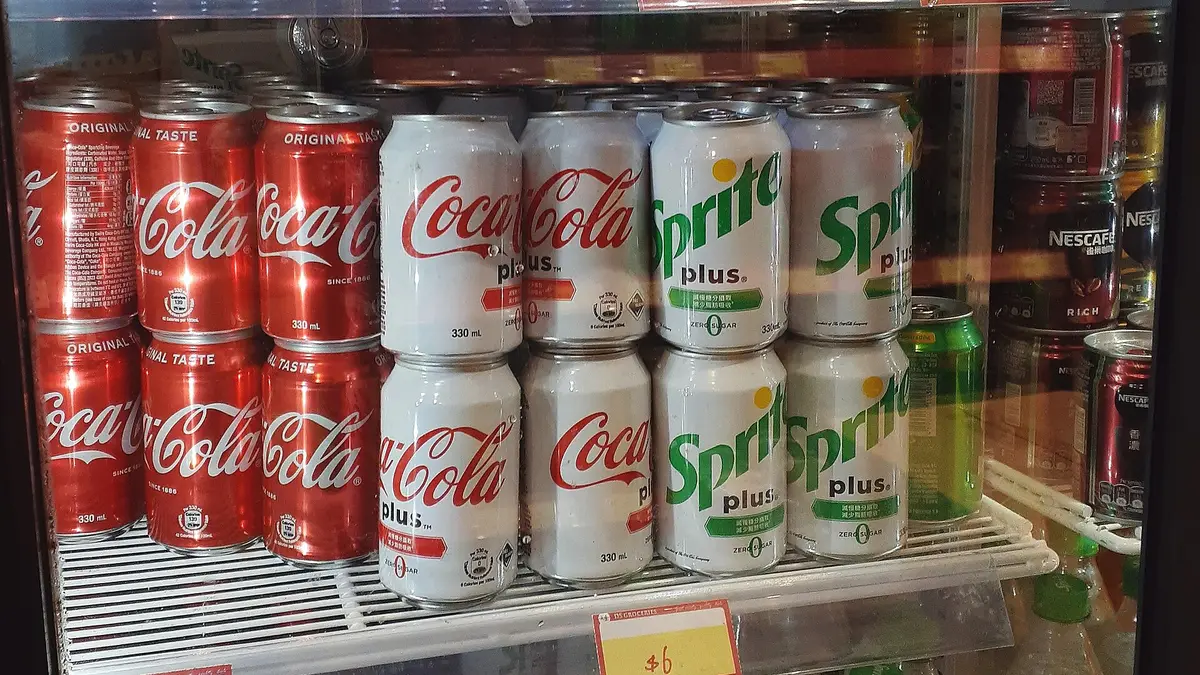
For a household reference: a home refrigerator uses between 25 and 60 kWh a month, or between 0.8 and 2 kWh a day, depending on size and efficiency. A single-door fan-cooled beverage cooler, at 3.4 kWh a day, uses more than the thirstiest home refrigerator, because glass insulates less than an opaque door, the LED lighting is always on and the unit works in warmer premises.
Static or fan cooling: which uses less
In a static cooling unit, cold air sinks by convection from the evaporator, without a fan. It uses less, but the temperature is less even and the glass may fog. In fan-cooled or turbo cooling units, a fan distributes the cold air: they cool faster and more evenly, with an anti-frost system, but consumption rises.
| Comparison (Ventus) | Static cooling | Fan cooling | Difference |
|---|---|---|---|
| 290 litres | LG-290 LED: 1.73 kWh/day (CLP 13,249/month) | LG-290 TC: 3.027 kWh/day (CLP 23,181/month) | +75% (+CLP 9,932/month) |
| 360 litres | LG-360 LED: 1.9 kWh/day (CLP 14,550/month) | LG-360 TC: 3.444 kWh/day (CLP 26,375/month) | +81% (+CLP 11,825/month) |
Energía Futura calculations with Ventus data sheets and the kWh at CLP 255.27. Over a year, the difference between the two 360-litre models reaches about CLP 141,900, more than the price gap between them (CLP 34,000).
The choice also depends on what is sold. For canned and bottled drinks restocked a few times a day, static cooling is enough. For dairy, fresh juices or products that need an even temperature on every shelf, fan cooling is safer, even if it uses more. In both cases the unit should work between 0 and 10 °C, the range given in the Ventus data sheets.
Inverter beverage cooler: how much it saves
Inverter models use a variable-speed compressor that adjusts its power to demand, instead of switching on and off at full power. Ventus has inverter and conventional versions of the same size, which allows a comparison:
| Size | Conventional | Inverter | Monthly saving | Price difference | Payback |
|---|---|---|---|---|---|
| 540 litres | VC-540L: 3.49 kWh/day | VC-540 INV: 2.49 kWh/day | CLP 7,658 | CLP 110,000 | ~14 months |
| 800 litres | VC-800LS: 6.62 kWh/day | VC-800 INV: 3.98 kWh/day | CLP 20,217 | CLP 84,000 | ~4 months |
Energía Futura calculations with Ventus data sheets, the kWh at CLP 255.27 and the online store prices as of 10 November 2026 (the conventional models were out of stock, with their last published price).
In a business that operates year-round, the 800-litre inverter recovers the difference in about four months. Ventus inverters also use R290 (propane), a refrigerant with a low greenhouse effect. At home, the same principles apply to refrigerators: we explain them in our guide to how much a refrigerator uses.
A practical point for store owners: if the cooler is bought on credit or in installments, the inverter's monthly saving can cover part of the payment. With the 800-litre model, the difference of CLP 20,217 a month equals almost 2% of the unit's price every month.

Which beverage cooler suits a store
- Small shop or counter: a 100-litre countertop unit, from CLP 184,990 and about CLP 6,100 a month in electricity.
- Minimarket selling cold drinks: a 260 to 360-litre unit. If the premises are not hot, static cooling uses up to 81% less; if the door is opened all day, a fan-cooled inverter is better.
- Liquor store or high-turnover business: two doors, 800 to 1,000 litres, ideally inverter: the saving versus a conventional unit can exceed CLP 240,000 a year.
- Check the power rating: a two-door cooler draws between 450 and 630 W; if the service connection is small, the breaker may trip together with other appliances.
If the store only opens during the day, it is not worth switching the cooler off at night: when it has to cool the whole load again, the compressor works harder and products lose quality.
How to cut consumption in the business
- Place it away from sun and heat sources, with 10 to 15 cm free at the back so the condenser can breathe.
- Don't open the door more than needed and restock drinks in one go, not one by one.
- Clean the condenser every three to six months: dust makes it work harder.
- Check the door gasket: if it doesn't seal, the compressor never stops.
- Set the thermostat at 4 to 6 °C: each degree lower increases consumption.
- Switch off the illuminated header at night if the store closes.
On a store's power bill, the beverage cooler is usually the appliance that weighs most, because it runs 24 hours a day, 365 days a year. A shop with two single-door fan-cooled units and one two-door unit can spend more than CLP 80,000 a month on refrigeration alone. So when replacing an old unit, compare the kWh in the data sheet, not just the price.
Real consumption may be higher than in the data sheet, which is measured in a lab: a hot store with the door opened many times a day makes the compressor work more. If you also have an ice cream freezer, see our guide to how much a chest or upright freezer uses; for the home, the smaller equivalent is the mini fridge.
Does your brand sell commercial refrigeration equipment? Reach Energía Futura's readers.
See advertising formatsFrequently asked questions
How much does a beverage cooler use per day?
Between 0.8 kWh (100-litre countertop) and 3.4 kWh (360-litre single-door fan-cooled). Two-door units, between 3.7 and 6.6 kWh.
How much does a beverage cooler cost per month?
Between CLP 6,126 and CLP 26,375 for single-door units and between CLP 28,105 and CLP 50,697 for two-door units, with the kWh at CLP 255.27.
How many watts does a beverage cooler have?
Between about 87 W (100 litres) and 630 W (1,000 litres, inverter), according to Ventus data sheets.
Is an inverter beverage cooler worth it?
For large units, yes: the 800-litre inverter saves about CLP 20,000 a month versus the conventional model and recovers the price difference in about four months.
Which uses less, static or fan cooling?
Static: in Ventus' 290 and 360-litre models, fan cooling uses between 75% and 81% more.