Between 7pm and 11pm on 13 October 2026, the average marginal cost of electricity in Chile was US$3 per MWh. An optimised simulation using that day's actual data gives US$41 per MWh: a US$38 gap. The calculation comes from consultancy Vinken, led by Pontifical Catholic University academic Matías Negrete Pincetic, and was published by Energía Estratégica on 16 November.
Vinken's conclusion is that the system is not properly valuing the energy stored in batteries. When a battery discharges at night, the marginal cost calculation treats it as negative demand, without reflecting the opportunity cost of that energy, which could have been used at another time. The result is an artificially low night-time price that affects power purchase agreements (PPAs) and the revenue of storage systems themselves.
View the data as a table
| Actual | US$3 |
| Vinken simulation | US$41 |
| Gap | US$38 |
What Vinken's analysis shows about the marginal cost
The exercise, which Vinken calls Vinken Ex Post (VEP), recalculates all 24 hours of 13 October using the data recorded that day, including operating constraints, ancillary services and the value of stored energy. It cannot be replicated in real time, the consultancy warns: it is an ideal benchmark of how the system would have run with all the information available.
Besides the actual (US$3) and simulated (US$41) values, the analysis compares the scheduled marginal cost for those hours, which was close to US$50 per MWh. The gap between what was scheduled, what actually happened and what would have been optimal is explained, according to Vinken, by a mix of forecasting errors, fixed operating instructions and price-formation mechanisms that do not fully value storage.
| Average marginal cost, 7pm to 11pm on 13 Oct 2026 | US$ per MWh |
|---|---|
| Scheduled | About 50 |
| Vinken optimised simulation (VEP) | 41 |
| Actual | 3 |
| Gap between actual and simulated | 38 |
Source: Vinken Ex Post analysis, via Energía Estratégica, 16 November 2026. The scheduled value is approximate in the source.
Very low marginal costs are not new. In October, the reference node hit its lowest level since 2002, with many zero-price hours thanks to abundant solar power and the season's water. What Vinken adds is that, in the night hours when batteries discharge, that price does not reflect the real value of energy.
How much batteries weigh in the power system today
The problem grows because batteries are growing. According to the Chilean Renewable Energy and Storage Association (ACERA), headed by Ana Lía Rojas, storage totals 11.3 GW across projects in operation, testing and construction, up from just 84 MW three years ago. Of that, about 3.2 GW is operating, 3.7 GW in testing and 4.3 GW under construction. It is the same inventory we detailed in our story on storage reaching 11.3 GW.
84% of that capacity sits between Arica and Atacama, and the municipality of María Elena alone hosts 2.3 GW in 14 projects. At 9pm, systems discharge about 1,700 MW on average. In 2026 batteries charged 4.3 TWh, about 70% of it at practically zero marginal cost, and ACERA estimates they could displace some 2.3 TWh of thermal generation this year.
| Storage indicator in Chile | Value |
|---|---|
| Total capacity (operating, testing and construction) | 11.3 GW |
| Capacity three years ago | 84 MW |
| Share between Arica and Atacama | 84% |
| María Elena | 2.3 GW in 14 projects |
| Average discharge at 9pm | 1,700 MW |
| Energy charged in 2026 | 4.3 TWh (70% at near-zero marginal cost) |
| Thermal generation that could be displaced in 2026 | 2.3 TWh |
| BESS in frequency regulation | 18 |
Source: ACERA, via Energía Estratégica, 16 November 2026.
Does your company develop, finance or operate batteries? Reach Energía Futura's readers.
See advertising optionsBatteries already provide half of the reserves
Batteries do more than shift energy from day to night. In September 2026 they provided 51% of secondary upward reserve and 50% of downward reserve, plus 36% and 46% of primary frequency control, respectively. 18 BESS take part in frequency regulation; tertiary control still has no storage.
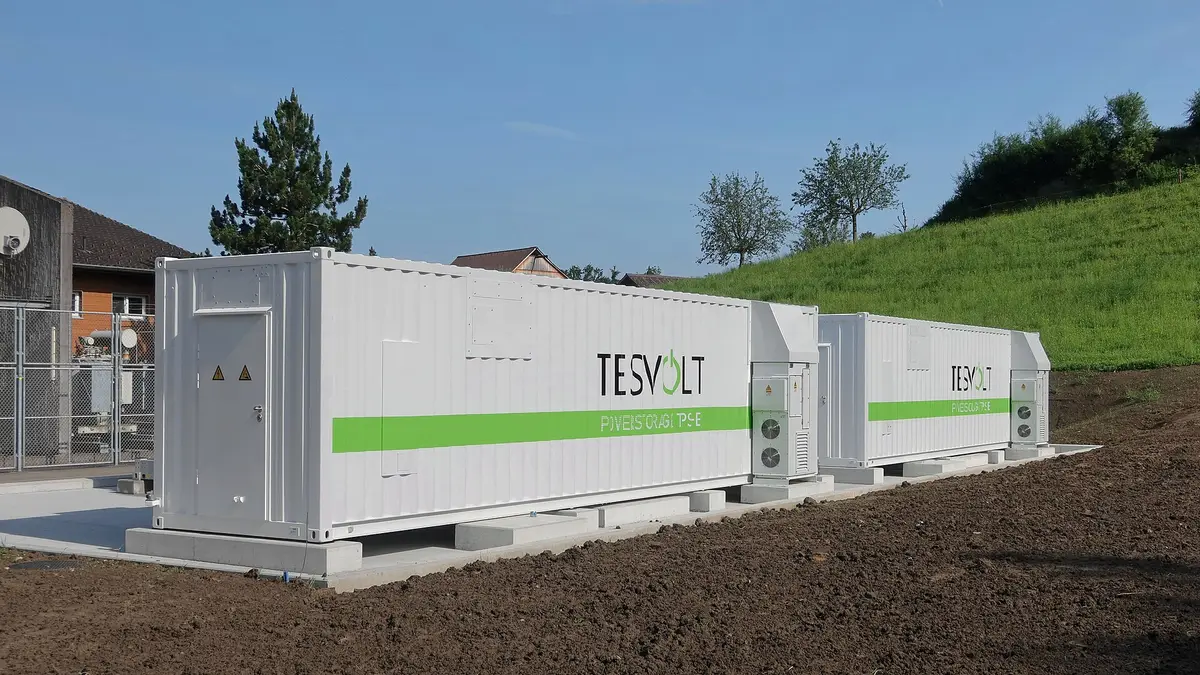
In the BESS and peak energy segment, batteries' share rose from 42% in 2024 to 55% in 2025 and exceeded 80% in 2026, according to ACERA. That expansion is what put the peak control method up for debate, as we reported in our story on generators' request to the CNE.
DS 32: how to bring battery value into the marginal cost
The rule to fix the problem already exists on paper. Supreme Decree 32, published on 17 June 2026, amended the system coordination and operation regulation and requires the Coordinator to calculate and use the opportunity cost of storage, considering its constraints, available energy and renewable and demand forecasts. But applying it requires new methodologies and tools that are not yet operating.
- 2024Batteries: 42% of the BESS and peak segment
- 2025Batteries: 55%
- 17 Jun 2026DS 32 publishedRequires using storage opportunity cost.
- Sep 2026BESS provide 51% of secondary reserve
- 13 Oct 2026Night marginal cost: US$3The simulation gives US$41.
- 16 Nov 2026Vinken's analysis published
Negrete proposes speeding up security-constrained economic dispatch (SCED), explicitly valuing stored energy, including that value in real-time prices and recording operating instructions with their rationale. ACERA's priorities are automated intraday scheduling, price signals that include opportunity cost and integrating BESS into automatic generation control (AGC). Both agree the challenge is no longer just installing batteries, but making sure operation and valuation keep pace.
Frequently asked questions
What is the marginal cost of electricity?
It is the cost of producing the next MWh at a point on the grid at a given hour. It is used to value energy transfers between generators in the wholesale market.
What did Vinken find?
That between 7pm and 11pm on 13 October 2026 the actual marginal cost was US$3 per MWh, while an optimised simulation using that day's data gives US$41: a US$38 gap.
Why does it affect batteries?
Because their discharge enters the calculation as negative demand without reflecting the opportunity cost of stored energy. That lowers the night-time price and cuts their revenue and that of contracts tied to it.
What does DS 32 say?
Published on 17 June 2026, it requires the Coordinator to calculate and use the opportunity cost of storage when operating the system. Applying it still requires new methodologies and tools.