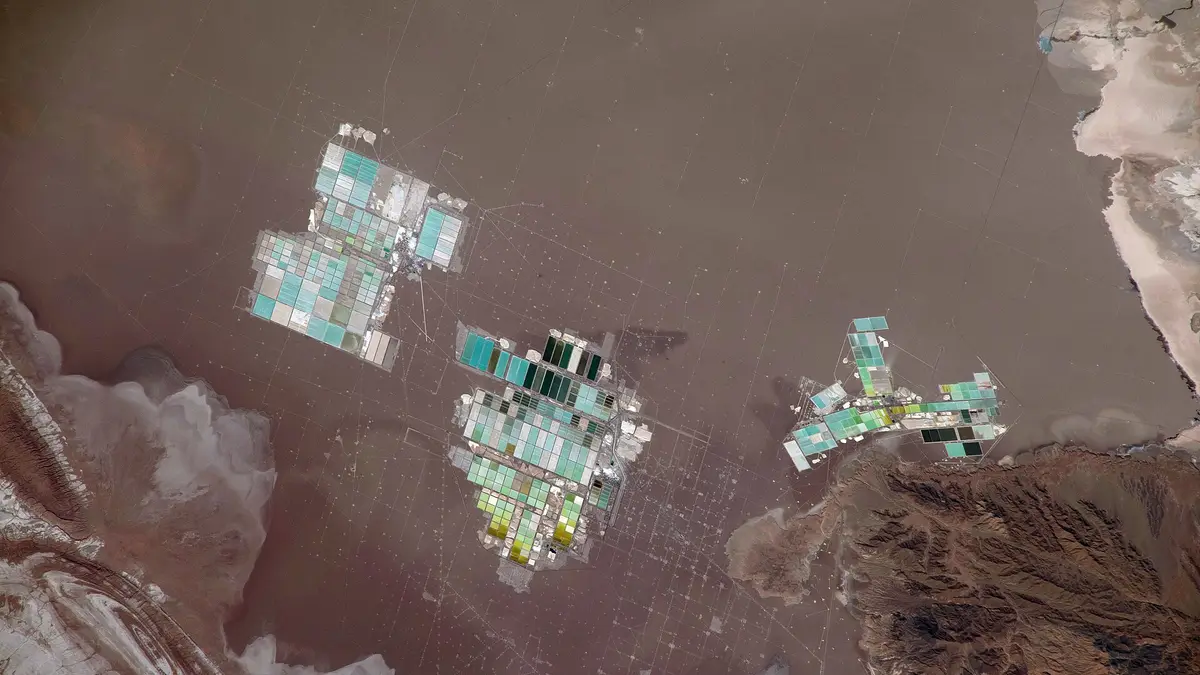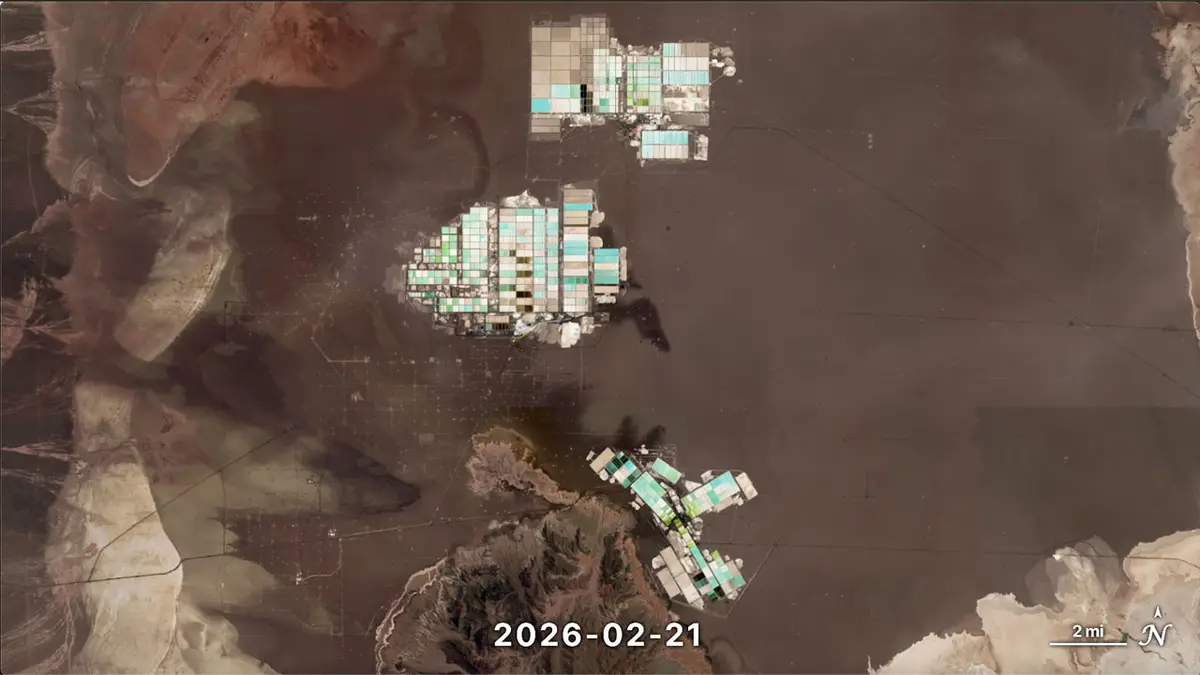
Global lithium demand will reach 2.08 million tonnes of lithium carbonate equivalent (LCE) in 2026, a 25% increase over 2025, according to the report Lithium Market: Developments and Projections by the Chilean Copper Commission (Cochilco), presented on Thursday, November 12, and reported by Electrominería, Redimin and CNN Chile. For 2027 it projects 2.25 million tonnes, up 8%.
Electric cars are no longer the only driver. Battery energy storage systems (BESS) will account for 32% of global lithium consumption this year, driven by artificial intelligence data centers, which need continuous and increasingly renewable electricity. Electric vehicle batteries remain first, with 57.5%, but their demand slowed in China after subsidies ended.
View the data as a table
| World demand 2026 | 2.08 Mt LCE |
| Energy storage (BESS) share | 32% |
| 2026 deficit | 79,000 t LCE |
| Carbonate, Q4 | US$19,000/t |
Global lithium demand by segment
Using Cochilco's percentages, electric car batteries would consume about 1.20 million tonnes of LCE in 2026 and BESS about 666,000 tonnes. The rest, about 218,000 tonnes, is split among electronics, ceramics and glass, lubricating greases and other uses (Energía Futura calculations on the 2.08 million total).
| Indicator | 2025 | 2026 | 2027 |
|---|---|---|---|
| World demand (million t LCE) | ~1.66 | 2.08 | 2.25 |
| Annual change | — | +25% | +8% |
| Share of EV batteries | — | 57.5% | — |
| Share of storage (BESS) | — | 32% | — |
| Market balance (t LCE) | — | 79,000 deficit | 42,000 surplus |
| Chile's output (t LCE) | 311,300 | 325,000 | 335,000 |
| Carbonate price (US$/t) | ~7,350 in mid-year | ~19,000 in Q4 | 18,500 |
Source: Cochilco, Lithium Market: Developments and Projections (November 12, 2026), via Redimin and CNN Chile. 2025 demand is an Energía Futura calculation based on the 25% increase.
Why BESS is pushing up lithium demand
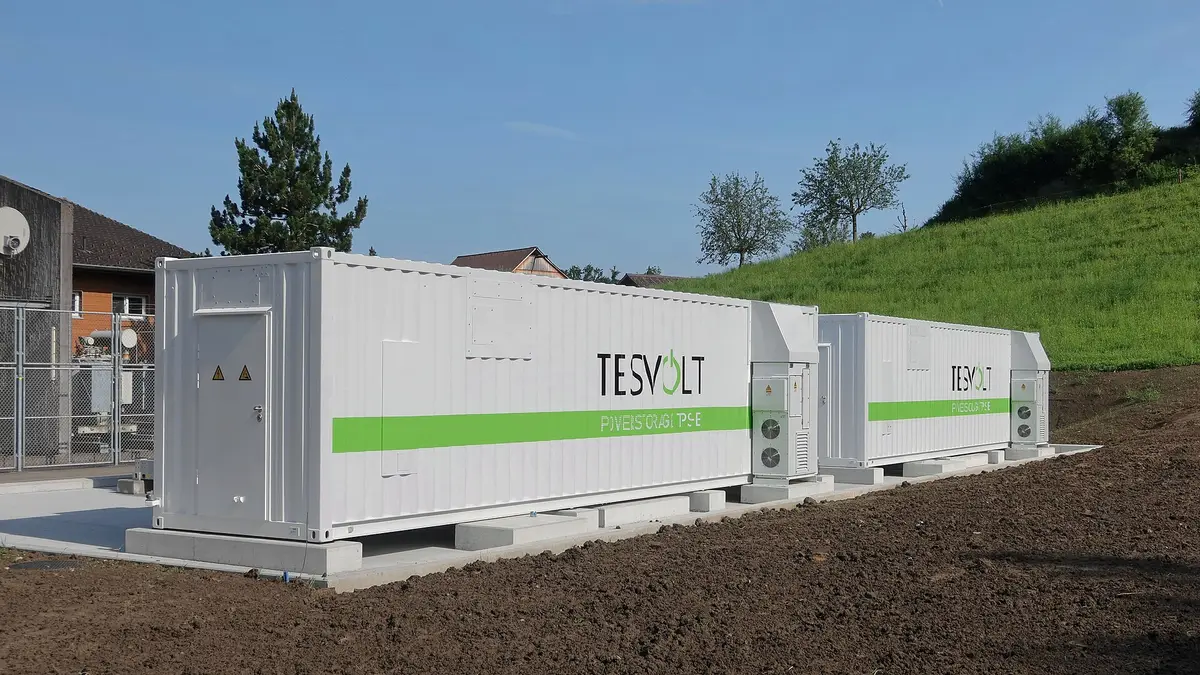
A BESS stores surplus solar or wind energy for a few hours and releases it when needed. Data centers, which run around the clock, are signing renewable power contracts with storage, multiplying orders for lithium iron phosphate (LFP) cells. Cochilco says market growth will be increasingly tied to storage, alongside electric mobility.
Chile is living this firsthand: the country passed 3,000 MW of operating batteries, and batteries already deliver a growing share of night-time electricity, as we reported in the story on batteries' contribution to generation.
Lithium carbonate prices: from US$7,350 to US$19,000
Lithium carbonate reached US$18,950 per tonne on September 24, 2026, up 43% from January 5 and far above the roughly US$7,350 of mid-2025, according to Cochilco. For the fourth quarter it projects an average of US$19,000 per tonne (FOB South America) and US$18,500 for 2027.
Cochilco splits the year into two phases. Between January and mid-May, prices rose sharply on expectations of BESS demand and on Zimbabwe's lithium export ban, in force from February to April. A mild correction followed when Zimbabwe resumed shipments under a quota system and electric car sales in China grew less than expected. The full price history is in our guide to lithium prices today.
One figure circulating with the report does not match the rest: Redimin reported that prices rose 102% between January and September. The gap with the 43% may be because it compares monthly averages or a different product; until Cochilco publishes the full document, we use the 43% figure between January 5 and September 24, which Electrominería and CNN Chile also report.
Does your company make, integrate or finance batteries? Reach Energía Futura's readers.
See advertising optionsDeficit in 2026, surplus in 2027 and Chile's place
With strong demand and tighter supply, Cochilco estimates a 79,000-tonne LCE deficit in 2026. In 2027 the market would swing to a 42,000-tonne surplus as new production gradually comes online. Supply risks lie in Zimbabwe, which from 2027 will only allow exports of processed lithium, and in China, where the environmental permit of the Jianxiawo deposit, about 3% of global mine supply in 2027, was revoked in September.
Chile remains the world's third-largest producer, behind Australia and China, with 311,300 tonnes of LCE in 2025, and would produce 325,000 in 2026 and 335,000 in 2027. But its share of world supply fell from 19% to 17%, according to Cochilco as cited by Redimin. The country ranking is in the world's largest lithium producers.
What higher global lithium demand means for Chile
For the Treasury, price matters more than volume. Lithium payments to Corfo, which owns the Salar de Atacama concessions, exceeded US$1.1 billion between January and September 2026, more than triple the US$339 million of all of 2025, according to Redimin. And January-October exports already total US$5.171 billion, as detailed in our story on lithium exports.
Chile's falling share, from 19% to 17%, shows the rest of the world is growing faster. Codelco aims to be among the five largest lithium producers by 2035 with its projects in the Salar de Atacama and Maricunga, as we reported in the story on Codelco's lithium goal.
Higher prices are already showing in exports: between January and July they reached US$3.713 billion, up 194.2% year on year, and exceeded the US$2.37 billion of all of 2025, with China taking 75%, according to CNN Chile.
Frequently asked questions
How much will global lithium demand grow in 2026?
By 25%, to 2.08 million tonnes of LCE, according to Cochilco. In 2027 it would rise 8%, to 2.25 million.
What share of lithium demand goes to storage batteries?
32% in 2026. Electric car batteries account for 57.5%.
How much is lithium carbonate worth?
US$18,950 per tonne on September 24, 2026. Cochilco projects an average of US$19,000 in the fourth quarter and US$18,500 in 2027.
Will there be a lithium shortage?
Cochilco estimates a 79,000-tonne LCE deficit in 2026 and a 42,000-tonne surplus in 2027.
How much lithium does Chile produce?
311,300 tonnes of LCE in 2025; Cochilco projects 325,000 in 2026 and 335,000 in 2027.