A consortium has submitted to Chile's Ministry of Public Works (MOP) the EcoVera Territorium project, a US$800 million plant that would turn waste from the Santiago Metropolitan Region into electricity. It would process up to 1 million tonnes of waste a year and generate about 800 GWh of electricity, Revista Electricidad reported on Tuesday 17 November 2026.
The initiative was filed with the MOP's General Directorate of Concessions with a request to be declared of public interest, the first step for the state to assess it as a possible concession. Its promoters say it would avoid about 1 million tonnes of CO₂ equivalent a year and create 4,000 jobs at the peak of construction.
View the data as a table
| Estimated investment | US$800 million |
| Electricity per year | 800 GWh |
| Waste it would process | 1 million t/year |
| Avoided emissions | 1 Mt CO₂e/yr |
What EcoVera Territorium is and how it would work
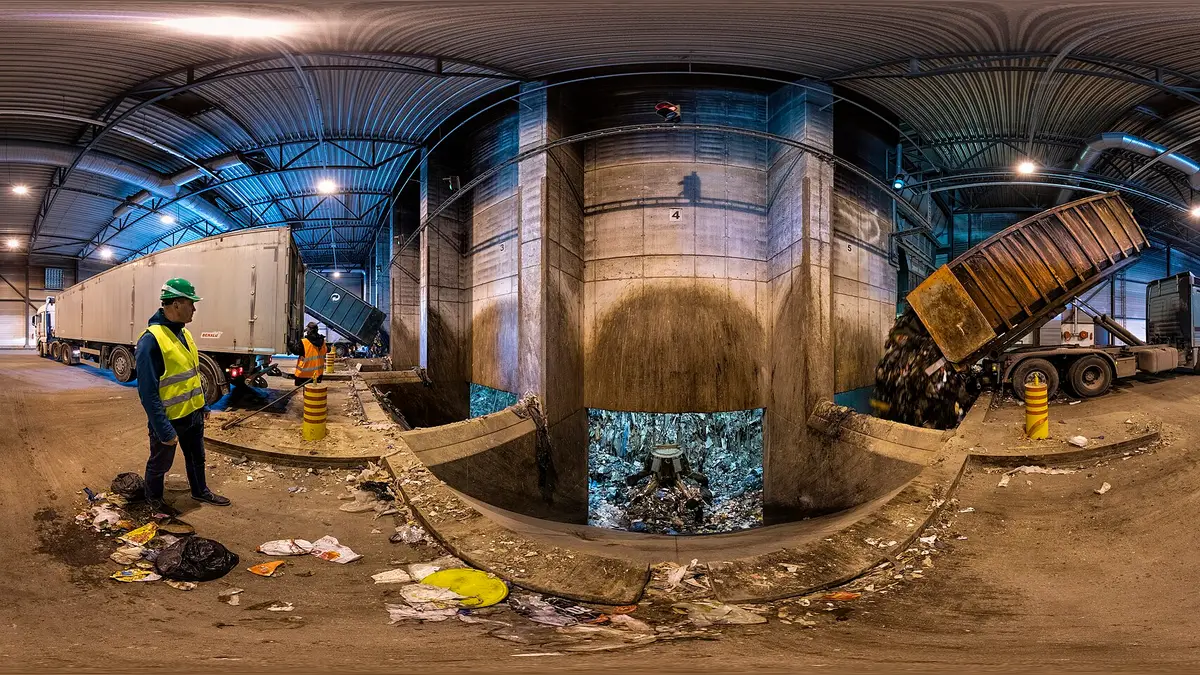
The project uses waste-to-energy technology: rubbish is burned in controlled furnaces and the heat drives turbines that generate electricity, with flue-gas cleaning systems. According to the company, the technology has been used for more than four decades in Europe, where there are about 500 plants. EcoVera's plant would run 24 hours a day, seven days a week, unlike solar power.
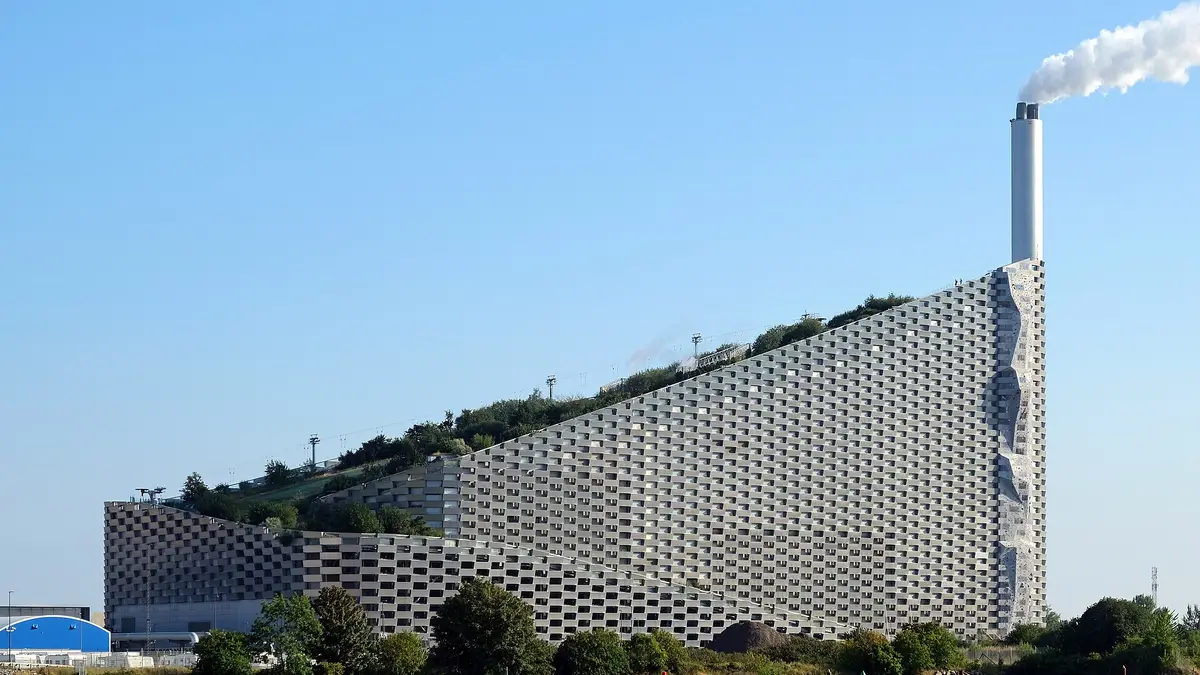
The best-known example of this technology is Amager Bakke (Copenhill) in Copenhagen, a waste-to-energy plant with a ski slope on its roof that supplies electricity and district heating to the city. Plants like this are part of waste management in countries such as Denmark, Sweden and Japan, where they are combined with recycling to reduce what goes to landfill.
The plant would make use of about 97% of the household waste it receives: 70% would go to energy recovery and 27% would be turned into synthetic aggregates for construction, after separating ferrous metal for recycling. Only the remaining 3% would require treatment and controlled final disposal.
| Item | Value |
|---|---|
| Estimated investment | US$800 million |
| Processing capacity | Up to 1 million t/year |
| Electricity generated | About 800 GWh/year |
| Avoided emissions | About 1 million t CO₂e/year |
| Construction jobs (peak) | 4,000 |
| Operating jobs | 230 |
| Construction peak period | 3 to 4 years |
| Social NPV / social IRR | US$1.6 billion / 18% |
Source: EcoVera Territorium, via Revista Electricidad, 17 November 2026. The figures are estimates from the project's pre-feasibility studies, not from an environmental assessment.
| Investment | US$800 million (estimated) |
| Technology | Waste-to-Energy |
| Capacity | Up to 1 million t/year |
| Generation | About 800 GWh/year |
| Avoided emissions | About 1 Mt CO₂e/year |
| Social NPV / social IRR | US$1.6 billion / 18% |
| Jobs | 4,000 in construction, 230 in operation |
| Studies | AMG, Sigdo Koppers, AFRY, Idom, JHG |
How much electricity EcoVera Territorium would generate
The 800 GWh a year are equivalent, according to the company, to the annual electricity use of four Santiago districts. As a reference, a home in Chile uses about 180 kWh a month, the standard household used by the National Energy Commission (CNE), as we explained in the guide on how much electricity a house in Chile uses. On that basis, 800 GWh would supply about 370,000 homes for a year (Energía Futura's calculation).
The advantage over solar or wind is that waste-based generation is constant: it does not depend on sun or wind, so it can supply power at night, when Chile's grid relies more on thermal plants and batteries. In the classification of the International Renewable Energy Agency (IRENA), the organic fraction of municipal waste counts as bioenergy, the same category we reviewed in the ranking of countries with the most bioenergy.
Does your company work in waste, the circular economy or energy? Reach Energía Futura's readers.
See advertising optionsSantiago's rubbish crisis
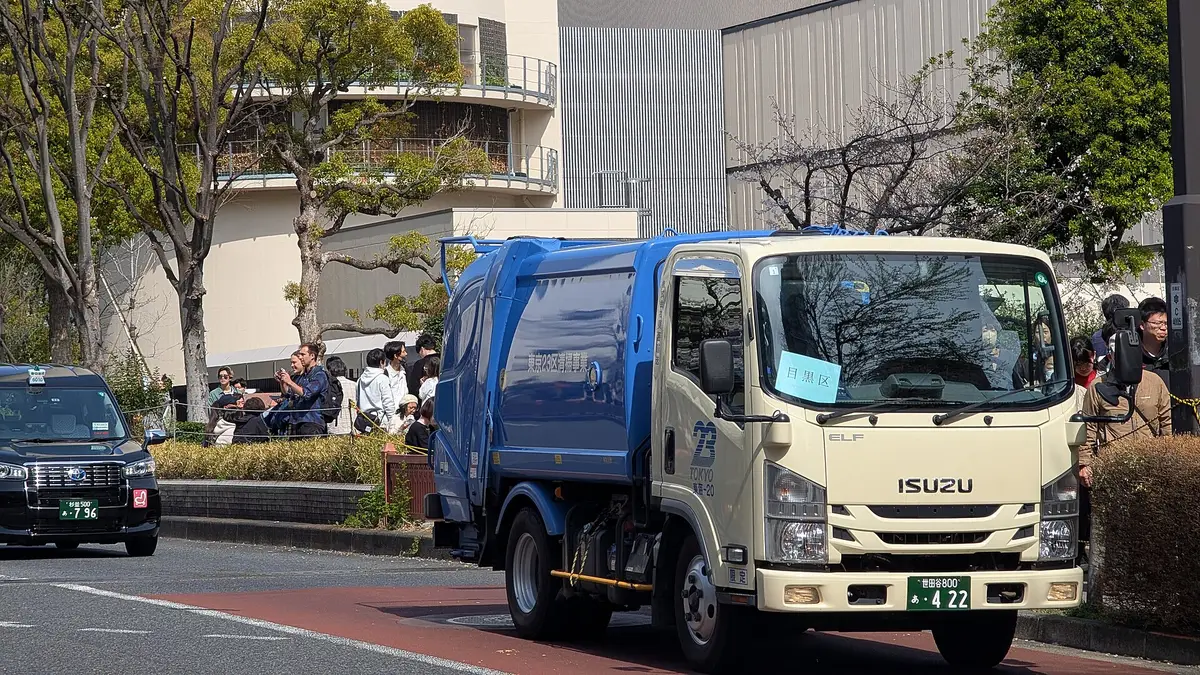
The Santiago Metropolitan Region disposes of about 3.5 million tonnes of municipal and similar solid waste a year, and about 98% of that volume ends up in three landfills, according to the project's background documents. With capacity for 1 million tonnes, EcoVera would take about 3 in every 10 tonnes of the region's rubbish.
| Indicator | Value |
|---|---|
| Municipal and similar solid waste disposed of in the Santiago region | 3.5 million t/year |
| Share going to three landfills | about 98% |
| EcoVera Territorium capacity | 1 million t/year |
| Share of the region's waste it could process | about 29% |
Source: EcoVera Territorium, via Revista Electricidad, 17 November 2026. The share is Energía Futura's calculation.
*“Waste has a cost for cities even after it leaves our homes. EcoVera Territorium proposes recovering part of its value and reducing the pressure on landfills”*, said its executive director, Mauricio Castillo. Each year, he added, the plant would handle a volume roughly comparable to that of Santiago's Santa Lucía hill.
Who is behind it and what is needed for it to be built
The pre-feasibility study was carried out by AMG Alliance Infrastructure and Sigdo Koppers, with the consultancies AFRY and Idom and the Chilean firm JHG, which specialises in thermal-energy processes and environmental monitoring. *“Our contribution has been to help fund the studies needed to make this project viable”*, said Juan Eduardo Errázuriz, executive chairman of Sigdo Koppers.
According to AMG, the project would have a social net present value of about US$1.6 billion and a social internal rate of return of 18%, similar to that of the Metro. But it is still at an early stage: the MOP must decide whether to declare it of public interest and, if it moves forward, a tender, an environmental assessment in the SEIA system and a site search would follow. The company has not said in which district it would be built.
Incineration plants often face criticism over their gas and ash emissions and for competing with recycling. The estimate of 1 million tonnes of CO₂e avoided comes from the company and includes the methane that would no longer be released from landfills. For scale: Chile emitted 76.3 million tonnes of fossil CO₂ in 2025, according to the Global Carbon Budget 2026.
Frequently asked questions
What is EcoVera Territorium?
It is a proposed waste-to-energy plant for the Santiago Metropolitan Region, with an estimated investment of US$800 million, that would turn household waste into electricity and synthetic aggregates.
How much electricity would it generate?
About 800 GWh a year, the annual electricity use of four Santiago districts, according to the company.
Where would the plant be built?
In the Santiago Metropolitan Region. The company has not disclosed the district; it mentions recovering degraded land in the area where it is installed.
What stage is the project at?
It was submitted to the MOP's General Directorate of Concessions with a request to be declared of public interest. It has not yet entered environmental assessment.