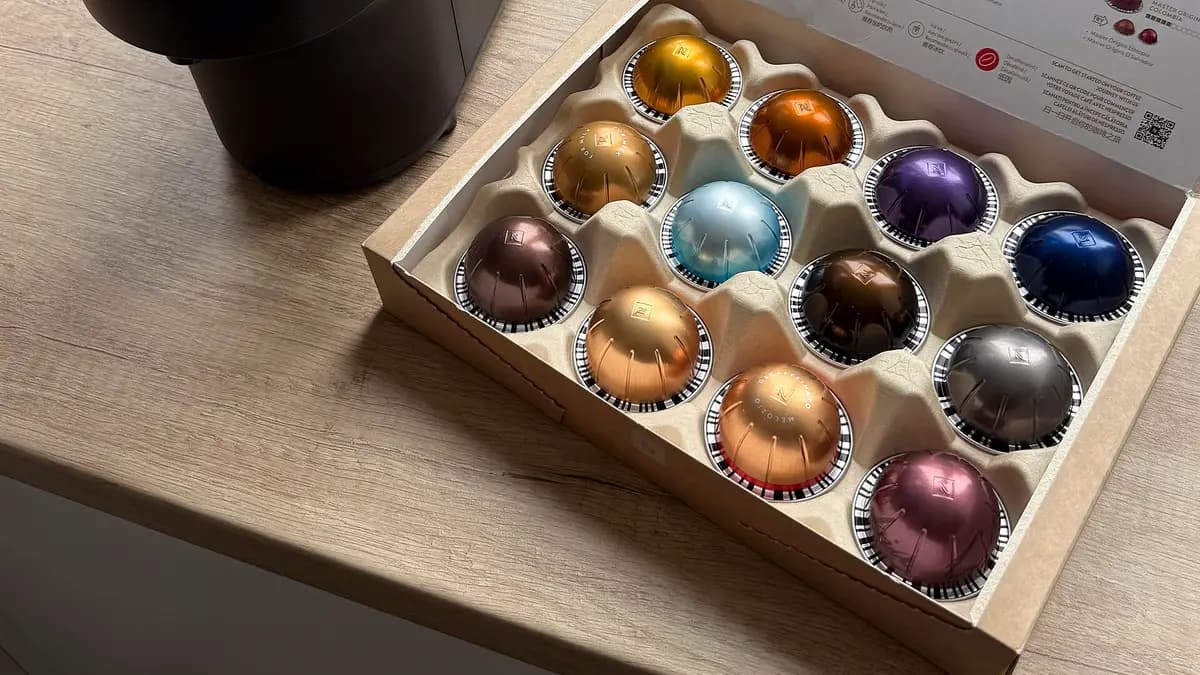
A coffee maker draws a lot of power, between 900 and 1,500 W, but only for a very short time. That is why its cost per cup is low: a pod machine uses around 0.02 kWh per coffee, about CLP 5, and a drip machine about 0.14 kWh per jug, about CLP 35, with electricity at CLP 255.27 per kWh (CGE's BT1 residential rate in Chile since October 2026). What really pushes up the bill is leaving it on: the warming plate that keeps the jug hot and the boiler in espresso machines.
In this guide we calculate how much each type of coffee maker uses, how much it costs per month in Chilean pesos and which one makes sense depending on how many coffees are drunk at home. The calculations start from the energy needed to heat the water and from the power ratings declared by manufacturers; at the end we explain how to measure the real consumption of your own machine.
How much electricity a coffee maker uses, by type
All electric coffee makers do the same thing: they heat water to about 90 to 96 °C and pass it through the ground coffee. What changes is how much water they heat, for how long and whether they keep it hot afterwards. Physics sets a floor: heating 150 ml of water from 15 °C to 95 °C takes about 0.014 kWh, about CLP 3.6, even if the machine were perfect.
| Type of coffee maker | Typical power | Consumption per use | Cost per use |
|---|---|---|---|
| Pod machine (Nespresso, Dolce Gusto and similar) | 1,200 to 1,500 W | 0.015 to 0.03 kWh per cup | CLP 4 to 8 |
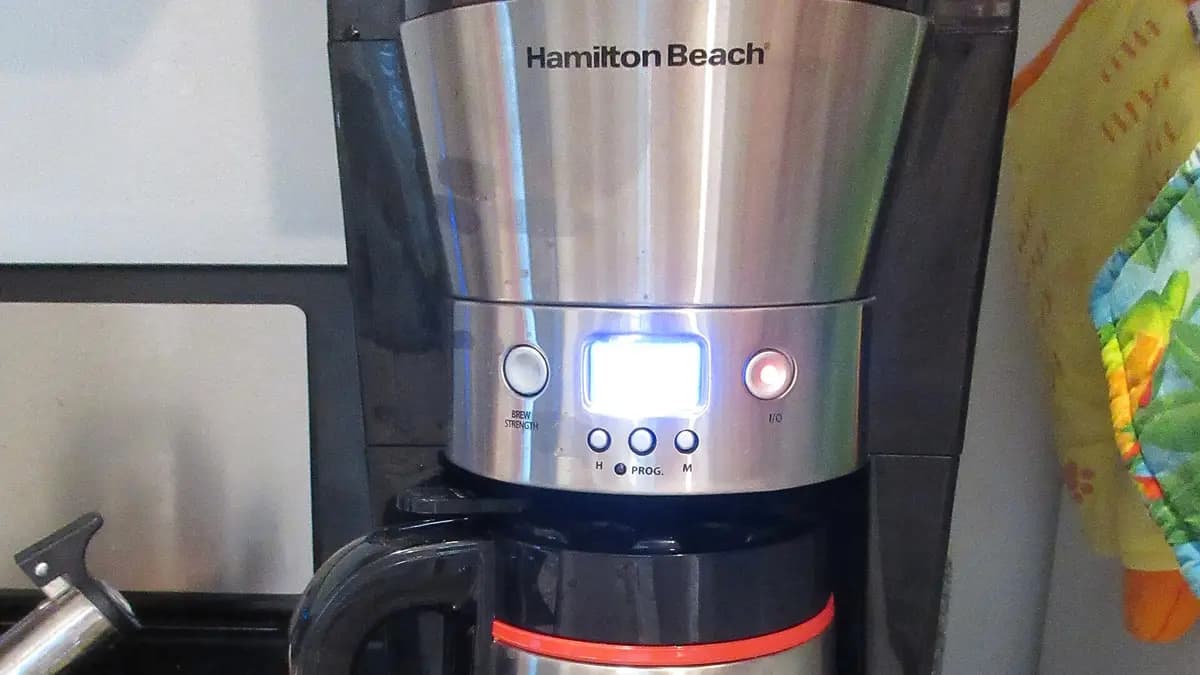
| Drip or filter (10-cup jug) | 900 to 1,100 W | about 0.14 kWh per jug | about CLP 35 |
| Warming plate of a drip coffee maker | tens of watts | 0.06 kWh per hour (at 60 W) | about CLP 15 per hour |
| Espresso with boiler (semi-automatic) | 1,000 to 1,500 W | 0.2 kWh if heated for 10 minutes at 1,200 W | about CLP 51 per switch-on |
| French press or moka pot with a kettle | 1,800 to 2,200 W (kettle) | about 0.06 kWh per 0.5 litres | about CLP 14 |
Energía Futura calculations with electricity at CLP 255.27 per kWh. Consumption figures are estimates based on the energy needed to heat the water and on typical declared power ratings; every model varies. The 60 W plate and the 10-minute warm-up are examples.
The pod machine is the most efficient per cup because it heats only the water for that cup, in a thermoblock that reaches temperature in under a minute. The drip machine uses more per brew, but makes up to ten cups at once: per cup, the cost is similar, about CLP 3.5 to 4.
How much a coffee maker costs per month in Chilean pesos
The monthly cost depends on how many coffees are drunk and, above all, on how long the machine stays on. These are some typical household cases, with electricity at CLP 255.27 per kWh:
| Case | Consumption per month | Cost per month |
|---|---|---|
| Pod machine, 2 coffees a day | 1.3 kWh | about CLP 340 |
| Drip, 1 jug a day, switched off when done | 4.2 kWh | about CLP 1,070 |
| Drip, 1 jug a day, with 1 hour on the plate | 6.0 kWh | about CLP 1,530 |
| Espresso with boiler, on 30 minutes a day | about 7.5 kWh | about CLP 1,900 |
| French press with a kettle, 0.5 litres a day | 1.8 kWh | about CLP 460 |
| Coffee maker on standby, 0.5 to 1 W, all month | 0.36 to 0.72 kWh | CLP 90 to 180 |
Energía Futura calculations. The espresso case assumes about 0.25 kWh a day to heat the boiler and make two coffees; thermoblock machines use considerably less.
Either way, the coffee maker weighs little on the bill: even the highest case, close to CLP 1,900 a month, is a small fraction of a typical bill. A typical home uses about 180 kWh a month, as we explain in the guide to how much electricity a home in Chile uses. The coffee maker accounts for between 1% and 4% of that.
The coffee costs more than the electricity
In the cost of each cup, electricity is the least of it. A pod costs in the order of hundreds of pesos in Chile, dozens of times the CLP 5 of electricity the machine uses to brew it. With ground or whole-bean coffee, the cost per cup also comfortably exceeds the energy cost. So if the goal is to save money, it pays more to look at the price of the coffee than at the watts of the coffee maker.
Pod, drip or espresso: which is best
There is no single most efficient coffee maker for everyone. It depends on how many cups are made and how it is used:
- One or two cups a day, one at a time: the pod machine uses the least energy, because it does not heat extra water or keep anything hot. Its cost is in the pods.
- Several cups in a row or a family: the drip machine is efficient per cup if it is switched off when done or the coffee is poured into a thermos instead of being left on the plate.
- Quality espresso at home: thermoblock machines heat up in seconds and use much less than boiler machines, which can take 15 to 30 minutes to reach temperature.
- Low consumption and no new appliances: a French press or a moka pot with the electric kettle, which heats only the water needed.
The electric kettle is, in fact, one of the most efficient ways to heat water: it transfers almost all the energy to the water and switches itself off when it boils. Its consumption per litre is in the electric kettle guide. Boiling water is not ideal for coffee: it is best to let it rest a few seconds until it reaches about 92 to 96 °C.
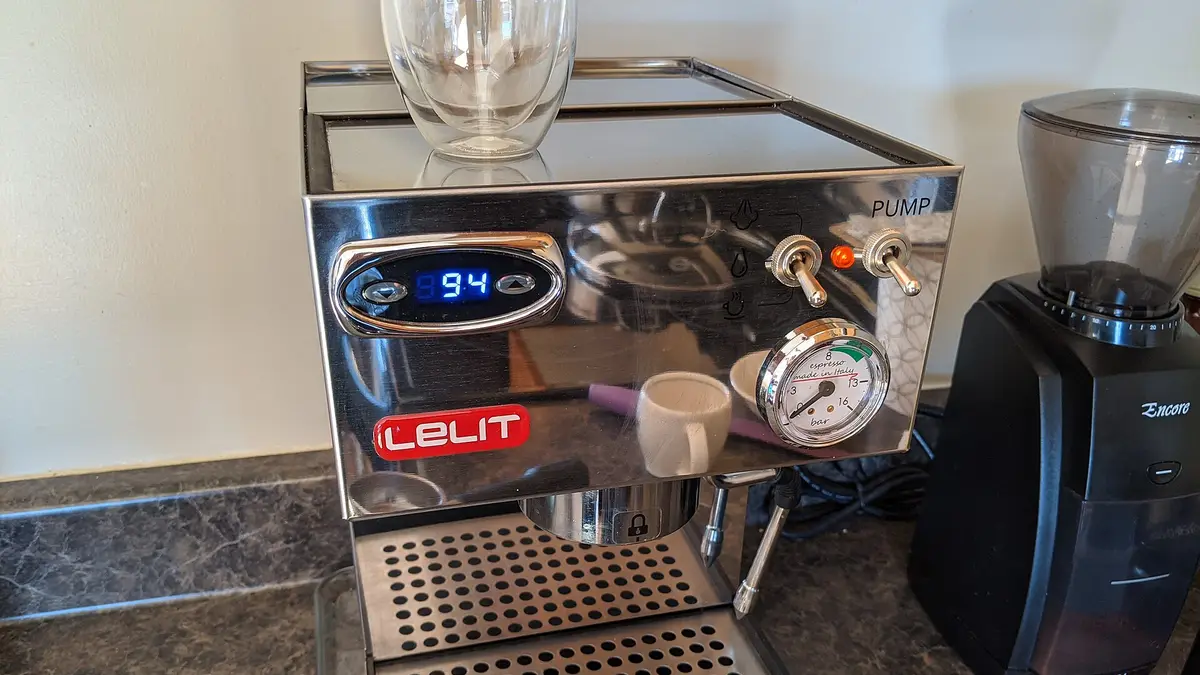
A coffee maker left on: plate, boiler and standby
Most of a coffee maker's avoidable consumption is not in brewing the coffee but in what happens afterwards. Three kinds of consumption add up without being noticed:
- The warming plate of drip coffee makers keeps the jug hot for as long as the machine stays on. With a 60 W plate, three hours on add up to 0.18 kWh, more than brewing the jug.
- The boiler of espresso machines is kept at temperature by switching on periodically. A machine left on all morning can use several times what it uses to make the coffees.
- Standby mode in coffee makers with a clock, display or Wi-Fi uses little, but 24 hours a day.
That is why the European Union made coffee makers switch themselves off. Since 2015, Regulation 801/2013 has required drip coffee makers with a glass jug to go into standby or off mode 40 minutes after brewing, those with a thermal jug after 5 minutes and other domestic coffee makers, such as pod and espresso machines, after 30 minutes, according to the summary by the European centre eceee. In standby, the European rule limits consumption to 0.5 W, or 1 W if the machine shows information on a display.
Many coffee makers sold in Chile are the same models sold in Europe and come with that automatic switch-off. It is worth checking the manual: some allow the standby time to be extended, which raises consumption.
How to save electricity when making coffee
- Heat only the water you need. In drip coffee makers and kettles, fill only for the cups you are going to drink.
- Pour the coffee into a thermos instead of leaving it on the plate. The coffee also does not burn and keeps its flavour better.
- Use the automatic switch-off and do not disable it. With espresso machines, switch them on just before use.
- Unplug coffee makers with a clock or display if they are rarely used, or plug them into a power strip with a switch.
- Descale regularly. Limescale in hard-water areas insulates the heating element and lengthens the warm-up.
- Choose a thermoblock when buying an espresso machine for daily and occasional use.
To find out how much your own coffee maker uses, the simplest way is a plug-in energy meter, which costs a few thousand pesos and shows the accumulated kWh. Just plug the machine in for a week of normal use and multiply the kWh by your tariff price. The price per kWh by municipality and distributor is in the guide to the price per kWh in Chile.
The coffee maker during a power cut
Because of its power, an electric coffee maker of 1,000 to 1,500 W will not run on most small portable power stations, which shut down when their maximum output is exceeded. During a power cut, it is more practical to heat water on a gas stove and use a French press, a moka pot or a manual filter. If you have a generator, it should deliver at least about 2,000 W for the coffee maker and leave headroom for other equipment.
In short: the coffee maker is not an appliance that pushes the electricity bill up much, but it is one where habits matter. The same drip coffee maker can cost CLP 1,070 a month if switched off when done, or more than CLP 2,000 if the plate stays on all morning.
Do you sell coffee makers or energy-efficient appliances? Reach Energía Futura's readers.
See advertising optionsFrequently asked questions
How much electricity does a coffee maker use?
A pod machine, about 0.02 kWh per cup (CLP 4 to 8). A drip machine, about 0.14 kWh per jug, about CLP 35, plus whatever the plate uses if it stays on.
How many watts does a coffee maker have?
Between 900 and 1,500 W depending on the type. The power is high, but it is used for a short time.
Which coffee maker uses the least electricity?
For one or two cups, a pod machine or a French press with a kettle. For several cups, a drip machine switched off when done.
Does leaving the coffee maker plugged in use much electricity?
On standby, between 0.5 and 1 W: about CLP 90 to 180 a month. What does use electricity is leaving it on with the plate or the boiler hot.