Energy investment that obtained environmental approval in Chile remains high, but the investment entering assessment is collapsing. Between January and September 2026, the Environmental Assessment Service (SEA) approved 90 energy projects worth US$11,854.8 million, 4.2% less than the US$12,371.8 million of the same period in 2025, according to the SEA's latest report, published on Thursday 22 October by REDIMIN.
The worrying figure is at the top of the funnel: in those nine months only 46 energy projects entered the Environmental Impact Assessment System (SEIA), against 132 a year earlier, a drop of 65.2%. The declared investment of those new projects fell 27.7%, from US$20,032 million to US$14,485 million.
Approved and incoming energy investment, in figures
The 2026 approvals largely correspond to projects that entered the SEIA in previous years, because an environmental assessment usually takes months or years. That is why the number of approvals holds steady, while new filings reflect the most recent investment decisions:
| Indicator (January to September) | 2025 | 2026 | Change |
|---|---|---|---|
| Energy projects approved | 89 | 90 | +1 |
| Approved investment | US$12,371.8 million | US$11,854.8 million | -4.2% |
| Energy projects filed with the SEIA | 132 | 46 | -65.2% |
| Investment filed | US$20,032.2 million | US$14,485.5 million | -27.7% |
Source: Environmental Assessment Service report with SEIA data, published by REDIMIN on 22 October 2026. Amounts are investments declared by the developers, not money already spent.
The gap between the drop in number (-65%) and in amount (-28%) shows that the projects still coming in are fewer but larger. With 46 projects and US$14,485 million, the average per project filed was about US$315 million, against about US$152 million in 2025.
September, the weakest month
In September 2026 only 4 energy projects worth US$908 million were filed, against 20 projects and US$2,395.9 million in September 2025: a fall of 80% in number and 62.1% in investment. One of the month's filings was in Antofagasta, for US$593 million, and the other three in the Santiago Metropolitan Region, for US$315 million in total.
Approvals, by contrast, had a good September: 13 projects worth US$3,276 million. Atacama accounted for US$1,056.7 million; Valparaíso, US$555 million; Antofagasta, US$500 million, and the Metropolitan Region, US$455 million.
Where the energy investment awaiting approval is
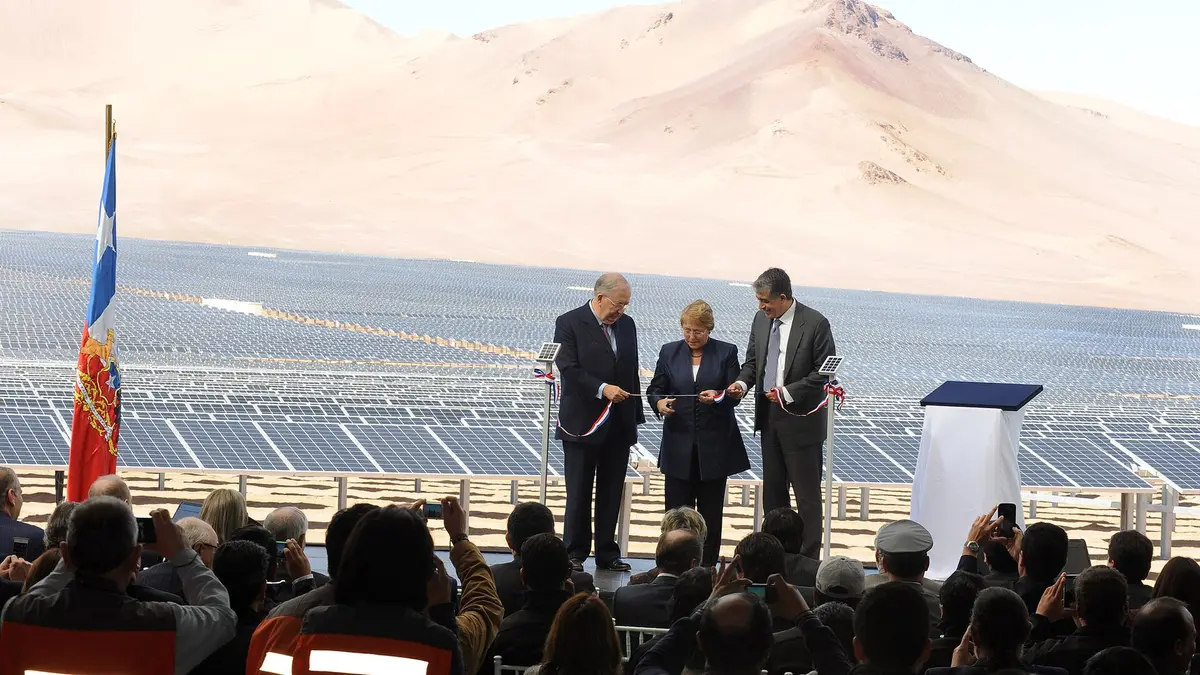
At the end of September there were 93 energy projects under assessment worth US$21,060.5 million. It is a large pipeline, equivalent on paper to almost two years of approvals at the current pace. Antofagasta leads by a wide margin:
| Region | Energy investment under assessment (September 2026) |
|---|---|
| Antofagasta | US$6,575 million |
| Atacama | US$3,578 million |
| Interregional projects | US$2,675 million |
| Los Lagos | US$2,591.4 million |
| National total (93 projects) | US$21,060.5 million |
Source: SEA, via REDIMIN. Interregional projects are mostly transmission lines that cross more than one region.
Antofagasta combines the best solar resource in the world with the country's largest mining demand, and it is where large battery storage systems are concentrated. The grid operator, the Coordinador Eléctrico Nacional, reported this month that more than 12,188 MW of projects are waiting to connect to the grid, many of them in that region, as we detailed in our story on the projects queuing to connect.
Why the energy investment entering assessment is falling
The SEA report does not explain the causes, but the industry has raised several in recent months. The main one is curtailment: during sunlight hours, the north generates more solar power than the lines can carry to the centre of the country, and that energy is lost or sold at a price of zero. A Deloitte report put 2025 curtailment at 6,205 GWh, as we reported in our story on a transmission grid that cannot cope.
With very low energy prices at midday, a new solar park without batteries is increasingly hard to finance. That is why most of the projects still moving forward are hybrids with storage or standalone batteries, which buy cheap energy during the day and sell it at night. Another factor is the investment cycle: in 2024 and 2025 a wave of projects entered assessment that is now already in the SEIA or approved, and the new pipeline has not yet been replenished.
Regulatory uncertainty adds to this. The Ministry of Energy is preparing a reform of electricity distribution, the National Energy Commission (CNE) is reviewing the rules for connecting to the networks, and the 2027 budget bill cuts the ministry's spending. These processes do not stop investment on their own, but developers usually wait for clear rules before filing new projects.
What the drop means for the coming years
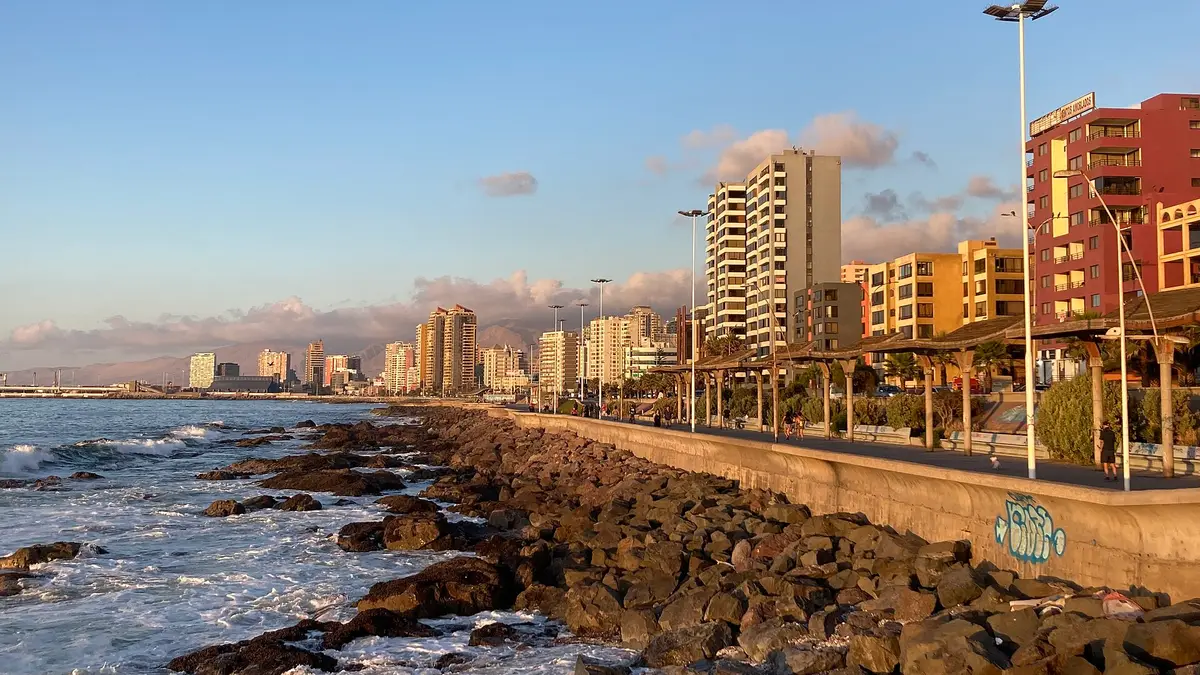
A project that does not enter the SEIA today is unlikely to be generating before 2029 or 2030, because financing, construction and grid connection come on top of the environmental assessment. If the fall in filings continues, the effect will be felt in the second half of the decade, just when the system must replace retiring coal plants and supply a demand that is growing with mining, electric mobility and data centres.
In the short term, the approved pipeline provides some slack. In the Ñuble region alone, for example, close to 1,000 MW of renewables and more than US$1,600 million were approved between March and October, as we detailed in our story on investment in Ñuble. And in Atacama, the 250 MW Ceibo solar park obtained its permit this month.
The question is how many of those approved projects will actually be built. A favourable environmental approval is only a permit: companies decide later whether to build, depending on prices, power purchase contracts and connection conditions. That is why the SEA warns that its figures are declared investment and not actual spending.
- 90 energy projects approved between January and September 2026, one more than in 2025.
- US$11,854.8 million in approved investment, 4.2% less than a year earlier.
- Only 46 new projects entered assessment, against 132 in 2025 (-65.2%).
- Investment filed fell 27.7%, to US$14,485.5 million.
- 93 projects worth US$21,060.5 million were still under assessment at the end of September.
Does your company develop or finance energy projects? Reach Energía Futura's readers.
See advertising optionsFrequently asked questions
How much energy investment was approved in Chile in 2026?
Between January and September, the SEA approved 90 energy projects worth US$11,854.8 million, according to its latest report.
Why are fewer energy projects entering the SEIA?
The SEA does not say. The industry points to solar curtailment due to a lack of transmission, low midday prices and uncertainty over ongoing regulatory changes.
Which region has the most energy investment under assessment?
Antofagasta, with US$6,575 million in energy projects under assessment at the end of September 2026.
Is an approved project always built?
No. Environmental approval is a permit; the company decides later whether to build, depending on financing, contracts and grid connection.