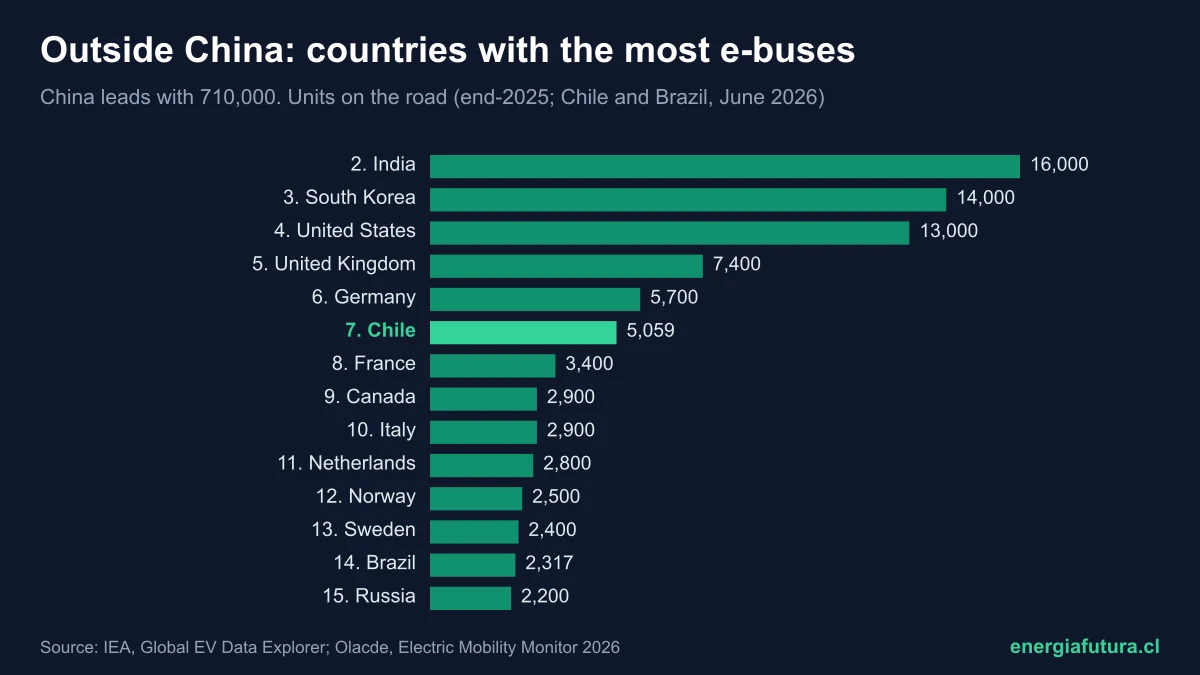
Updated on 24 November 2026. China is the country with the most electric buses in the world: 710,000 at the end of 2025, 86.6% of the 820,000 on the planet's roads, according to the International Energy Agency's (IEA) Global EV Data Explorer. Far behind come India (16,000), South Korea (14,000) and the United States (13,000). Chile, with 5,059 electric buses in June 2026 according to Olacde's Electric Mobility Monitor, would rank seventh in the world, behind Germany and ahead of France, and holds 47% of Latin America's electric buses.
View the data as a table
| Electric buses worldwide | 820,000 |
| Are in China | 86.6% |
| Sold in 2025 | 70,000 |
| Electric buses in Chile | 5,059 |
Ranking of countries with the most electric buses
The IEA publishes the electric bus fleet (battery-electric, plug-in hybrid and hydrogen) of about 30 countries, with data to the end of 2025. For Chile, Brazil, Colombia, Mexico, Ecuador and Argentina, which the agency does not break out, we used the monitor of the Latin American and Caribbean Energy Organization (Olacde), with data to June 2026. That is why the dates are not identical: the table combines two official sources and says so on each row.
| # | Country | Electric buses | Source and date |
|---|---|---|---|
| 1 | China | 710,000 | IEA, end-2025 |
| 2 | India | 16,000 | IEA, end-2025 |
| 3 | South Korea | 14,000 | IEA, end-2025 |
| 4 | United States | 13,000 | IEA, end-2025 |
| 5 | United Kingdom | 7,400 | IEA, end-2025 |
| 6 | Germany | 5,700 | IEA, end-2025 |
| 7 | Chile | 5,059 | Olacde, June 2026 |
| 8 | France | 3,400 | IEA, end-2025 |
| 9 | Canada | 2,900 | IEA, end-2025 |
| 10 | Italy | 2,900 | IEA, end-2025 |
| 11 | Netherlands | 2,800 | IEA, end-2025 |
| 12 | Norway | 2,500 | IEA, end-2025 |
| 13 | Sweden | 2,400 | IEA, end-2025 |
| 14 | Brazil | 2,317 | Olacde, June 2026 |
| 15 | Russia | 2,200 | IEA, end-2025 |
Source: IEA, Global EV Data Explorer, electric bus stock at end-2025 (accessed 24 November 2026), and Olacde, Electric Mobility Monitor 2026, figure 5. The IEA rounds its figures. Japan, Turkey, Indonesia and other countries are not broken out in either source, so they do not appear.
View the data as a table
| China | 710,000 |
| India | 16,000 |
| South Korea | 14,000 |
| United States | 13,000 |
| United Kingdom | 7,400 |
| Germany | 5,700 |
| Chile | 5,059 |
| France | 3,400 |
| Canada | 2,900 |
| Italy | 2,900 |
| Netherlands | 2,800 |
| Norway | 2,500 |
| Sweden | 2,400 |
| Brazil | 2,317 |
| Russia | 2,200 |
| Spain | 2,000 |
| Belgium | 1,800 |
| Denmark | 1,700 |
| Poland | 1,700 |
| Colombia | 1,658 |
| Israel | 1,600 |
| Finland | 1,100 |
| Mexico | 1,095 |
| Portugal | 820 |
| New Zealand | 750 |
| Uzbekistan | 700 |
| Switzerland | 490 |
| Uruguay | 310 |
| Ecuador | 166 |
| Argentina | 111 |
| Vietnam | 110 |
| Philippines | 98 |
| Singapore | 97 |
| South Africa | 83 |
| Malaysia | 19 |
| Jordan | 17 |
China owns almost nine in ten electric buses
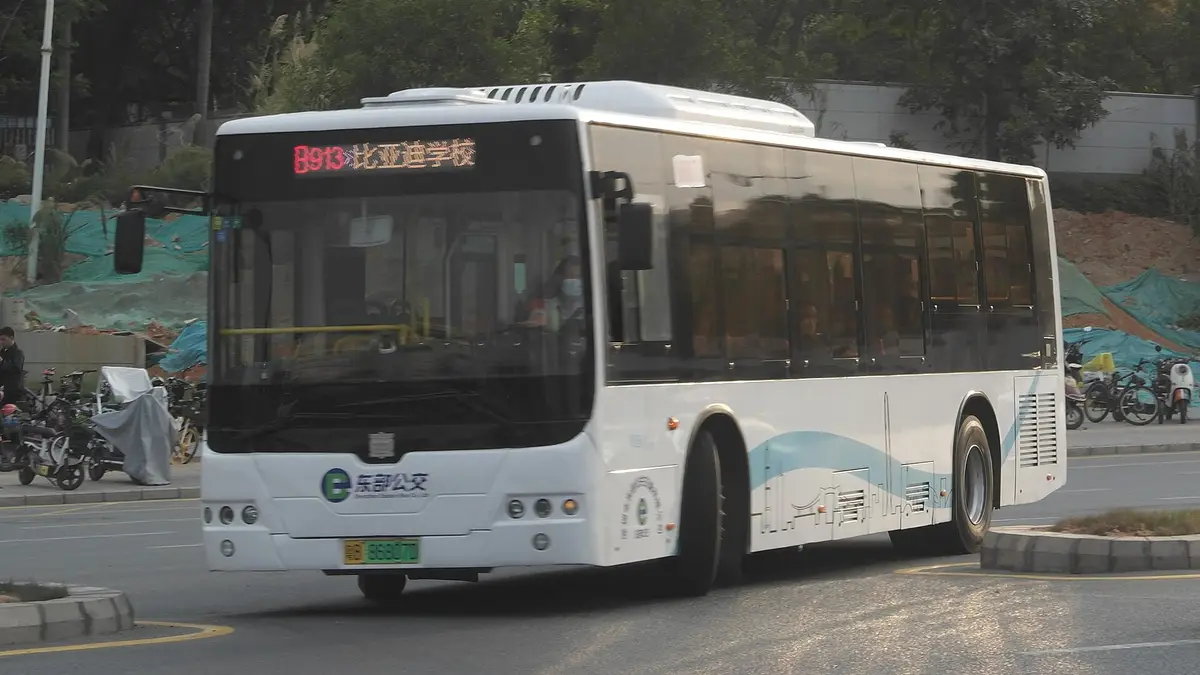
China's dominance is not new. As early as 2015 it had 120,000 of the world's 130,000 electric buses, and within five years it passed half a million. Cities such as Shenzhen electrified their entire urban bus fleet in the last decade, backed by national subsidies and local manufacturers such as BYD and Yutong.
What has changed in recent years is that the rest of the world began growing faster. China added 40,000 electric buses in 2025, 57% of the 70,000 sold worldwide, down from about two thirds in 2024. Outside China, the fleet went from about 80,000 to 110,000 in a year. India, which had 3,000 in 2020, reached 16,000; South Korea went from 1,800 to 14,000 over the same period.
View the data as a table
| India | South Korea | United States | United Kingdom | Germany | France | |
|---|---|---|---|---|---|---|
| 2015 | 100 | 22 | 860 | 200 | No data | 310 |
| 2016 | 100 | 52 | 1,400 | 400 | 230 | 360 |
| 2017 | 100 | 52 | 1,600 | 460 | 260 | 410 |
| 2018 | 100 | 100 | 2,200 | 620 | 280 | 450 |
| 2019 | 550 | 220 | 2,700 | 720 | 500 | 700 |
| 2020 | 3,000 | 1,800 | 3,300 | 1,000 | 880 | 830 |
| 2021 | 4,100 | 3,100 | 3,300 | 1,600 | 1,400 | 1,600 |
| 2022 | 6,100 | 5,200 | 5,000 | 2,100 | 1,800 | 2,100 |
| 2023 | 8,400 | 8,000 | 8,000 | 3,000 | 3,000 | 2,200 |
| 2024 | 12,000 | 11,000 | 11,000 | 5,200 | 3,800 | 3,000 |
| 2025 | 16,000 | 14,000 | 13,000 | 7,400 | 5,700 | 3,400 |
View the data as a table
| 2015 | 2016 | 2017 | 2018 | 2019 | 2020 | 2021 | 2022 | 2023 | 2024 | 2025 | |
|---|---|---|---|---|---|---|---|---|---|---|---|
| India | 100 | 100 | 100 | 100 | 550 | 3,000 | 4,100 | 6,100 | 8,400 | 12,000 | 16,000 |
| South Korea | 22 | 52 | 52 | 100 | 220 | 1,800 | 3,100 | 5,200 | 8,000 | 11,000 | 14,000 |
| United States | 860 | 1,400 | 1,600 | 2,200 | 2,700 | 3,300 | 3,300 | 5,000 | 8,000 | 11,000 | 13,000 |
| United Kingdom | 200 | 400 | 460 | 620 | 720 | 1,000 | 1,600 | 2,100 | 3,000 | 5,200 | 7,400 |
| Germany | No data | 230 | 260 | 280 | 500 | 880 | 1,400 | 1,800 | 3,000 | 3,800 | 5,700 |
| France | 310 | 360 | 410 | 450 | 700 | 830 | 1,600 | 2,100 | 2,200 | 3,000 | 3,400 |
| Netherlands | 100 | 180 | 270 | 390 | 850 | 1,300 | 1,400 | 1,500 | 1,700 | 2,100 | 2,800 |
| Canada | No data | No data | No data | 19 | 68 | 270 | 430 | 690 | 1,600 | 2,200 | 2,900 |
| Italy | No data | 38 | 46 | 110 | 540 | 590 | 670 | 790 | 1,000 | 2,200 | 2,900 |
| Norway | No data | 13 | 31 | 43 | 200 | 480 | 590 | 900 | 1,300 | 1,900 | 2,500 |
| Sweden | 25 | 64 | 86 | 180 | 280 | 450 | 620 | 1,000 | 1,200 | 1,500 | 2,400 |
| Spain | No data | No data | 140 | 180 | 290 | 300 | 460 | 710 | 1,200 | 1,700 | 2,000 |
| Poland | 14 | 34 | 34 | 200 | 270 | 470 | 640 | 860 | 1,200 | 1,600 | 1,700 |
| Belgium | 87 | 120 | 140 | 170 | 220 | 270 | 330 | 330 | 770 | 1,000 | 1,800 |
| Denmark | 4 | 6 | 6 | 8 | 110 | 110 | 330 | 730 | 940 | 1,300 | 1,700 |
Where more electric buses are already sold than diesel ones
The total fleet tells the history; the share of sales shows where each country is heading. In 2025, electric buses were 71% of new buses sold in Denmark, 62% in China and Norway, and 51% in Belgium. Worldwide the figure was only 5%, because diesel still dominates in India, the United States and much of Asia and Africa.
Latin America's surprise is Uruguay: 37% of new buses sold in 2025 were electric, according to the IEA, partly thanks to state subsidies for buying electric buses. Its fleet, however, is still small: 310 at the end of 2025 for the IEA and 279 in June 2026 for Olacde, which use different bases.
| Country | Electric buses sold in 2025 | Share of new bus sales |
|---|---|---|
| China | 40,000 | 62% |
| India | 4,300 | 4% |
| South Korea | 2,900 | 6% |
| United Kingdom | 2,900 | 30% |
| Germany | 1,800 | 26% |
| United States | 1,800 | 2% |
| Italy | 1,400 | 25% |
| Denmark | 410 | 71% |
| Uruguay | 240 | 37% |
| World | 70,000 | 5% |
Source: IEA, Global EV Data Explorer, 2025 sales. The IEA does not publish Chile's share of bus sales.
Where Chile stands in the electric bus ranking
With 5,059 electric buses in June 2026, Chile has Latin America's largest fleet, more than twice Brazil's (2,317), a country with ten times its population. Next come Colombia (1,658) and Mexico (1,095), according to Olacde. The region had 10,685 electric buses in June, 967 more than in March, a rise of about 10% in three months.
View the data as a table
| Chile | 5,059 |
| Brazil | 2,317 |
| Colombia | 1,658 |
| Mexico | 1,095 |
| Uruguay | 279 |
| Ecuador | 166 |
| Argentina | 111 |
Most of Chile's fleet runs in Santiago, within the Red system, which in recent years replaced diesel buses with electric ones under contracts that separate bus ownership from operation. That model explains why new bus sales fell sharply in 2026 after the record year of arrivals, as we reported in our story on new bus sales in Chile. The regions are adding buses too: in Antofagasta, for example, route 114 already runs electric buses.
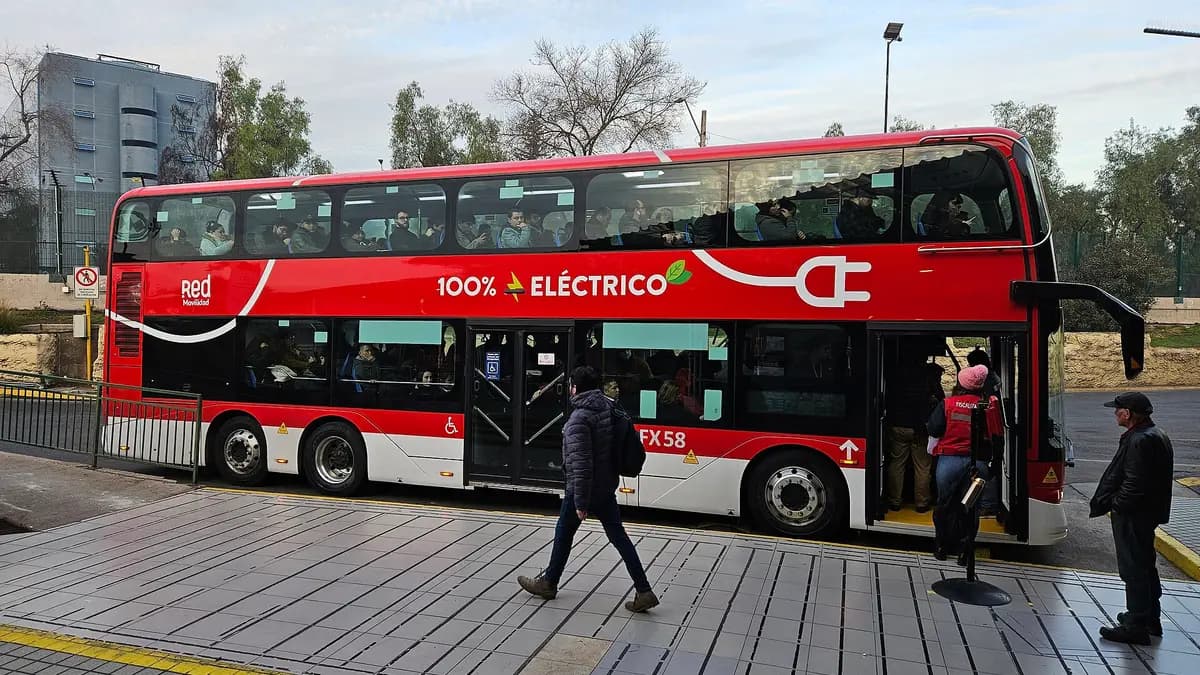
Seen in perspective, Chile's seventh place says more about its early adoption than about its size. Its fleet is similar to Germany's (5,700) and larger than France's (3,400), two countries with bus fleets and populations several times larger. In electric cars, by contrast, the region still lags: Latin America has only just passed one million electric cars, more than half of them in Brazil.
| 1 | China | 710,000 | IEA, end-2025 |
| 2 | India | 16,000 | IEA, end-2025 |
| 3 | South Korea | 14,000 | IEA, end-2025 |
| 4 | United States | 13,000 | IEA, end-2025 |
| 5 | United Kingdom | 7,400 | IEA, end-2025 |
| 6 | Germany | 5,700 | IEA, end-2025 |
| 7 | Chile | 5,059 | Olacde, June 2026 |
| 8 | France | 3,400 | IEA, end-2025 |
| 9 | Canada | 2,900 | IEA, end-2025 |
| 10 | Italy | 2,900 | IEA, end-2025 |
| 11 | Netherlands | 2,800 | IEA, end-2025 |
| 12 | Norway | 2,500 | IEA, end-2025 |
| 13 | Sweden | 2,400 | IEA, end-2025 |
| 14 | Brazil | 2,317 | Olacde, June 2026 |
| 15 | Russia | 2,200 | IEA, end-2025 |
| 16 | Spain | 2,000 | IEA, end-2025 |
| 17 | Belgium | 1,800 | IEA, end-2025 |
| 18 | Denmark | 1,700 | IEA, end-2025 |
| 19 | Poland | 1,700 | IEA, end-2025 |
| 20 | Colombia | 1,658 | Olacde, June 2026 |
| 21 | Israel | 1,600 | IEA, end-2025 |
| 22 | Finland | 1,100 | IEA, end-2025 |
| 23 | Mexico | 1,095 | Olacde, June 2026 |
| 24 | Portugal | 820 | IEA, end-2025 |
| 25 | New Zealand | 750 | IEA, end-2025 |
| 26 | Uzbekistan | 700 | IEA, end-2025 |
| 27 | Switzerland | 490 | IEA, end-2025 |
| 28 | Uruguay | 310 | IEA, end-2025 |
| 29 | Ecuador | 166 | Olacde, June 2026 |
| 30 | Argentina | 111 | Olacde, June 2026 |
| 31 | Vietnam | 110 | IEA, end-2025 |
| 32 | Philippines | 98 | IEA, end-2025 |
| 33 | Singapore | 97 | IEA, end-2025 |
| 34 | South Africa | 83 | IEA, end-2025 |
| 35 | Malaysia | 19 | IEA, end-2025 |
| 36 | Jordan | 17 | IEA, end-2025 |
Why buses go electric before cars
In almost every country, the city bus was the first heavy vehicle to switch to batteries. The reasons are operational: it runs fixed, known routes, returns every night to the same depot, where it charges, and covers many kilometres a year, so the lower cost of electricity compared with diesel is recovered quickly. Fleets are also bought by authorities or large operators, which can finance the upfront investment and charging infrastructure in one go.
Olacde has estimated that saving for Latin America: with diesel at US$1.31 a litre, an electric bus saves about US$26,210 a year in energy compared with a diesel one, rising to US$49,065 if fuel becomes 50% more expensive. Adding buses and electric cars, the region saves about US$1,519 million a year, close to US$4 million a day, according to the same monitor. On top of that come benefits that don't show up on the energy bill: less noise and zero tailpipe emissions on cities' busiest streets.
Methodology
The world figures are the electric bus stock (battery-electric, plug-in hybrid and fuel-cell) published by the International Energy Agency in its Global EV Data Explorer, which accompanies the Global EV Outlook 2026, with data to the end of 2025, accessed on 24 November 2026. For the Latin American countries the IEA does not break out, we used Olacde's Electric Mobility Monitor 2026, with data to June 2026 based on national statistics. For Uruguay, which appears in both, the world ranking uses the IEA figure. Sales and sales shares are from the IEA. This ranking will be updated on this same page when the IEA and Olacde publish new data.
How to cite this data
Energía Futura (2026). 'Countries with the most electric buses 2026: world ranking and where Chile stands'. Updated on 24 November 2026. energiafutura.cl/en/news/countries-with-the-most-electric-buses-2026-world-ranking-and-where-chile-stands. Data: International Energy Agency (Global EV Data Explorer) and Olacde (Electric Mobility Monitor 2026).
Does your company work in electric buses, charging or fleets? Reach Energía Futura's readers.
See advertising optionsFrequently asked questions
Which country has the most electric buses?
China, with 710,000 at the end of 2025, 86.6% of the world total, according to the IEA.
How many electric buses are there in the world?
820,000 at the end of 2025. That year 70,000 were sold, 5% of the world's new buses.
How many electric buses does Chile have?
5,059 in June 2026, according to Olacde. It is Latin America's largest fleet and 47% of the regional total.
Where does Chile rank in the world for electric buses?
With its 5,059 buses, Chile would be seventh, behind China, India, South Korea, the United States, the United Kingdom and Germany, comparing its June 2026 figure with the IEA's end-2025 data.
Which country sells the highest share of electric buses?
Denmark: 71% of new buses sold in 2025 were electric. In Latin America, Uruguay stands out at 37%.