A 60 cm, 13-place-setting dishwasher uses between 0.74 and 0.94 kWh per wash on its eco programme, according to the European energy labels of models on sale today. With electricity at CLP 255.27 per kWh (CGE's BT1 residential rate in Chile since October 2026), each wash costs between CLP 189 and CLP 240 in electricity, and uses about 9 to 10 litres of water.
Washing the same dishes by hand uses far more water: 103 litres on average and 2.5 kWh of energy to heat it, according to a University of Bonn study cited by Maldita.es. Below: how much a dishwasher uses, its monthly cost in pesos, which programmes are best and when washing by hand is cheaper.
How much electricity a dishwasher uses per wash
A dishwasher's consumption depends mainly on heating the water: the heating element, of about 2,000 W, runs for only part of the cycle, while the pump and controls use little. So the useful figure is not the power rating but the kWh per wash, which the European energy label shows as kWh per 100 cycles on the eco programme.
| Model (example) | EU energy class | Consumption per 100 washes (eco) | Consumption per wash | Water per wash | Cost per wash (CLP 255.27/kWh) |
|---|---|---|---|---|---|
| Bosch SMS2HTW06E, 13 place settings | C | 74 kWh | 0.74 kWh | — | CLP 189 |
| Bosch SMV4HAX19E, 13 place settings | D | 84 kWh | 0.84 kWh | 9.0 litres | CLP 214 |
| Bosch SMV2ITX09E, 13 place settings | E | 94 kWh | 0.94 kWh | 9.5 litres | CLP 240 |
Sources: product sheets with the European energy label published by Spanish retailers (MediaMarkt, PcBox and Qubbos). They are examples to show the range; each model's label has its exact figure.
The difference between a class C and a class E model is 0.2 kWh per wash: about CLP 51. It seems small, but with one wash a day it adds up to more than CLP 18,000 a year. Intensive, quick or high-temperature programmes use more than eco: in the Bonn study, the machines used between 1 and 2 kWh depending on the programme.
How much a dishwasher costs to run per month in pesos
The monthly cost depends on how often it is used. With electricity at CLP 255.27 per kWh, these are the electricity costs for the three models in the table above:
| Use | Washes per month | Class C (0.74 kWh) | Class D (0.84 kWh) | Class E (0.94 kWh) |
|---|---|---|---|---|
| Three times a week | 13 | CLP 2,456 | CLP 2,788 | CLP 3,119 |
| Five times a week | 22 | CLP 4,156 | CLP 4,717 | CLP 5,279 |
| Every day | 30 | CLP 5,667 | CLP 6,433 | CLP 7,199 |
| Twice a day | 60 | CLP 11,334 | CLP 12,866 | CLP 14,397 |
Energía Futura calculations using CGE's BT1 tariff. In areas with a more or less expensive kWh, the cost changes in the same proportion: prices by distributor are in our guide to the price of a kWh in Chile.
For a family that uses it daily, the dishwasher adds about 22 to 28 kWh a month, between 11% and 14% of the consumption of an average Chilean home of 200 kWh. That is more than a washing machine, but much less than an old fridge or an electric heater in winter.
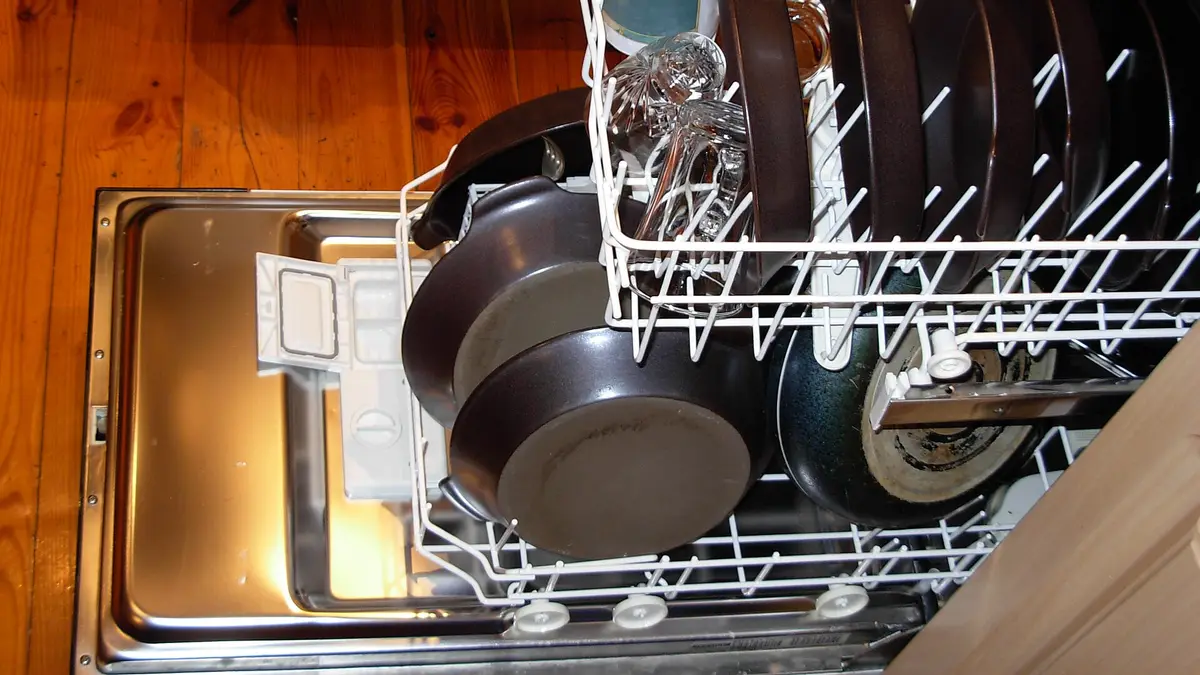
Dishwasher or washing by hand: which uses less
The most cited study is by the University of Bonn in Germany. It compared two efficient dishwashers with 117 people from seven European regions, who washed 140 pieces of dirty dishes by hand, the equivalent of a full 12-place load. These were the results, according to Maldita.es's summary:
| Method | Water | Energy | Detergent | Cleaning (1 to 5) |
|---|---|---|---|---|
| Hand washing (average) | 103 litres | 2.5 kWh | 35 g | 3.3 |
| Dishwasher (normal or intensive programme) | 15 to 22 litres | 1 to 2 kWh | 30 g | 3.3 to 4.3 |
The energy for hand washing is that of the hot water. If the water comes from an electric water heater, 2.5 kWh is about CLP 638 per load of dishes: almost three times what a class E dishwasher uses on eco. If the water is heated with a gas heater, the cost depends on the gas price, but the amount of energy is the same. Hot water costs are in our guide to electric water heaters.
Current models use even less water than those in the study: 9 to 10 litres per wash, versus 103 litres by hand. Over a year, with one wash a day, the difference exceeds 33,000 litres, more than 33 m³ of drinking water.
When washing by hand is cheaper
Hand washing wins when done with little water: filling a basin or sink rather than leaving the tap running, using cold or lukewarm water, and when there are few dishes. For a couple of plates and cups, running the dishwasher half full does not pay. The rule of thumb: if you collect a full load every day, the dishwasher uses less water and less energy; if few dishes are used at home, careful hand washing can cost the same or less.
Why the eco programme takes so long
The eco programme usually lasts three hours or more, and many users avoid it for that reason. But that is where the savings are: instead of heating the water to 65 or 70 °C, it washes at a lower temperature for longer, letting the detergent work. Heating the water less cuts energy use, and the European labelling regulation requires the energy class to be measured on exactly that programme.
Quick programmes, of 30 to 60 minutes, are for lightly soiled dishes, but use more energy per item because they must heat the water faster and hotter. Intensive is for pots with baked-on food. For daily use, eco is the cheapest.
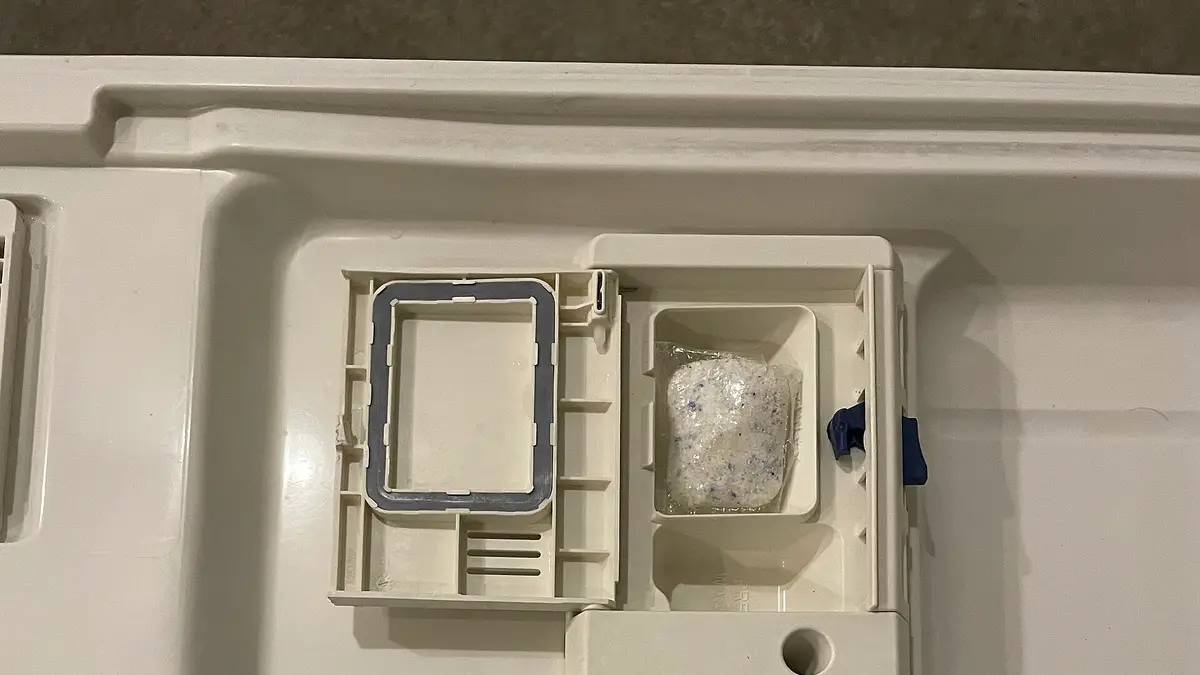
How to choose a model that uses less
- Size for the household: 60 cm models hold 12 to 14 place settings and suit four or more people; 45 cm models (9 to 10 place settings) suit couples or small families; countertop models, small flats.
- Energy label: many imported models carry the European label, with kWh per 100 cycles and litres per wash. Comparing that figure is more useful than comparing the letter.
- Eco programme and half load: most modern models have both; half load helps when you do not collect a full load.
- Noise: measured in decibels; below 44 dB is quiet, useful in open kitchens or flats.
- Delay start: lets you schedule the wash for when the rest of the house is not drawing power, without exceeding the connection capacity.
A dishwasher also needs a water inlet and drain nearby; in older flats, installation can cost more than the price difference between two models. Before buying, measure the space and check where the washing machine or sink connections are.
How to spend less when washing up
- Run it full: consumption per wash is almost the same with a half load as with a full one.
- Do not pre-rinse: just scrape off solid food; rinsing under the tap cancels out the water savings.
- Choose the eco programme for everyday dishes.
- Turn off heated drying if the model allows: opening the door at the end and letting dishes air-dry saves energy.
- Clean the filter every week or two: a clogged filter forces repeat washes.
- Use salt and rinse aid in hard-water areas, to prevent scale on the heating element, which makes it use more.
Among household appliances, the dishwasher sits somewhere in the middle. For comparison, a washing machine uses less per cycle if it washes cold, as we explained in our washing machine consumption guide, while the electric water heater and heating weigh most on the bill.
Do you sell energy-efficient appliances? Reach Energía Futura's readers.
See advertising optionsFrequently asked questions
How much electricity does a dishwasher use?
Between 0.74 and 0.94 kWh per wash on eco, for 13-place models. With electricity at CLP 255.27 per kWh, between CLP 189 and CLP 240 per wash.
How much does a dishwasher cost per month?
With one wash a day, between CLP 5,667 and CLP 7,199 a month in electricity, depending on its efficiency.
How much water does a dishwasher use?
About 9 to 10 litres per wash in current models, versus about 103 litres by hand according to the University of Bonn study.
Is it cheaper to wash by hand?
Only if you wash few dishes with little water. With a full load every day, the dishwasher uses less water and less energy.
Which dishwasher programme uses least?
Eco: it takes longer but heats the water less. Quick and intensive programmes use more energy.