Chile's state-owned National Mining Company (Enami) is fighting on two fronts. Acciona Energía has sued it for US$9,812,506 over an alleged breach of a renewable electricity supply contract signed in February 2018, REDIMIN reported on 26 November. The case has been before Santiago's 20th Civil Court since August.
The same day it emerged that Enami's board had extended to 23 December 2026 the deadline to close its partnership with Rio Tinto on the Salares Altoandinos lithium project, worth US$3 billion, in the Atacama Region. The original deadline was 23 November, and approval from China's competition regulator was still pending, according to REDIMIN.
View the data as a table
| What Acciona is claiming | US$9.81 million |
| What Enami offered to pay | US$723k |
| Salares Altoandinos investment | US$3,000 million |
| New deadline with Rio Tinto | 23 December |
Why Acciona is suing Enami
The contract, awarded through a tender, secures renewable electricity for Enami facilities in Antofagasta, Atacama and Coquimbo from April 2018 to March 2030. Acciona is claiming US$4,988,335 for contract year 2024 and US$4,824,171 for 2025, under a take-or-pay clause: in its reading, Enami must pay for a minimum amount of energy each year whether or not it uses it.
The core disagreement is over the consumption of Enami's future smelter. Acciona included it in its calculation. Enami argues that it is not appropriate to count the consumption of a facility that does not yet exist, and that adding it to the supply requires 24 months' notice. In earlier talks, the state company offered to pay US$435,000 for 2024 and US$288,000 for 2025, offers Acciona rejected.
| Contract year | Amount Acciona claims | Enami's offer in talks | Difference |
|---|---|---|---|
| 2024 | US$4,988,335 | US$435,000 | US$4,553,335 |
| 2025 | US$4,824,171 | US$288,000 | US$4,536,171 |
| Total | US$9,812,506 | US$723,000 | US$9,089,506 |
Source: Acciona Energía's lawsuit before Santiago's 20th Civil Court, via REDIMIN, 26 November 2026. Differences and the total offer are Energía Futura's calculation.
View the data as a table
| 2024 | 2025 | |
|---|---|---|
| Acciona claims | US$4,988,335 | US$4,824,171 |
| Enami offered | US$435,000 | US$288,000 |

Take-or-pay and renewable energy in mining
Take-or-pay clauses are common in long-term energy contracts: they give the generator a minimum income to finance its plants and the customer a stable price. The risk appears when actual consumption falls far short of projections, as happens when a new plant is delayed. It is the same logic as the PPAs big companies sign, such as the renewable supply deal described in our story on Colbún, Falabella and Mallplaza.
Relations between the two companies had already been strained. In July 2023, Acciona announced the early termination of the contract over late payment of at least 77 invoices. Enami contested it and the termination did not go ahead. Now the state company has filed a dilatory exception challenging the information used to calculate the amounts and said it trusts the court will reject the claim. The case is still at first instance, with no ruling.
Enami and Rio Tinto: one more month for lithium
Enami's board approved the extension at an extraordinary meeting on 13 November. The partnership, signed in July 2025, gives Rio Tinto 51% of the company that will develop Salares Altoandinos and Enami 49%. The multinational committed contributions of up to US$425 million, including pre-feasibility studies and its direct lithium extraction (DLE) technology, which reinjects brine and reduces evaporation at the salt flat.
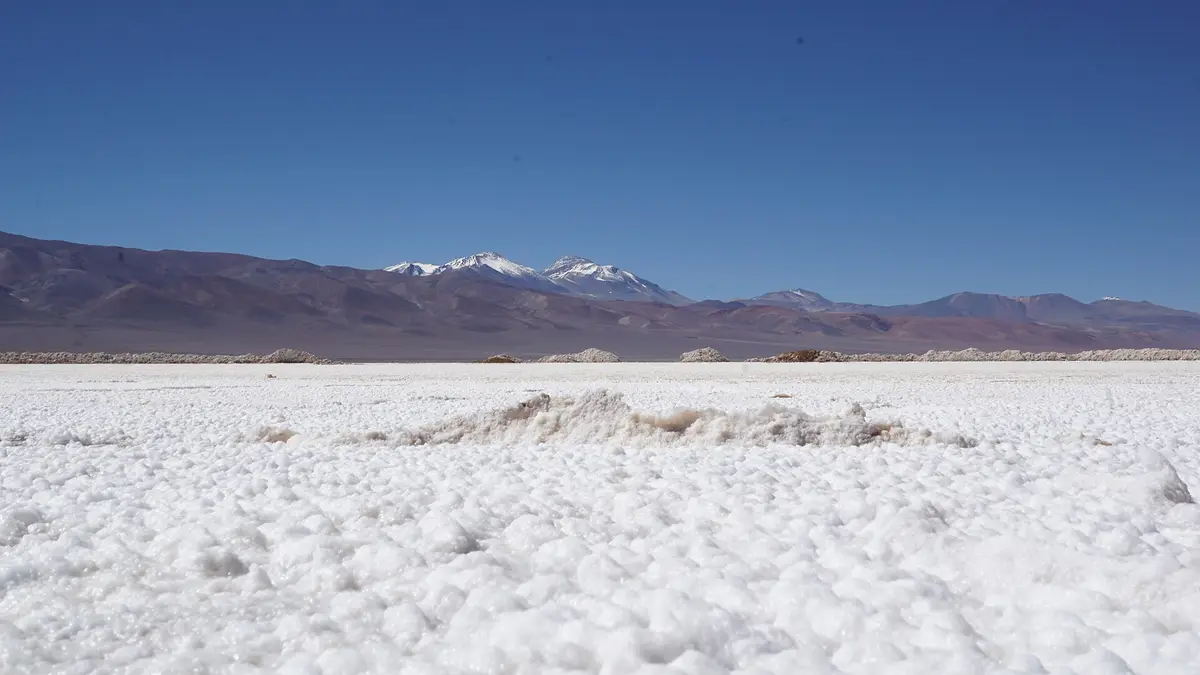
The project covers the Aguilar, Grande and La Isla salt flats in Diego de Almagro and holds a Special Lithium Operating Contract (CEOL) approved by the Comptroller General, valid until 31 December 2060. A week before the deadline the extension had not yet been publicly approved, as we reported in our earlier story on the Rio Tinto deadline.
| Salares Altoandinos | Figure |
|---|---|
| Estimated investment | US$3 billion |
| Ownership | Rio Tinto 51%, Enami 49% |
| Rio Tinto contributions | Up to US$425 million (studies and DLE technology) |
| Salt flats | Aguilar, Grande and La Isla (Diego de Almagro, Atacama) |
| CEOL | Valid until 31 Dec 2060 |
| Pending condition | Approval from China's SAMR |
| New deadline | 23 December 2026 |
Source: Enami, via REDIMIN, 26 November 2026.
Enami's reorganisation from 1 December
In parallel, Enami will carry out an internal reorganisation from 1 December to strengthen its support for small and medium-sized miners. The Lithium unit will report directly to executive vice-president Juan Carlos Sáez, and development, engineering and construction functions will be reassigned. Yerko González becomes manager of Mining Promotion and Development, Jorge Varas manager of Operations and Anita Becerra deputy manager of the General Secretariat and Strategic Coordination.
Lithium is now the big driver of Chile's mining exports: shipments totalled US$5.171 billion from January to October, up 165% on a year earlier, as detailed in our story on lithium exports. For Enami, closing the partnership with Rio Tinto before 23 December is the key to moving from paper to field studies.
The project is part of Chile's National Lithium Strategy and plans to produce about 35,000 tonnes of lithium carbonate a year from 2032 using direct extraction, according to information the company released before the original deadline. The pending SAMR approval is the last regulatory step that has been publicly disclosed. If it does not arrive before 23 December, Enami's board will again have to decide whether to extend the deal.
- February 2018Enami and Acciona sign the renewable supply contractRuns from April 2018 to March 2030.
- July 2023Acciona announces early termination over 77 late invoicesEnami contested it and it did not go ahead.
- July 2025Enami and Rio Tinto sign the Salares Altoandinos partnership
- August 2026Acciona sues Enami for US$9.8 million
- 13 NovemberEnami's board approves extending the Rio Tinto deal
- 23 NovemberOriginal deadlineApproval from China's SAMR regulator was pending.
- 1 DecemberLithium unit moves under the executive vice-president
- 23 December 2026New deadline to close the partnership
Does your company sell renewable power, advise on contracts or work in lithium? Reach Energía Futura's readers.
See advertising optionsFrequently asked questions
Why did Acciona sue Enami?
For US$9.8 million that, according to Acciona, Enami owes under the take-or-pay clause of its renewable power contract for 2024 and 2025. Enami disputes the inclusion of its future smelter's consumption.
What is a take-or-pay clause?
It obliges the customer to pay for a minimum amount of energy each year even if it uses less.
Until when was the Rio Tinto deal extended?
Until 23 December 2026. Approval from China's competition regulator (SAMR) is still pending.
How much will Salares Altoandinos cost?
The estimated investment is US$3 billion, with Rio Tinto as majority partner (51%).