The agreement between Chile's National Mining Company (Enami) and Rio Tinto to develop the Salares Altoandinos lithium project in the Atacama Region expires on 23 November 2026, and the state company's board has not yet approved an extension. The board has discussed the matter twice without agreement, Diario Financiero reported on 12 November. Without that extension, the partnership would end without being completed.
The project has an estimated investment of US$3 billion, initial output of 35,000 tonnes a year of lithium carbonate equivalent (LCE) from 2032, rising to 75,000 tonnes within three years. Rio Tinto would contribute up to US$425 million in cash and in kind, including its direct lithium extraction (DLE) technology. Neither Enami nor Rio Tinto would comment, according to DF. As of 16 November, when this story was published, no board decision had been announced.
View the data as a table
| Estimated investment | US$3,000 million |
| Initial output | 35,000 t LCE |
| Rio Tinto contribution | US$425 million |
| Rio Tinto stake | 51% |
What is still needed to close the Salares Altoandinos deal
The agreement, signed on 23 July 2025 in Copiapó by Enami, its subsidiary Enami Litio SpA (Enali) and Rio Tinto, was subject to three conditions: the Special Lithium Operating Contract (CEOL), authorisation from the Chilean Nuclear Energy Commission (CChEN) and antitrust approvals in Chile and abroad. Almost all have been met.
| Condition | Status | Date |
|---|---|---|
| Enami's CEOL for Salares Altoandinos | Met: registered by the Comptroller; valid until 31 Dec 2060 | February 2026 |
| Chilean Nuclear Energy Commission quota | Met: approved in line with projected output | 2026 |
| National Economic Prosecutor (FNE) | Met: unconditional approval | 17 July 2026 |
| Other antitrust jurisdictions | Met, except China | 2026 |
| SAMR, China's competition regulator | Pending | No date |
| Deadline extension by Enami's board | Pending: discussed twice without approval | Expires 23 Nov 2026 |
Source: Diario Financiero (12 Nov 2026) and Revista Nueva Minería, based on deal documents.
| Enami's CEOL lithium contract | Met | Feb 2026 |
| CChEN quota | Met | 2026 |
| FNE (Chile) | Met, unconditional | 17 Jul 2026 |
| SAMR (China) | Pending | No date |
| Deadline extension (Enami board) | Pending | Expires 23 Nov 2026 |
Only the approval of China's State Administration for Market Regulation (SAMR) remains. In August, Enami's executive vice-president Juan Carlos Sáez told the Chamber of Deputies' Mining Committee that the certificate was expected in July or August but would be delayed "a few more months". According to DF, the Chinese regulator is reviewing this deal together with the partnership between Codelco and Rio Tinto for the Maricunga lithium project.
Salares Altoandinos lithium: where it is and how much it would produce
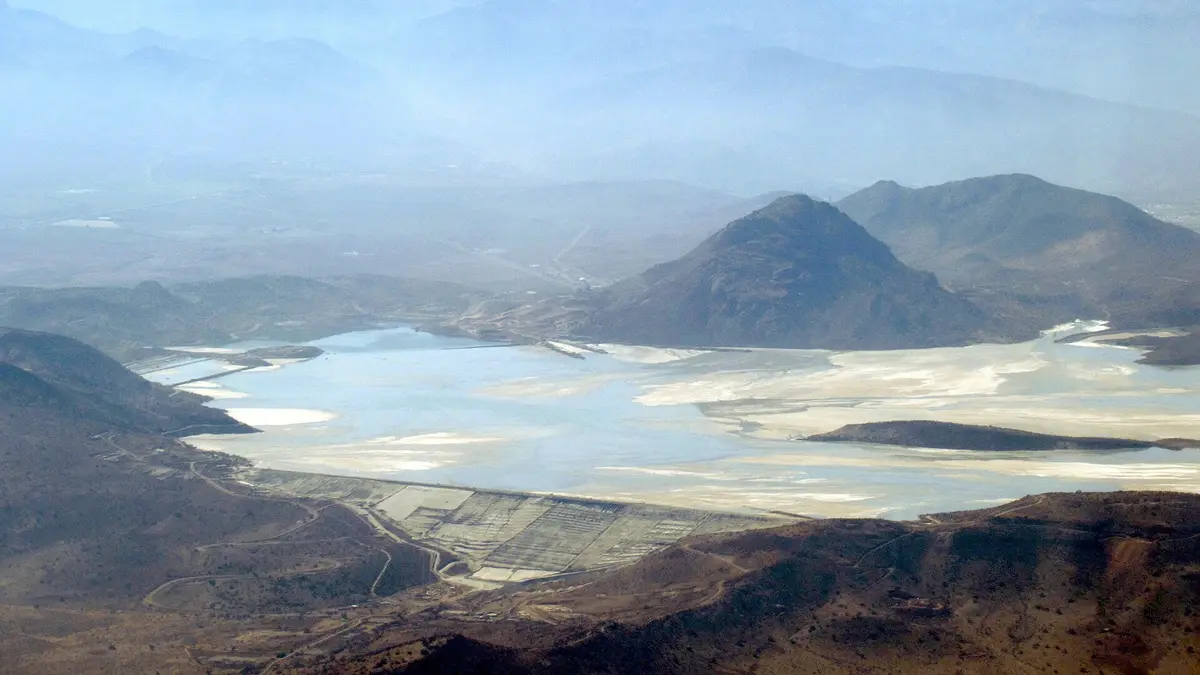
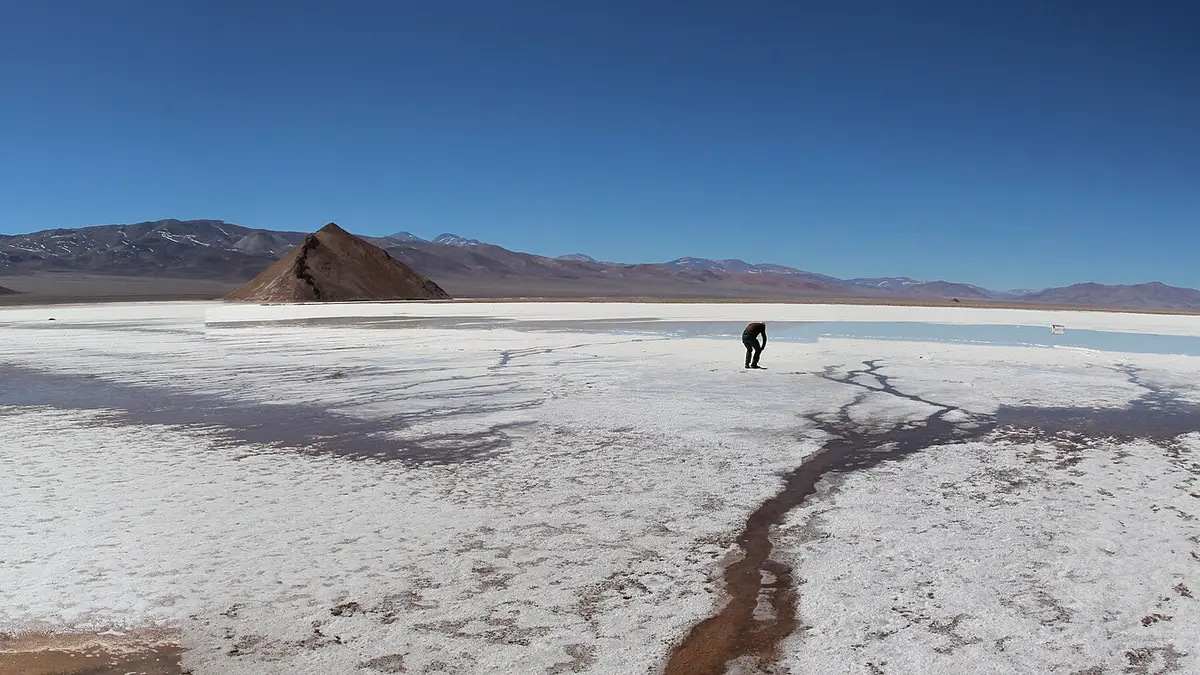
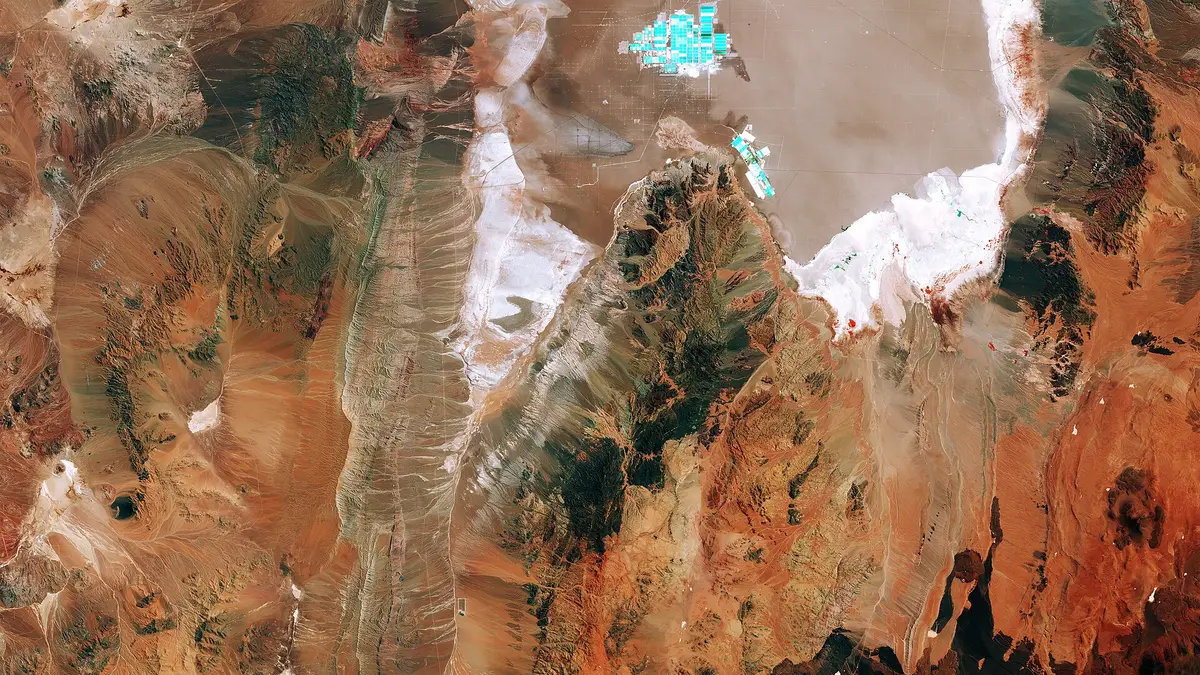
Salares Altoandinos is located in the municipality of Diego de Almagro, in the Atacama Region, and covers the Aguilar, La Isla and Grande salt flats. With 35,000 tonnes of LCE a year at the start and 75,000 at full capacity, it would be one of the projects with which Chile aims to regain ground: in 2025 it was the world's third-largest producer, with 56,000 tonnes of contained lithium, behind Australia (92,000 t) and China (62,000 t), according to the US Geological Survey (USGS). Since one tonne of LCE contains about 0.188 tonnes of lithium, the initial 35,000 tonnes equal some 6,600 tonnes of lithium and the 75,000, about 14,100. Codelco, for its part, has set the goal of being among the top five lithium producers by 2035.
View the data as a table
| Salar de Aguilar | Salares Altoandinos (Enami) | |
| Salar de La Isla | Salares Altoandinos (Enami) | |
| Diego de Almagro | Project's municipality | |
| Salar de Maricunga | Other projects | Codelco-Rio Tinto |
| Salar de Atacama | Other projects | SQM-Codelco and Albemarle |
Under the partnership, Rio Tinto would hold 51% of Enali and Enami 49%, with a five-member board: three appointed by Rio Tinto and two by the state company. The deal also provides for reimbursing Enami's exploration spending and a projected contribution of more than US$15 billion in taxes and local and regional payments over the project's life, according to DF.
Does your company work in lithium, salt flats or direct extraction technology? Reach Energía Futura's readers.
See advertising optionsWhy direct extraction matters for more sustainable lithium
Rio Tinto's contribution is not just money. It includes its direct lithium extraction (DLE) technology, which separates lithium from brine without the large evaporation ponds used in the Salar de Atacama. Chile's National Lithium Strategy encourages new salt-flat projects to use technologies with lower impact on water and ecosystems, and DLE is the main candidate.
It is not a cost-free solution: many DLE plants use fresh water in the process and need to reinject brine into the salt flat, something scientists are still studying. We explain it in our story on what was discussed at South America's first DLE symposium.
- 22 May 2025Enami picks Rio TintoUnanimous board vote.
- 23 Jul 2025Signed in Copiapó
- Feb 2026Comptroller registers the CEOL
- Mar-Apr 2026New executive VP and three directors
- 17 Jul 2026FNE approves unconditionally
- 12 Nov 2026DF: board has not extended the deadline
- 23 Nov 2026Deadline expires
- 2032Planned start-up35,000 t LCE a year.
An inherited deal and a new board
Enami's board chose Rio Tinto unanimously on 22 May 2025, under the previous government, after an international competitive process. In March 2026 the new government replaced executive vice-president Iván Mlynarz with Juan Carlos Sáez, and in April President José Antonio Kast appointed three new directors: Max Larraín, Álvaro Iriarte and Rolando Cubillo.
According to DF, the government has said it requested more information, and some directors were reportedly unsure about continuing an inherited alliance. Mining Minister Daniel Mas has said Enami "lost its focus" on supporting small-scale mining. In addition, Eramet, which lost the tender, has sought mining easements in the Copiapó courts, which Enami has described as an attempt to obstruct the partnership.
The decision comes at a time of higher lithium demand: Cochilco projects that global lithium demand will grow 25% in 2026, driven by stationary batteries. What happens on 23 November will determine whether one of the country's large direct-extraction lithium projects moves forward with its partner or goes back to square one.
Frequently asked questions
What is Salares Altoandinos?
It is Enami's lithium project in the Aguilar, La Isla and Grande salt flats, in Diego de Almagro, Atacama Region. It plans 35,000 tonnes a year of lithium carbonate equivalent from 2032, with an estimated investment of US$3 billion.
When does the Enami-Rio Tinto agreement expire?
On 23 November 2026. If Enami's board does not approve an extension, the partnership would end without being completed, according to Diario Financiero.
Which approval is missing?
China's competition regulator (SAMR). The CEOL, the CChEN authorisation and the FNE approval have already been obtained.
What happens if the deadline passes without an extension?
According to a document cited by Diario Financiero, without the extension the partnership agreement with Rio Tinto would end without being completed. Enami would keep its CEOL over the salt flats but would have to find another way to develop the project.
What does Rio Tinto bring?
Up to US$425 million in cash and in kind, including its direct lithium extraction technology, plus funding for studies and development through to commercial operation. It would hold 51% of Enali.