Central Chile now has a large seawater plant of its own. Aguas Pacífico opened the Aurora desalination plant on 26 November on the Quintero-Puchuncaví bay, with capacity to produce 1,000 litres per second of drinkable desalinated water and an investment of US$1.3 billion, which could reach about US$1.7 billion with a second phase, according to Revista Electricidad.
The plant will run exclusively on renewable energy, has no stacks or direct combustion emissions, and carries water through a 105-kilometre pipeline across six districts to Tiltil, in the Santiago Metropolitan Region. Its customers include Anglo American, Colbún, Esval and the El Granizo rural drinking-water cooperative in Olmué. The ceremony was led by Louis de Grange, minister of both Public Works and Transport.
View the data as a table
| Production capacity | 1,000 l/s |
| Investment | US$1,300 million |
| Pipeline to Tiltil | 105 km |
| For human consumption | 25% |
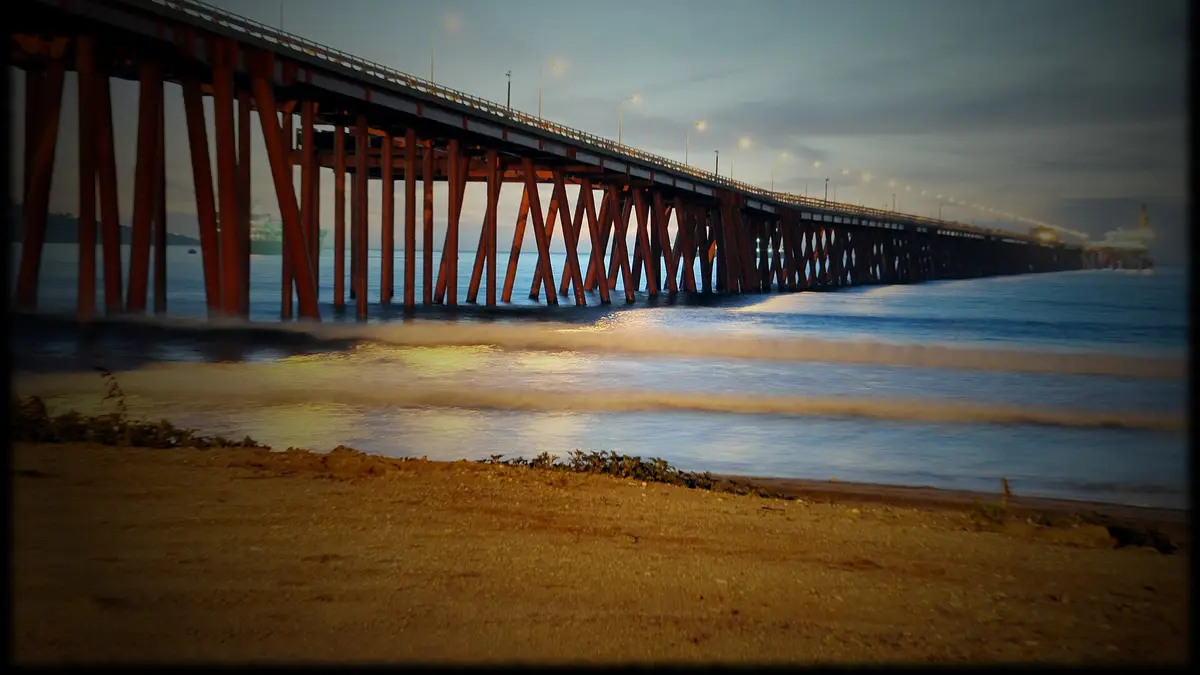
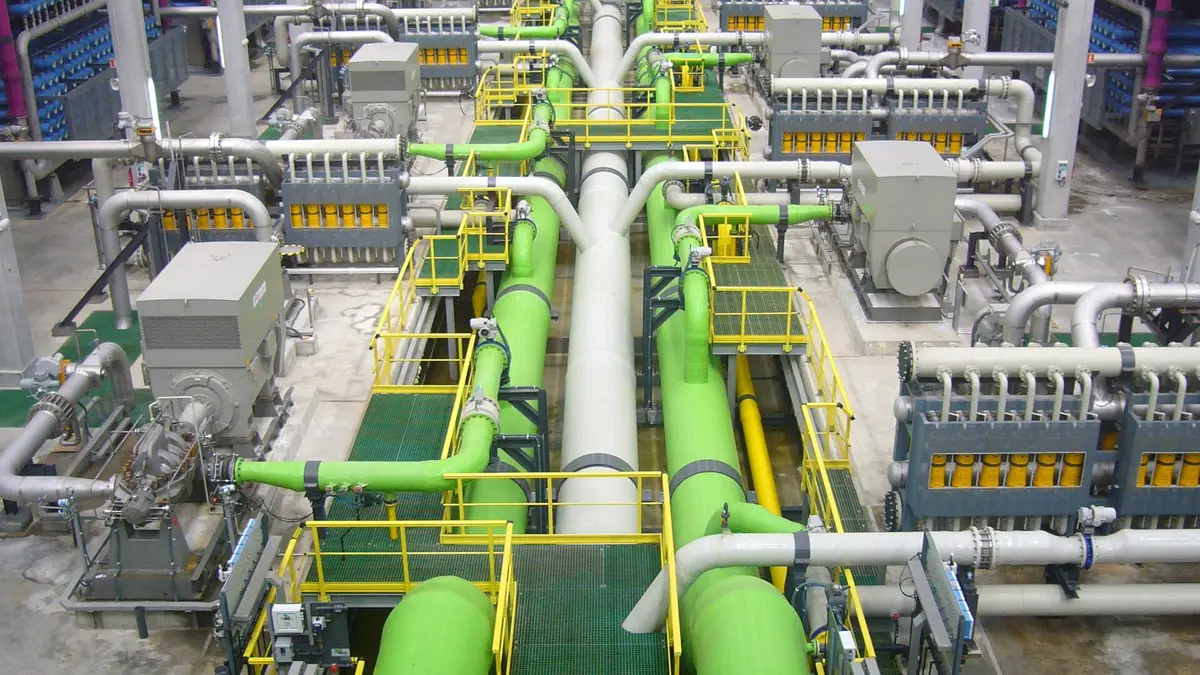
What the Aurora desalination plant looks like
Aurora is a multipurpose plant: its water is split between mining, the power industry and human consumption. 25% of output will go to people, under a contract with Esval and agreements with eight rural water systems (SSR) in Limache and Olmué and with the La Dormida farming community. The company will also voluntarily allocate 30 litres per second to rural drinking water.
According to Aguas Pacífico, it is the third-largest desalination plant in Chile and the southernmost outside the Antofagasta Region. Construction took three years, logged 14 million hours of work without lost-time accidents and peaked at 2,000 jobs, with more than 50% local labour.
| Feature | Figure |
|---|---|
| Location | Quintero-Puchuncaví bay, Valparaíso Region |
| Capacity | 1,000 l/s of drinkable desalinated water |
| Investment | US$1.3 billion (up to ~US$1.7 billion with a second phase) |
| Pipeline | 105 km, six districts, to Tiltil |
| Energy | 100% renewable, no stacks |
| Human consumption | 25% of output + 30 l/s voluntary for rural systems |
| Disclosed customers | Anglo American, Colbún, Esval, APR El Granizo |
| Brine | Submarine outfall with 36 diffusers |
Source: Aguas Pacífico and Public Works Ministry, via Revista Electricidad, 26 November 2026.
A desalination plant running on renewable power
Desalinating seawater by reverse osmosis uses a lot of electricity: water has to be pumped at high pressure through membranes and then pushed along the pipeline. That is why the energy source drives much of the carbon footprint of the water produced. In November 2023 Aguas Pacífico signed a 100% renewable power supply contract with Colbún, backed by international renewable energy certificates (I-REC); Colbún now also appears among its water customers.
The company says desalinated water will reduce reliance on inland sources and on water deliveries by tanker trucks that burn fossil fuels. Northern desalination plants serving mining follow the same logic, and the sector already gets 36.8% of its water from the sea, according to Cochilco, as detailed in our data sheet on seawater in Chilean mining.
Chart source: Cochilco, table of plants supplying mining in its water report to 2025; Aurora, according to Aguas Pacífico. Worldwide, the largest plants exceed a million cubic metres a day, as shown in our ranking of the world's largest desalination plants.
The desalinated water already reaching Los Bronces
The first major customer is mining. Since September 2026, Anglo American's Los Bronces mine has received up to 500 litres per second of desalinated water from this plant, more than 45% of the operation's water needs, according to Reporte Minero. The milestone was marked at the Quilapilún Station in Colina, home to the storage ponds and pumping station. The miner aims to stop using fresh water in its processes by 2030.
The same project includes 25 litres per second for six rural water systems in Colina and Tiltil from December 2026, serving more than 10,000 people. Los Bronces is having its own water episode this week, after the discharge into the San Francisco stream described in our story on the Los Bronces power failure.
| Where the water goes | Flow or share | Since |
|---|---|---|
| Los Bronces (Anglo American) | Up to 500 l/s | September 2026 |
| Human consumption (Esval, 8 rural systems in Limache and Olmué, La Dormida) | 25% of output | Once the plant runs |
| Rural systems in Colina and Tiltil | 25 l/s | December 2026 |
| Rural drinking water (voluntary) | 30 l/s | Announced at the opening |
Source: Aguas Pacífico and Anglo American, via Revista Electricidad and Reporte Minero. Figures do not necessarily add up: the supply to Colina and Tiltil is part of the Anglo American agreement.
The Aurora desalination plant and brine in Quintero-Puchuncaví
The plant sits on a bay with a difficult environmental history. Aurora uses a non-suction intake and a submarine outfall with 36 diffusers to disperse the brine, and will run quarterly participatory monitoring with community groups from Quintero and Puchuncaví to track salinity. In the first half of 2023, fishers from the Bahía Narau federation blocked access to the works for 86 days, Ex-Ante recalled.
In January 2025 Aguas Pacífico filed an expansion of a further 1,000 litres per second for US$280 million for environmental review, in two 500 l/s stages, with the full plant due in 2030. Demand points the same way: Cochilco projects seawater will go from covering 40.7% of copper mining's water demand in 2024 to 67.6% in 2034, with 13.9 m³/s of seawater, according to its 2025-2034 projection. Although most of that growth is in Antofagasta, Aurora is the first large plant to carry seawater to a mine in central Chile, more than 100 kilometres from the coast. The effect of brine on the sea is something the state has begun to study, as we reported in our story on the brine study.
- First half of 2023Fishers block the works for 86 days
- November 2023Renewable power contract with Colbún
- January 2025Expansion filed for review: +1,000 l/s for US$280M
- September 2026Los Bronces starts receiving desalinated waterUp to 500 l/s, over 45% of the mine's needs.
- 26 November 2026Aurora plant opens
- December 202625 l/s for six rural water systems in Colina and Tiltil
- 2030Expected date for the full expanded plant
Does your company work in desalination, water treatment or renewable supply for industry? Reach Energía Futura's readers.
See advertising optionsFrequently asked questions
Where is the Aurora desalination plant?
On the Quintero-Puchuncaví bay in the Valparaíso Region. Its 105 km pipeline runs to Tiltil, in the Santiago Metropolitan Region.
How much water does it produce?
It has capacity for 1,000 litres per second of drinkable desalinated water. An expansion under review would add another 1,000 l/s.
What energy does it run on?
100% renewable energy, according to Aguas Pacífico, which has a supply contract with Colbún backed by I-REC certificates.
Who receives the water?
Anglo American for Los Bronces, Colbún, Esval, rural water systems in Limache, Olmué, Colina and Tiltil, and the La Dormida farming community.