EV chargers in Chile could buy electricity at a free (unregulated) price regardless of their capacity. That is the core of bill 18,821-08, which the Senate Mining and Energy Committee decided to refine in a technical working group with the Energy Ministry, the National Energy Commission (CNE) and the Superintendency of Electricity and Fuels (SEC), the Senate reported on 19 November 2026.
Today only customers with more than 300 kW connected can choose between a regulated tariff and a free price, and most charging stations are below that threshold. The bill creates an e-mobility connection that could opt for a free price whatever its capacity, and requires distributors to answer a connection request within 10 business days.
View the data as a table
| Plug-ins sold January to May | 7,802 |
| Public charge points | 1,854 |
| Public and private chargers | 7,149 |
| Current free-price threshold | 300 kW |
What the bill proposes for EV chargers
The bill was filed on 28 October 2026 by senators Yasna Provoste, Juan Luis Castro, Francisco Huenchumilla, Daniel Núñez and Renzo Trisotti. It amends the General Electricity Services Law in three ways:
- New article 126 bis: distributors must offer an electronic, traceable procedure to connect charging infrastructure. Within 10 business days they must report technical feasibility, available capacity, works, budget and timeline. Once the quote is accepted, the connection must be made within 60 calendar days, unless grid reinforcements are justified in a technical report.
- New article 147 bis: holders of an e-mobility connection may choose a regulated tariff or a free price regardless of capacity. The minimum stay in each regime drops from four years to 12 months.
- New definition in article 225: an e-mobility connection is one used exclusively for charging, with a separate meter and commissioning declared to the SEC through the TE6 filing.
The text adds protection for smaller users: anyone offering free-price contracts must provide a pre-contract sheet with the price, indexation formula, regulated charges, term, guarantees and risks. Savings estimates must state their assumptions and cannot be presented as guaranteed. The rules would take effect six months after the law is published.
| Who can choose a free price | Customers with over 300 kW connected | Any e-mobility connection, regardless of capacity |
| Minimum stay in a regime | 4 years | 12 months |
| Notice to switch | 12 months | 30 days (new connection) or 6 months (existing) |
| Distributor response | No specific deadline for charging | 10 business days with feasibility, works, cost and timeline |
| Connection once the quote is accepted | No specific deadline for charging | 60 calendar days, unless justified reinforcements |
| Requirements | - | TE6 filing with the SEC and a separate meter |
| Entry into force | - | Six months after the law is published |
Why the 300 kW threshold leaves out almost every charger
The law sets a 500 kW limit for choosing a free price, but the Energy Ministry lowered it to 300 kW through Exempt Resolution 58 of 2024, after a report from the Competition Tribunal. Even so, the bill's preamble notes that “a large number of charging installations remain below the threshold”, even when they serve heavily used vehicles.
The difference shows on the bill. Estimates cited in the bill indicate that a heavily used vehicle, covering about 91,000 kilometres a year and consuming 16.4 MWh, could cut its energy cost by 30% to 40% with a free-price contract. For a regular-use car driving 15,000 kilometres a year, estimated savings range from 30% to 50%. The authors warn these are reference scenarios, not a guarantee.
| Profile | Annual distance | Estimated saving with a free price |
|---|---|---|
| Heavily used vehicle (taxi, shared taxi, delivery) | 91,000 km (16.4 MWh) | 30% to 40% |
| Regular-use vehicle | 15,000 km | 30% to 50% |
Source: preamble of bill 18,821-08, with estimates presented to the Mining and Energy Committee.
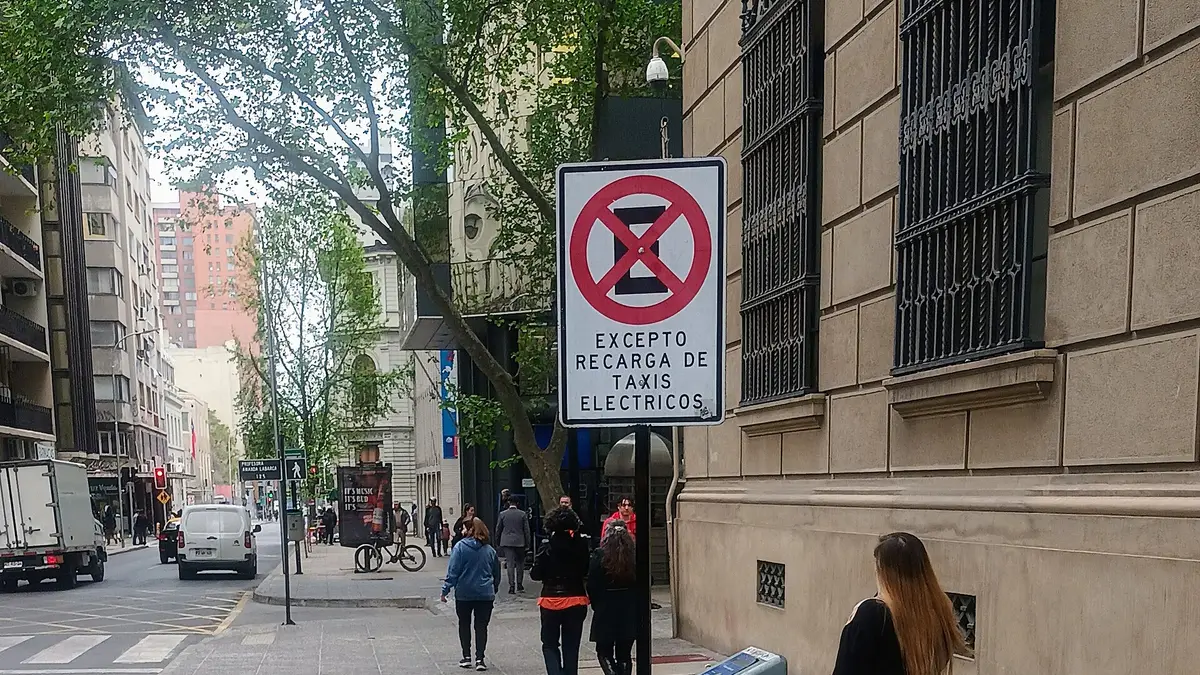
How many EV chargers Chile has and where they are
The bill cites the Library of Congress's parliamentary advisory service: between January and May 2026, 7,802 plug-in light and medium vehicles were sold, 6.1% of the market and 162.9% more than a year earlier. As of April 2026 there were 517 public-access sites with 1,854 charge points, and 7,149 chargers including private ones, with 291.7 MW of capacity.
Geographic concentration was the problem senators raised most. On the interoperability platform run by the SEC and the Energy Ministry, checked by Energía Futura on 22 November 2026, the Santiago Metropolitan Region has 1,278 of the 1,663 charge points registered, 77%. Next come Valparaíso (81) and O'Higgins (48), while Arica y Parinacota has 5. Detail by municipality and operator is in our guide to EV charging stations in Chile in 2026.
View the data as a table
| Metropolitana | 1,278 |
| Valparaíso | 81 |
| O'Higgins | 48 |
| Biobío | 39 |
| Los Lagos | 33 |
| Maule | 32 |
| Coquimbo | 29 |
| La Araucanía | 25 |
| Antofagasta | 19 |
| Aysén | 17 |
| Atacama | 17 |
| Magallanes | 11 |
| Tarapacá | 11 |
| Ñuble | 10 |
| Los Ríos | 8 |
| Arica y Parinacota | 5 |
“In Aysén we are talking about a thousand-kilometre route”, senator Miguel Ángel Calisto said in the session, also noting that Chile has the second-largest electric bus fleet after China. Senator Renzo Trisotti said shared taxis serving Iquique airport depend on a single charge point in Plaza Prat.
Does your company install, operate or finance EV chargers? Reach Energía Futura's readers.
See advertising optionsWhat the government said and what comes next
Energy Minister Ximena Rincón said the government views the initiative favourably and welcomed that it ensures “network charges are paid and there are no cross-subsidies”. She proposed discussing the technical standard, the free price and the charging tariff within the power-grid reform the ministry plans to present in the first quarter of 2027.
The committee chose to keep in the text the parts that are not the executive's exclusive prerogative: the connection, the tariff option, the TE6, independent metering, traceable connection and contract information. “We want a special e-mobility connection with a regulated tariff and a free price, which also allows charging consumption to be separated”, explained Provoste, who chairs the committee.
- 2024Threshold cut to 300 kWEnergy Ministry Exempt Resolution 58, after a TDLC report.
- 2025Rule adjustedExempt Resolution 10 aligns the threshold with connected-capacity rules.
- Jul 2026Senate thematic sessionTwo barriers identified: grid connection and access to free prices.
- 28 Oct 2026Bill filedBill 18,821-08, first reading in the Senate.
- 19 Nov 2026Technical working group with the governmentThe Mining and Energy Committee agrees to refine the text with the ministry, the CNE and the SEC.
- Q1 2027Power-grid reformThe government would include charging price-setting there.
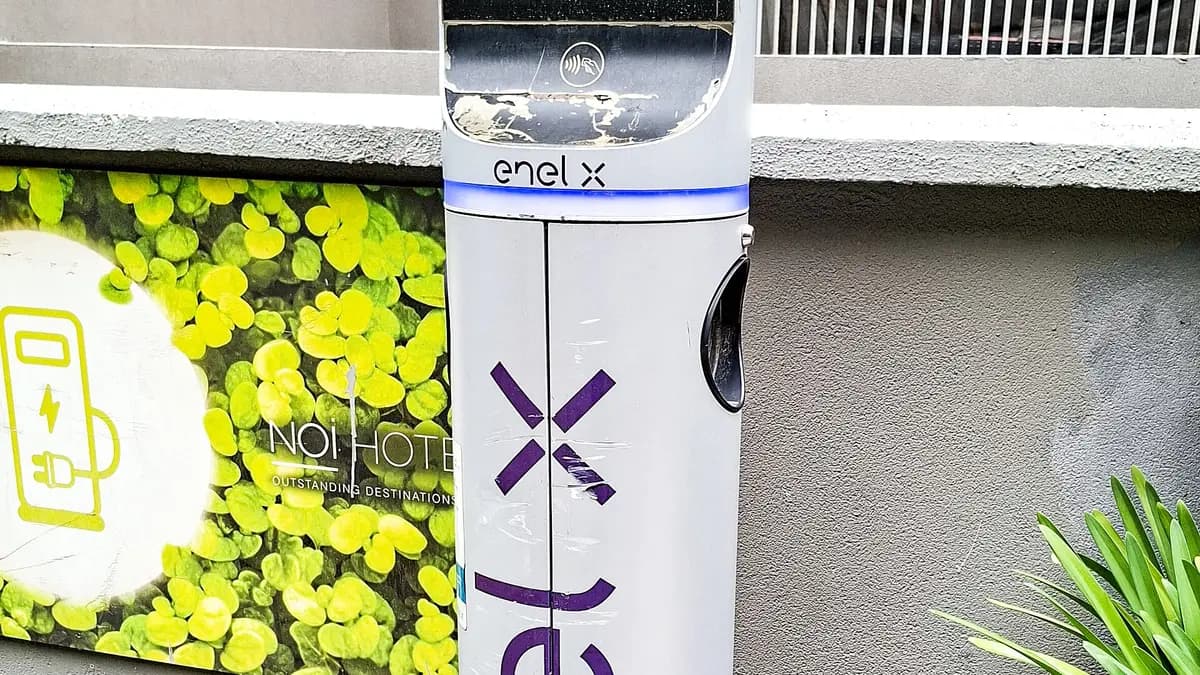
For operators and companies already installing stations, the change would open the door to contracts with time-of-day prices, for example to charge at midday with solar power. Chile already has operators charging per kWh under different rules; who sells, installs and manages stations is listed in our guide to EV charger companies in Chile.
The bill is at the first constitutional stage, without urgency, awaiting the committee's first report. To become law it must pass the Senate floor and the Chamber of Deputies. Meanwhile, sales keep growing: the breakdown by brand and model is in the ranking of best-selling electric cars in Chile.
Frequently asked questions
What is an e-mobility connection?
A grid connection used only to charge electric vehicles, with a separate meter and declared to the SEC through the TE6 filing. The bill gives it the right to choose a regulated tariff or a free price.
Could a home charger access a free price?
According to the text, yes, if it meets the requirements: exclusive use for charging, separate metering and TE6. The rest of the household's consumption would keep its usual tariff.
When would the law take effect?
Six months after publication. The bill is only at its first stage in the Senate, and the government proposes moving part of it into the 2027 grid reform.
How many public charge points does Chile have?
The bill cites 1,854 as of April 2026. The SEC platform listed 1,663 charge points at 686 locations on 22 November 2026.