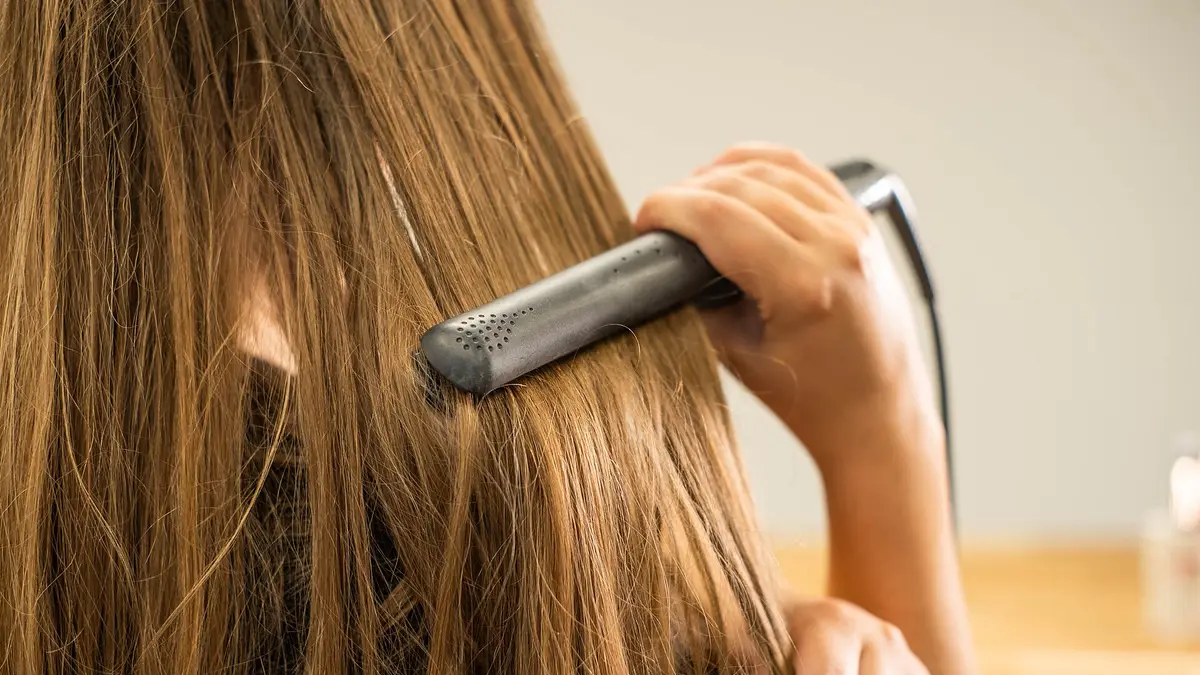
A household hair straightener draws between 40 and 60 W, according to the product sheets of best-selling models from Remington, BaByliss and other brands. Using it for 20 minutes, heating time included, takes about 0.015 kWh, or roughly CLP 4 per use, with power at CLP 255.27 per kWh (CGE's BT1 residential rate in Chile since October 2026). Used every day, it adds up to less than CLP 150 a month. It is one of the beauty appliances that uses the least electricity: a 2,000 W hair dryer uses more than 20 times as much in a single session.
This guide calculates how much electricity a hair straightener uses by wattage, what it costs each month, how it compares with a hair dryer and a hot air brush, and what to look for when buying one, because temperature and safety features matter more than the running cost.
How much electricity a hair straightener uses
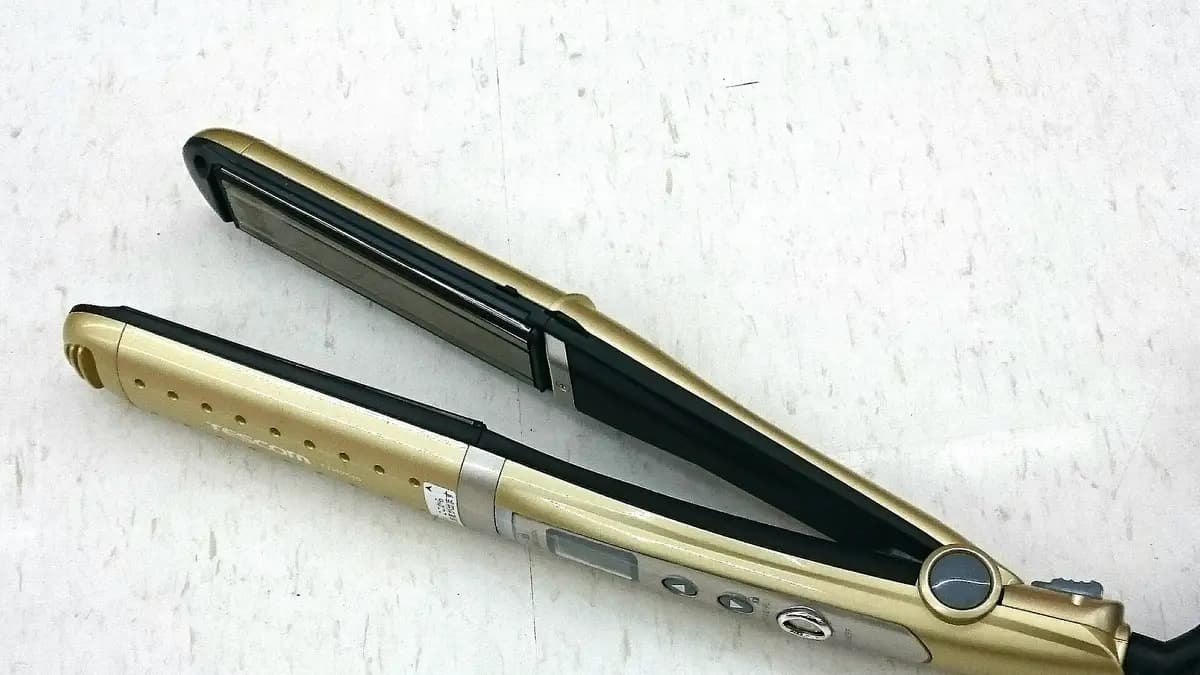
A hair straightener works with one or two heating elements that heat the plates, made of ceramic, tourmaline or titanium, to 200 to 235 °C. Unlike a hair dryer, it does not need to heat air or run a motor: it only keeps a small surface hot. That is why its wattage is low. And once the plates reach the chosen temperature, the thermostat switches the current off and on, so actual average consumption stays below the rated power.
Product sheets published by stores in Spain, where the same 220-240 V models that reach Chile are sold, show ratings of between 40 and 60 W for household straighteners.
| Model | Power | Maximum temperature | Product sheet source |
|---|---|---|---|
| Remington S1510 | 40 W | 220 °C | Beep |
| BaByliss ST394E | 42 W | 235 °C | ManoMano |
| DAM DM12847C00 | 45 W | 210 °C | MediaMarkt |
| Remington S7710 | 50 W | 230 °C | PowerPlanet |
| Bellissima Creativity 11876 | 50 W | 230 °C | MediaMarkt |
| Solac Expert 4 Sense | 55 W | 230 °C | MediaMarkt |
| Jata JBPP5570 | 60 W | 230 °C | MediaMarkt |
Product sheets checked on 30 October 2026. In Chile, the big department stores sell straighteners from these and other brands, but several local product sheets do not state the wattage; it is worth checking the label or the manual. Some professional straighteners and steam models are rated higher, at 100 W or more.
How much a hair straightener costs in Chilean pesos
The calculation is power times time of use times the price per kWh. We use a 20-minute session: about 30 to 60 seconds of heating, which is what many manufacturers state, plus the time needed to straighten long hair. To be conservative, the calculation assumes full power the whole time.
| Straightener power | Cost per use (20 minutes) | Cost per month (daily use) | Cost per year (daily use) |
|---|---|---|---|
| 35 W | CLP 3 | CLP 89 | CLP 1,087 |
| 45 W | CLP 4 | CLP 115 | CLP 1,398 |
| 60 W | CLP 5 | CLP 153 | CLP 1,863 |
| 100 W (professional) | CLP 9 | CLP 255 | CLP 3,106 |
Energía Futura calculations with 30 uses a month, 365 a year and power at CLP 255.27 per kWh, rounded. The price per kWh varies by municipality and distribution company, as shown in the price of a kWh in Chile by municipality and utility.
Even with the heaviest use, a hair straightener costs less than CLP 3,200 a year. If a 50 W model is left plugged in for eight hours, it costs about CLP 102: the problem with forgetting it is not the electricity bill but the risk of burns or fire, because the plates stay above 200 °C.
Another way to see it: a full year of daily straightening with a 45 W appliance adds up to about 5.5 kWh. That is the same energy a 2,000 W kettle uses running for less than three hours in total, or a 5,500 W electric shower in one hour. So between one straightener and another, the yearly difference on the electricity bill is a few hundred pesos, not thousands.
Compared with a hair dryer and a hot air brush: what each costs
The straightener is the styling tool that uses the least. Hair dryers and hot air brushes heat air with elements of hundreds or thousands of watts and also run a motor. The Revlon One-Step hot air brush, one of the best sellers, is offered by Chilean retailer Paris at CLP 66,990 (30 October 2026), and its description states 800 W, although the specifications table on the same page lists 1,100; in the United States it is sold as a 1,100 W appliance.
| Appliance | Power | Time of use | Cost per use | Cost per month (daily use) |
|---|---|---|---|---|
| Hair straightener | 45 W | 20 minutes | CLP 4 | CLP 115 |
| Hot air brush (Revlon One-Step) | 800 W | 15 minutes | CLP 51 | CLP 1,532 |
| Hot air brush (1,100 W version) | 1,100 W | 15 minutes | CLP 70 | CLP 2,106 |
| Hair dryer | 2,000 W | 10 minutes | CLP 85 | CLP 2,553 |
Energía Futura calculations with 30 uses a month and power at CLP 255.27 per kWh. A hair dryer's cost depends heavily on its wattage and how long it takes to dry the hair; the guide to how much electricity a hair dryer uses and which wattage to choose breaks it down by model.
In practice, anyone who blow-dries and then straightens spends almost everything on the drying. Letting hair air-dry, even partly, saves far more than choosing a 40 W straightener over a 60 W one.
Does your company sell small appliances or energy-efficient beauty products? Reach Energía Futura's readers.
See advertising formatsWhich one to choose: wattage, plates and safety
Since the electricity cost barely differs from one model to another, the choice comes down to other factors. Slightly higher wattage usually means faster heating and plates that recover their temperature better when passing through thick sections, not a meaningfully higher electricity bill.
- Temperature control: straighteners with several settings or a digital display let you lower the heat. Manufacturers usually recommend lower temperatures for fine or coloured hair and higher ones for thick hair.
- Plate material: ceramic spreads heat evenly; tourmaline and titanium are offered on mid-range and premium models. The material does not significantly change consumption.
- Automatic shut-off: many models switch themselves off after a period without use. It is the most useful feature for avoiding accidents.
- Long swivel cord: reduces the risk of the cord being damaged by twisting, a common cause of failure.
- SEC seal: in Chile, every electrical appliance sold must have a safety certification and the SEC seal, with a QR code to verify it.
How to use it with lower cost and more safety
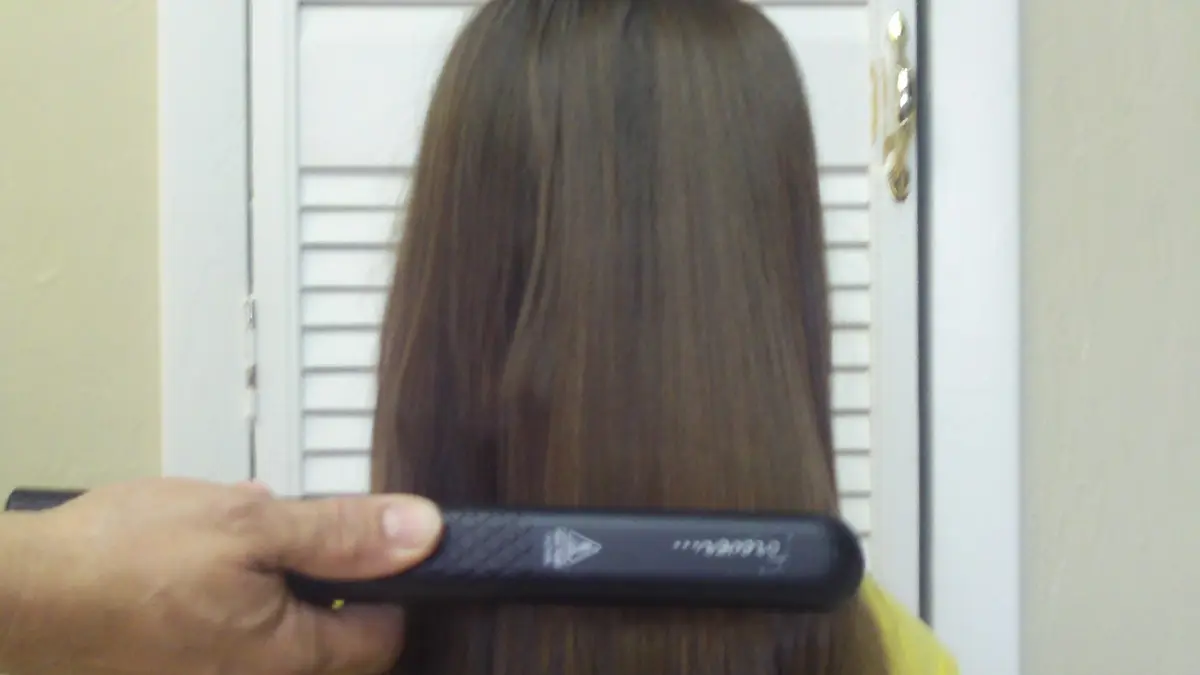
- Plug it in just before using it: most reach temperature in under a minute, so there is no need to leave it heating.
- Straighten dry hair: running the iron over damp hair takes more passes and more time.
- Unplug it when finished and let it cool on a heat-resistant surface, away from towels and paper.
- Keep it out of children's reach: the plates stay hot for several minutes after switching off.
- Check the cord: if it has cuts, taped joints or a loose plug, the appliance should be replaced.
On the monthly electricity bill, the straightener is almost invisible. What drives a household's consumption are the appliances that heat water or air, or that run all day, such as the fridge. The guide to how much electricity a home in Chile uses each month shows the average and where the electricity goes.
Frequently asked questions
How many watts does a hair straightener use?
Household straighteners draw between 40 and 60 W, according to the product sheets of models from Remington, BaByliss, Bellissima, Solac and Jata. Some professional or steam models exceed 100 W.
How much does a hair straightener cost per month?
Used 20 minutes a day, a 45 W straightener costs about CLP 115 a month, with power at CLP 255.27 per kWh. A 60 W one, about CLP 153.
Which uses more electricity, a straightener or a hair dryer?
The hair dryer. A 2,000 W dryer costs about CLP 85 in 10 minutes, more than 20 times what a 45 W straightener costs in 20 minutes (CLP 4).
What happens if I leave the straightener plugged in?
In electricity terms, little: a 50 W model costs about CLP 102 over eight hours. The risk is burns or fire, because the plates exceed 200 °C. That is why it is worth choosing a model with automatic shut-off and always unplugging it when finished.
How long does a hair straightener take to heat up?
Most household models reach their temperature in under a minute. The Bellissima Creativity 11876, for example, states 30 seconds of heating time on its product sheet. So there is no point plugging it in well in advance.
Is a higher-wattage straightener better?
Not necessarily. More power usually means faster heating and a steadier temperature, but what matters most for the hair is being able to adjust the temperature and plates that heat evenly.