The University of Antofagasta will set up a public observatory to track the effects of desalination plants on the coast of the region that depends most on seawater in Chile. The project, called “Regional Water Resilience: Monitoring of Desalination Plants and Coastal Governance”, has more than 418 million Chilean pesos (about US$440,000) in funding from the Regional Government and will run for 24 months, Reporte Minero reported on 29 October 2026.
The Antofagasta Region accounts for more than 70% of Chile's desalination, and much of that water goes to large copper mines. The study aims to close a gap the team itself acknowledges: until now, research on desalination plants has been funded mostly with private money, and its data is not publicly available.
The announcement came the same week as another signal. At Water Congress 2026, the international conference on water management in mining, the consultancy ECOS presented ten critical challenges in assessing and enforcing rules on these plants, according to Minería Chilena. Both come as Chile prepares for its new Desalination Law to take effect.
What the University of Antofagasta desalination observatory will do
The project is led by the Faculty of Marine Sciences and Biological Resources (FACIMAR). Its scientific methodology is in the hands of Dr. Rodrigo Orrego, an academic at the Alexander von Humboldt Institute of Natural Sciences and head of the Aquatic Toxicology Laboratory (AQUATOX). Environmental monitoring and underwater operations are coordinated by Fernando Valenzuela Picón, of the Bioinnovation Center. The team has six researchers with postgraduate degrees and scientific diving and navigation certifications regulated by Chile's maritime authority (Directemar) and the Navy's Hydrographic and Oceanographic Service (SHOA).
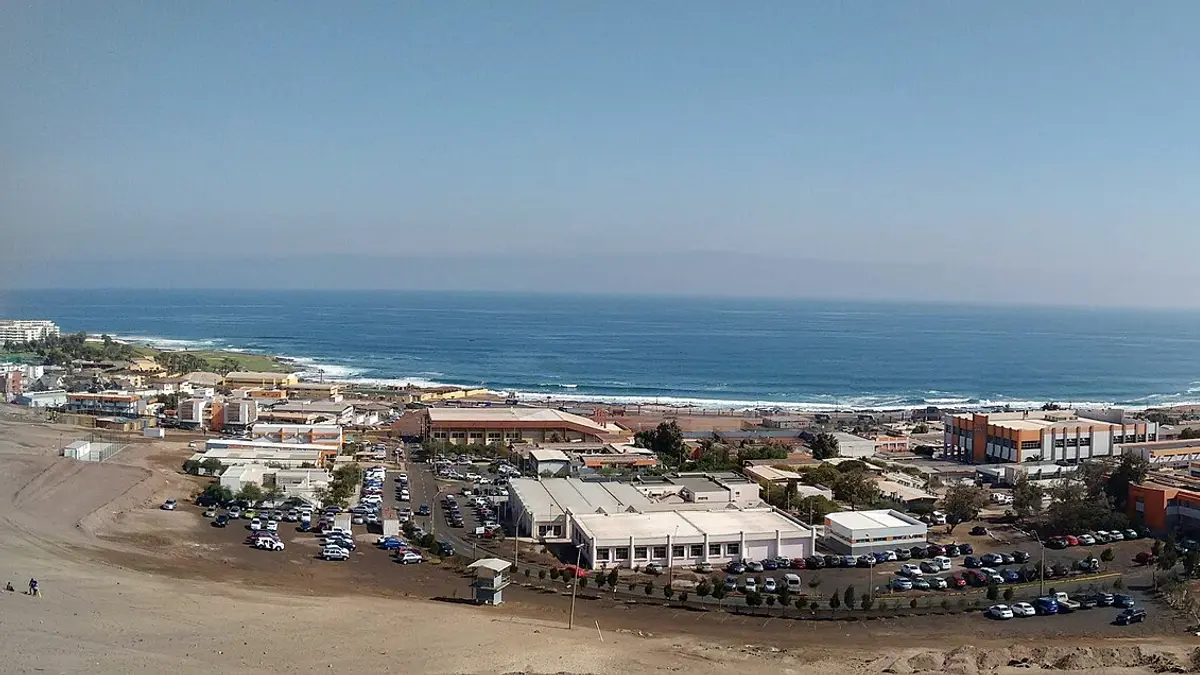
Work will focus on San Jorge Bay, off Antofagasta. The team will study microorganisms, seabed and plankton communities, and the chemistry of water and sediments near seawater intakes and brine discharges. It will use “sentinel organisms” such as algae, bivalves and fish, along with genetic biomarkers that respond to stress from excess salt. “We use sentinel organisms such as algae, bivalves and fish to assess responses to environmental stress,” Orrego explained.
| Project | Detail |
|---|---|
| Name | Regional Water Resilience: Monitoring of Desalination Plants and Coastal Governance |
| Institution | University of Antofagasta (FACIMAR) |
| Funding | More than 418 million pesos, Antofagasta Regional Government |
| Duration | 24 months |
| Field campaigns | 4, in summer and winter over two years |
| Study area | San Jorge Bay, Antofagasta |
| Output | Free, public online observatory, with data on the university's Open Science platform |
Source: University of Antofagasta, via Reporte Minero, 29 October 2026. The dollar figure is an Energía Futura approximation.
There will be four seasonal monitoring campaigns, in summer and winter, to build comparable time series. The result will be an online observatory with maps and 3D models of the seabed, the physical and chemical behaviour at intakes and outfalls, biological indicators, and the quality of water, sediments and marine life. It is designed for authorities such as the fisheries service Sernapesca, the Environmental Assessment Service (SEA) and the Environment Superintendency (SMA), as well as industry, artisanal fishers and communities. The project also includes a regional working group on water resilience.
Why Antofagasta's desalination plants matter for mining
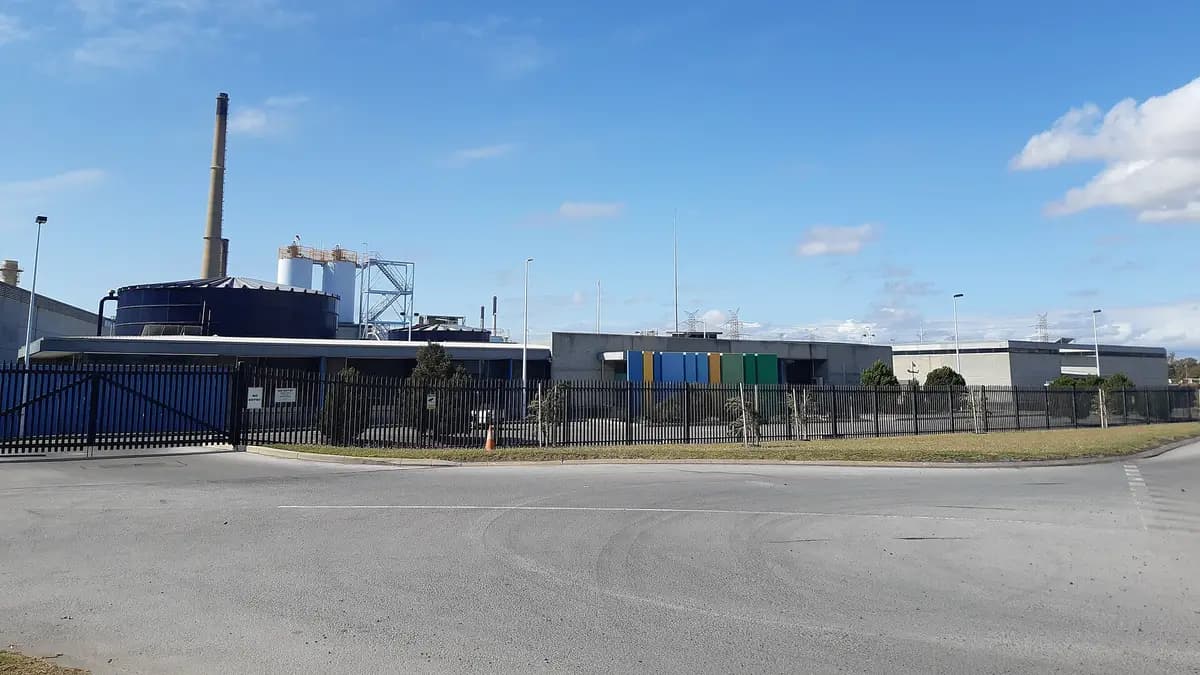
Mining is desalination's biggest customer. According to the ECOS presentation at Water Congress, the mining industry uses about 80% of the water production capacity of Chile's desalination plants, and its reliance on seawater will keep growing. Data from the Chilean Copper Commission (Cochilco) backs this up: in 2025, copper mining drew 8.11 m³/s of seawater, 36.8% of all the water it uses, and 70.4% of that volume was desalinated, according to its water consumption report to 2025.
Antofagasta is at the center of that shift. The region accounts for 50.1% of the water drawn by copper mining and is the only one where seawater already exceeds freshwater, at 57.2% of its withdrawals. The year-by-year breakdown is in seawater in Chilean mining in figures.
| Indicator | Figure | Source |
|---|---|---|
| Seawater drawn by copper mining (2025) | 8.11 m³/s | Cochilco |
| Share of seawater that is desalinated | 70.4% | Cochilco |
| Antofagasta's share of water drawn by mining | 50.1% | Cochilco |
| Desalination capacity used by mining | About 80% | ECOS, Water Congress 2026 |
| New northern mining projects relying on desalination | More than 70% | Chilean government at IMARC, via REDIMIN |
| Seawater share of projected mining water use in 2034 | 67.6% | Cochilco |
Sources: Cochilco (2025 water report and 2025-2034 projection), Minería Chilena and REDIMIN, October 2026.
The trend will continue. At the IMARC conference, the Chilean government presented a mining pipeline worth US$105 billion, with the goal of doubling the value of mining output by 2034, and according to REDIMIN more than 70% of new projects in the north depend on desalinated seawater. Desalinated water adds between US$0.05 and US$0.12 per pound of copper to operating costs, according to the figures presented.
Does your company work in desalination, water management or sustainable mining? Reach Energía Futura's readers.
See advertising optionsThe ten challenges of desalination plants, according to ECOS
ECOS senior expert Vivian Hernández gave a talk at Water Congress titled “Desalination: critical challenges in environmental assessment and compliance.” After reviewing the regulatory framework and public information from the SEA and the SMA, she identified ten challenges: six in environmental assessment and four in compliance and enforcement during operation.
- Brine discharge and how it disperses in different marine settings along the coast.
- Effects of seawater intake on marine life.
- Energy consumption of the plants.
- Management of chemicals and waste from the process.
- Relations with coastal communities.
Her diagnosis points to where problems begin. “Many of the compliance gaps seen today in project execution originate in the assessment,” Hernández said, because many projects are approved with general commitments, without clear thresholds or verifiable indicators. She recommended stronger marine baselines, advanced brine dispersion models adapted to the Chilean coast, and measurable operating conditions backed by long-term monitoring.
The University of Antofagasta observatory targets exactly that lack of long-term data. It is the second publicly funded study on the issue announced in October, after the 190.5 million peso FIPA project described in the study on desalination brine.
What changes with Chile's Desalination Law
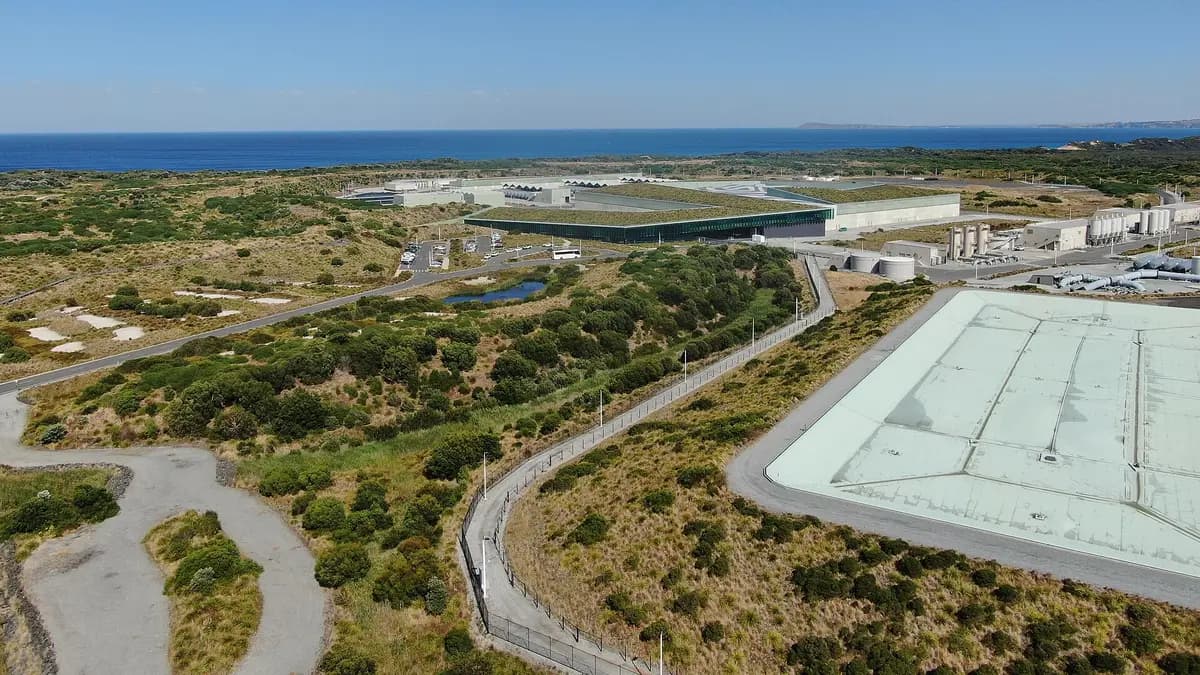
Law No. 21,813, on the use of seawater for desalination, was published in May 2026 and takes effect in November 2027, according to the ECOS presentation. According to the University of Antofagasta team, the law does not set rules for monitoring brine discharges, which besides salt may carry biocides, antiscalants, flocculants and coagulants.
| Law 21,813 | What it sets out |
|---|---|
| Environmental assessment | Industrial-scale desalination plants and intensive seawater extraction enter the SEIA assessment system |
| Brine | The Environment Ministry may issue an emission standard for discharges |
| Zones | The National Strategy will identify areas where brine discharges should be avoided |
| Oversight | The water authority (DGA) supervises the whole project lifecycle, with a binding technical report and a public inventory of plants |
| Penalties | Fines of up to 10,000 UTA and loss of concessions, including existing ones |
| Human consumption | Takes priority; mining projects may be required to provide up to 5% of output for that use |
Source: ECOS presentation at Water Congress 2026, via Minería Chilena, 29 October 2026. The UTA is a Chilean annual tax unit.
The brine emission standard does not exist yet: today each discharge is assessed case by case in the SEIA. The public data generated by the observatory could therefore serve as a technical basis for that regulation, although the project has no formal mandate to do so. “Our main goal is to place ourselves at the forefront of the environmental and technological management of desalination plants,” Orrego said.
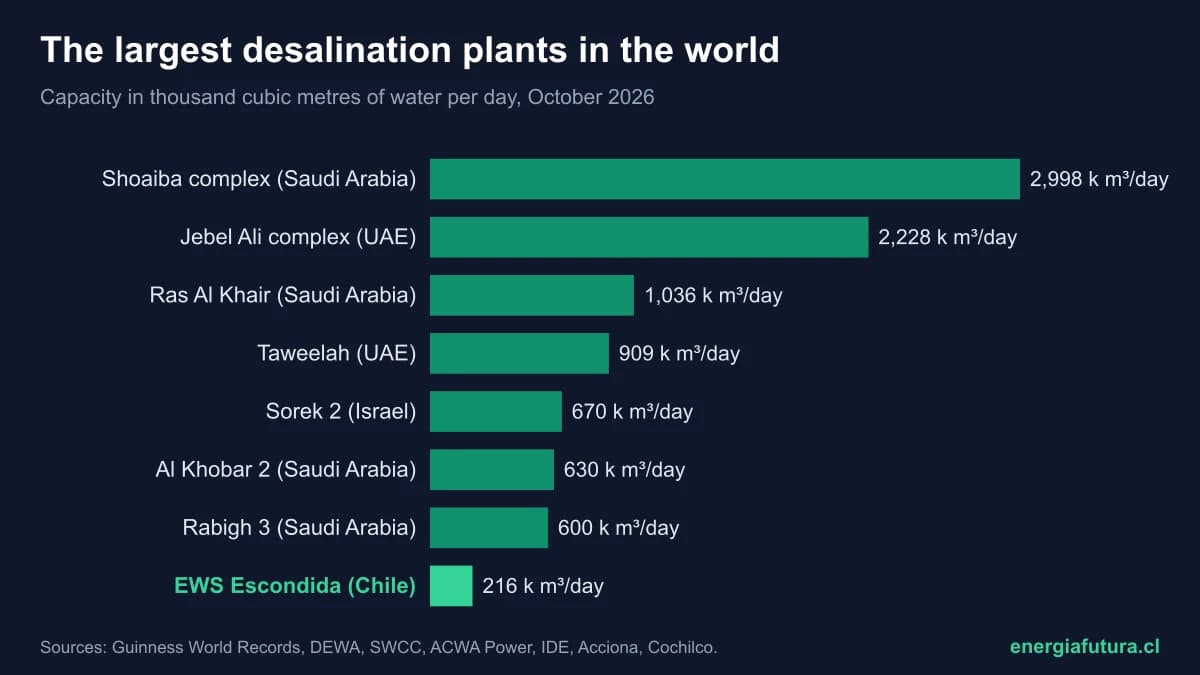
For a sense of scale, Chile's largest mining desalination plant, BHP's Escondida Water Supply, produces 2,500 litres per second, about 216,000 m³ a day, still far from the Persian Gulf complexes at the top of the ranking of the world's largest desalination plants.
Frequently asked questions
What is the University of Antofagasta desalination observatory?
A 24-month project with more than 418 million pesos from the Regional Government that will monitor seawater intakes and brine discharges in San Jorge Bay and publish the data on a free online observatory.
Why Antofagasta?
Because it hosts more than 70% of Chile's desalination and 50.1% of the water drawn by copper mining, according to the university and Cochilco.
What harm can brine cause?
Brine is saltier than seawater and may carry process chemicals. Its effect depends on how it disperses along each stretch of coast, which is what this study and the FIPA 2026-01 project aim to measure.
When does the Desalination Law take effect?
Law 21,813 was published in May 2026 and takes effect in November 2027, according to ECOS.