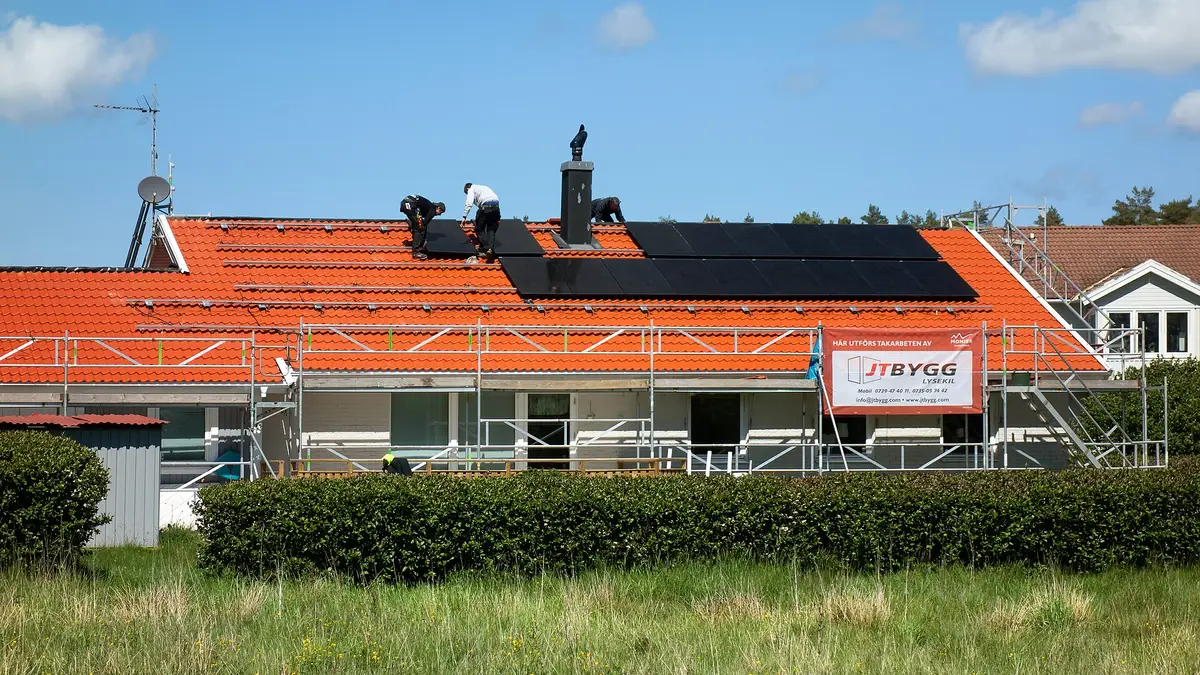
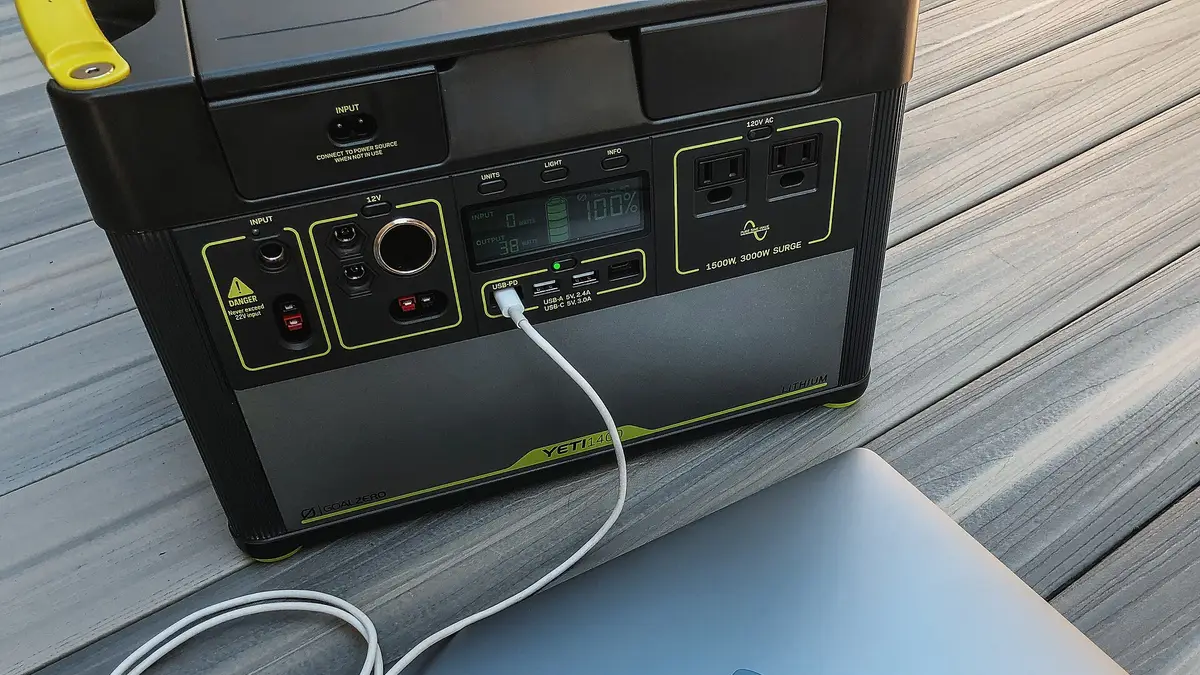
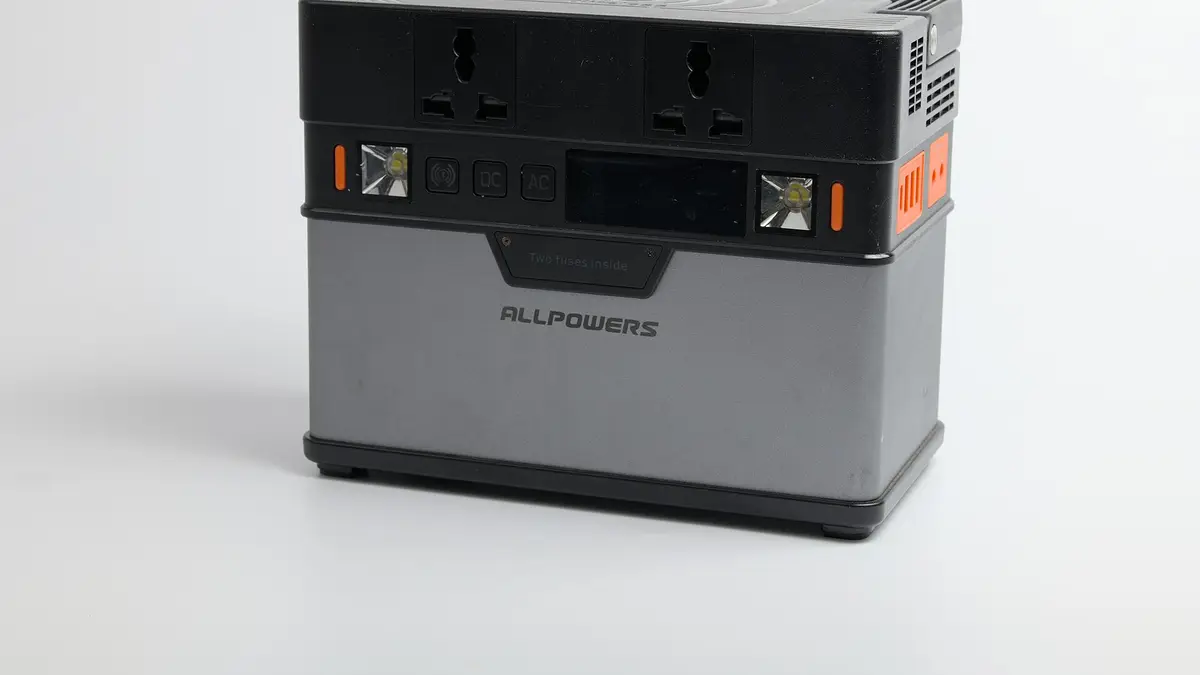
A portable solar generator is a lithium battery with 220 V sockets, USB ports and an input for solar panels, all in a box you can carry by hand. It burns no petrol and makes no noise: it stores electricity and releases it when needed. As of 22 November 2026, Falabella in Chile sells them from CLP 219,990 (a 256 Wh EWTTO) to CLP 5,308,852 (a 4,096 Wh EcoFlow Delta Pro 3), at the price without the store's credit card.
The figure that matters is capacity in Wh. A 1,024 Wh unit, the most popular size for power cuts, costs from CLP 519,990 and delivers about 870 Wh of usable energy through the socket: a router and a laptop run for about 12 hours. Filling it from the grid costs about CLP 291 at the residential tariff, and a well-oriented 200 W panel charges it in one sunny summer day in Santiago. This guide compares 20 models and explains which one to buy for each use.
View the data as a table
| Lowest price for a 1,024 Wh unit | $519,990 |
| Hours running a router and a laptop | 12.4 h |
| Cost to fill it from the wall | $291 |
What a portable solar generator is and how it differs from a petrol generator
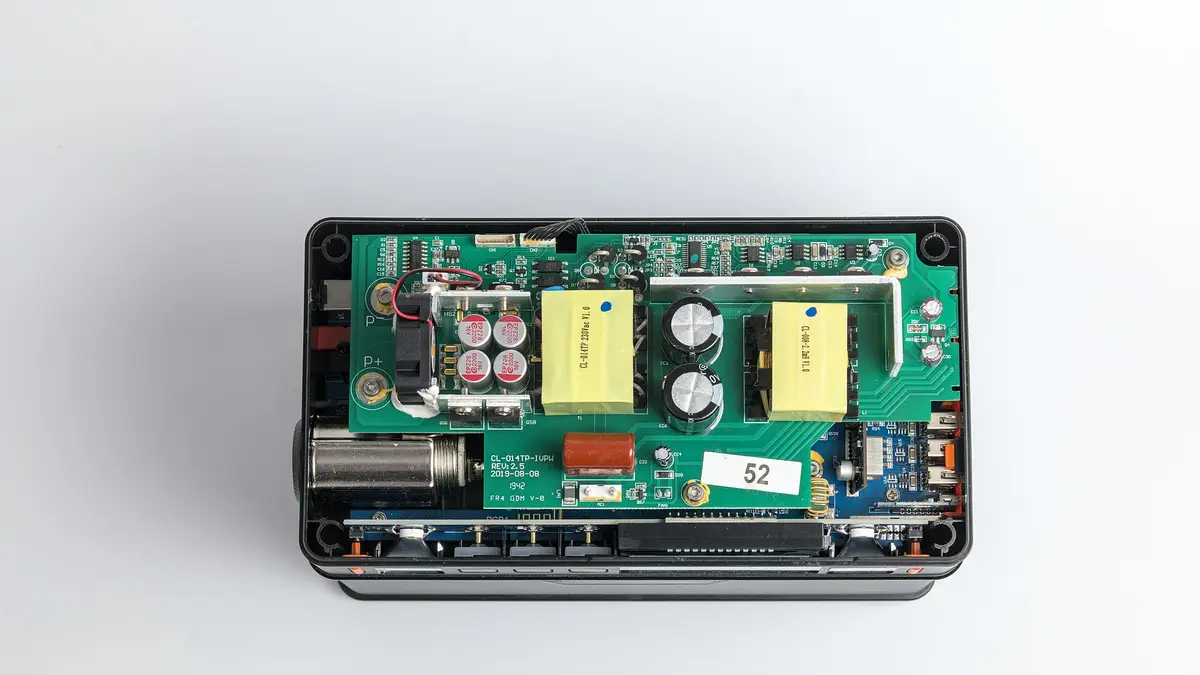
The name is misleading: a portable solar generator does not generate electricity by itself. It is a power station, as manufacturers call it: a battery with an inverter that turns direct current into 220 V, a built-in charger and a controller to take energy from solar panels. It charges from the wall, the car or the sun, and then powers appliances with no connection to the grid.
A petrol generator, by contrast, produces electricity by burning fuel while it runs. It has far more autonomy (just refill the tank), but it is noisy, emits fumes and cannot be used indoors. If you need to run a whole house for several days, see our guide to the home generator. A portable solar generator covers the essentials: router, lights, phones, laptop, a fridge for some hours or medical equipment such as a CPAP machine.
Portable solar generator prices in Chile
On 22 November 2026 we checked the portable solar generators Falabella sells from EcoFlow, Bluetti, Jackery and EWTTO. We used the price without the store's card (the event or online price), not the lower CMR card price or the crossed-out regular price. Prices change often, especially during sales season.
| Size | Reference models | Capacity | Price without store card |
|---|---|---|---|
| Small | EWTTO EP400, Bluetti EB3A, Jackery Explorer 300 Plus, EcoFlow River 2 | 256 to 320 Wh | CLP 219,990 to 359,231 |
| Medium | EWTTO EP800, EcoFlow River 2 Max and River 3 Max, Bluetti AC70P | 512 to 864 Wh | CLP 379,990 to 624,990 |
| 1 kWh | EWTTO ES1200, Bluetti Elite 100 V2, Jackery Explorer 1000 V2, EcoFlow Delta 3 | 1,024 to 1,070 Wh | CLP 519,990 to 1,300,418 |
| Large | Bluetti AC180P and Elite 200 V2, EWTTO ES2400, EcoFlow Delta 3 1500 | 1,440 to 2,073 Wh | CLP 899,990 to 1,474,990 |
| Very large | Bluetti Elite 300 and Apex 300, EcoFlow Delta Pro 3 | 2,765 to 4,096 Wh | CLP 1,699,990 to 5,308,852 |
Source: Falabella, prices without store card as of 22 November 2026. Capacity as stated in each listing or by the manufacturer.
| EWTTO EP400 | 256 | 400 | 219,990 | 859 |
| Bluetti EB3A | 268 | 600 | 270,980 | 1,011 |
| Jackery Explorer 300 Plus | 288 | 300 | 299,990 | 1,042 |
| Bluetti Premium 30 V2 | 320 | 600 | 303,040 | 947 |
| EcoFlow River 2 | 256 | 300 | 359,231 | 1,403 |
| EWTTO EP800 | 512 | 800 | 379,990 | 742 |
| EcoFlow River 2 Max | 512 | 500 | 509,990 | 996 |
| EWTTO ES1200 | 1,024 | 1,200 | 519,990 | 508 |
| Bluetti AC70P | 864 | 1,000 | 615,990 | 713 |
| EcoFlow River 3 Max | 572 | 600 | 624,990 | 1,093 |
| Bluetti Elite 100 V2 | 1,024 | 1,800 | 699,990 | 684 |
| Jackery Explorer 1000 V2 | 1,070 | 1,500 | 699,990 | 654 |
| Bluetti AC180P | 1,440 | 1,800 | 899,990 | 625 |
| EWTTO ES2400 | 2,048 | 2,400 | 1,049,990 | 513 |
| Bluetti Elite 200 V2 | 2,073 | 2,600 | 1,299,990 | 627 |
| EcoFlow Delta 3 | 1,024 | 1,800 | 1,300,418 | 1,270 |
| EcoFlow Delta 3 1500 | 1,500 | 1,800 | 1,474,990 | 983 |
| Bluetti Elite 300 | 3,014 | 2,400 | 1,699,990 | 564 |
| Bluetti Apex 300 | 2,765 | 3,840 | 2,040,990 | 738 |
| EcoFlow Delta Pro 3 | 4,096 | 4,000 | 5,308,852 | 1,296 |
The price gap between brands is wide. For the same 1 kWh, the EWTTO ES1200 costs CLP 519,990, the Bluetti Elite 100 V2 and the Jackery Explorer 1000 V2 CLP 699,990 and the EcoFlow Delta 3 CLP 1,300,418. What you pay extra for in the expensive models is output power (the Delta 3 delivers 1,800 W, the ES1200 1,200 W), charging speed, a phone app, after-sales service and the option to add extra batteries.
Cost per Wh: the fair way to compare
To compare units of different sizes, divide the price by the capacity. That gives the price per Wh, the same logic as the price per litre at the supermarket. In our sample of 20 models it ranges from CLP 508 per Wh (EWTTO ES1200) to CLP 1,403 per Wh (EcoFlow River 2, the brand's smallest).
The general rule holds: larger units are cheaper per Wh. Those of 1,000 to 3,000 Wh range from CLP 508 to 738 per Wh, while those under 600 Wh almost always exceed CLP 740. The exceptions are EcoFlow's premium models: the Delta 3 costs CLP 1,270 per Wh, the Delta 3 1500 CLP 983 and the Delta Pro 3 CLP 1,296, for their power and home backup features.
View the data as a table
| Capacity (Wh) | Price (CLP) | |
|---|---|---|
| EWTTO EP400 | 256 Wh | $219,990 |
| Bluetti EB3A | 268 Wh | $270,980 |
| Jackery Explorer 300 Plus | 288 Wh | $299,990 |
| Bluetti Premium 30 V2 | 320 Wh | $303,040 |
| EcoFlow River 2 | 256 Wh | $359,231 |
| EWTTO EP800 | 512 Wh | $379,990 |
| EcoFlow River 2 Max | 512 Wh | $509,990 |
| EWTTO ES1200 | 1,024 Wh | $519,990 |
| Bluetti AC70P | 864 Wh | $615,990 |
| EcoFlow River 3 Max | 572 Wh | $624,990 |
| Bluetti Elite 100 V2 | 1,024 Wh | $699,990 |
| Jackery Explorer 1000 V2 | 1,070 Wh | $699,990 |
| Bluetti AC180P | 1,440 Wh | $899,990 |
| EWTTO ES2400 | 2,048 Wh | $1,049,990 |
| Bluetti Elite 200 V2 | 2,073 Wh | $1,299,990 |
| EcoFlow Delta 3 | 1,024 Wh | $1,300,418 |
| EcoFlow Delta 3 1500 | 1,500 Wh | $1,474,990 |
| Bluetti Elite 300 | 3,014 Wh | $1,699,990 |
| Bluetti Apex 300 | 2,765 Wh | $2,040,990 |
| EcoFlow Delta Pro 3 | 4,096 Wh | $5,308,852 |
How long it lasts with each appliance
Runtime is the usable energy divided by the appliance's power. A 1,024 Wh unit does not deliver all of that through the socket: the inverter loses energy converting the current. Assuming 85% efficiency, about 870 Wh are usable at 220 V. Losses are lower through the USB ports, so charging phones and laptops over USB-C goes a little further.
| Appliance | Power | Hours with 512 Wh | Hours with 1,024 Wh | Hours with 2,048 Wh |
|---|---|---|---|---|
| Wi-Fi router | 10 W | 43.5 h | 87 h | 174 h |
| CPAP machine | 40 W | 10.9 h | 21.8 h | 43.5 h |
| Fridge (average) | 42 W | 10.4 h | 20.7 h | 41.4 h |
| Laptop | 60 W | 7.3 h | 14.5 h | 29 h |
| 55-inch LED TV | 84 W | 5.2 h | 10.4 h | 20.7 h |
| Electric kettle | 2,000 W | Not enough power | 26 minutes (if the unit delivers 2,000 W) | 52 minutes |
Energía Futura calculation with 85% efficiency at the 220 V outlet. The fridge averages 42 W because its compressor switches on and off: it uses about 1 kWh a day, as we explain in our guide to how much electricity a fridge uses. The TV figure is for a 55-inch model in standard picture mode.
There are two different limits that should not be confused. Capacity (Wh) tells you how long the battery lasts; output power (W) tells you which appliances you can plug in. A 300 W EcoFlow River 2 will not run a 2,000 W kettle even when full, and an 1,800 W unit will boil it but use a good share of its charge in a few minutes. For heating, kettles or hair dryers, a portable solar generator does not go far.
How long it takes to charge with the sun, by city
The point of a portable solar generator is that it can be charged with panels. To calculate how long it takes we used PVGIS 5.3, the European Commission's solar radiation tool, with a panel well oriented to the north and 14% losses. A 200 W portable panel produces about 1,146 Wh a day in Santiago in December and about 1,160 Wh in Antofagasta. In June that drops to 716 Wh in Santiago and 326 Wh in Punta Arenas.
View the data as a table
| Antofagasta | Santiago | Puerto Montt | Punta Arenas | |
|---|---|---|---|---|
| Jan | 1,148 Wh | 1,152 Wh | 1,002 Wh | 812 Wh |
| Feb | 1,168 Wh | 1,174 Wh | 962 Wh | 772 Wh |
| Mar | 1,144 Wh | 1,150 Wh | 836 Wh | 636 Wh |
| Apr | 1,030 Wh | 1,020 Wh | 636 Wh | 526 Wh |
| May | 956 Wh | 814 Wh | 464 Wh | 400 Wh |
| Jun | 918 Wh | 716 Wh | 384 Wh | 326 Wh |
| Jul | 952 Wh | 784 Wh | 432 Wh | 374 Wh |
| Aug | 1,062 Wh | 890 Wh | 538 Wh | 550 Wh |
| Sep | 1,162 Wh | 1,018 Wh | 748 Wh | 674 Wh |
| Oct | 1,204 Wh | 1,078 Wh | 838 Wh | 824 Wh |
| Nov | 1,194 Wh | 1,112 Wh | 884 Wh | 878 Wh |
| Dec | 1,160 Wh | 1,146 Wh | 934 Wh | 844 Wh |
With those figures, filling a 1,024 Wh unit (about 1,138 Wh counting 90% charging efficiency) takes one sunny day across almost all of Chile in December. In June the gap between north and south is large: 1.2 days in Antofagasta, 1.6 days in Santiago, 3 days in Puerto Montt and 3.5 days in Punta Arenas.
View the data as a table
| Antofagasta | 1.2 days |
| La Serena | 1.4 days |
| Santiago | 1.6 days |
| Concepción | 2.2 days |
| Temuco | 2.7 days |
| Puerto Montt | 3.0 days |
| Punta Arenas | 3.5 days |
In practice results are usually worse: folding panels lie on the ground without the ideal tilt, and any shade or cloud cuts the charge. So it is best to see the panel as a complement and not count on it for a long winter outage. To choose the right panel, see our guide to the portable solar panel.
| City | Wh a day with a 200 W panel in December | Days to fill 1,024 Wh in December | Wh a day in June | Days to fill 1,024 Wh in June |
|---|---|---|---|---|
| Antofagasta | 1,160 | 1.0 | 918 | 1.2 |
| La Serena | 1,136 | 1.0 | 786 | 1.4 |
| Santiago | 1,146 | 1.0 | 716 | 1.6 |
| Concepción | 1,140 | 1.0 | 524 | 2.2 |
| Temuco | 1,028 | 1.1 | 416 | 2.7 |
| Puerto Montt | 934 | 1.2 | 384 | 3.0 |
| Punta Arenas | 844 | 1.3 | 326 | 3.5 |
Energía Futura calculation with PVGIS 5.3, European Commission: average daily output for each month of a well-oriented 200 W panel, with 14% losses, and 90% charging efficiency of the power station.
How much it costs to charge from the wall
Charging a portable solar generator from the grid is cheap. At CGE's November 2026 BT1 residential tariff of CLP 255.91 per kWh, according to its tariff schedule, filling a 1,024 Wh unit from empty costs about CLP 291. A 256 Wh unit costs about CLP 73 and a 2,048 Wh one about CLP 582.
So a portable solar generator is not bought to cut your electricity bill: a well-oriented 200 W portable panel produces at most about 366 kWh a year in Santiago, worth about CLP 94,000 only if all of that energy were used. With a unit and a panel costing more than CLP 700,000 together, recovering the investment would take many years. It is bought for backup (power cuts, medical equipment, remote work) and for mobility (camping, off-grid houses, field work).
With a panel included: is the bundle worth it?
Bluetti and EcoFlow sell station-plus-panel bundles. At Falabella, the Bluetti Elite 100 V2 (1,024 Wh) costs CLP 699,990 on its own and CLP 889,990 with a 100 W panel. Bought separately, the station and Bluetti's 100 W panel (CLP 179,990) add up to CLP 879,990, so the bundle saves nothing in that case. The same brand's 130 W panel costs CLP 199,990.
A 100 W panel is enough to keep phones, lights and a router charged, but it takes about two sunny summer days to fill a 1 kWh unit. If the goal is to recover a full charge in one day, a 200 W panel or two 100 W panels connected together make more sense, as long as the station accepts that solar input power.
Which portable solar generator to buy for each use
- Camping and short trips: 256 to 512 Wh. They cover phones, lights, a speaker and a small cooler for a night. From CLP 219,990.
- Power cuts in a flat: 1,000 to 1,500 Wh. They keep the router, a laptop and the lights going for a full day, or a fridge for about 20 hours. From CLP 519,990.
- Medical equipment (CPAP, concentrators): at least 1,000 Wh and pure sine wave output; check the device's power with your doctor.
- Whole-home backup: 2,000 Wh or more, with the option to add batteries. From CLP 899,990 for 1,440 Wh.
- If you only need to charge a phone: a 20,000 mAh power bank may be enough, at a fraction of the price.
If all you need is backup for a power cut, see also our guide to the emergency solar kit: which appliances each capacity can run and how much the folding panel delivers.
Does your company sell power stations, batteries or solar panels? Reach Energía Futura's readers.
See advertising optionsFrequently asked questions
How much does a portable solar generator cost in Chile?
As of 22 November 2026, at Falabella, from CLP 219,990 (256 Wh) to CLP 5,308,852 (4,096 Wh), without the store card. A 1 kWh unit starts at CLP 519,990.
How many hours does a 1,000 Wh portable solar generator last?
It depends on the appliance: about 87 hours with a 10 W router, 14.5 hours with a 60 W laptop and about 20 hours with an average fridge.
Can a portable solar generator run a fridge?
Yes, if its output power can handle the compressor's start-up, which draws several times its normal consumption, and it delivers a pure sine wave. A 1,024 Wh unit keeps it running for about 20 hours.
How long does it take to charge with a solar panel?
With a well-oriented 200 W panel, a 1,024 Wh unit fills in one sunny day in December across almost all of Chile, and in 1.6 days in Santiago in June.