The pellet stove has become one of the most popular heating options in central and southern Chile, and one of the cheapest per hour. With a 15-kilo bag at CLP 4,850 to 5,690, each kWh of heat a pellet stove delivers costs between CLP 81 and 95, compared with the CLP 255 a kWh costs in an electric resistance heater.
In this guide we calculate how much heating with pellets costs per hour and per month, what stoves cost in Chilean stores, what happens with the electricity they use and when they beat an air conditioner or an electric heater.
Price of a bag of pellets in Chile
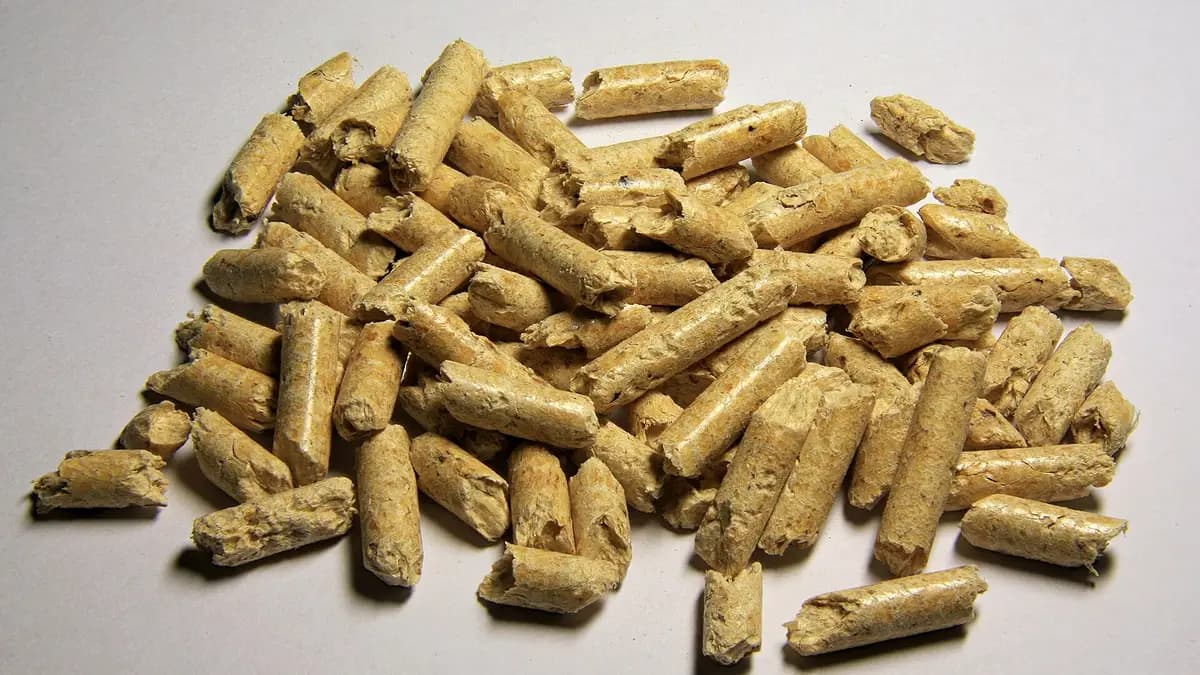
Pellets are sold in 15-kilo bags. A survey by the Energy Ministry's regional office and consumer agency Sernac in La Araucanía, carried out on August 3-6, 2026 at five outlets in Temuco, found prices from CLP 4,850 to CLP 5,500, a difference of CLP 650 per bag, according to Araucanía Noticias. In the online store of Ecomas, one of the large producers, the bag is listed at CLP 5,690 in the Santiago Metropolitan Region and CLP 5,490 in regions such as La Araucanía, Maule and Biobío.
- Setradis and Calor de Hogar: CLP 4,850 per 15 kg bag (Temuco, August 2026).
- Tecnobiomas: CLP 4,890.
- Ecomas: CLP 4,990.
- Pellet Recabarren: CLP 5,500.
Buying in bulk lowers the price: some distributors offer packs of dozens of bags at unit prices below CLP 4,700. What matters is that the pellets are certified and dry, because moisture lowers the heating value and dirties the stove.
A practical figure: a 15-kilo bag lasts 6 to 16 hours of stove use, depending on the power setting. On the coldest days, with the stove on all day, you can use more than one bag a day.
How much heating with a pellet stove costs
Good-quality pellets certified under ISO 17225-2 (class A1, the same basis as the European ENplus seal) have a heating value of at least 16.5 MJ per kilo, or about 4.6 kWh per kilo. A 15-kilo bag therefore holds about 69 kWh of energy. If the stove is 87% efficient, the figure stated in retail data sheets for models such as the Amesti Italy 8100, the bag delivers about 60 kWh of useful heat to the home.
| Price of a 15 kg bag | Cost per kWh of pellets | Cost per kWh of useful heat (87% efficiency) |
|---|---|---|
| CLP 4,850 | CLP 70.5 | CLP 81 |
| CLP 5,000 | CLP 72.7 | CLP 84 |
| CLP 5,500 | CLP 80.0 | CLP 92 |
| CLP 5,690 | CLP 82.8 | CLP 95 |
Per hour, the cost depends on the stove's power setting. A 9 kW stove at full power burns about 2.3 kilos an hour; at half power, around 1.2 kilos; and at minimum, less than one kilo. With a bag at CLP 5,000 (about CLP 333 per kilo):
| Stove use | Pellets per hour | Cost per hour | Cost for 8 hours a day over a month |
|---|---|---|---|
| Minimum power | 0.9 kg | CLP 300 | CLP 72,000 |
| Medium power (about 5 kW of heat) | 1.25 kg | CLP 417 | CLP 100,000 |
| Maximum power (9 kW) | 2.3 kg | CLP 767 | CLP 184,000 |
These are our own calculations with reference values. A Fundación Energía para Todos study cited by the media in May 2026 put the average cost of pellets at CLP 243 per hour, the lowest of the heating options it compared, as we noted in our guide to low-consumption electric heaters.
Pellets, air conditioning or an electric heater: which is cheapest
The fair comparison is per kWh of heat delivered to the home. An electric resistance heater turns all its electricity into heat, but electricity is expensive. An inverter air conditioner, by contrast, delivers several units of heat for each unit of electricity, which is why it competes with pellets.
| Heating system | Cost per kWh of useful heat | Assumption |
|---|---|---|
| Pellet stove | CLP 81 to 95 | Bag at CLP 4,850 to 5,690 and 87% efficiency |
| Inverter air conditioner | About CLP 85 | 3 kWh of heat per kWh of electricity at CLP 255.27 |
| Electric heater (resistance, oil-filled, ceramic) | CLP 255 | Efficiency of 1 at CLP 255.27 per kWh |
An air conditioner's efficiency drops when it is very cold outside, so in the south its advantage shrinks; in those climates pellets are usually cheaper. We cover air conditioners in detail in how much electricity an air conditioner uses.
Price of a pellet stove in Chile
We reviewed pellet stove search results on Sodimac's website on October 17, 2026. Published prices ranged from CLP 589,990 to CLP 1,299,990, and several models are sold with an installation kit.
| Model (as listed) | Published price | Listing detail |
|---|---|---|
| Estufa Pellet Puelo | CLP 589,990 | One of the cheapest in the listing |
| Estufa Pellet 6.2 kW | CLP 719,990 to 814,990 | For about 100 m², with wifi in some versions |
| Amesti Bambu 6000 | CLP 749,900 | — |
| Amesti Italy 8100 | CLP 829,990 to 899,990 | 9.2 kW, 22 kg hopper, 87% efficiency according to retail data sheets |
| Estufa Pellet 9.5 kW | CLP 814,990 to 909,990 | For about 160 m² |
| Estufa Pellet Slim 9000 | CLP 1,049,990 to 1,199,990 | Slim format |
| Estufa Pellet Vulcan 10 | CLP 1,299,990 | The most expensive in the listing |
Installation requires a flue to the outside. Choosing the right power matters: an oversized stove will almost always run at minimum, with poorer combustion, while an undersized one will not heat the space.
Electricity and power cuts: what you need to know
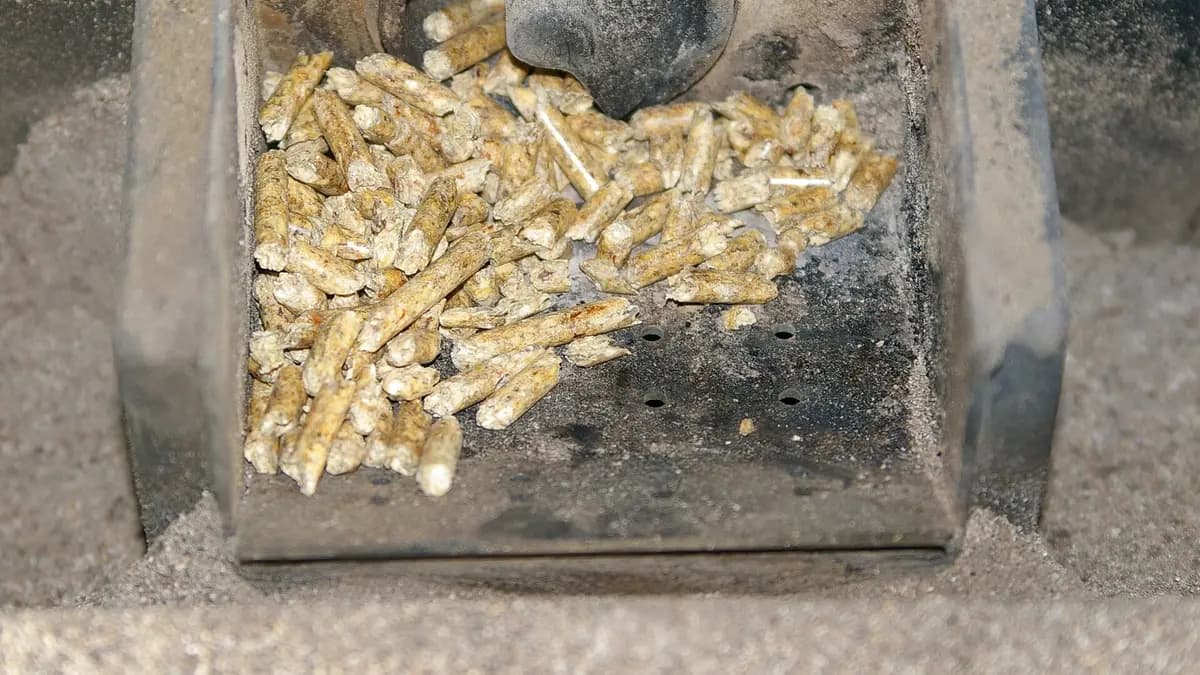
Most pellet stoves need electricity. A motor moves the pellets from the hopper, a fan drives the air and an igniter lights them. Replacement igniters of 300 W are sold in stores, and a Chilean supplier estimates these stoves use between 100 and 400 W. Ignition is the peak; afterwards the stove uses much less. That is why an automatic pellet stove shuts down during a power cut.
There are models that work without electricity, by gravity and natural convection, with manual lighting and loading. They are less common and less automated; before buying one, check certification and flue draught with the manufacturer. For short outages, another option is backing up an automatic stove with a portable power station, as we explain in our guide to emergency solar kits.
Subsidies and restrictions for pellet stoves
Chile's Environment Ministry funds the Heater Replacement Program, which swaps wood stoves for pellet stoves or air conditioners in cities with pollution-reduction plans. In September 2026 it opened applications for Talca and Maule, with 201 pellet stoves available and a co-payment of CLP 140,000 covering installation, according to G5 Noticias. Applications are made at calefactores.mma.gob.cl, and applicants must own the wood stove being handed over for destruction.
- Santiago Metropolitan Region: according to the Environment Ministry, cited by CNN Chile, certified pellet stoves are exempt from the wood-burning ban in the province of Santiago, San Bernardo and Puente Alto.
- Pre-emergency and environmental emergency days: on those days the ban also extends to pellets across the Metropolitan Region.
- Plan season: the restrictions of Santiago's pollution plan apply from May to August.
Pellets emit far less particulate matter than wet firewood. The replacement program itself aims to cut particulate matter that, in those cities, comes 80% from residential wood burning.
How many pellets you use in a season
A home in central-southern Chile uses between 1 and 2 tonnes of pellets per season, according to supplier estimates. That is 67 to 133 bags. With a bag at CLP 4,850 to 5,000, the season's cost ranges from about CLP 323,000 to CLP 667,000, spread over the cold months. Home insulation is the factor that moves that number most.
Do you sell stoves, pellets or efficient heating solutions? Reach Energía Futura readers.
See advertising optionsFrequently asked questions
How much does a bag of pellets cost in Chile?
Between CLP 4,850 and 5,690 for a 15-kilo bag in 2026, according to the La Araucanía survey and Ecomas' online prices.
How much does a pellet stove cost to run per hour?
Between CLP 300 and 770 per hour depending on power, with a bag at CLP 5,000. At medium power, about CLP 417.
Does a pellet stove work without power?
Automatic ones do not: they need electricity for the motor, fan and igniter. Gravity models without electricity exist but are less common.
Are pellets cheaper than an electric heater?
Yes: pellet heat costs between CLP 81 and 95 per kWh, compared with about CLP 255 for an electric resistance heater.