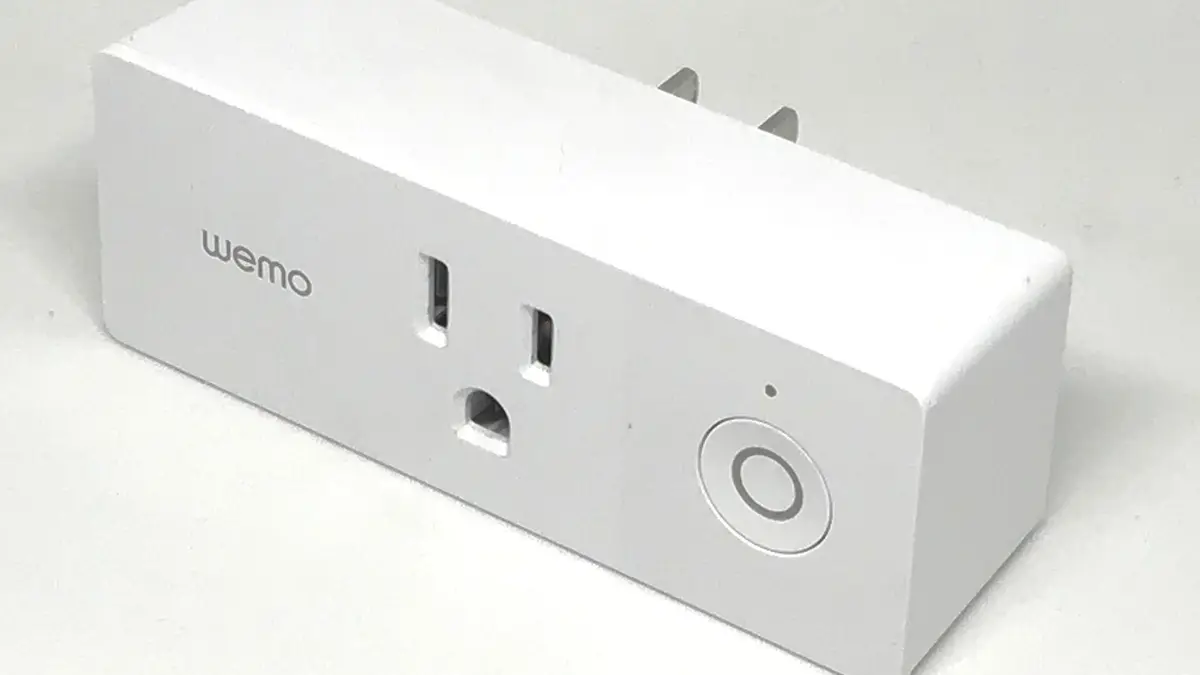
A smart plug is an adapter that goes between the wall socket and an appliance and can be switched on, off or scheduled from your phone via Wi-Fi, Zigbee or Bluetooth. Its most rewarding use for your wallet is cutting standby power: the energy appliances use when they are off but still plugged in, such as the TV set-top box, the games console or the speaker.
The plug itself uses little: a median of 0.25 W, according to measurements by the US Lawrence Berkeley National Laboratory, or about CLP 560 a year at CLP 255.91 per kWh under CGE's November 2026 BT1 tariff. A typical TV corner, by contrast, draws 15.35 W on standby, about CLP 28,677 a year if it stays that way 20 hours a day. In Chile, Wi-Fi plugs start at CLP 11,990 and mechanical timers at CLP 4,990.
View the data as a table
| 1 watt on all year | CLP 2,242 |
| A smart plug's own draw | CLP 560 |
| TV corner on standby 20 hours a day | CLP 28,676 |
How a smart plug works
Inside there is a relay (a switch operated by a small electromagnet), a communications module and, in some models, an energy meter. The relay opens or closes the circuit according to the command it receives from the app, from a voice assistant such as Alexa or Google, or from a schedule stored in the plug itself.
- Wi-Fi: connects straight to the home router. The easiest to set up. Examples in Chile: Sonoff S26, TP-Link Tapo and Amazon's own.
- Zigbee: needs a hub, but uses less power and doesn't crowd the Wi-Fi. Example: Aqara.
- With energy meter: shows how many watts and kWh the connected appliance uses. The best way to find out which appliance weighs on the bill.
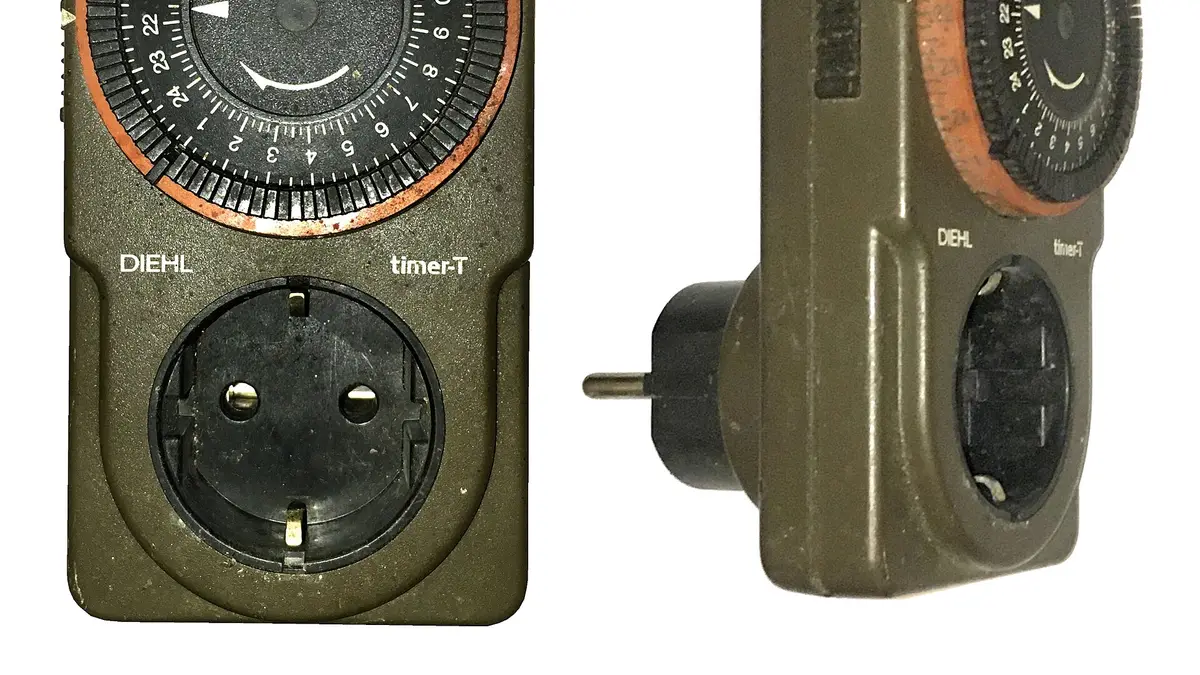
- Mechanical or digital timer: connects to nothing; it switches on and off according to a 24-hour dial or a weekly program. The cheapest option.
The practical difference between a plug-in timer and a smart plug is flexibility. A timer always repeats the same schedule and has to be set by hand; a smart plug can be controlled remotely, follow routines (turn everything off when you leave home) and, if it has a meter, tell you how much it used each day. To keep the front-garden lights on from 20:00 to 23:00, a CLP 4,990 timer does the job.
How much power a smart plug and standby appliances use
The rule for turning watts into pesos is simple: one watt left on all year is 8.76 kWh, about CLP 2,242 at the CGE tariff. The Berkeley lab, which compiles standby measurements for hundreds of products, estimates that standby accounts for 5% to 10% of residential electricity in most developed countries.
| Appliance on standby | Watts (median) | kWh a year | Pesos a year |
|---|---|---|---|
| TV set-top box | 8 | 70.1 | CLP 17,934 |
| Modem or router | 3.32 | 29.1 | CLP 7,443 |
| Wireless speaker | 2.8 | 24.5 | CLP 6,277 |
| Desktop computer | 2.7 | 23.7 | CLP 6,053 |
| Games console | 1.7 | 14.9 | CLP 3,811 |
| Microwave | 1.5 | 13.1 | CLP 3,363 |
| Television | 0.95 | 8.3 | CLP 2,130 |
| Smart plug | 0.25 | 2.2 | CLP 560 |
Source: median of measurements in the Lawrence Berkeley National Laboratory Standby Table and Energía Futura calculation with CGE's November 2026 BT1 tariff (CLP 255.91 per kWh), assuming the appliance is plugged in 24 hours a day. Individual models may use more or less than the median; a plug with a meter gives the exact figure.
The set-top box is the champion: its median of 8 W and measured maximum of 30 W are explained by the fact that many keep downloading the programme guide and updates while the screen is off. The price per kWh varies by municipality and distribution company; you can find yours in our guide to the electricity price per kWh in Chile.
How much a smart plug saves in pesos
The saving depends on what you plug in. A smart plug on an appliance that already uses little on standby (a modern TV at 0.95 W) saves almost nothing. Where it pays off is on a power strip with several appliances, all cut at once. We ran the numbers for two typical corners of a home, assuming 20 hours a day on standby.
View the data as a table
| Set-top box or printer | Speaker | Console or computer | Streaming player or monitor | Television | |
|---|---|---|---|---|---|
| TV corner | 8.00 W | 2.80 W | 1.70 W | 1.90 W | 0.95 W |
| Home office | 2.61 W | 2.25 W | 2.70 W | 0.60 W | 0.00 W |
| Corner | Standby draw | Cost per year (20 h a day) | Net saving with a smart plug | Pays back a CLP 13,990 plug in |
|---|---|---|---|---|
| TV: set-top box, speaker, console, streaming player and television | 15.35 W | CLP 28,677 | CLP 28,117 | 6 months |
| Home office: printer, PC speakers, computer and monitor | 8.16 W | CLP 15,245 | CLP 14,685 | 12 months |
Source: Energía Futura calculation with the LBNL median standby figures, the kWh at CLP 255.91 and the plug's own draw (0.25 W, CLP 560 a year). The reference plug is the Sonoff S26 R2 at CLP 13,990 from Falabella. Note: it is best to leave the router on if the home has cameras, alarms or internet phone service.
To put it in perspective: the typical household the CNE uses consumes 180 kWh a month, as we explain in how much electricity a house uses in Chile. The TV corner's 112 kWh a year equal about 19 days of that consumption.
Maximum load: which appliances you can connect
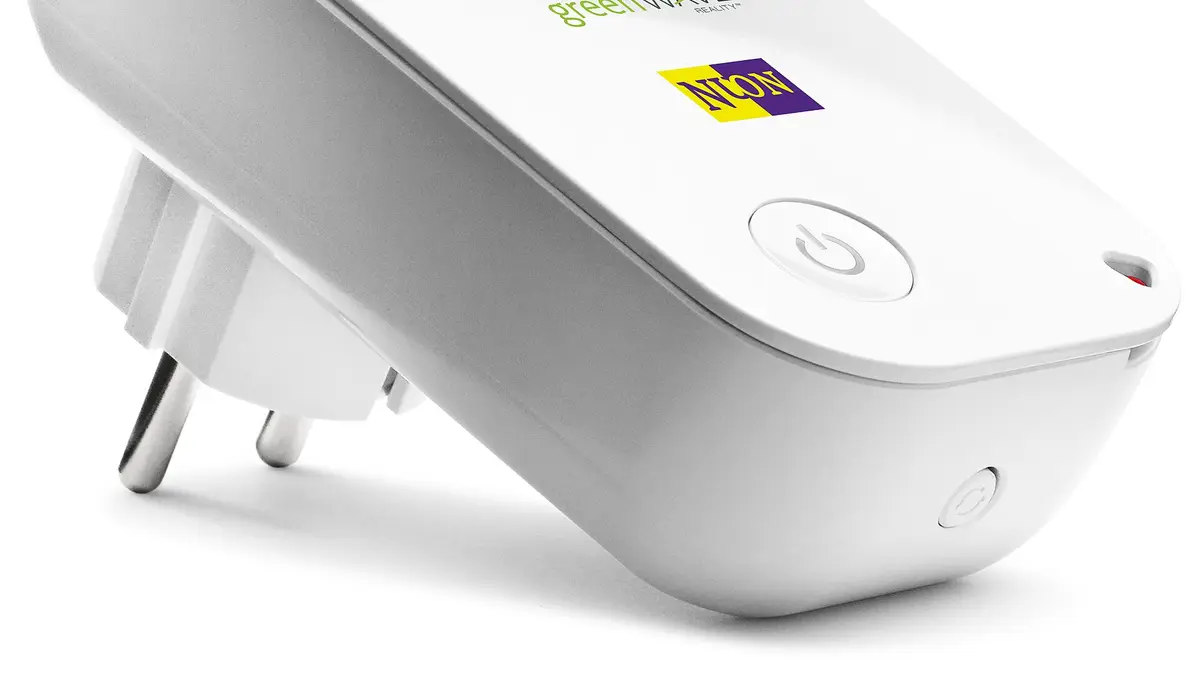
Every smart plug has a maximum current printed on it: 10 A or 16 A. At 220 V that means 2,200 W or 3,520 W. The Sonoff S26 R2, for example, is rated at 16 A and 4,000 W. Connecting more than that heats the relay and can burn out the plug.
- Yes: TVs, set-top boxes, consoles, lights, fans, chargers, drip coffee makers, air fryers under 1,500 W on 16 A plugs.
- With care: 2,000 W electric heaters (including the infrared heaters common in Chile): only on 16 A plugs and without an extension lead. A 10 A plug is at its limit.
- No: ovens, cookers, water heaters and appliances the manufacturer says must be plugged in directly. Not fridges either: a scheduling mistake can spoil the food.
- Always: check it has Chilean type C or L pins or a certified adapter.
| Wi-Fi plug with energy meter, 16 A | Mundo Magia | CLP 11,990 | Falabella |
| S26 R2 Wi-Fi plug (4,000 W / 16 A) | Sonoff | CLP 13,990 | Falabella |
| Smart plug-in socket | Halux | CLP 15,990 | Sodimac |
| Smart plug with Alexa | Amazon | CLP 19,980 | Falabella |
| Pack of 2 S26 Wi-Fi plugs | Sonoff | CLP 25,490 | Falabella |
| Tapo P125M Wi-Fi smart plug | TP-Link | CLP 25,990 | Falabella |
| Zigbee smart plug | Aqara | CLP 29,990 | Falabella / Sodimac |
| On/off plug | Ozom | CLP 30,290 | Sodimac |
| 24-hour mechanical timer | Halux | CLP 4,990 | Sodimac |
| Weekly digital timer | Halux | CLP 8,390 | Sodimac |
| Pack of 24-hour mechanical timers | Halux | CLP 9,190 | Sodimac |
| Manual analogue timer | Completel | CLP 10,990 | Sodimac |
| Weekly analogue timer | Completel | CLP 12,990 | Sodimac |
| Weekly and daily digital timer | Completel | CLP 17,990 | Sodimac |
Prices in Chile: Wi-Fi, Zigbee and timers
In our check on 24 November 2026, Wi-Fi plugs started at CLP 11,990 (a 16 A model with an energy meter, on offer at Falabella) and CLP 13,990 (Sonoff S26 R2). Amazon's Alexa plug cost CLP 19,980, the TP-Link Tapo P125M CLP 25,990 and the Aqara Zigbee CLP 29,990. At Sodimac, 24-hour mechanical timers started at CLP 4,990 and weekly digital ones at CLP 8,390.
How to choose: if the goal is saving, pick one with an energy meter, because it lets you find out which appliance uses too much. If it is convenience, pick one that works with the voice assistant already in the house. And if all you need is a fixed schedule, a timer costs a third as much. There are also in-wall smart sockets and home automation modules, though those require an electrician.
How to set it up so it really saves
Setup takes a few minutes: plug it in, download the maker's app, connect it to the home's 2.4 GHz Wi-Fi (most don't work on 5 GHz) and give it a recognisable name, such as 'TV corner'. From then on, the schedule is what determines the saving.
- Night schedule: switching off the TV corner and the home office between 1:00 and 7:00 already cuts 6 hours of standby a day.
- Leaving routine: one button in the app that turns off everything non-essential when the house is empty.
- One-week measurement: if the plug has a meter, leave it a few days on each suspect appliance before deciding where to install it permanently.
- Beware of devices that update at night: some set-top boxes and consoles download updates in the early hours. Leave them a window switched on once a week.
The smart plug is the entry point to home automation, which adds sensors, thermostats and scheduled lighting. In Chile, electrical products must carry safety certification, and the SEC advises against daisy-chaining power strips and extension leads from a single socket.
Does your company sell home automation, smart plugs or efficiency solutions? Reach Energía Futura's readers.
See advertising optionsFrequently asked questions
How much power does a smart plug use?
A median of 0.25 W, according to Lawrence Berkeley National Laboratory measurements. Over a year that is about 2.2 kWh, roughly CLP 560 at CLP 255.91 per kWh.
Does a smart plug really save electricity?
Yes, if it is used to cut appliances with a high standby draw. A TV corner with a set-top box, console and speaker saves about CLP 28,000 a year; a TV alone, barely CLP 1,800.
What is the difference between a timer and a smart plug?
A timer repeats a fixed schedule and costs from CLP 4,990. A smart plug is controlled from your phone, follows routines and can measure consumption; it starts at CLP 11,990.
Can I plug a heater into a smart plug?
Only if the plug is rated 16 A (3,520 W) and the heater draws no more than about 2,000 W. It is not advisable on 10 A plugs.
Does it work without internet?
Many store their schedule and keep following it offline, but remote control and voice assistants stop working until the connection returns. Zigbee plugs depend on their hub.