A voltage regulator, also called a voltage stabiliser, is a device that sits between the wall socket and your appliances and keeps feeding them a voltage close to 220 V, even when the grid rises or falls. It is not the same as a voltage protector, which simply cuts the power when voltage goes out of range, nor as a UPS, which also has a battery to keep running during an outage.
Chile's nominal voltage is 220 V at 50 Hz, and the technical standard of the National Energy Commission (CNE) requires distribution companies to keep it within ±7.5% on urban networks, that is, between 203.5 and 236.5 V, for 95% of the time each week. In most homes that is enough and a regulator is unnecessary. There are cases, especially in rural areas or at the end of long lines, where one does help. Prices run from CLP 15,990 for a protector to CLP 99,990 for a 2,000 VA regulator.
View the data as a table
| Nominal voltage | 220 V |
| Margin in urban areas | ±7.5% |
| Margin on rural networks | ±10% |
| Absolute limit | ±15% |
What a voltage regulator is and how it works
Inside, a regulator is a transformer with several taps and a circuit that measures the incoming voltage. If the grid drops to 200 V, it switches to the tap that raises it; if it climbs to 240 V, it switches to one that lowers it. There are three common technologies:
- Relay type (AVR): the most common and cheapest. It changes taps with relays, in steps, and you hear a click at each adjustment. Fine for computers, TVs and audio equipment.
- Servo motor: a motor moves a contact along the winding and adjusts the voltage smoothly and precisely. It reacts more slowly but without jumps. Used for sensitive equipment and larger loads.
- Static or electronic (SCR or IGBT): switches taps with semiconductors and no moving parts. The fastest and the most expensive.
A regulator does not generate power: if the grid goes down, so does it. Nor does it stop lightning or a very brief, very high overvoltage (a 'spike'), which is what surge suppressors are for. And it draws power itself, because the transformer warms up while plugged in even with nothing connected.
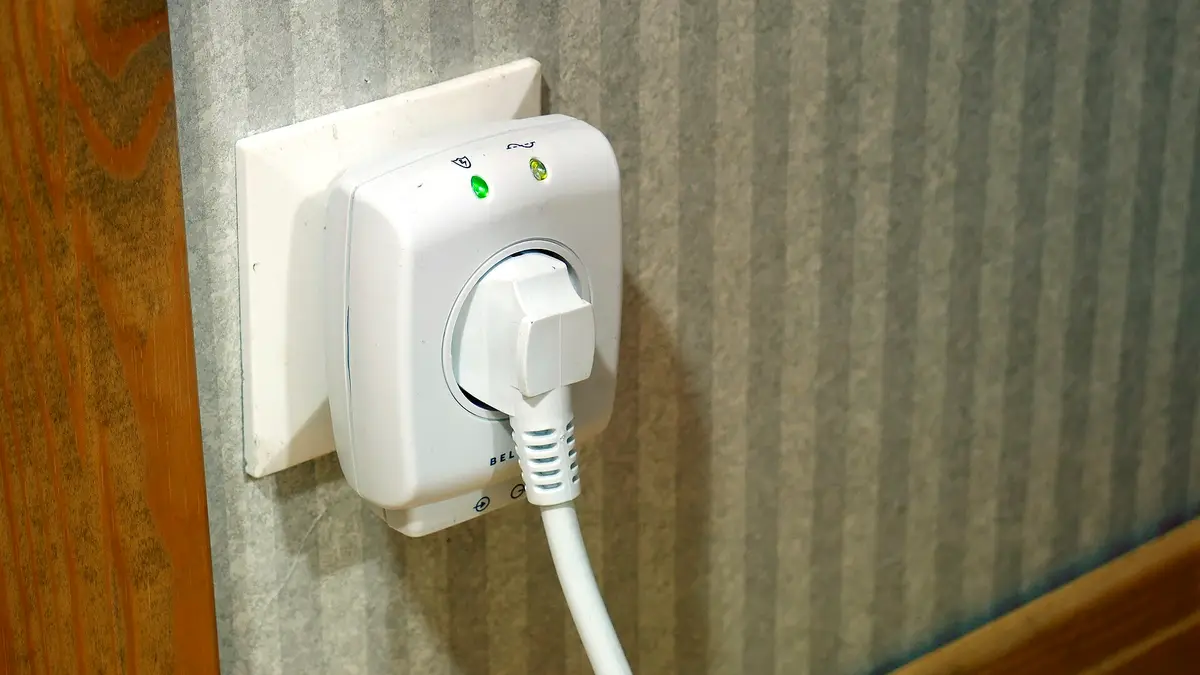
Regulator, protector, surge suppressor or UPS: what's the difference
| Device | What it does | What it doesn't do | Typical use | Price in Chile |
|---|---|---|---|---|
| Voltage protector | Cuts off if voltage drops or rises too far and reconnects after a delay | Does not correct voltage | Fridge, washing machine, microwave | From CLP 15,990 |
| Surge suppressor | Diverts brief spikes (lightning, grid switching) to earth | Does nothing about sustained sags | Computer power strips, routers | Built into strips from CLP 16,990 |
| Regulator or stabiliser | Keeps the output close to 220 V | Gives no backup during an outage | PCs, audio gear, machines in rural areas | From CLP 87,990 (1,000 VA) |
| UPS | Provides battery backup and almost always regulates | Lasts minutes, not hours | PCs, routers, alarms | From CLP 72,990 (700 VA) |
Source: prices without store card at Falabella on 24 November 2026. The protectors in the table are 1,500 W models with two sockets; the UPS is a 700 VA, 360 W line-interactive model with built-in automatic voltage regulation.
For a fridge, the most useful device is usually a voltage protector with a delay: when power returns after an outage, it waits a few minutes before reconnecting, so the compressor doesn't restart while the refrigerant pressure is still high. That matters as much for an upright or chest freezer. For a desktop computer, a UPS covers both needs: it regulates and gives you time to save your work. For a whole house with frequent voltage sags, a 5 or 10 kVA regulator is wired into the panel by an electrician.
When a voltage stabiliser helps and when it doesn't
The Distribution Service Quality Technical Standard, set by the CNE in 2024, defines how far voltage may vary. The margin depends on network density: it is stricter in cities than in rural areas. And there is an absolute limit that must never be crossed.
| Situation | Margin | Range at 220 V | For how long |
|---|---|---|---|
| Low-voltage network, high and medium density (cities) | ±7.5% | 203.5 to 236.5 V | 95% of the time each week |
| Low-voltage network, low, very low and extremely low density (rural) | ±10% | 198 to 242 V | 95% of the time each week |
| Any network, in normal or abnormal state | ±15% | 187 to 253 V | At all times |
Source: articles 1-5 and 3-1 of the CNE's Distribution Service Quality Technical Standard (2024). Voltage is measured as a 10-minute average at the customer's connection point.
Within those margins almost every modern appliance works without trouble: the power supplies of computers, TVs and chargers are designed to accept wide ranges (many from 100 to 240 V). A regulator does make sense when:
- The lights dim every time the fridge or water pump starts.
- The home is in a rural area or at the end of a long line, where the rules allow ±10% and in practice the sags can be larger.
- You use motor-driven or sensitive electronic equipment whose maker asks for a stable supply.
- You run a fuel generator, whose voltage varies with the load. See our guide to the home generator.
Before buying, it is worth measuring: a basic multimeter costs from CLP 19,990 at Sodimac. If voltage repeatedly falls outside the ranges in the table, the distribution company is responsible. Complaints go to it first and, if it doesn't answer or the answer is unsatisfactory, to the SEC, which oversees service quality.
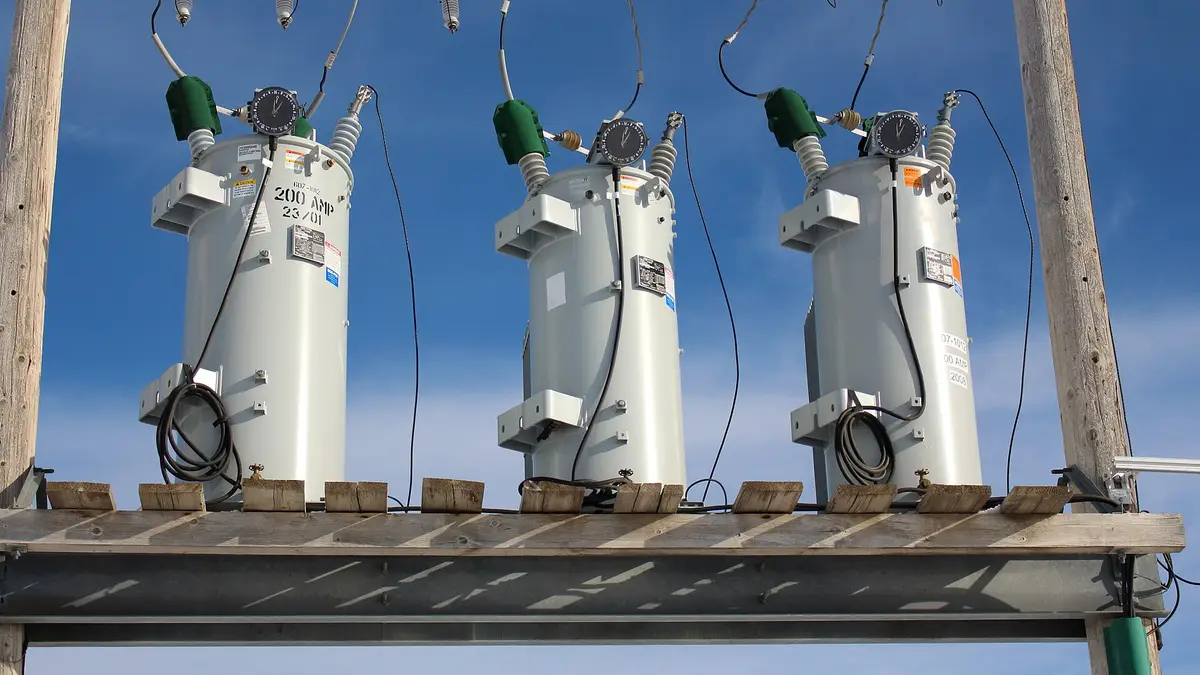
What size to choose: VA and watts
Regulators and UPS units are sold in volt-amperes (VA), not watts. The difference is the power factor: in these devices, real power in watts is usually about 60% of the VA. The Enersafe 2,000 VA regulator, for example, delivers 1,200 W; the APC 700 VA UPS, 360 W.
- Step 1: add up the watts of everything you will connect (it's on each appliance's label).
- Step 2: add a 25% margin so the unit doesn't run at its limit.
- Step 3: divide by 0.6 to convert to VA. A 300 W PC plus a 40 W monitor (340 W) needs about 708 VA: a 1,000 VA unit.
- Watch out for motors: fridges, pumps and air conditioners draw several times their rated power when starting. For them, choose a bigger regulator or, better, a protector with a delay.
| 1,500 W voltage protector, 2 sockets | Forza Zion | CLP 15,990 |
| Power strip with protector, 7 outlets | MLAB | CLP 16,990 |
| 6,600 W hard-wired voltage protector | Forza | CLP 19,990 |
| 700 VA / 360 W UPS with AVR | APC Easy BVG700I | CLP 72,990 |
| 1,000 VA servo stabiliser | Nagashi NGE-1000VA | CLP 87,990 |
| 2,000 VA / 1,200 W AVR | Enersafe | CLP 99,990 |
| 5 kVA single-phase regulator | Enersafe | CLP 258,990 |
| 10 kVA single-phase regulator | Enersafe | CLP 479,000 |
| 220 to 110 V transformer, 500 W (does not regulate) | Macrotel | CLP 38,990 |
A common mistake is buying a 220 to 110 V transformer thinking it regulates: it only changes the voltage for appliances imported from the United States and does not correct grid fluctuations. Another is plugging a heater or kettle into a small regulator: resistive appliances don't need a stable voltage and will overload it.
How much power the device uses while plugged in
Every transformer has losses. A regulator has no-load losses, which each manufacturer reports on its datasheet. A UPS draws more because it also keeps its battery charged: the median of the measurements compiled by the Lawrence Berkeley National Laboratory is 25.49 W on standby, which at CLP 255.91 per kWh under CGE's November 2026 BT1 tariff comes to about CLP 57,143 a year.
So it pays to leave on the regulator or UPS only what needs it, not every appliance in the room. If you want backup for long outages, an inverter with batteries can be more efficient than a computer UPS.
Does your company sell electrical protection, backup or power-quality solutions? Reach Energía Futura's readers.
See advertising optionsFrequently asked questions
Which is better, a regulator or a voltage protector?
It depends on the problem. If your home's voltage is within the rules and you only worry about outages and sudden swells, a protector is enough (from CLP 15,990). If there are frequent voltage sags, you need a regulator.
Does a fridge need a voltage regulator?
In most homes, no. A protector with a delay is advisable: it disconnects the fridge when voltage is out of range and waits a few minutes before reconnecting after an outage.
What is the normal voltage in Chile?
220 V at 50 Hz. The rules allow 203.5 to 236.5 V in urban areas and 198 to 242 V on rural networks for 95% of the time, and never outside 187 to 253 V.
Does a UPS regulate voltage?
Line-interactive and online UPS units do: the 700 VA APC sold in Chile has built-in AVR. The most basic *standby* units only switch to battery when voltage goes out of range.
How much does a voltage regulator cost in Chile?
From CLP 87,990 for a 1,000 VA servo stabiliser and CLP 99,990 for a 2,000 VA unit; for a whole house, CLP 258,990 (5 kVA) and CLP 479,000 (10 kVA), at Falabella prices on 24 November 2026.