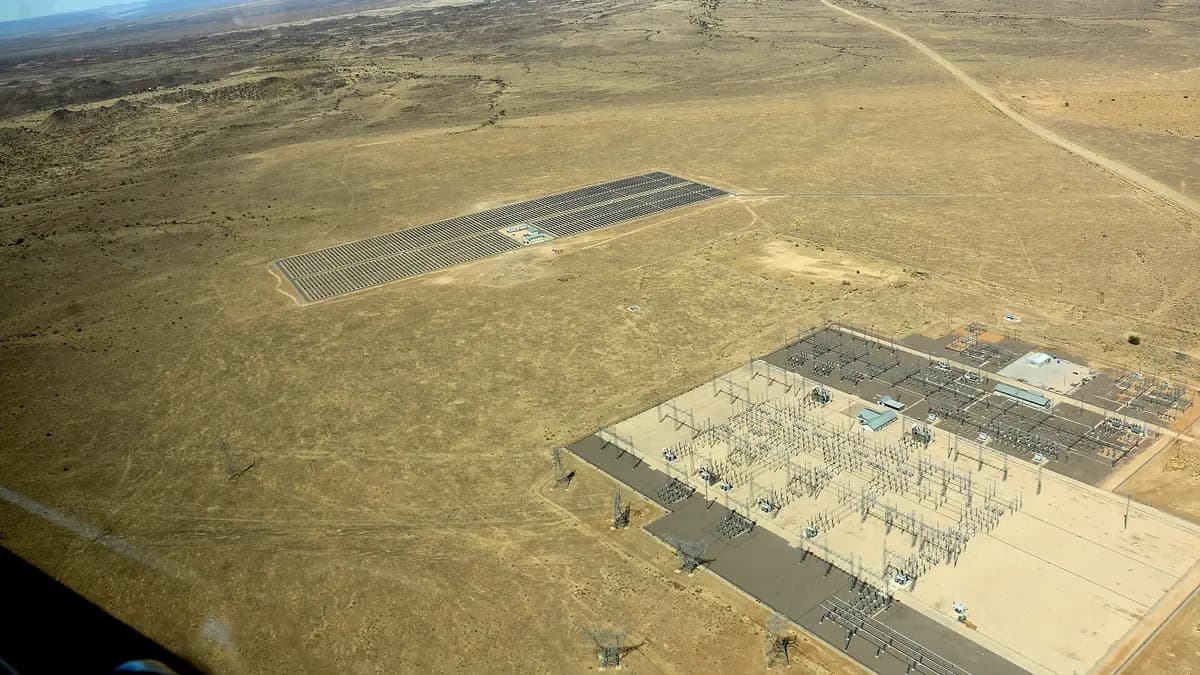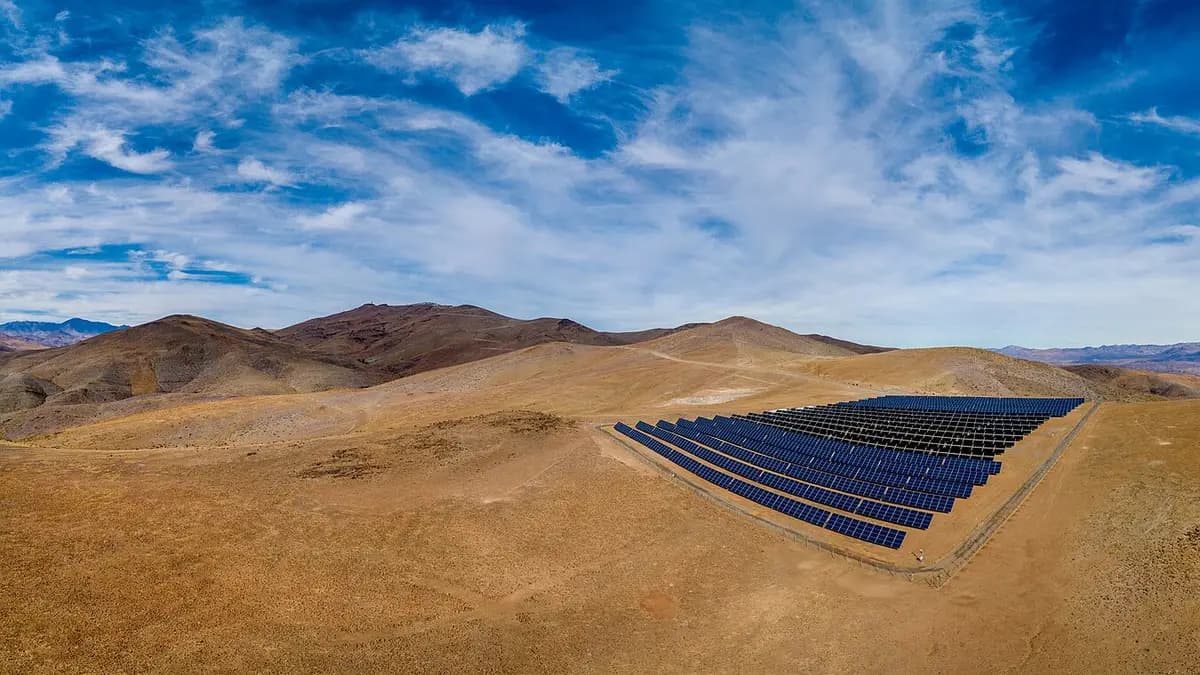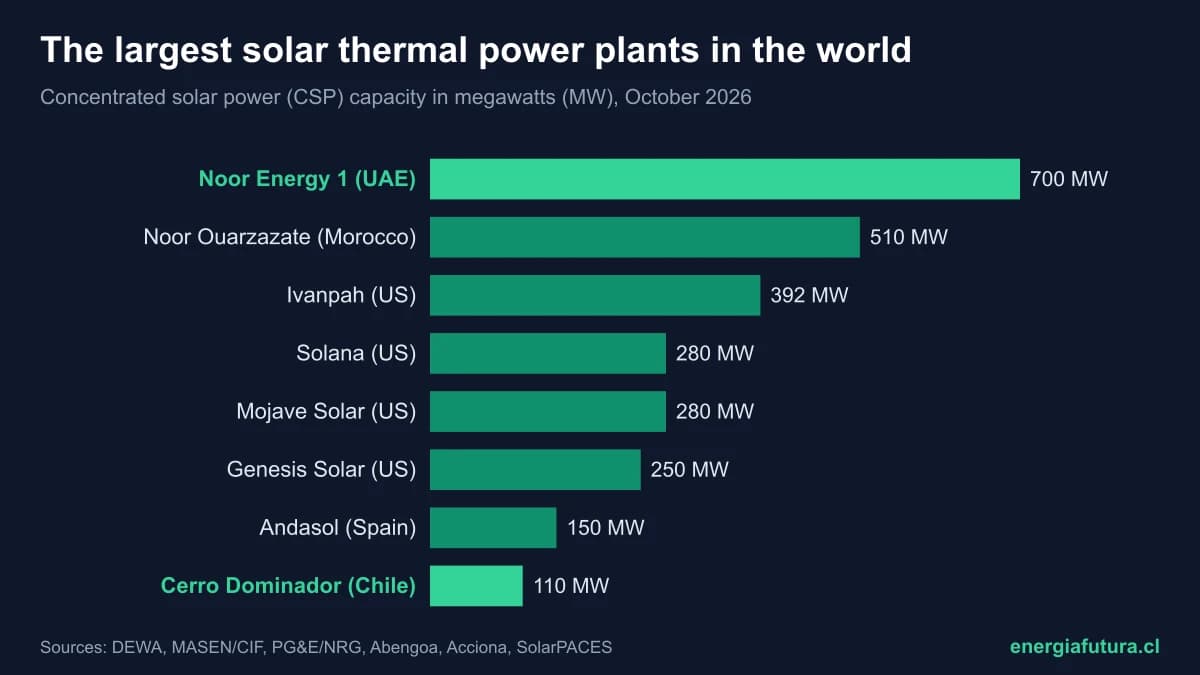
Updated on 27 October 2026. The largest solar thermal power plant in the world is Noor Energy 1, the fourth phase of the Mohammed bin Rashid Al Maktoum Solar Park in Dubai (United Arab Emirates). It has 700 MW of concentrated solar power (600 MW of parabolic trough collectors and a 100 MW molten salt tower), plus 250 MW of photovoltaics, for a total of 950 MW. In December 2023 it set two Guinness World Records: the tallest solar power tower in the world, at 263.126 metres, and the largest thermal energy storage, at 5,907 MWh, according to the Dubai Government Media Office.
Chile makes the ranking with Cerro Dominador, in the Antofagasta Region: 110 MW of tower-type concentrated solar power and 17.5 hours of molten salt storage. It is the only large-scale solar thermal plant in Latin America and ranks eighth on this list, although it stores energy for more hours than the Dubai plant.
Ranking of the largest solar thermal power plants in the world in 2026
The table ranks plants by their concentrated solar power (CSP) capacity, excluding the photovoltaic panels some of them share on the same site. When a complex has several units at the same location, such as Noor Ouarzazate or Andasol, they are added together. Retired plants, such as the old parabolic trough plants built in California in the 1980s, are excluded.
| Rank | Plant | Country | CSP capacity | Technology | Storage | In operation |
|---|---|---|---|---|---|---|
| 1 | Noor Energy 1 | United Arab Emirates | 700 MW | Parabolic trough (600 MW) and tower (100 MW) | 15 hours | 2023-2024 |
| 2 | Noor Ouarzazate I, II and III | Morocco | 510 MW | Parabolic trough (360 MW) and tower (150 MW) | 3 to 7.5 hours | 2016-2018 |
| 3 | Ivanpah | United States | 392 MW | Three towers | No storage | 2014 |
| 4 | Solana | United States | 280 MW | Parabolic trough | 6 hours | 2013 |
| 5 | Mojave Solar | United States | 280 MW | Parabolic trough | No storage | 2014 |
| 6 | Genesis Solar | United States | 250 MW | Parabolic trough | No storage | 2014 |
| 7 | Andasol 1, 2 and 3 | Spain | 150 MW | Parabolic trough | 7.5 hours | 2008-2011 |
| 8 | Cerro Dominador | Chile | 110 MW | Tower | 17.5 hours | 2021 |
Table sources: DEWA and the Dubai Media Office (Noor Energy 1), MASEN and the Climate Investment Funds (Noor Ouarzazate), PG&E and NRG (Ivanpah), Abengoa and Atlantica (Solana and Mojave Solar), NextEra (Genesis Solar) and Acciona (Cerro Dominador). The figures for Mojave Solar, Genesis Solar and Andasol are the design capacities reported by their developers when they entered operation.
What a solar thermal plant is and how it differs from a PV farm
A solar thermal plant, or concentrated solar power (CSP) plant, does not turn light directly into electricity, as a photovoltaic panel does. It uses mirrors that concentrate sunlight on a receiver, heat a fluid (thermal oil or molten salt), and that heat produces steam to drive a turbine, just like a conventional thermal power station but without burning fuel.
Its big advantage is that heat can be stored in molten salt tanks and used after sunset. That is why a solar thermal plant with storage can generate at night, something a PV farm only achieves with added batteries. Its drawbacks are cost and scale: while the biggest PV farms already exceed several gigawatts, the largest solar thermal plants are measured in hundreds of megawatts, as a comparison with the ranking of the largest solar plant in the world shows.
- Parabolic trough: rows of curved mirrors heat a pipe carrying thermal oil. It is the most widespread technology, used by Andasol, Solana and most of Noor Energy 1.
- Central tower: thousands of flat mirrors (heliostats) track the sun and aim at a receiver on top of a tower. It reaches higher temperatures and is used by Cerro Dominador, Ivanpah and Noor III.
- Linear Fresnel: long flat mirrors that mimic a trough. It is cheaper but less efficient; in 2025 China connected a 100 MW Fresnel plant in Hami.
Noor Energy 1, the largest solar thermal power plant in the world
Noor Energy 1 covers 44 square kilometres of desert south of Dubai and uses 70,000 heliostats that track the sun to feed its tower. The investment was AED 15.78 billion, about US$4.3 billion, under an independent power producer model, according to the Dubai Electricity and Water Authority (DEWA). The plant was inaugurated in December 2023 and supplies more than 320,000 homes, avoiding about 1.6 million tonnes of CO2 a year, according to its official website.
Its 15 hours of storage allow it to deliver power around the clock. That is why Dubai built it into its clean energy strategy: the photovoltaic part covers the day and the solar thermal part covers the night. In September 2026 its owners closed a US$2.7 billion refinancing, according to pv magazine.
Noor Ouarzazate, Ivanpah and the other solar thermal giants
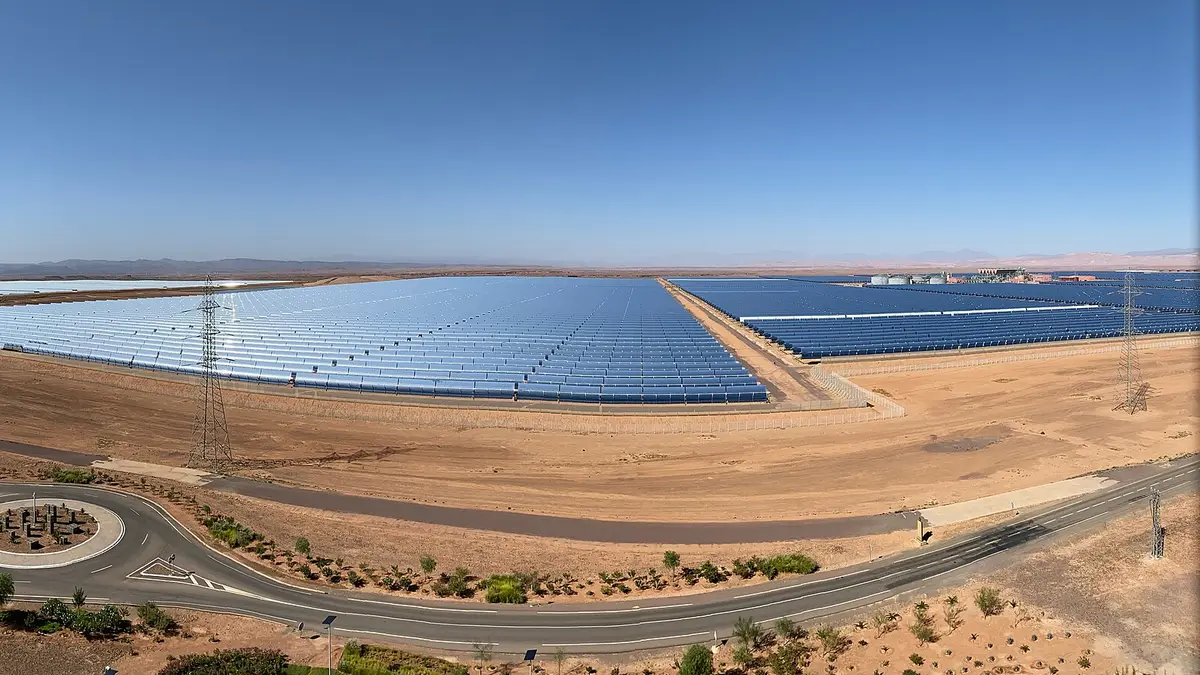
Second place goes to the Noor Ouarzazate complex in Morocco, run by the state agency MASEN. Its three solar thermal plants add up to 510 MW: Noor I (160 MW) and Noor II (200 MW) use parabolic troughs, and Noor III (150 MW) is a tower of about 250 metres with around 7.5 hours of storage, according to Power Magazine. With the Noor IV photovoltaic plant, the complex reaches about 580 MW.
Third place belongs to Ivanpah, in the Mojave Desert (California), with 392 MW spread across three towers. When it entered operation in 2014 it was the largest solar thermal plant in the world. In January 2025 the utility PG&E agreed with the owners to end the contracts for units 1 and 3 early, which would have led to their closure from 2026. But on 4 December 2025 the California Public Utilities Commission rejected that deal, without ruling out a new proposal, and the plant kept running. As of October 2026 we found no new decision on its closure.

The United States completes the ranking with Solana (Arizona, 280 MW and 6 hours of storage), Mojave Solar (California, 280 MW) and Genesis Solar (California, 250 MW), all opened between 2013 and 2014. Spain, by contrast, has the largest solar thermal fleet in the world, but split into small plants: most are 50 MW, the maximum allowed under its former incentive scheme. According to Protermosolar, the country has about 2,300 MW in 49 plants, which generated 3,691 GWh in 2025, 32% of it at night, according to Energías Renovables. Spain has not opened a solar thermal plant since 2013.
China, the country building solar thermal plants the fastest
Today the solar thermal market is growing mainly in China. In 2025 the country connected nine plants, most of them 100 MW towers with 6 to 12 hours of storage in Qinghai, Gansu and Xinjiang, and ended the year with 27 plants and 1,738.2 MW, up 107% on 2024, according to the China Solar Thermal Alliance (CSTA) as cited by SolarPACES. That made it the third country in the world by solar thermal capacity.
China also has about 25 projects under construction, totalling around 3,000 MW. They include CGN's 200 MW tower in Delingha (Qinghai), which began construction in 2024 and would be the solar thermal tower with the highest unit capacity in the world; we could not confirm whether it has entered operation.
| Indicator | Figure | Source and date |
|---|---|---|
| Solar thermal capacity worldwide | 8,800.2 MW (includes 8 retired US plants) | CSTA via SolarPACES, end of 2025 |
| Spain | About 2,300 MW in 49 plants | Protermosolar, 2026 |
| China | 1,738.2 MW in 27 plants | CSTA via SolarPACES, end of 2025 |
| Chinese plants connected in 2025 | 9 | CSTA via SolarPACES |
| Projects under construction in China | About 25 (around 3,000 MW) | CSTA and CRES via SolarPACES |
| Chile | 110 MW (Cerro Dominador) | Acciona, 2021 |
Cerro Dominador, the largest solar thermal plant in Chile and Latin America
Cerro Dominador is located in the municipality of María Elena, in the Antofagasta Region, and was inaugurated in June 2021 as the first solar thermal plant in Latin America. Its 252-metre tower receives light from 10,600 heliostats and its molten salt system lets it generate for 17.5 hours without sun, according to Acciona, which built it together with Abengoa. It shares the site with a 100 MW photovoltaic plant operating since 2018, so the complex totals 210 MW.
| Feature | Cerro Dominador | Noor Energy 1 |
|---|---|---|
| Solar thermal capacity | 110 MW | 700 MW |
| Tower height | 252 metres | 263.126 metres |
| Heliostats | 10,600 | 70,000 |
| Storage | 17.5 hours | 15 hours (5,907 MWh) |
| Photovoltaics on the same site | 100 MW | 250 MW |
| Start of operation | 2021 | 2023-2024 |
The Chilean plant has one sixth of the Dubai plant's solar thermal capacity, but more hours of storage. Even so, it has had no successors in the country: in northern Chile, the combination of photovoltaic panels and batteries proved cheaper for covering the night. Batteries have grown at a pace of gigawatts while solar thermal adds a few hundred megawatts a year, as the ranking of the largest battery in the world shows.
Solar thermal keeps an edge in long-duration storage, of more than ten hours, where batteries are still expensive. That is the niche in which China is now building and where Cerro Dominador, with its 17.5 hours, remains among the plants with the longest storage in the world. Chile's broader shift to clean power is tracked in the ranking of countries with the most renewable electricity, where Chile stands out for solar.
Does your company develop, build or finance solar and storage projects? Reach Energía Futura's readers.
See advertising optionsHow this ranking was built
The ranking only counts concentrated solar power capacity in operation as of October 2026, using data from operators, governments and the SolarPACES project database. A complex counts as a single plant when its units are on the same site and under the same name. Plants under construction, such as the 200 MW Delingha tower, and retired plants are excluded. The list will be updated on this same page when new plants enter operation.
Frequently asked questions
What is the largest solar thermal power plant in the world?
It is Noor Energy 1, in Dubai, with 700 MW of concentrated solar power and 15 hours of storage. Including its photovoltaic part, it totals 950 MW.
What is the largest solar thermal plant in Latin America?
It is Cerro Dominador, in María Elena (Chile), with 110 MW and 17.5 hours of storage. It has been operating since 2021.
Which country has the most solar thermal power?
Spain, with about 2,300 MW in 49 plants. It is followed by the United States and China, which ended 2025 with 1,738.2 MW and ranks third, according to the CSTA.
Has the Ivanpah solar thermal plant closed?
No. The plan to close two of its three units from 2026 was put on hold when the California Public Utilities Commission rejected the deal on 4 December 2025.
What is the tallest solar tower in the world?
The one at Noor Energy 1, at 263.126 metres, according to Guinness World Records. Cerro Dominador's tower is 252 metres tall.
How to cite this data
Energía Futura (2026). The largest solar thermal power plant in the world 2026: ranking of the biggest concentrated solar power (CSP) plants. With data from DEWA, MASEN, PG&E, CPUC, Protermosolar, CSTA, SolarPACES and Acciona, accessed on 27 October 2026. Available at https://energiafutura.cl/en/news/the-largest-solar-thermal-power-plant-in-the-world-2026-ranking-of-the-biggest-csp-plants. The cover chart may be reproduced with credit to Energía Futura and a link to this page.