H2 Magallanes, the US$16 billion green hydrogen and ammonia project that TotalEnergies' Chilean subsidiary had under review in the Magallanes Region, has left Chile's Environmental Impact Assessment System (SEIA). The company TEC H2 MAG SpA asked to withdraw on 12 November, and the Magallanes Environmental Assessment Commission accepted the request in a resolution signed on Friday 13, Revista Electricidad reported.
It was the largest investment ever filed with the SEIA, according to the Ministry of Energy. The company attributed the decision to market conditions, the lack of long-term offtake contracts and high equipment costs. The SEA resolution gives no reasons: it simply declares the study withdrawn and ends the procedure, according to Electrominería.
View the data as a table
| Estimated investment | US$16,000 million |
| Wind farm | 5,000 MW |
| Electrolysis | 3,850 MW |
| Green ammonia | 10,800 t/day |
What H2 Magallanes was
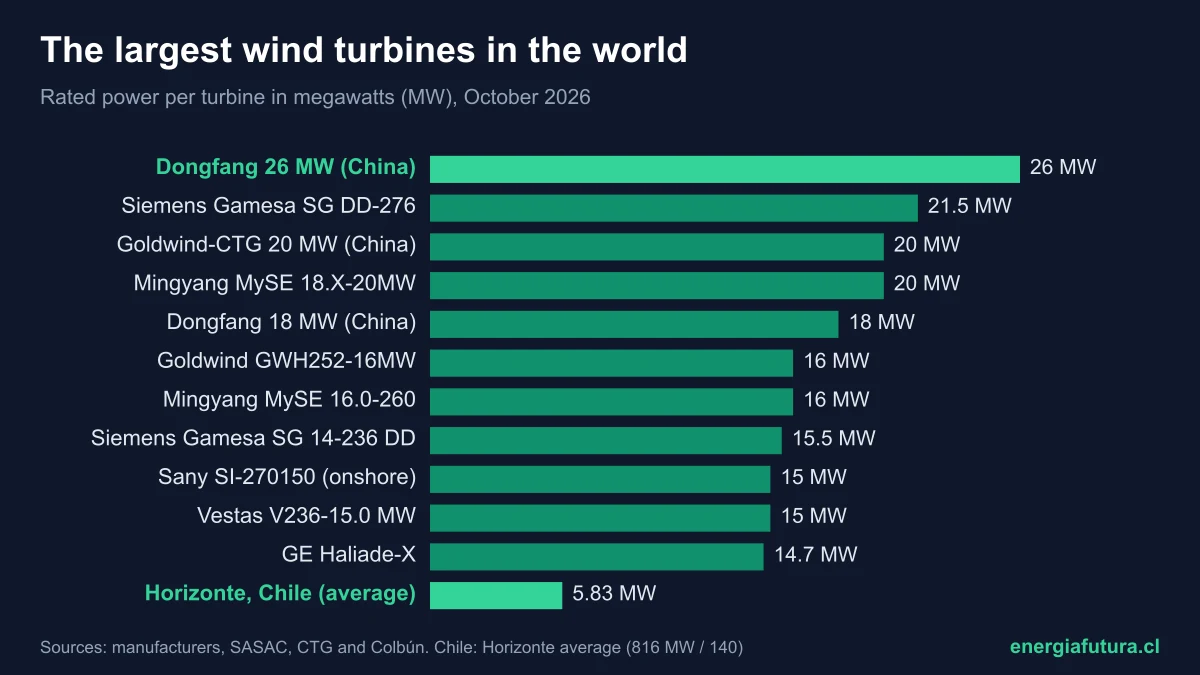
The project, developed by TotalEnergies H2 with French group EREN, was located in the municipality of San Gregorio, in the north of Magallanes province. It planned a 5,000 MW wind farm with 616 turbines of 8 MW, seven electrolysis centres totalling 3,850 MW to produce up to 1,750 tonnes of hydrogen a day, and a plant to turn it into 10,800 tonnes of ammonia a day using the Haber-Bosch process with nitrogen captured from the air, according to the study summary published by the Infrastructure Policy Council with information from Pulso.
The design also included a desalination plant of 1,300 litres per second, a marine terminal to export the ammonia and, according to Revista Electricidad, five data centres. When the project was filed in May 2025, it was reported that it would create some 10,000 jobs, according to BioBioChile.
| Component | H2 Magallanes |
|---|---|
| Estimated investment | US$16 billion |
| Wind farm | 5,000 MW (616 turbines of 8 MW) |
| Electrolysis | 3,850 MW in seven centres |
| Hydrogen output | Up to 1,750 t/day |
| Ammonia output | 10,800 t/day |
| Desalination plant | 1,300 l/s |
| Location | San Gregorio, Magallanes Region |
| Owner | TEC H2 MAG SpA (TotalEnergies H2 and EREN) |
Source: Environmental Impact Study filed with the SEIA on 5 May 2025, via the Infrastructure Policy Council (CPI) and Pulso; data centres, according to Revista Electricidad (13 November 2026). REDIMIN reported a maximum annual hydrogen output of 638,750 tonnes, equivalent to 1,750 tonnes a day over 365 days.
Why TotalEnergies pulled H2 Magallanes
The environmental impact study was filed on 5 May 2025. In September that year the company asked to suspend the review until March 2027 to prepare its answers, but the SEA granted a shorter deadline: 7 December 2026. The project had received more than 670 public comments, ranging from water use and the transport of the 616 turbines on the region's roads to the effect of noise on species such as the Magellanic lizard and the Magellanic tuco-tuco, according to the SEA report summarised by Ex Ante in November 2025.
There were also questions about its proximity to Pali Aike National Park and the Bahía Lomas Ramsar site, a key wetland for migratory birds, according to REDIMIN. Even so, the withdrawal ends the review before an environmental decision: it is not a rejection by the authority and does not prevent the project from being filed again later.
- 5 May 2025EIA filed with the SEIAUS$16 billion, the largest investment ever filed.
- Sep 2025Asks to suspend until March 2027The SEA sets 7 December 2026 as the deadline.
- Nov 2025Over 670 public commentsWater, turbine transport and local wildlife.
- 12 Nov 2026TEC H2 MAG asks to withdrawLetter signed by Antoine Liane.
- 13 Nov 2026Review endsMagallanes' Assessment Commission accepts the withdrawal.
Green hydrogen in Magallanes continues with other projects
TotalEnergies' exit does not empty the region's pipeline. On 26 August 2026 the Magallanes Assessment Commission unanimously approved HNH Energy, a US$11 billion green ammonia project with about 2.1 GW of wind, which became the largest investment ever approved by the SEIA, according to Energía Estratégica. Its owners plan to start construction in 2027.
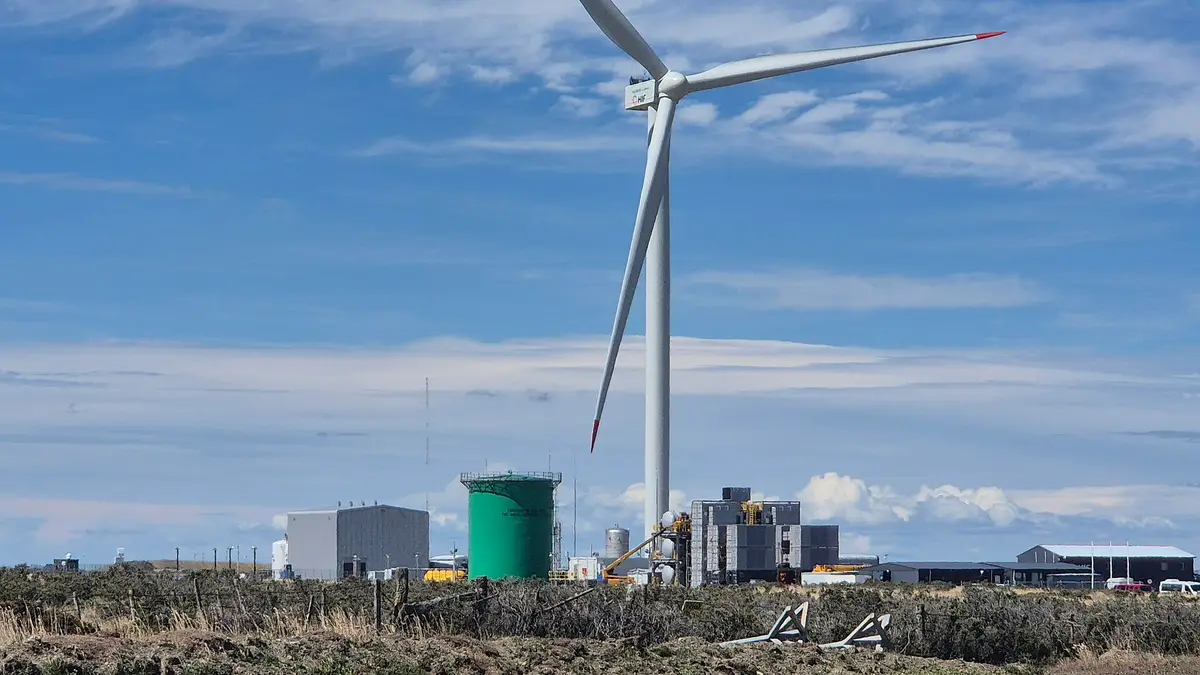
Still under review is the Acuario Project, by IB Decarb Dos Alfa, worth US$4.7 billion: a plant producing 4,100 tonnes a day of green ammonia and a 1.73 GW wind farm with 173 turbines, also in San Gregorio, admitted for review in July 2026, according to Reporte Minero. And near Punta Arenas, HIF Global's Haru Oni pilot plant has produced synthetic fuels since 2022.
| Project | Owner | Investment | Wind | Status |
|---|---|---|---|---|
| H2 Magallanes | TEC H2 MAG (TotalEnergies H2 and EREN) | US$16 billion | 5,000 MW | Withdrawn (13 Nov 2026) |
| HNH Energy | HNH Energy consortium | US$11 billion | ~2.1 GW | Approved (26 Aug 2026) |
| Acuario | IB Decarb Dos Alfa | US$4.7 billion | 1.73 GW | Under review (since Jul 2026) |
Sources: SEA via Revista Electricidad (H2 Magallanes), Energía Estratégica (HNH Energy) and Reporte Minero (Acuario). All three are in the municipality of San Gregorio.
None of these projects is yet a large plant in operation. Scaling up depends on buyers willing to sign long-term contracts, the cost of electrolysers and port infrastructure. Worldwide, the green hydrogen plants already running are much smaller than what is planned in Magallanes, as our ranking of the world's largest green hydrogen plant shows.
Does your company develop green hydrogen, wind or port infrastructure projects? Reach Energía Futura's readers.
See advertising optionsWhat the exit of H2 Magallanes means for investment
The US$16 billion was never money spent: H2 Magallanes had not taken a final investment decision or started works. Its withdrawal shrinks the pipeline of projects under review, which on 13 November totalled US$11,125 million in power generation alone, as we reported in our story on the 3,850 MW under construction in Chile. It also cools expectations among engineering, assembly, transport and port service providers in the region.
The case adds to other setbacks for green hydrogen worldwide, where several large projects have been delayed by slow demand. The lesson analysts draw is that abundant wind is not enough: buyers, financing and clear rules are needed to turn announcements into plants. That is why it pays to distinguish between projects announced, under review, approved and under construction. In the north, for example, green ammonia logistics are moving ahead another way: Terquim will invest US$50 million in Mejillones to prepare its terminal to receive it.
Frequently asked questions
Did TotalEnergies cancel H2 Magallanes?
It withdrew from the environmental review. The procedure ended on 13 November 2026 without a decision, so the project was not rejected and could be filed again.
How much was H2 Magallanes going to invest?
US$16 billion, the largest investment ever filed with the SEIA, for a 5,000 MW wind farm, 3,850 MW of electrolysis and a plant producing 10,800 tonnes of green ammonia a day.
Why was the project withdrawn?
The company cited market conditions, the lack of long-term offtake contracts and high equipment costs, according to Revista Electricidad.
What other green hydrogen projects are there in Magallanes?
HNH Energy (US$11 billion, approved in August 2026), the Acuario Project (US$4.7 billion, under review) and HIF Global's Haru Oni pilot plant, which operates near Punta Arenas.