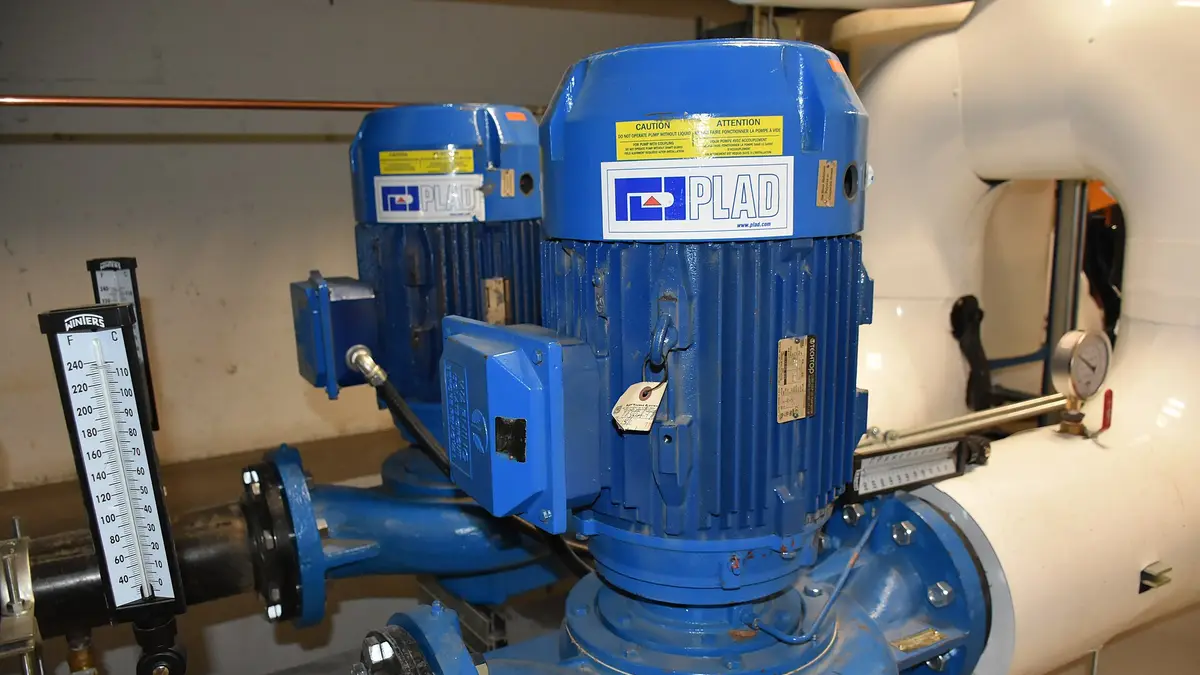
A 1 HP water pump has a power of about 0.75 kW and costs close to CLP 190 for each hour of operation, with electricity at CLP 255.27 per kWh (CGE's BT1 residential rate in Chile since October 2026). A 0.5 HP booster pump, the most common type in homes, costs about CLP 94 per hour. Since most pumps run only a few minutes a day, a household's monthly cost usually stays below CLP 6,000; irrigation, wells and swimming pools are what push it up.
A water pump can serve very different uses: boosting a home's water pressure, drawing water from a well, irrigating a smallholding or filtering a pool. This guide calculates how much each one costs in Chilean pesos, explains the differences between pump types and when a solar pump makes sense.
How much electricity a water pump uses by horsepower
In Chile, pumps are almost always sold by HP (horsepower). One HP equals 745.7 watts of mechanical power. The electrical power the motor draws from the grid is somewhat higher, because the motor has losses: in single-phase household pumps the difference is usually 10% to 30%, and the exact figure appears on the motor plate as absorbed power or P1. Using nominal power, this is the hourly cost:
| Pump power | In kW (approximate) | Cost per hour of operation | Typical use |
|---|---|---|---|
| 0.5 HP | 0.37 kW | CLP 94 | Boosting pressure in a house or flat |
| 0.75 HP | 0.56 kW | CLP 143 | Pool pump, shallow well |
| 1 HP | 0.75 kW | CLP 190 | Large house, garden irrigation, well |
| 1.5 HP | 1.12 kW | CLP 286 | Deep well, vegetable garden irrigation |
| 2 HP | 1.49 kW | CLP 381 | Smallholding irrigation, several taps at once |
Energía Futura calculations with electricity at CLP 255.27 per kWh (energy and service charges of CGE's BT1 rate in October 2026). If the motor draws 20% more than its nominal power, the real cost rises by the same proportion. The price per kWh varies by municipality and distributor, as shown in the price of a kWh in Chile by municipality.
Power tells you how much the pump costs per hour; the real cost depends on how many hours it runs. A booster pump does not run all day: it starts when someone opens a tap and stops when the pressure recovers. In a home of four people, that adds up to roughly one hour a day of operation.
How much a water pump costs per month in Chilean pesos
These are five common scenarios, with 30 days of use and each pump's nominal power:
| Use | Pump | Hours a day | Monthly consumption | Monthly cost |
|---|---|---|---|---|
| Boosting a home's pressure | 0.5 HP | 1 hour | 11.2 kWh | CLP 2,860 |
| Garden irrigation | 1 HP centrifugal | 1 hour | 22.4 kWh | CLP 5,715 |
| Well for a country house | 1 HP submersible | 2 hours | 44.8 kWh | CLP 11,430 |
| Pool filtering (summer) | 0.75 HP | 6 hours | 100.7 kWh | CLP 25,700 |
| Smallholding irrigation | 2 HP submersible | 3 hours | 134.3 kWh | CLP 34,280 |
Energía Futura calculations with electricity at CLP 255.27 per kWh, rounded. Hours are typical-use assumptions; the real cost may be higher if the pump is more powerful than needed or if leaks make it start when nobody is using water.
The pool is the use that most surprises people on the bill: a small filter pump running six hours a day in summer can add more than 100 kWh a month, more than a fridge uses in the same period. If the water is also heated, the cost multiplies, as we showed in how much it costs to heat a pool with a heat pump.
How much it costs to pump a cubic metre of water
For anyone with a well or who irrigates with a pump, a useful measure is the cost per cubic metre (1,000 litres). Physics says lifting 1,000 litres to a height of 30 metres takes 0.082 kWh of hydraulic energy. A household pump uses roughly 40% of the electricity it draws, so it needs about 0.2 kWh per cubic metre: about CLP 52. At 50 metres, the figure rises to about CLP 87 per cubic metre.
The Energía Futura calculation assumes an overall efficiency of 40% (motor plus pump), a typical value for small pumps; large, well-sized pumps are more efficient. Total head includes the depth of the water, the height of the tank or taps and the outlet pressure: 10 metres of head equals 1 bar of pressure.
Which water pump to choose: peripheral, centrifugal, submersible or booster
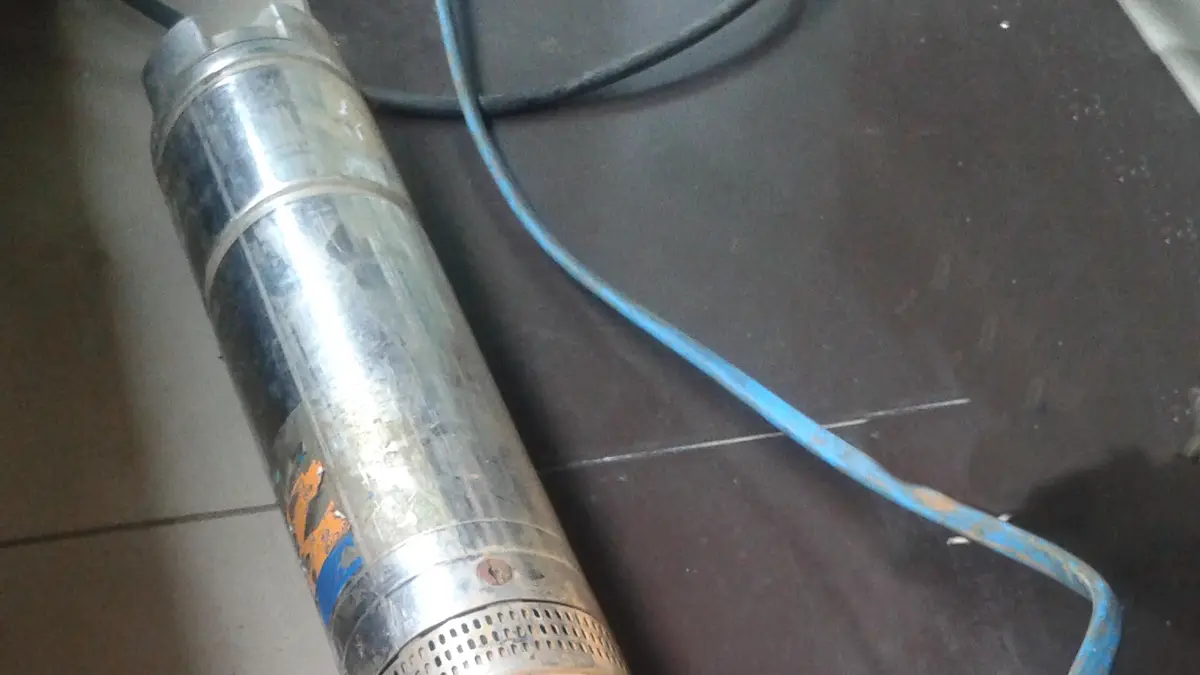
Each type of pump is designed for a different combination of flow (how many litres per minute it moves) and head (how much pressure it delivers). Choosing the wrong one is the most common reason pumps use too much power or fail to deliver the expected pressure:
| Type | Flow | Pressure | What it is for |
|---|---|---|---|
| Peripheral | Low | High | Boosting pressure in a home with few taps. Example: a 0.5 HP unit moves up to about 40 litres per minute, according to retail listings |
| Centrifugal | High | Medium | Irrigation, transferring water between tanks, homes with many taps |
| Submersible well pump | Medium to high | High | Drawing water from deep wells; it sits in the water |
| Submersible drainage pump | High | Low | Emptying tanks, pools or flooded basements |
| Booster set | Depends on the pump | Constant | Pump with pressure tank and pressure switch for houses and flats |
| Pool pump | High | Low | Circulating water through the filter |
Before buying by horsepower, check the pump curve in the manufacturer's specifications: it shows how many litres per minute the pump delivers at each head. An oversized pump starts and stops too often, uses more power and wears out sooner.
The pressure switch and the pressure tank
The pressure switch (presostato) turns the pump on when pressure drops below one value and off when it rises to another. The pressure tank stores water under pressure, so the pump does not start every time someone opens a tap for a few seconds. Fewer starts mean less wear and lower consumption, because each start draws a current several times higher than normal running current.
If the pump starts by itself every few minutes with nobody using water, there is a leak or the tank has lost its air charge. It shows on the bill: a 0.5 HP pump running two extra hours a day because of a leak adds about CLP 5,700 a month.
Solar pumps: when they make sense
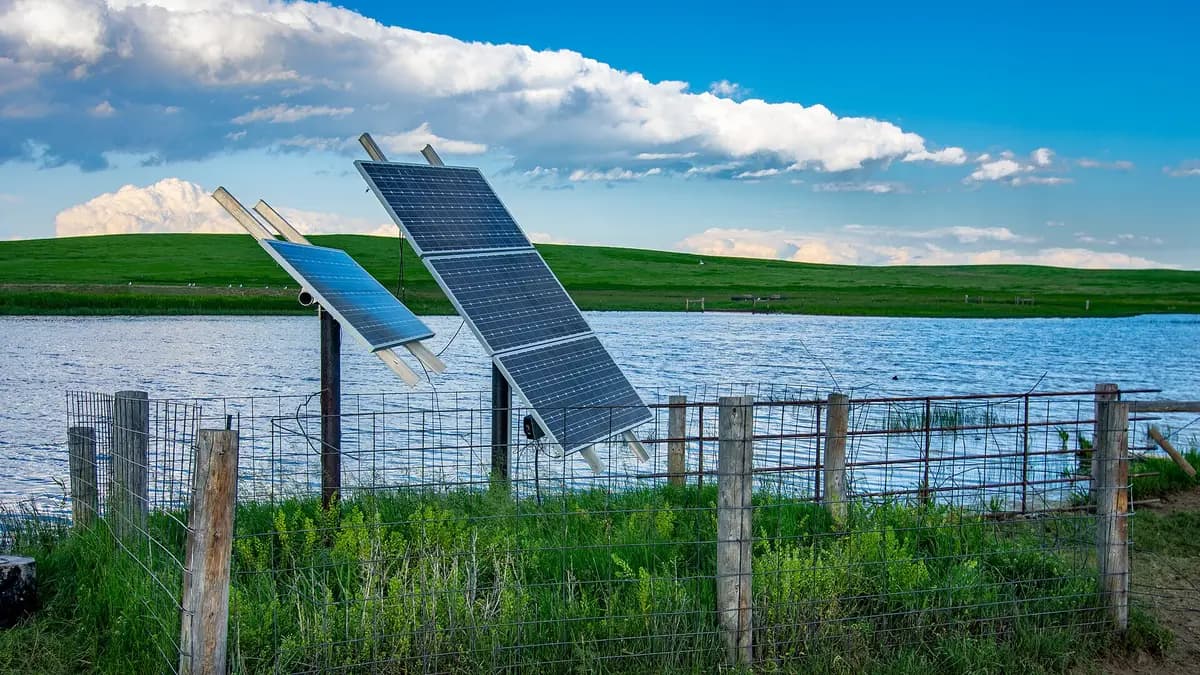
Solar pumps run on photovoltaic panels connected directly or through a controller, without using the grid. The logic is simple: instead of storing electricity in batteries, you store water in an elevated tank during the day and use it when needed.
- They make sense on smallholdings and farms without a grid connection or with a distant connection point, where bringing in electricity costs more than the panels.
- They make sense for irrigation, because the greatest need for water coincides with the sunniest months.
- Sizing: suppliers usually install somewhat more panel capacity than the pump's power, so it also works with partial cloud and in hours of lower sunlight.
- Savings: a 1 HP pump running two hours a day on grid power costs about CLP 11,430 a month, about CLP 137,000 a year, which a solar pump no longer pays.
- Funding: Chile's Irrigation Promotion Law 18,450, administered by the National Irrigation Commission (CNR), subsidises irrigation works through competitive calls that have included renewable energy projects.
For a grid-connected home the alternative is usually different: instead of a solar pump, install rooftop panels that cover the whole home's consumption, including the pump. We explain how to size them in home solar kits: what they include and how much they cost in Chile.
Five tips to spend less
- Choose the pump by flow and head, not just by horsepower: the biggest is not the best.
- Install a good-sized pressure tank to reduce the number of starts.
- Check for leaks: a leaking toilet cistern can make the pump start dozens of times a day.
- Water early or at dusk, when less water evaporates and the pump runs fewer hours.
- Adjust pool filtering hours to the season: winter needs far fewer than summer.
During power cuts, homes that depend on a pump are also left without water. That is why, in rural areas with frequent outages, an elevated tank or a back-up power source for the pump is as important as the pump itself.
Does your company sell pumps, irrigation or solar energy? Reach Energía Futura's readers.
See advertising optionsFrequently asked questions
How much electricity does a 1 HP water pump use?
About 0.75 kW per hour of operation, somewhat more once motor efficiency is factored in. With electricity at CLP 255.27 per kWh, close to CLP 190 per hour.
How much does a booster pump cost per month?
In a typical home, with a 0.5 HP pump running one hour a day, about CLP 2,860 a month.
What is the difference between a peripheral and a centrifugal pump?
A peripheral pump delivers little flow but high pressure; a centrifugal pump moves more water at lower pressure. A peripheral pump suits a small home; for irrigation or large homes, a centrifugal one.
What does a water pump's pressure switch do?
It turns the pump on when pressure falls below a set value and off when pressure recovers.
Is a solar water pump worth it?
Yes on smallholdings without grid power or for irrigation, where it stores water in a tank instead of using batteries. In a grid-connected home, a solar system for the whole house is usually the better option.