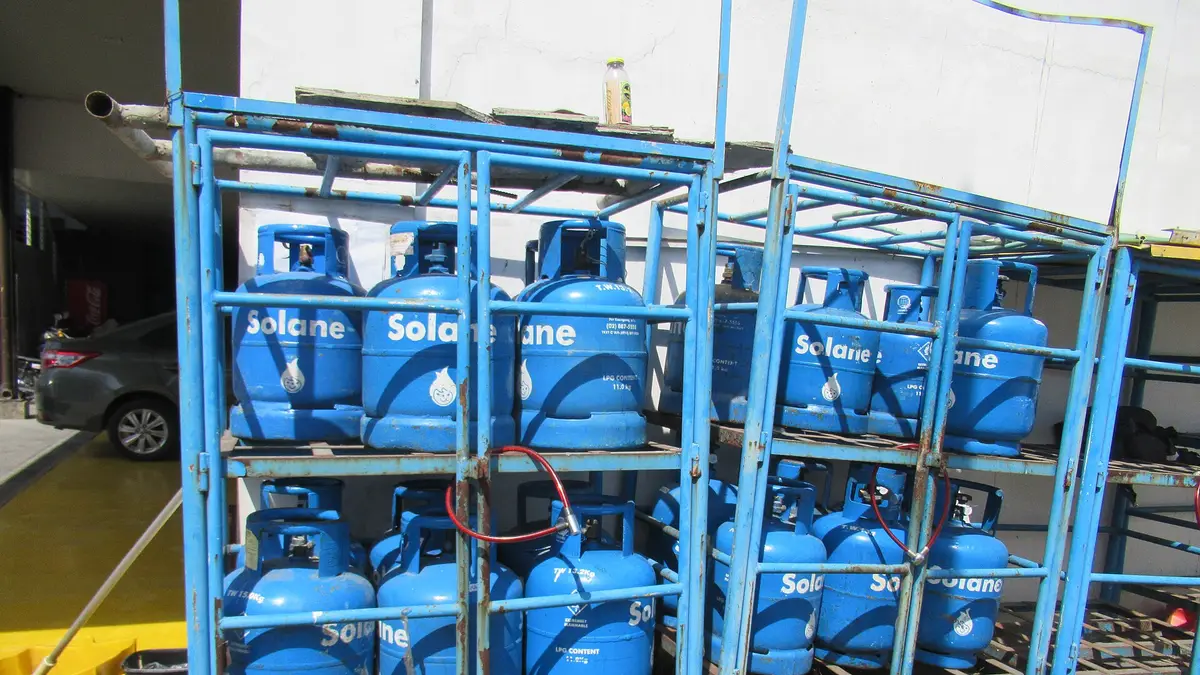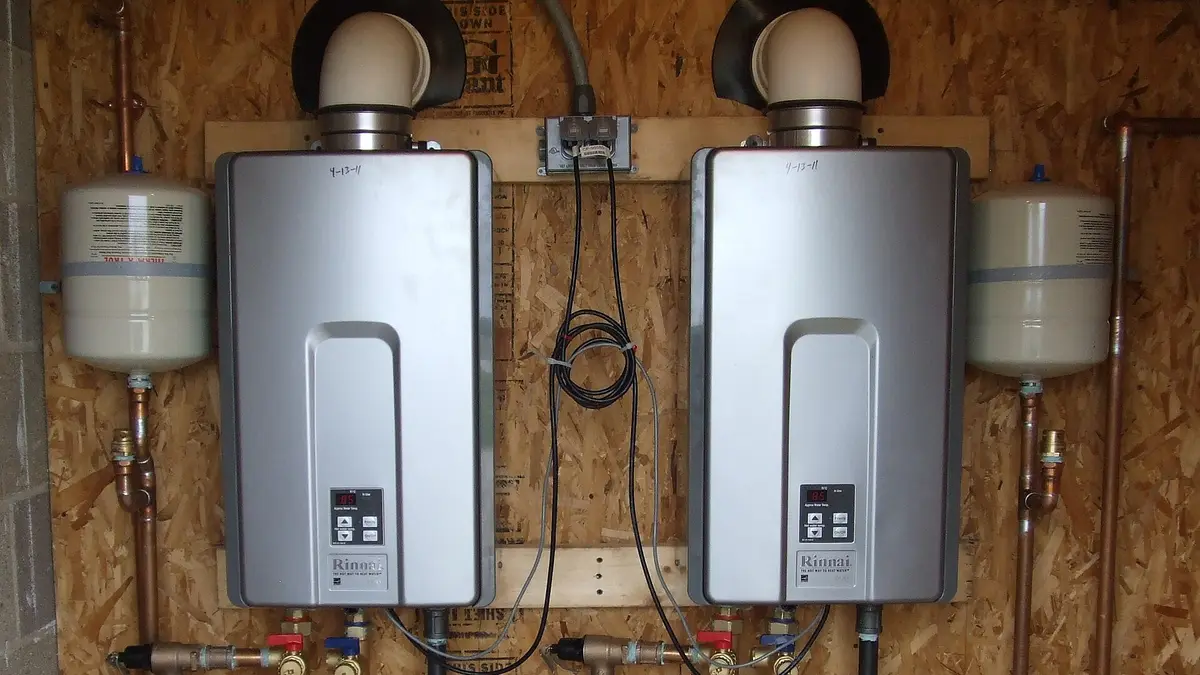
A 10-litre tankless gas water heater, known in Chile as a calefont, heats 10 litres of water per minute and, with bottled LPG, costs about CLP 370 per 8-minute shower, according to Energía Futura calculations with a 15 kg cylinder at CLP 30,250 (Lipigas, Santiago Metropolitan Region, as reported to Gas en Línea, the platform of Chile's National Energy Commission). The same shower with an electric tank water heater costs about CLP 532 in electricity, plus the tank's standby losses.
The litres of a calefont are not a storage capacity but the flow it can heat: the litres per minute it can raise by about 25 °C. Choosing that number well is the key decision, together with the type of flue and the type of gas in the home. This guide explains how many litres each household needs, how much it costs per month and what the rules require.
What the litres mean: flow and power
A 5, 7, 10 or 13-litre calefont delivers that flow of water while raising its temperature by about 25 °C. If mains water arrives at 15 °C, it comes out at about 40 °C, the usual shower temperature. In winter, with mains water at 10 °C, the flow at 40 °C drops: a 10-litre unit delivers about 8.3 litres per minute at that temperature.
Heating more water per minute takes more power. The physics is direct: each litre per minute raised by 25 °C requires about 1.74 kW. This is how the best-selling sizes in Chile compare:
| Gas water heater | Approximate output | Maximum LPG consumption | What it can handle |
|---|---|---|---|
| 5 litres | 8.7 kW | 0.76 kg/h | Kitchen sink or one low-flow shower, best in warm areas |
| 7 litres | 12.2 kW | 1.07 kg/h | One bathroom, one shower at a time |
| 10 litres | 17.4 kW | 1.53 kg/h | One comfortable shower plus the kitchen; homes with two bathrooms not used at the same time |
| 13 litres | 22.7 kW | 1.99 kg/h | Two moderate-flow showers at once |
| 16 litres | 27.9 kW | 2.45 kg/h | Two good-flow showers at once |
Energía Futura calculations for a 25 °C rise, with 87% efficiency and 13.1 kWh per kilo of LPG. The efficiency comes from the specification of a 10-litre natural-draught unit sold in Chile (Splendid Beyond 10L), which states 18 kW of output and 20.6 kW of input, according to the listing published by Paris.cl.
What size of gas water heater you need
Between a 7-litre and a 10-litre calefont (tankless gas water heater), the question is nearly always the same: which one is enough. The answer depends on how many hot taps are open at once, not on the number of people:
- Flat with one bathroom and one or two people: a 7-litre unit is enough if the shower has a moderate flow. In the south, where water arrives colder, it is worth going up to 10.
- Home with one bathroom and a family: 10 litres is the most balanced size. It gives a comfortable shower even in winter and lets someone wash the dishes while another person showers, with some drop in temperature.
- Home with two bathrooms used at the same time: 13 to 16 litres. With 10 litres, two simultaneous showers come out lukewarm.
- Kitchen or a washbasin only: a 5-litre unit is enough.
A bigger unit does not use more gas per shower: gas use depends on the water heated, not on the size of the appliance. What does change is the purchase price and the need for a flue and gas connection suited to the higher power.
How much gas a water heater uses per shower and per month
To compare with other ways of heating water we use the same shower as in our electric water heater guide: 8 minutes at a flow of 8 litres per minute at 40 °C, that is, 64 litres of warm water. Heating it from 12 °C requires 2.08 kWh of heat. At 87% efficiency, the calefont burns about 0.18 kilos of gas per shower:
| LPG (15 kg cylinder, Santiago region) | Cylinder price | Cost per 8-minute shower | Monthly cost (4 people, 1 shower a day) |
|---|---|---|---|
| Gasco | CLP 27,950 | CLP 340 | CLP 40,800 |
| Lipigas | CLP 30,250 | CLP 368 | CLP 44,200 |
| Abastible | CLP 39,550 | CLP 481 | CLP 57,700 |
Energía Futura calculations with home delivery prices reported to Gas en Línea (Gasco and Abastible as of 21 October 2026; Lipigas as of 1 October). The monthly cost assumes 120 showers, about 22 kilos of gas, roughly one and a half 15 kg cylinders. It does not include dishwashing or handwashing.
The comparison with an electric tank heater favours gas. The same shower costs about CLP 532 with an electric tank, with electricity at CLP 255.27 per kWh (CGE's BT1 residential rate since October 2026), and the tank also loses energy keeping the water hot. The details are in how much electricity an electric water heater uses. For a family of four, with a Gasco or Lipigas cylinder, the calefont saves CLP 20,000 to 35,000 a month compared with the electric tank.
LPG or natural gas
Calefonts are sold in versions for liquefied petroleum gas (GL or GLP) or for natural gas (GN), and they are not interchangeable: switching from one gas to the other requires a conversion kit fitted by an authorised technician. Piped natural gas is billed per cubic metre according to each distributor's tariff; a cubic metre delivers roughly 10 to 11 kWh. To compare with bottled gas, divide the price per cubic metre on your bill by that figure and compare it with the CLP 142 to 201 per kWh of LPG in 15 kg cylinders.
Natural draught, forced draught or electronic ignition calefont
Besides the litres, calefonts differ in how they ignite and how they vent combustion gases:
| Type | How it works | Advantages | Disadvantages |
|---|---|---|---|
| Natural draught | Gases rise on their own through a vertical flue to the outside | Cheaper, needs no electricity | Requires a flue with a good outlet; sensitive to draughts |
| Forced draught | A fan pushes the gases through a flue that can run horizontally | Can be installed where there is no vertical flue, safer in small spaces | More expensive, needs a socket and does not work during a power cut |
| Electronic ignition ("ionizado") | Lights with a spark when the tap is opened, with no pilot flame | Uses no gas on a flame that burns all day | Needs batteries (or electricity) to light |
| Standing pilot | A small flame stays lit permanently | Simple, no batteries | Burns gas even when nobody uses hot water |
The categories combine: a calefont can be natural draught with electronic ignition, like the 10-litre model cited above. Most electronic-ignition models use two large batteries, and when they run down the calefont stops lighting. That is the first thing to check if it will not ignite.
Forced draught has become common in new flats, where the calefont sits in a utility area or kitchen with no vertical flue. Its weak point is its reliance on electricity: if the power goes out, there is no hot water. A natural-draught unit with electronic ignition, by contrast, keeps working during a power cut thanks to its batteries.
Installation: what the SEC requires
Installing a calefont is regulated by Supreme Decree 66 of 2007, the regulation on indoor gas installations enforced by Chile's Superintendency of Electricity and Fuels (SEC). Manufacturers' manuals state that the appliance must be installed by a gas installer authorised by the SEC, complying with the ventilation and flue requirements. These are the key points:
- Authorised installer: only an installer licensed by the SEC can connect a calefont to the gas supply. Their registration can be checked on the SEC website.
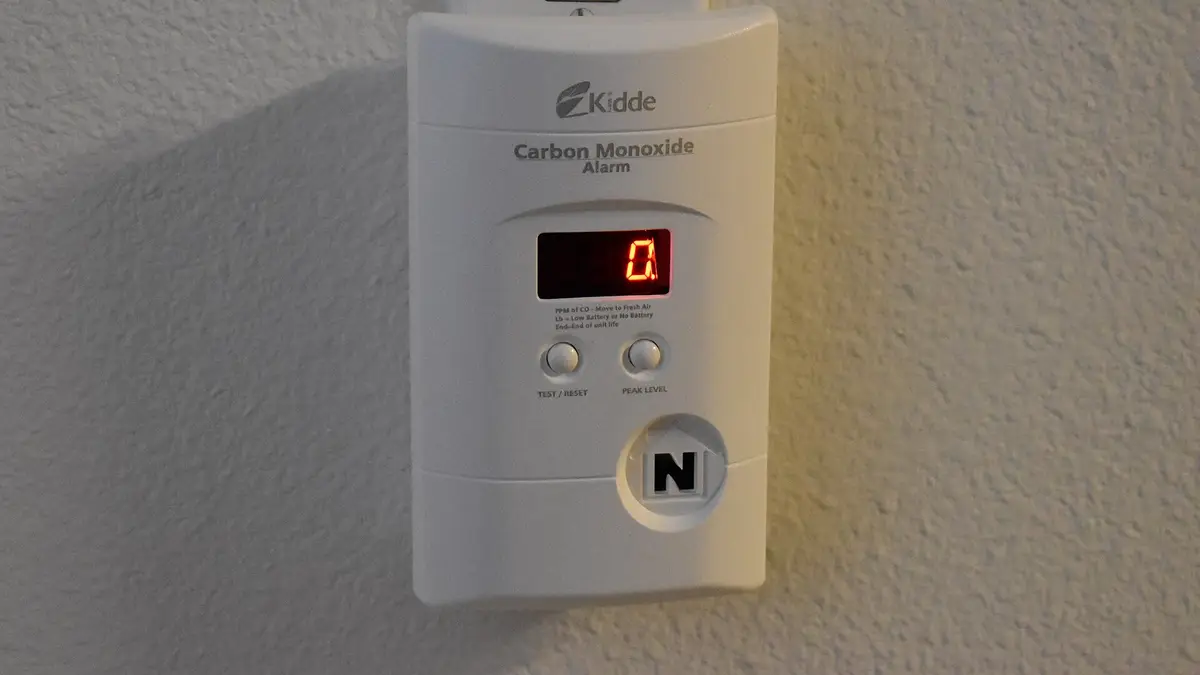
- Flue: combustion gases must be vented outside. A blocked, short or badly sealed flue is the main cause of carbon monoxide poisoning.
- Room ventilation: the space where the calefont sits needs air inlets. Blocking vents to keep out the cold is dangerous.
- Certified equipment: the calefont must carry SEC certification, shown on its label with a QR code.
- Maintenance: manufacturers recommend regular servicing by a technician, generally once a year, to clean the burner and check the flue.
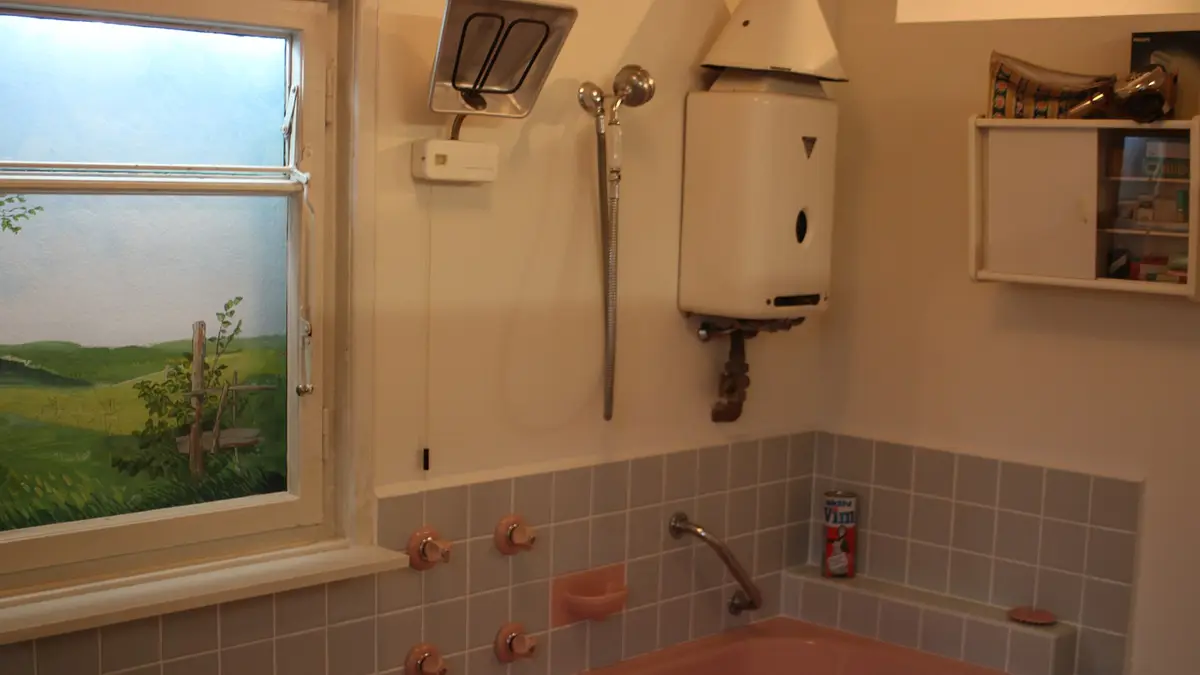
Among its tips for using gas at home, the SEC recommends good ventilation wherever gas appliances operate and opening the bathroom window if the calefont is installed there, which is common in older homes. Warning signs are a yellow flame, black soot marks on the unit or a headache while showering. In any of those cases, turn the calefont off and call a technician.
Calefont, electric tank or heat pump
The calefont is still the cheapest way to heat water in most Chilean homes that have gas. An electric tank heater is simpler to install, with no flue or gas, but costs more per shower. Heat pump water heaters can cut electricity use to about a third, putting them in a similar range to the calefont, although they cost much more to buy. To see how much hot water weighs on a household's total bill, check how much electricity a home in Chile uses per month.
In the kitchen it is a different story: electricity already competes head to head with gas there, because induction uses energy much more efficiently, as we showed in how much an electric cooktop costs compared with gas. For hot water, bottled gas still wins for now.
Does your company sell water heaters, gas installations or hot water solutions? Reach Energía Futura's readers.
See advertising optionsFrequently asked questions
What size of calefont do I need for a home with two bathrooms?
If both bathrooms are used at the same time, a 13 to 16-litre unit. If they are not used at once, a 10-litre unit is enough.
How much gas does a calefont use per shower?
About 0.18 kilos of LPG in an 8-minute shower: CLP 340 to 481, depending on the company selling the cylinder.
What is the difference between natural and forced draught?
A natural-draught unit vents gases through a vertical flue without electricity; a forced-draught unit uses a fan, can be installed without a vertical flue, but needs a socket and does not work during a power cut.
Is a calefont cheaper than an electric water heater?
The LPG calefont: about CLP 370 per shower, against about CLP 532 for an electric tank heater, plus the tank's standby losses.
Why won't my electronic-ignition calefont light?
The most common cause is flat batteries. If it still does not light after replacing them, it may be low water or gas pressure; in that case, call an authorised technician.