Power transmission investment under construction in Chile has grown more than ninefold so far in 2026. As of 30 September there were 48 projects in the national and zonal transmission systems under construction, with an investment of US$3.276 billion and 2,143 km of new lines. In January there were 22 projects, US$347 million and 155 km, according to the Ministry of Energy's Project Report, whose September edition was published on 19 October and highlighted on Friday by the trade outlet Electrominería.
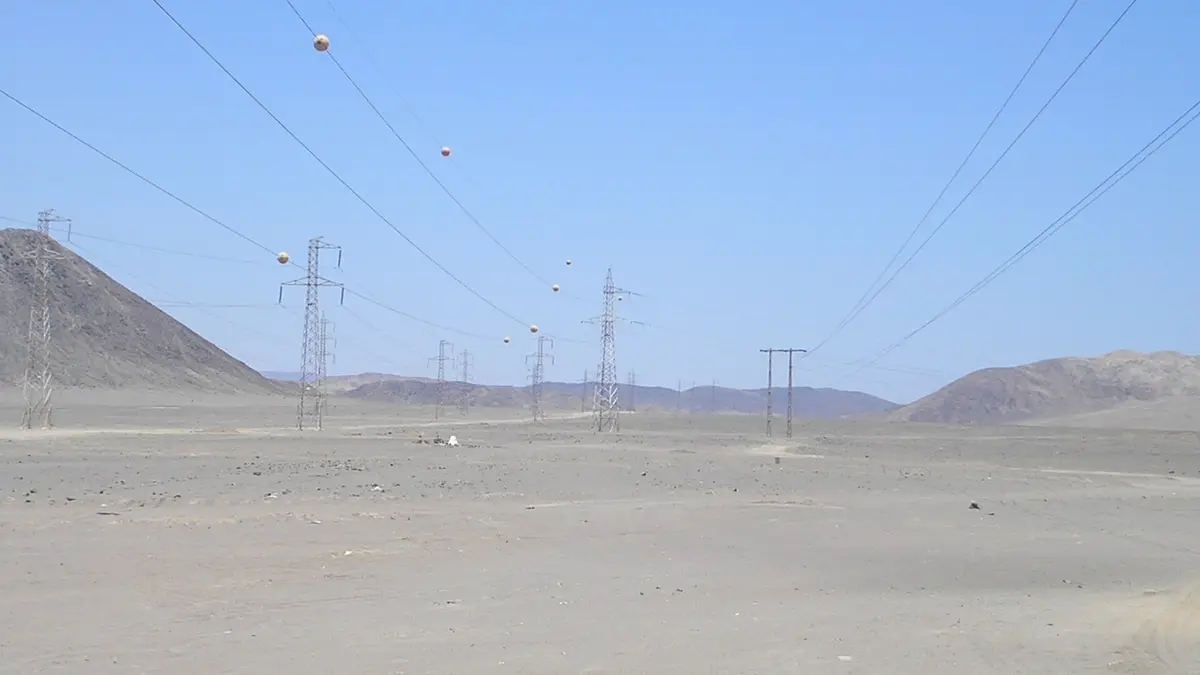
The jump has a name: the Kimal-Lo Aguirre direct current line, the country's first high-voltage direct current (HVDC) line, which will link the Antofagasta Region with the Santiago Metropolitan Region. The ministry added it to its list of projects under construction in February, and since then it has been the largest investment in the sector.
Power transmission investment in Chile, month by month
The Ministry of Energy's monthly report, built with information from the grid operator (Coordinador Eléctrico Nacional), the National Energy Commission (CNE) and the companies, makes it possible to follow the trend through 2026. These are the figures from each edition:
| Month of 2026 | Projects under construction | Investment (US$ million) | New lines (km) |
|---|---|---|---|
| January | 22 | 347 | 155 |
| February | 42 | 2,488 | 1,501 |
| March | 47 | 3,041 | 2,096 |
| April | 49 | 3,259 | 2,190 |
| May | 49 | 3,300 | 2,182 |
| June | 50 | 3,300 | 2,143 |
| July | 50 | 3,300 | 2,143 |
| August | 50 | 3,305 | 2,143 |
| September | 48 | 3,276 | 2,143 |
Source: Ministry of Energy of Chile, Project Report, January to September 2026 editions. Figures reflect what was reported on the last business day of each month. Investment is the amount declared by the developers, not money already spent.
The table shows that the big change came between January and March, when Kimal-Lo Aguirre and other large projects were added. Since April the figure has stabilised at around US$3.3 billion. The slight drop in September, from 50 to 48 projects, is because some works were completed and left the list.
More lines, fewer substations
The mix has also changed. In January, lines accounted for 66% of the transmission investment under construction and substations for 34%. In September, lines rise to 87%, substations fall to 9% and a third component appears: synchronous condensers, with the remaining 4%. This equipment helps control voltage and gives stability to a grid with more and more solar and wind power, which on its own does not provide that inertia.
Kimal-Lo Aguirre, the project behind the jump
In the September report, Kimal-Lo Aguirre is listed with a length of 1,342 km, an investment of US$2 billion and an estimated grid connection date of May 2029. It crosses five regions, from Antofagasta to the Metropolitan Region, and more than 30 municipalities, from María Elena to Pudahuel. It is owned by the Conexión Energía consortium, formed by Transelec, ISA and China Southern Power Grid.
The amount varies by source. The ministry uses US$2 billion; Electrominería cites US$1.48 billion, and Reporte Minero reported on 10 September that the line was 20% complete, with US$422 million spent out of an investment of about US$1.5 billion and commercial operation expected in 2029. The difference may depend on whether converter stations and other associated costs are counted.
Whichever figure is used, Kimal-Lo Aguirre accounts for 45% to 61% of all transmission investment under construction. Without it, the other 47 projects add up to about US$1.276 billion, according to an Energía Futura calculation using the ministry's figure. In other words: even excluding the megaline, investment in January was almost four times lower than today.
The line aims to carry solar and wind power from the north to the centre of the country, where most consumption is. Today part of that energy is lost because the grid cannot carry it: curtailment reached 6,205 GWh in 2025, as we detailed in our article on the Deloitte report on transmission.
The other large transmission projects under construction
The September list ranges from substation expansions worth US$1 million to projects worth hundreds of millions of dollars. These are the largest after Kimal-Lo Aguirre:
| Project | Owner | Investment (US$ million) | Estimated start |
|---|---|---|---|
| Kimal-Lo Aguirre HVDC line | Conexión Energía | 2,000 | May 2029 |
| Zonal system Group 3 Itahue-Hualqui (Mate), Itahue-Mataquito section | Celeo Redes | 324 | March 2027 |
| New Nueva Lagunas substation and 2x500 kV Nueva Lagunas-Kimal line | ISA InterChile | 195 | April 2027 |
| Tineo-Nueva Ancud transmission system | Transelec | 107 | August 2027 |
| Synchronous condensers at Monte Mina substation | Transelec | 64 | September 2027 |
| Tocopilla synchronous condensers | Engie | 50 | April 2027 |
| New Providencia substation and 2x110 kV underground Vitacura-Providencia line | SAESA | 44 | April 2028 |
| Capacity increase of the 2x500 kV Alto Jahuel-Lo Aguirre line | Transelec | 42 | Pending |
Source: Ministry of Energy of Chile, Project Report for September 2026, table 6. Dates are estimated connection dates reported by the owners.
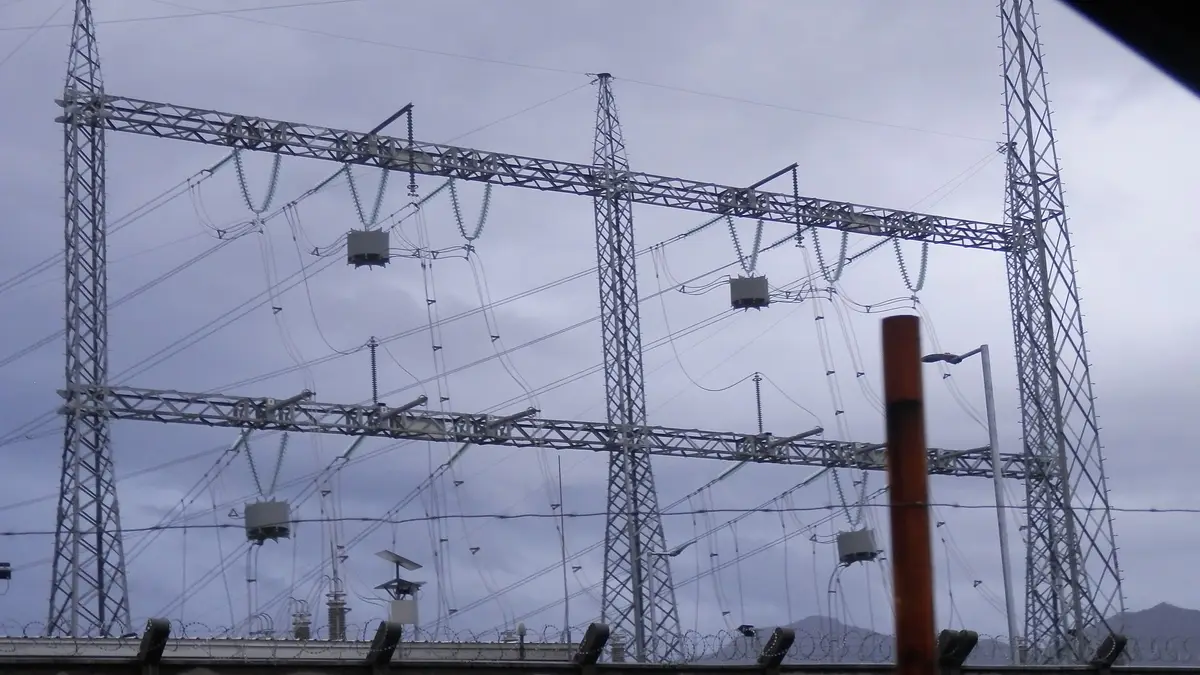
The Tineo-Nueva Ancud project, which will provide a second strong link to Chiloé Island, is complemented by the 200 MW battery at Tineo that the CNE included among the urgent works, as we reported in our article on the 2026 urgent transmission works. The underground line between Vitacura and Providencia is one of the few large projects inside Santiago.
How much transmission weighs in Chile's energy investment
Transmission is now one of the three large blocks of electricity investment under construction, together with power plants and batteries. As of 30 September, all projects under construction added up to 120 projects worth US$9.288 billion:
| Type of project under construction | Number | Capacity | Investment (US$ million) | Share |
|---|---|---|---|---|
| Transmission works | 48 | 2,143 km of lines | 3,276 | 35% |
| Storage systems (batteries) | 32 | 3,702 MW / 15,398 MWh | 3,172 | 34% |
| Power plants | 40 | 1,892 MW | 2,840 | 31% |
| Total | 120 | — | 9,288 | 100% |
Source: Ministry of Energy of Chile, Project Report for September 2026. Shares are an Energía Futura calculation.
Transmission is now the block with the most investment under construction, just ahead of batteries. Power plants came third: in September there were 1,892 MW under construction, compared with 3,222 MW in January. Total investment under construction has also fallen from its peak: it was US$11.721 billion in March and US$10.3 billion in August.
That decline is not necessarily bad news. Many solar plants and batteries finished construction and moved into testing: in September there were 34 power plants (2,195 MW) and 26 storage systems (3,459 MW) in testing. But it does show that fewer new generation projects are starting construction, in line with the drop in projects entering Chile's environmental impact assessment system (SEIA) this year.
Projects under environmental review
Looking ahead, the transmission pipeline under environmental review is smaller. As of 30 September there were 10 transmission projects under assessment in the SEIA, with 132 km of lines and US$316 million, concentrated in Antofagasta and the Metropolitan Region. In September only one new project was filed, the 2x220 kV underground line and El Carmen substation, worth US$39 million, and another worth US$8 million was approved.
Why power transmission investment matters
The transmission grid is the main bottleneck of Chile's power system. At nodes in the north and centre, the marginal cost of energy falls to zero for many hours of the day because there is surplus solar power that cannot reach other areas. More lines make it possible to use that cheap energy, reduce curtailment and lower dependence on diesel plants in isolated areas.
Demand will also grow. The grid operator projects that consumption could rise by 63.9% to 98.8% by 2046 because of mining, green hydrogen and data centres, as we explained in our article on electricity demand to 2046. The lines now under construction, with start dates between 2026 and 2029, are the basis for absorbing that growth.
The risk lies in the timelines. Transmission projects take years between tender and commissioning, and in Chile several have been delayed by permits, rights of way and disputes with landowners. Kimal-Lo Aguirre, for example, depends on some 5,000 sectoral and environmental permits across five regions, according to Reporte Minero.
Does your company work in transmission, substations or services for the power sector? Reach Energía Futura's readers.
See advertising optionsFrequently asked questions
How much is being invested in power transmission in Chile in 2026?
As of 30 September 2026 there were 48 transmission projects under construction worth US$3.276 billion, according to the Ministry of Energy. In January there were 22 projects worth US$347 million.
What is the Kimal-Lo Aguirre line?
It is Chile's first high-voltage direct current (HVDC) transmission line. It is about 1,342 km long, will link Antofagasta with the Santiago Metropolitan Region and is expected to start operating in 2029.
Who is building Kimal-Lo Aguirre?
The Conexión Energía consortium, formed by Transelec, ISA and China Southern Power Grid.
Where is the report on projects under construction published?
On the website of Chile's Ministry of Energy, which publishes a monthly Project Report covering power plants, batteries and transmission works under construction, in testing and under environmental review.